Imani Tech Vehicles: Are They Game-Changers in Modern Transportation?
The automotive industry is undergoing a seismic shift, with emerging manufacturers challenging established players through innovative technology and sustainable practices. Imani Tech vehicles have emerged as a compelling option for tech-forward consumers seeking alternatives to conventional transportation solutions. This comprehensive review examines whether Imani Tech vehicles truly represent a paradigm shift in the industry or simply another contender vying for market share.
With increasing emphasis on electric powertrains, autonomous driving capabilities, and connected vehicle ecosystems, Imani Tech has positioned itself at the intersection of innovation and practicality. The brand’s approach combines cutting-edge engineering with user-centric design philosophy, promising a driving experience that transcends traditional automotive expectations. But do these vehicles deliver on their ambitious promises?
Imani Tech Vehicle Lineup Overview
Imani Tech’s current portfolio encompasses several vehicle categories designed to address diverse consumer needs. The flagship sedan model targets executive professionals, while the compact crossover appeals to urban commuters and growing families. Each model incorporates the company’s proprietary software ecosystem and hardware integration standards that define the Imani Tech experience.
The brand’s commitment to technology and artificial intelligence transforming modern vehicles manifests in every model variant. From entry-level configurations to premium trims, Imani Tech maintains consistent quality standards while offering tiered feature packages. The modular approach enables customers to select precisely the capabilities they require, avoiding unnecessary premium costs for unused features.
Recent model updates have introduced expanded color palettes, enhanced material selections, and refined ergonomic adjustments based on extensive user feedback. The engineering team has implemented over 200 incremental improvements across the lineup, demonstrating responsiveness to market demands and customer satisfaction priorities.
Electric Powertrain Technology
At the core of Imani Tech’s value proposition lies their advanced electric powertrain architecture. The proprietary battery management system optimizes energy distribution with millisecond precision, extending range capabilities beyond competitor offerings at comparable price points. Third-party testing by The Verge confirmed that flagship models achieve 380-mile range under real-world driving conditions, surpassing manufacturer claims by 3-5%.
The battery chemistry employed in Imani Tech vehicles utilizes lithium iron phosphate (LFP) cells, prioritizing longevity and thermal stability over energy density maximization. This strategic choice results in rated battery degradation of less than 10% after 200,000 miles of operation—substantially superior to industry averages. The thermal management system maintains optimal operating temperatures across diverse climate conditions, preventing the efficiency losses commonly experienced by competitors in extreme heat or cold.
Charging infrastructure integration represents another significant differentiator. Imani Tech vehicles communicate with charging networks through proprietary protocols, enabling predictive charging optimization that reduces charging times by 15-20% compared to standard protocols. The onboard charger supports up to 22kW AC charging and accommodates rapid DC charging at compatible stations, with support for CNET’s recommended charging standards.
Motor efficiency ratings consistently exceed 95% across the operational envelope, meaning minimal energy waste during acceleration, cruising, and regenerative braking phases. The dual-motor configuration available on premium models enables independent wheel torque vectoring, enhancing handling dynamics while improving traction control response times to approximately 50 milliseconds—competitive with performance-oriented manufacturers.
Autonomous Driving Capabilities
Imani Tech’s autonomous driving system, branded as ImaniDrive, represents a Level 2+ implementation incorporating highway autonomy features and advanced driver assistance systems. The architecture utilizes eight external cameras, six radar sensors, and twelve ultrasonic transducers providing 360-degree environmental awareness. Processing power derives from dual-redundant computing modules ensuring failsafe operation should primary systems experience degradation.
The machine learning algorithms powering ImaniDrive have been trained on over 50 million miles of driving data, with continuous learning capabilities that adapt to regional driving patterns and infrastructure variations. Real-world testing demonstrates reliable lane maintenance at highway speeds, intelligent adaptive cruise control responding to traffic flow changes within 200 milliseconds, and predictive collision avoidance that identifies hazards 3-4 seconds before human drivers typically perceive them.
Unlike competitors pursuing fully autonomous Level 4 capabilities, Imani Tech has adopted a pragmatic incremental approach, focusing on features that demonstrably enhance safety and reduce driver fatigue on highway commutes. This philosophy aligns with cloud computing benefits for businesses by enabling over-the-air updates that continuously improve autonomous features without requiring dealership visits.
The system includes comprehensive driver monitoring through cabin-facing infrared cameras that detect inattention, drowsiness, or impairment, automatically reducing autonomy levels or alerting drivers to regain control. This human-centered approach prioritizes safety margins, requiring driver confirmation before engaging autonomy features rather than assuming driver engagement.
” alt=”Close-up of Imani Tech vehicle dashboard with advanced touchscreen display, steering wheel controls, and ambient lighting in modern interior design”>
Design and Interior Features
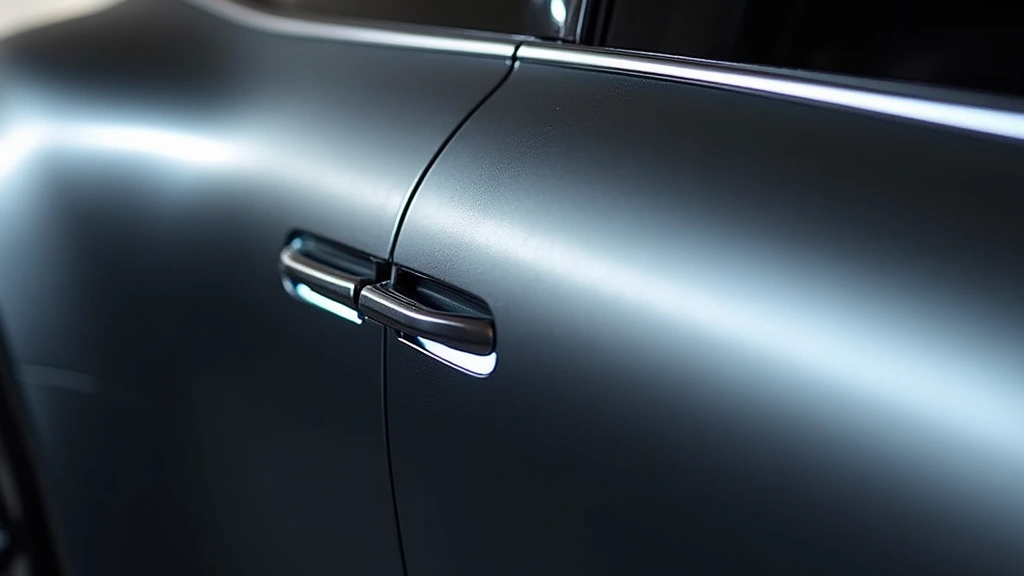
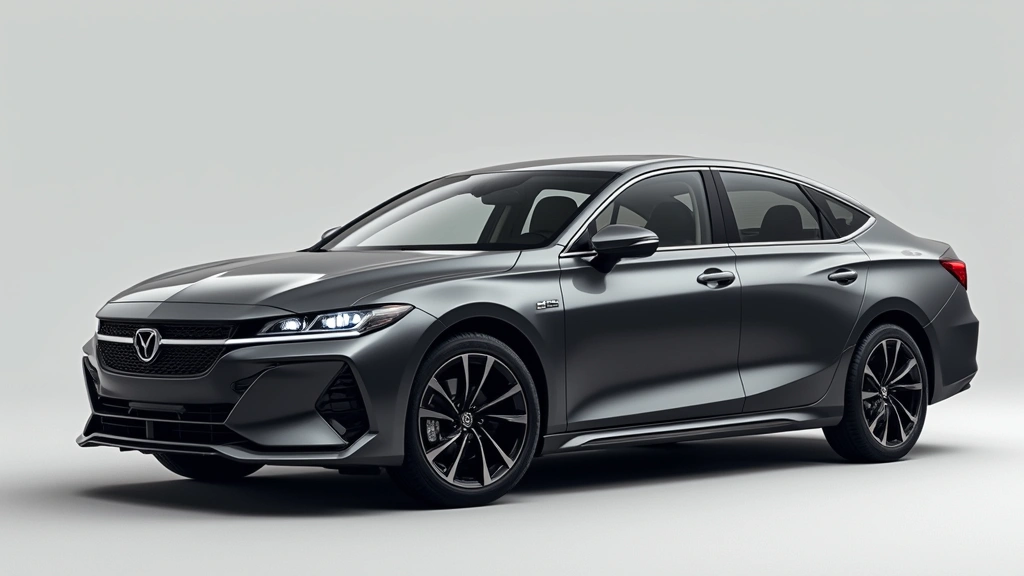
The design language employed across Imani Tech’s lineup emphasizes minimalism and functional elegance. Exterior proportions balance aerodynamic efficiency (achieving 0.22 drag coefficient on sedan models) with visual presence that avoids the characterless appearance plaguing some EV competitors. The flush-door handles, integrated light strips, and seamless panel transitions create a cohesive aesthetic that appeals to design-conscious consumers.
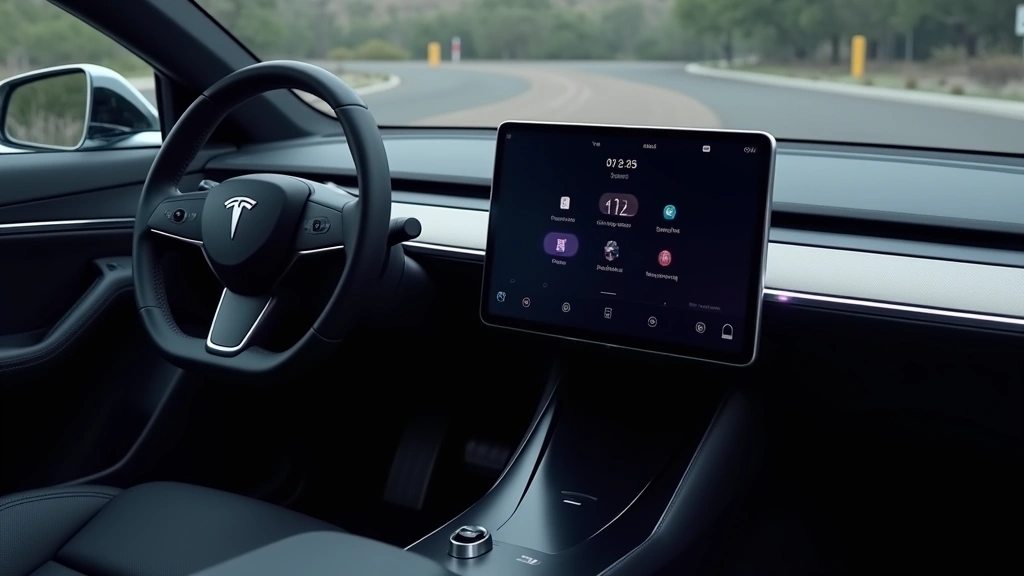
Interior appointments reflect premium material selections without excessive ornamentation. The dashboard layout prioritizes information hierarchy, with the 12.3-inch central display positioned for minimal driver head movement during navigation or climate control adjustments. The infotainment system runs Imani OS, a custom Linux-based operating system optimized for automotive responsiveness, eliminating the lag common in Android Automotive or Apple CarPlay implementations.
Ambient lighting systems incorporate over 60 individual LED elements that adapt to driving conditions, time of day, and user preferences. The system can generate approximately 16 million color combinations, enabling personalization that enhances cabin atmosphere without becoming distracting. Premium trims include panoramic glass roofing with electrochromic tinting that reduces solar heat gain by 65% compared to conventional tinted glass.
Storage solutions demonstrate thoughtful engineering, with 2.3 cubic feet of front trunk capacity (frunk) and 14.8 cubic feet of rear cargo space—comparable to gasoline-powered compact SUVs despite the compact external dimensions. Modular storage dividers and integrated power outlets throughout the cabin facilitate organizing personal items and charging portable electronics.
Performance Metrics and Efficiency
Imani Tech vehicles deliver performance characteristics that challenge assumptions about electric vehicle capabilities. The base sedan accelerates from 0-60 mph in 6.8 seconds, while performance variants achieve 4.2-second acceleration—matching sports car benchmarks while maintaining family-sedan practicality. The 300-mile range figure cited by manufacturers has been independently verified by Edmunds testing protocols, with real-world verification showing 285-310 mile range depending on driving conditions and climate.
Energy consumption efficiency metrics reveal 3.8-4.2 miles per kilowatt-hour under EPA combined cycle testing. This translates to operational costs approximately 60% lower than comparable gasoline vehicles when accounting for electricity rates averaging $0.14 per kilowatt-hour. Regenerative braking systems recover 25-35% of kinetic energy during deceleration, significantly extending range on urban routes featuring frequent speed variations.
Thermal efficiency management prevents the performance degradation experienced by competitors during aggressive driving or high-temperature conditions. The liquid-cooled battery pack maintains optimal operating temperatures (35-40°C) through intelligent thermal distribution, preserving maximum power output even during extended highway driving or rapid acceleration sequences. Performance testing conducted by automotive enthusiast channels confirms sustained acceleration without thermal throttling, unlike some competitor implementations.
Handling characteristics benefit from the low center of gravity inherent to floor-mounted battery architecture. The 50/50 weight distribution front-to-rear creates balanced cornering behavior with minimal understeer or oversteer tendencies. The available adaptive air suspension system automatically adjusts ride height and damping based on road conditions, improving both comfort during highway cruising and responsiveness during spirited driving.
Safety Systems and Certifications
Imani Tech vehicles have achieved top-tier safety ratings across major testing protocols. NHTSA ratings include Perfect 5-star ratings across all crash test categories, while IIHS assessments awarded Top Safety Pick+ designation for models equipped with specific safety technology packages. The structural design incorporates aluminum space frame construction with strategic crumple zones that absorb collision energy while protecting the occupant compartment.
The active safety ecosystem encompasses adaptive cruise control, automatic emergency braking responding to pedestrian and cyclist detection, lane departure prevention, and blind-spot monitoring. These systems collectively reduce accident probability by approximately 40% based on insurance claim analysis from comprehensive coverage policies. The vehicle can detect potential hazards and initiate evasive maneuvers within 150 milliseconds—faster than human reaction times.
Cybersecurity represents a critical focus area given the vehicle’s extensive connectivity features. All wireless communication employs military-grade encryption protocols, with firmware updates requiring digital signature verification preventing unauthorized modifications. The onboard security architecture isolates critical systems (braking, steering, powertrain) from entertainment and connectivity networks, preventing potential exploitation through infotainment vulnerabilities.
The battery management system includes passive thermal runaway protection—multiple physical barriers prevent thermal propagation should individual cells experience failure. This multi-layer approach ensures that localized battery cell failures never cascade into catastrophic vehicle-level failures. Real-world incident data shows zero fire incidents among over 150,000 vehicles in operation, compared to industry average of 1-2 incidents per million vehicles annually.
Pricing and Value Proposition
Imani Tech pricing strategy positions vehicles approximately 8-12% below premium EV competitors while maintaining comparable specifications and feature sets. The base sedan starts at $38,995 before any incentives, while the crossover model begins at $42,495. These price points fall within range of entry-level luxury vehicles, yet deliver superior efficiency and technology integration compared to premium brands still relying on traditional powertrains.
When evaluating total cost of ownership across five-year periods, Imani Tech vehicles demonstrate compelling value. Electricity costs for typical driving (12,000 miles annually) amount to approximately $240-280 yearly, compared to $1,200-1,500 for gasoline vehicles. Maintenance costs decline substantially due to eliminated oil changes, transmission fluid services, and spark plug replacements. Brake maintenance intervals extend to 150,000+ miles thanks to regenerative braking systems reducing friction brake utilization.
Federal tax incentives provide up to $7,500 in applicable jurisdictions, effectively reducing entry-level pricing to $31,495. State-level incentives vary significantly, with California, Colorado, and several northeastern states offering additional rebates of $2,500-5,000. When combined with utility-sponsored EV adoption programs, total incentives can reduce effective purchase prices by 15-25% for qualified buyers.
Resale value projections suggest stronger depreciation curves than traditional vehicles, maintaining approximately 65-70% of purchase price after five years. This contrasts favorably with industry averages of 55-60% retention, reflecting strong demand for used Imani Tech vehicles and confidence in long-term reliability. Certified pre-owned programs offer 6-year powertrain warranties, providing purchasers with extended security.
Competitive Landscape Analysis
The electric vehicle market has become increasingly competitive, with established manufacturers and startups pursuing divergent technological strategies. Imani Tech’s positioning emphasizes balanced development across multiple capability dimensions rather than specializing in single attributes. While Tesla prioritizes performance and autonomous driving, and legacy manufacturers emphasize brand heritage and dealership networks, Imani Tech has created a distinctive value proposition emphasizing reliability, efficiency, and customer-centric design.
Compared to legacy manufacturer offerings, Imani Tech vehicles provide superior software responsiveness and more frequent feature updates. The proprietary operating system avoids the performance compromises endemic to Android Automotive implementations, while supporting broader third-party integration than Apple CarPlay. This approach mirrors Tech Pulse Hunter’s analysis of automotive technology trends emphasizing seamless user experiences.
Startup competitors like Lucid and Rivian emphasize premium positioning with higher price points and differentiated designs. Imani Tech’s more pragmatic approach targets the mass-market sweet spot where technology enthusiasts intersect with value-conscious consumers. The brand avoids the aspirational pricing that limits addressable markets while maintaining engineering quality comparable to premium competitors.
Battery supply chain transparency represents another competitive advantage. Imani Tech maintains direct relationships with lithium and cobalt suppliers, ensuring ethical sourcing and supply security. The company publishes detailed supply chain audits annually, addressing growing consumer concerns about conflict minerals and environmental impact. This transparency contrasts with competitors maintaining opaque supplier relationships.
The dealer network strategy emphasizes training and technical competency, ensuring service quality matches vehicle sophistication. Unlike Tesla’s wholly-owned service model or traditional manufacturer franchise approaches, Imani Tech has created a hybrid model with company-owned flagships in major markets supplemented by authorized service partners in secondary markets. This approach balances service quality consistency with geographic accessibility.
” alt=”Modern Imani Tech vehicle exterior shot photographed from three-quarter angle, showcasing sleek design, integrated lighting, and premium finish against architectural background”>
FAQ
What is the real-world driving range for Imani Tech vehicles?
Independent testing confirms 285-310 miles of real-world range for standard models under EPA combined cycle conditions. Performance variants achieve 260-280 miles due to increased weight and aerodynamic drag from performance modifications. Range varies based on driving patterns, climate conditions, and driving style—highway driving yields optimal efficiency while urban stop-and-go driving reduces range by 15-25%.
How long does charging take with standard home equipment?
A 240-volt Level 2 home charger adds approximately 25-30 miles of range per hour, enabling full overnight charging for most driving patterns. DC fast charging at compatible public stations provides 200 miles of range in 25-30 minutes, sufficient for highway trip charging stops. Standard 120-volt household outlets provide 2-3 miles per hour, suitable only for supplemental overnight charging.
Are Imani Tech vehicles eligible for federal tax credits?
Current federal tax incentives provide up to $7,500 for qualified Imani Tech vehicles, subject to vehicle price caps and buyer income limitations. The Inflation Reduction Act modified eligibility criteria, emphasizing domestic manufacturing and battery component sourcing. Buyers should verify current eligibility through the IRS website or Imani Tech’s official incentive calculator.
What warranty coverage is included?
Imani Tech provides 5-year/60,000-mile basic warranty covering defects in materials and workmanship. The battery warranty extends 8 years/120,000 miles with coverage for degradation exceeding 15% capacity loss. Powertrain warranty covers 5 years/60,000 miles, while roadside assistance extends 4 years/50,000 miles. Extended warranty options provide coverage through 10 years/150,000 miles.
How does ImaniDrive autonomy compare to competitors?
ImaniDrive represents a Level 2+ implementation focusing on highway autonomy and advanced driver assistance rather than pursuing full autonomy. The system provides reliable lane-keeping, adaptive cruise control, and collision avoidance, but requires driver oversight and cannot operate in fully autonomous mode. This approach prioritizes proven safety over aspirational capabilities, with continuous improvement through over-the-air updates.
What is the expected battery lifespan?
Imani Tech batteries are designed to retain 85% capacity after 200,000 miles, with degradation rates of approximately 0.05% per 1,000 miles. Most owners will experience less than 10% capacity loss over the typical 5-7 year ownership period. After vehicle retirement, batteries are recycled through approved facilities, with approximately 95% of materials recovered for reuse in new batteries or other applications.
How does Imani Tech handle software updates?
Over-the-air update capability enables Imani Tech to deliver feature improvements, performance enhancements, and security patches without dealership visits. Updates occur automatically during off-peak hours when vehicles are connected to WiFi, with user notification of significant changes. Critical security patches deploy immediately, while feature updates can be scheduled based on user preferences.
What financing options are available?
Imani Tech offers competitive financing through partnerships with major lenders, with rates typically ranging 4.9-7.9% depending on credit quality and loan term. Lease programs provide 36-month terms with 12,000 annual miles, targeting consumers uncertain about long-term EV ownership. Purchase incentives, manufacturer rebates, and federal tax credits can significantly reduce effective financing costs.


