Future of Aviation Tech? Expert Predictions for 2025 and Beyond
The aviation industry stands at a transformative crossroads, with technological innovations reshaping how aircraft are designed, operated, and maintained. From artificial intelligence applications revolutionizing flight operations to electric propulsion systems challenging traditional jet engines, the next decade promises unprecedented changes. Industry experts are increasingly bullish on emerging technologies that could fundamentally alter commercial and private aviation within the next 5-10 years.
Modern aviation technology encompasses far more than just aerodynamics and fuel efficiency. Today’s innovations span autonomous flight systems, advanced materials science, real-time predictive maintenance powered by machine learning, and sustainable fuel alternatives. Airlines and manufacturers are investing billions into research and development, recognizing that technological advancement directly impacts profitability, safety, and environmental sustainability. Understanding these emerging trends helps passengers, aviation professionals, and investors anticipate the future landscape of air travel.
Electric and Hybrid-Electric Aircraft Revolution
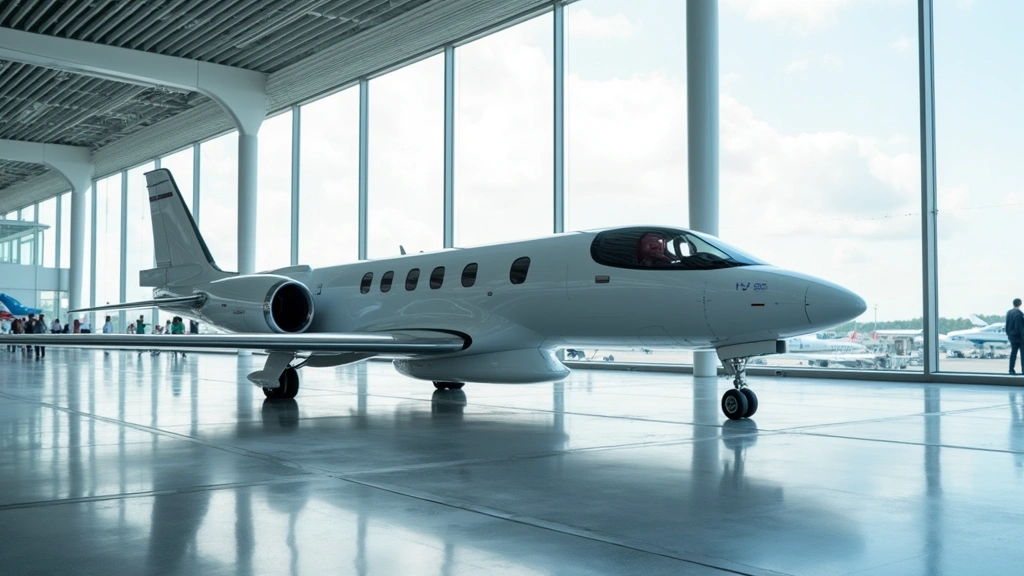
The shift toward electric propulsion represents perhaps the most visible transformation in aviation technology. Major manufacturers including Airbus, Boeing, and emerging companies like eVTOL developers are aggressively pursuing electric aircraft platforms. Regional aircraft with 50-100 passenger capacity could realistically operate on battery power within 3-5 years, according to recent industry analyses. These systems promise dramatically reduced operating costs, virtually silent operation, and zero direct emissions during flight.
Hybrid-electric architectures represent a pragmatic intermediate step, combining traditional jet engines with electric motors to optimize fuel consumption across different flight phases. During takeoff and climb, electric motors provide supplementary thrust, while cruising relies on conventional engines running at optimal efficiency. This hybrid approach extends range capabilities while significantly reducing fuel consumption—some projections suggest 30-50% reductions in fuel burn for regional routes. Technology in renewable energy principles directly inform these aviation innovations, particularly regarding energy storage and conversion efficiency.
Battery technology remains the critical limiting factor. Current lithium-ion systems provide insufficient energy density for long-haul international flights, but solid-state battery research is advancing rapidly. Several manufacturers project that next-generation solid-state batteries could achieve the energy-to-weight ratios necessary for narrow-body aircraft on transcontinental routes by 2035-2040. The timeline for electric aviation adoption depends heavily on battery breakthroughs, regulatory approvals, and supporting infrastructure development at airports worldwide.
AI-Powered Flight Operations and Maintenance
Artificial intelligence applications are fundamentally transforming how airlines manage flight operations and aircraft maintenance. Modern commercial aircraft generate terabytes of operational data during each flight—engine parameters, structural stress measurements, fuel consumption rates, and hundreds of other metrics. Advanced machine learning algorithms analyze this data in real-time, identifying patterns that predict component failures before they occur. Predictive maintenance systems can reduce unscheduled maintenance events by 40-50%, directly improving operational reliability and reducing costs.
AI-powered flight planning systems optimize routes considering real-time weather data, wind patterns, air traffic congestion, and fuel prices. These systems can identify fuel-saving opportunities that human dispatchers might miss, potentially reducing fuel consumption by 3-5% on individual flights. When applied across an airline’s entire fleet, such optimizations translate to millions in annual savings and significant carbon emission reductions.
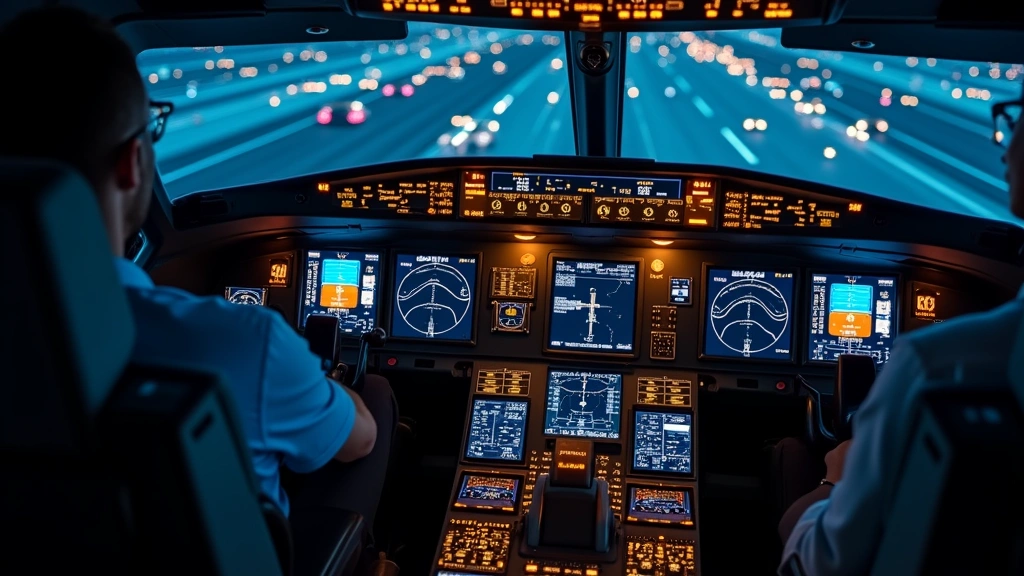
Crew resource management systems enhanced with AI provide real-time decision support to pilots, analyzing complex situations and recommending optimal courses of action. These systems integrate weather data, aircraft system status, air traffic control information, and historical precedent to enhance safety and operational efficiency. The technology doesn’t replace pilot judgment but augments it with computational power and instant access to vast historical databases.
” alt=”Advanced cockpit avionics display showing real-time flight data analytics and AI-powered decision support systems in modern commercial aircraft” style=”width: 100%; height: auto; border-radius: 8px;”>
Advanced Materials and Composite Technologies
Aviation has always driven materials science innovation, and next-generation aircraft will push these boundaries further. Carbon fiber reinforced polymers (CFRP) already constitute 50% of Boeing 787 and Airbus A350 structures, dramatically reducing weight compared to traditional aluminum airframes. Future aircraft will incorporate graphene-enhanced composites, ceramic matrix composites (CMCs), and additively manufactured titanium components that reduce weight by additional 15-25% while maintaining or exceeding structural integrity requirements.
Ceramic matrix composites represent a particularly significant breakthrough. Unlike traditional metal alloys, CMCs maintain structural strength at significantly higher temperatures, enabling more efficient engine designs with higher turbine inlet temperatures. These materials are already appearing in commercial engine applications, with GE Aviation and Rolls-Royce incorporating CMC components in next-generation engines. The efficiency gains translate to 5-8% fuel consumption reductions and extended engine service life.
3D printing (additive manufacturing) is revolutionizing aircraft component production, particularly for complex titanium parts in engines and airframes. This technology reduces material waste, enables lighter designs impossible to achieve through traditional machining, and accelerates manufacturing timelines. Airlines report that additively manufactured parts often outlast traditionally produced equivalents while weighing 30-40% less, directly improving fuel efficiency and reducing emissions.
Autonomous and Semi-Autonomous Flight Systems
Fully autonomous commercial aircraft remain years away, but semi-autonomous systems are already deployed in modern cockpits. Auto-landing systems can safely land aircraft in zero-visibility conditions, and autopilot systems manage the vast majority of flight time on commercial routes. The natural progression involves expanding these autonomous capabilities while maintaining redundant human oversight, gradually reducing pilot workload on routine operations and freeing crews to focus on complex decision-making and emergency management.
Regulatory frameworks are evolving to accommodate increased automation. Certification authorities including the FAA and EASA are developing standards for autonomous flight operations, though these processes move cautiously given aviation’s uncompromising safety standards. Industry consensus suggests that single-pilot operations on commercial aircraft might become feasible by 2035-2040, with the remaining pilot functioning primarily as a system monitor and emergency responder rather than actively flying the aircraft.
Cargo aircraft represent the most likely platform for autonomous flight operations, as they eliminate passenger safety concerns and regulatory complexity. Several companies are developing autonomous cargo aircraft for regional delivery routes, with prototypes already undergoing testing. These systems could revolutionize logistics and supply chain operations, particularly for time-sensitive medical deliveries and disaster relief operations.
Sustainable Aviation Fuels and Green Technology
Sustainable Aviation Fuels (SAF) represent the most immediately deployable technology for reducing aviation’s carbon footprint. SAF can be produced from renewable sources including agricultural waste, municipal solid waste, and captured carbon dioxide, and existing aircraft can operate on SAF with minimal modifications—many can use up to 50% SAF blended with conventional jet fuel without any changes whatsoever. Full SAF compatibility is expected within years as engines are certified for 100% sustainable fuel operation.
Life-cycle analysis shows that SAF can reduce carbon emissions by 50-80% compared to conventional jet fuel, depending on production methods and feedstock sources. The International Air Transport Association (IATA) has committed to net-zero carbon aviation by 2050, with SAF adoption as a cornerstone of this strategy. However, SAF currently costs 2-3 times more than conventional fuel, making economic incentives and regulatory mandates essential for widespread adoption. Renewable energy technology innovations are driving down SAF production costs, with industry projections suggesting cost parity with conventional fuel by 2030-2035.
Beyond SAF, aviation is exploring hydrogen fuel cells for regional aircraft and electric propulsion for short-haul operations. Hydrogen offers exceptional energy density and produces only water vapor as a byproduct, but requires entirely new engine designs and ground infrastructure. Airbus has committed to developing hydrogen-powered commercial aircraft, with prototypes expected by 2035 and potential service entry by 2040. The hydrogen economy’s broader development will significantly influence aviation’s adoption timeline.
Real-Time Data Analytics and Predictive Systems
Modern aircraft are essentially flying data centers, generating continuous streams of information that sophisticated analytics platforms process to enhance safety, efficiency, and maintenance operations. Real-time data analytics enable airlines to monitor aircraft health continuously, identifying developing issues before they become critical. Predictive algorithms can forecast component failures with 85-95% accuracy, allowing maintenance teams to schedule repairs during planned downtime rather than facing costly unscheduled removals.
Weather prediction systems powered by advanced data analytics and machine learning provide increasingly accurate forecasts specifically tailored to aviation operations. These systems analyze satellite data, ground-based radar, aircraft-mounted sensors, and atmospheric models to identify hazardous conditions with remarkable precision. Turbulence forecasting has improved dramatically, with AI systems now predicting in-flight turbulence 4-6 hours in advance with reasonable accuracy, enabling route optimization to minimize passenger discomfort and reduce structural stress on aircraft.
Fuel management systems leverage real-time data to optimize consumption continuously. Modern aircraft can receive updated wind forecasts every 15-30 minutes and adjust cruise altitude and speed to capitalize on favorable winds and minimize headwinds. These micro-optimizations, accumulated across thousands of flights, result in substantial fuel savings and emissions reductions. Airlines using advanced fuel optimization systems report 2-4% annual fuel consumption reductions.
Cybersecurity in Modern Aircraft
As aviation technology becomes increasingly connected and software-dependent, cybersecurity emerges as a critical concern. Modern aircraft contain dozens of networked computer systems managing everything from flight controls to passenger entertainment, and securing these systems against potential threats is paramount. The aviation industry is implementing defense-in-depth strategies, compartmentalizing critical systems, implementing advanced encryption protocols, and conducting continuous security assessments.
The FAA and international aviation authorities have established cybersecurity standards that manufacturers and airlines must follow. These standards require regular security audits, vulnerability assessments, and incident response procedures. Manufacturers are increasingly adopting software development practices from the technology industry, including secure coding standards, automated testing, and continuous security updates. Learning coding practices that emphasize security fundamentals are becoming essential for aviation software engineers.
Emerging threats include potential attacks on ground-based air traffic control systems, passenger connectivity systems, and maintenance networks. Airlines and manufacturers are collaborating with cybersecurity experts and government agencies to identify vulnerabilities and implement protective measures. The aviation industry’s approach to cybersecurity balances innovation with caution, recognizing that security cannot be compromised for convenience.
” alt=”Modern airport control tower at dusk showing advanced radar and communication systems that manage aviation operations with cybersecurity protections” style=”width: 100%; height: auto; border-radius: 8px;”>
FAQ
When will electric aircraft become commercially viable?
Regional aircraft carrying 50-100 passengers on routes under 500 miles could enter service by 2028-2032, depending on battery development progress. Larger narrow-body aircraft for longer routes likely won’t be feasible until 2035-2040 at the earliest. Long-haul wide-body aircraft will remain dependent on conventional engines, hybrids, or hydrogen propulsion for several decades.
How much will sustainable aviation fuel reduce emissions?
Life-cycle carbon emissions can be reduced by 50-80% with sustainable aviation fuels compared to conventional jet fuel, depending on production methods and feedstock sources. The exact reduction varies based on whether SAF is produced from waste materials, agricultural residues, or captured carbon dioxide.
Are autonomous aircraft safe?
Commercial aircraft already operate autonomously for most of their flight time using autopilot systems. Fully autonomous aircraft will only be certified after extensive testing and validation demonstrating safety equivalent to or exceeding current human-piloted operations. The aviation industry’s rigorous safety standards ensure that any new technology must prove itself before deployment.
What role will AI play in future aviation?
Artificial intelligence will enhance flight safety through predictive maintenance, optimize fuel consumption through intelligent route planning, improve crew decision-making through real-time decision support, and enable more efficient air traffic management. AI augments human capabilities rather than replacing pilots, at least for the foreseeable future.
How do aircraft cybersecurity threats compare to other industries?
Aviation faces unique cybersecurity challenges given the safety-critical nature of aircraft systems. However, the industry’s compartmentalized architecture, rigorous certification standards, and collaborative approach to security make aircraft among the most secure networked systems in operation today. TechPulseHunter Blog regularly covers emerging technology security concerns affecting multiple industries.
Will hydrogen aircraft replace battery-electric planes?
Both technologies will likely coexist, serving different roles. Battery-electric aircraft will dominate regional routes under 1,000 miles, while hydrogen aircraft will serve longer regional and potentially medium-haul routes. Conventional fuel or sustainable fuels will continue powering long-haul international flights for decades. The optimal technology depends on route distance, payload requirements, and infrastructure availability.


