Smart Home Tech: Revolution or Hype? Expert Opinion
The smart home industry has exploded over the past decade, transforming how we interact with our living spaces. What was once considered futuristic technology is now becoming mainstream, with millions of households worldwide adopting connected devices to automate everything from lighting and temperature control to security systems and entertainment. Yet amidst the excitement, legitimate questions persist: Is smart home technology a genuine revolution that fundamentally improves our quality of life, or is it primarily marketing hype designed to drive consumer spending? This comprehensive analysis examines the reality behind the buzzwords, exploring both the tangible benefits and the legitimate concerns that define today’s smart home ecosystem.
Smart home adoption has accelerated dramatically, driven by declining device costs, improved interoperability standards, and growing consumer comfort with connected technology. According to recent market research, the global smart home market is projected to reach substantial valuations in coming years, with adoption rates climbing across North America, Europe, and Asia-Pacific regions. However, industry experts remain divided on whether we’re witnessing genuine technological progress or sophisticated marketing that obscures fundamental limitations and practical challenges. Understanding this distinction requires examining real-world performance data, security implications, and actual user satisfaction metrics rather than relying solely on manufacturer claims.
The Current State of Smart Home Technology
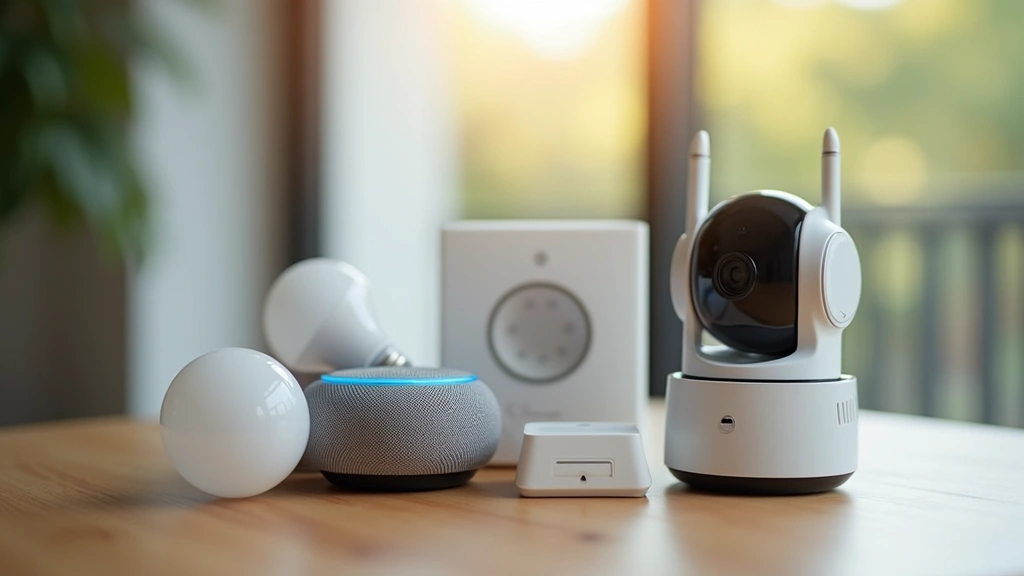
The smart home landscape encompasses diverse device categories, from intelligent speakers and thermostats to security cameras, door locks, lighting systems, and appliances. Major technology companies including Amazon, Google, Apple, and Samsung dominate the market, each promoting proprietary ecosystems while grudgingly supporting competing standards. The proliferation of options creates both opportunity and confusion for consumers attempting to build coherent smart home setups.
Today’s smart home devices operate through cloud connectivity, local networks, or hybrid approaches combining both methods. Voice assistants powered by artificial intelligence applications transforming the future serve as central control hubs, enabling hands-free interaction with connected devices. However, the maturity level of these systems varies dramatically. While some implementations demonstrate genuine utility, others represent premature technology deployments that frustrate users with unreliable performance and limited practical applications.
Independent testing by The Verge and similar tech publications reveals significant performance variations across product categories. Smart speakers generally perform well for basic tasks like playing music and setting timers, but struggle with complex voice commands and contextual understanding. Smart thermostats show consistent value in energy management, while smart lighting offers genuine convenience improvements. Conversely, many smart kitchen appliances introduce connectivity features that add cost without meaningful functional benefits.
Genuine Benefits: Where Smart Homes Deliver
Despite skepticism, smart home technology provides measurable benefits in specific applications. Energy management represents perhaps the strongest use case, with technology in smart homes enhancing modern living through intelligent thermostats that learn user patterns and optimize heating/cooling schedules. Studies demonstrate that smart thermostats can reduce energy consumption by 10-15% annually, translating to tangible cost savings and environmental benefits. This represents genuine value rather than marketing rhetoric.
Security and convenience improvements also justify smart home investments for many users. Smart locks eliminate fumbling with keys and enable remote access monitoring, while security cameras provide real-time awareness and recorded evidence for insurance purposes. These applications deliver practical value that users appreciate daily. Voice control for lighting and entertainment systems, while sometimes overhyped in marketing, genuinely improves convenience for specific use cases, particularly for individuals with mobility limitations.
Home automation for elderly care and accessibility represents an underappreciated benefit category. Smart lighting that responds to voice commands, automated door locks, and fall detection systems can enable seniors to maintain independence while receiving necessary support. This application demonstrates how smart home technology addresses genuine human needs beyond consumer gadgetry.
Remote monitoring capabilities provide peace of mind for homeowners traveling or managing properties remotely. The ability to check security cameras, verify door lock status, and adjust thermostats from anywhere offers practical value that wasn’t previously accessible. This functionality, while not revolutionary, genuinely improves home management capabilities for many users.
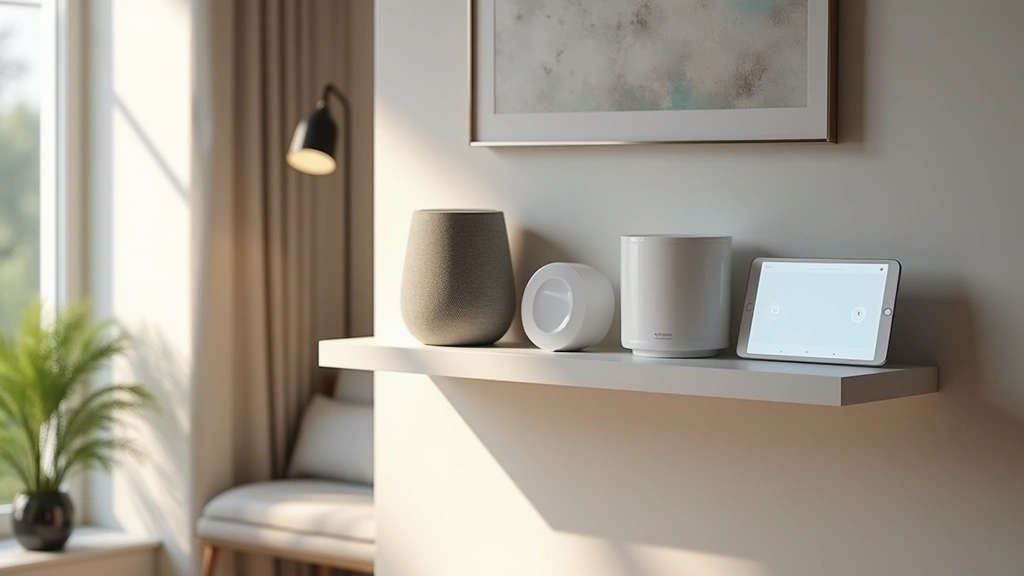
” alt=”Modern smart home hub with multiple connected devices displayed on sleek white shelving unit, featuring smart speaker, connected thermostat, and wireless security device in contemporary living room setting”>
The Hype Reality Gap: Overpromised Features
Significant discrepancies exist between marketing claims and actual device performance. Manufacturers frequently highlight artificial intelligence capabilities that, upon real-world testing, prove disappointing. Voice recognition accuracy, while improving, still fails regularly on casual speech patterns, accents, and background noise. Marketing materials showcase seamless voice interactions, yet actual users encounter frequent misunderstandings requiring manual correction.
Smart home integration presents another area where hype exceeds reality. Manufacturers promote “seamless ecosystem” integration, yet users frequently discover compatibility issues, inconsistent performance across device brands, and cumbersome workarounds requiring manual configuration. The promise of unified control through a single app rarely materializes in practice, forcing users to manage multiple applications and learn different interface paradigms.
Automation capabilities receive significant overselling. Marketing emphasizes “intelligent” systems that anticipate user needs, yet most implementations rely on simple rule-based triggers rather than genuine artificial intelligence. A thermostat that learns your schedule isn’t truly intelligent in the way marketing suggests; it’s executing predetermined rules based on historical data. This distinction matters because it sets incorrect expectations for device capabilities.
Predictive functionality represents another hype-reality gap. Manufacturers claim systems that predict maintenance needs, optimize energy usage based on weather forecasts, and anticipate user preferences. While these features exist in some advanced systems, their actual performance often disappoints. Prediction algorithms frequently generate false positives, provide recommendations users ignore, or fail to account for real-world variables affecting accuracy.
Security and Privacy Concerns
Smart home security vulnerabilities represent legitimate concerns that extend beyond marketing hype. Connected devices create network entry points for hackers, and many consumers underestimate the security implications of deploying multiple internet-connected devices throughout their homes. Manufacturers have faced repeated security breaches exposing user data, and many devices ship with inadequate default security configurations.
Privacy implications deserve serious consideration. Smart speakers and cameras continuously monitor home environments, raising questions about data collection, retention, and usage. While manufacturers claim data encryption and privacy protection, actual practices sometimes diverge from marketing claims. The concentration of personal information in cloud servers creates attractive targets for malicious actors, and users often lack visibility into how their data is actually utilized.
Firmware update practices vary dramatically across manufacturers. Some companies provide regular security patches and feature updates, while others abandon products shortly after release, leaving users vulnerable to discovered exploits. This fragmented approach creates ongoing security challenges that consumers struggle to manage effectively.
The interconnected nature of smart home systems amplifies security risks. Compromising a single device can potentially provide access to network infrastructure and other connected devices. This cascade vulnerability problem remains inadequately addressed in many consumer-grade smart home implementations.
Integration Challenges and Ecosystem Wars
The smart home market suffers from fragmentation resulting from competing proprietary ecosystems. Amazon’s Alexa, Google Assistant, Apple’s Siri, and Samsung’s SmartThings represent different platforms with limited cross-compatibility. This ecosystem fragmentation forces consumers to choose sides, and device compatibility often depends on ecosystem alignment rather than technical merit.
Interoperability standards including Matter and Thread promise to address fragmentation, but implementation remains inconsistent. Manufacturers sometimes support standards incompletely or inconsistently, undermining the promised benefits. This creates confusion for consumers attempting to build coherent systems without deep technical knowledge.
The complexity of smart home setup and maintenance exceeds what typical consumers can reasonably manage. Network configuration, device pairing, account setup, and ongoing troubleshooting require technical competence that many users lack. This accessibility barrier limits market adoption and contributes to frustration among less technically inclined consumers.
When examining how to upgrade laptop memory, the process parallels smart home complexity—both require technical knowledge most consumers prefer to avoid. Similarly, the effort required to establish smart home systems creates friction that limits adoption among mainstream users.
Cost-Benefit Analysis for Homeowners
Smart home investment costs vary dramatically based on implementation scope. Basic smart speaker adoption requires minimal investment, while comprehensive home automation systems demand significant capital expenditure across multiple device categories. The financial justification for these investments depends heavily on individual circumstances and usage patterns.
Energy savings from smart thermostats typically justify their cost within 1-2 years, making them strong financial investments. Security system enhancements similarly provide measurable value through insurance discounts and genuine security improvements. Conversely, many smart devices deliver minimal financial benefits, relying instead on convenience justification.
Convenience benefits, while valuable, defy precise quantification. Some users genuinely appreciate voice-controlled lighting and entertainment systems, while others find the marginal improvement insufficient to justify costs and complexity. This subjective value proposition varies significantly across individual consumers and household types.
The total cost of smart home ownership extends beyond device purchase prices. Subscription services for cloud connectivity, premium features, and enhanced functionality add recurring costs that many consumers underestimate during initial purchase decisions. These ongoing expenses accumulate significantly over device lifespans, affecting overall financial viability.
Longevity and product support significantly impact cost-benefit calculations. Devices discontinued by manufacturers may become incompatible with ecosystem updates, forcing replacement sooner than expected. This planned obsolescence dynamic inflates actual ownership costs relative to initial purchase prices.
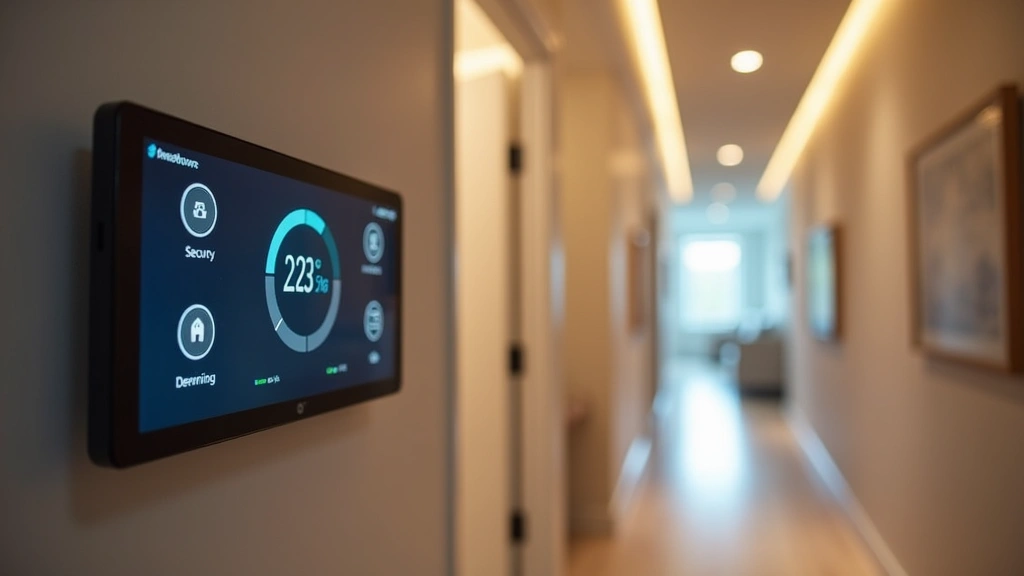
” alt=”Smart home control panel mounted on wall displaying temperature, security status, and device connectivity information with minimalist design and soft ambient lighting in hallway”>
Future Outlook and Emerging Technologies
The smart home industry trajectory suggests continued growth despite current limitations. Advancing artificial intelligence capabilities promise genuine improvements in system intelligence and predictive functionality. Machine learning algorithms that improve through usage patterns may eventually deliver the intelligent automation currently overpromised in marketing materials.
Edge computing represents a significant emerging trend that addresses privacy and latency concerns. Processing data locally on devices rather than transmitting to cloud servers reduces privacy exposure and improves response times. As edge computing becomes more prevalent, it may address legitimate concerns currently limiting mainstream adoption.
Improved interoperability standards and greater manufacturer cooperation could dramatically simplify smart home deployment and management. If ecosystem fragmentation diminishes, consumers gain freedom to choose devices based on merit rather than ecosystem compatibility requirements. This competitive environment would benefit consumers through better product quality and reduced lock-in effects.
Integration with broader smart city infrastructure and utilities management promises significant benefits in energy efficiency and resource optimization. Smart homes connected to intelligent grid systems could optimize energy usage at scale, reducing overall consumption and environmental impact. This macro-level benefit extends beyond individual household advantages.
The convergence of smart home technology with cloud computing benefits for businesses suggests that residential applications may benefit from enterprise-grade reliability and security improvements. As cloud infrastructure matures and security practices improve, smart home systems may achieve greater stability and trustworthiness.
Emerging applications in health monitoring, predictive maintenance, and personalized environmental optimization represent genuine innovation frontiers. Devices that monitor air quality, detect potential health issues, or predict appliance failures before breakdown could deliver substantial value. However, these capabilities remain largely in development stages rather than mature commercial implementations.
FAQ
Are smart homes worth the investment?
Smart home value depends on specific circumstances. Smart thermostats and security cameras typically deliver measurable financial and practical benefits. However, many smart devices provide primarily convenience improvements that may not justify costs for all users. Evaluate investments based on your specific needs rather than general market enthusiasm.
Which smart home ecosystem should I choose?
Amazon’s Alexa, Google Assistant, and Apple HomeKit each offer distinct advantages. Amazon provides the broadest device compatibility, Google excels at natural language understanding, while Apple prioritizes privacy. Evaluate based on your device preferences and privacy priorities rather than ecosystem marketing claims.
How secure are smart home devices?
Security varies dramatically across manufacturers. Choose brands with strong security track records, enable two-factor authentication, use strong passwords, and maintain updated firmware. Be aware that no system is completely secure, and consider privacy implications before deploying cameras and microphones throughout your home.
Can I start small with smart home technology?
Absolutely. Begin with a smart speaker and single device category like lighting or thermostat. This approach lets you evaluate whether smart home technology genuinely improves your daily life before significant investment. Many users discover that modest implementations provide sufficient value without elaborate systems.
What smart home devices provide genuine value?
Smart thermostats consistently deliver energy savings and convenience. Security cameras and smart locks improve home security and awareness. Voice-controlled lighting offers genuine convenience for some users. Conversely, many smart appliances provide limited practical benefits relative to costs.
Will smart home technology become simpler?
Ongoing improvements in interoperability standards and user interface design should eventually simplify smart home deployment and management. However, complexity will likely remain higher than traditional home automation for the foreseeable future, requiring at least basic technical competence.
Smart home technology represents a genuine technological advancement with real benefits in specific applications, yet significant hype obscures actual capabilities and limitations. Energy management, security, and convenience improvements justify investments for many users, particularly those with technical comfort and specific use cases. However, the current ecosystem fragmentation, security concerns, and overpromised artificial intelligence capabilities warrant cautious, targeted adoption rather than enthusiastic embrace of all smart home technologies.
The revolution-versus-hype question ultimately resolves differently for different users. For individuals prioritizing energy efficiency and willing to tolerate technical complexity, smart homes deliver genuine value. For others seeking simple solutions to basic problems, traditional approaches may prove more satisfactory. Success requires honest evaluation of personal needs, realistic expectations about device capabilities, and careful selection of investments addressing genuine household requirements rather than marketing-driven desires.
As the industry matures and emerging technologies mature, smart home systems will likely become more reliable, secure, and genuinely intelligent. However, current implementations represent transitional technology with both genuine benefits and legitimate limitations. Informed consumers should approach smart home adoption selectively, focusing on applications with proven value while remaining skeptical of marketing claims exceeding demonstrated capabilities. Visit Tech Pulse Hunter Blog for additional technology insights and detailed reviews.
For additional context on how technology transforms modern living, explore resources like CNET’s technology reviews and The Verge’s smart home coverage, which provide independent testing and detailed analysis of current devices and emerging trends.


