Virginia Tech vs BC: Game Day Tech Preview and Live Stream Guide
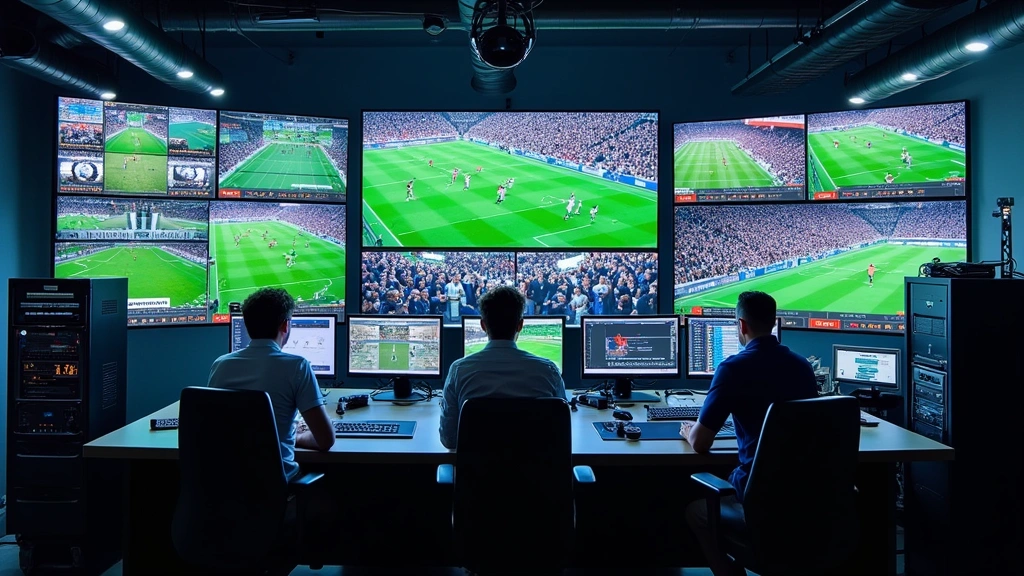
College football season brings more than just thrilling on-field matchups—it’s a showcase of cutting-edge broadcast technology, stadium innovations, and digital experiences that transform how fans engage with the game. When Virginia Tech faces Boston College, you’re witnessing not just athletic competition but a complex ecosystem of tech infrastructure working seamlessly behind the scenes. From 4K streaming capabilities to real-time analytics displayed on massive LED boards, modern football broadcasts represent some of the most sophisticated technical productions in sports entertainment.
The BC vs Virginia Tech football rivalry has evolved dramatically over the past decade, and so has the technology supporting it. Whether you’re attending in person at Lane Stadium or watching from home, understanding the tech landscape enhances your game day experience. This comprehensive preview examines everything from streaming options and broadcast specifications to the advanced analytics systems coaches use to gain competitive advantages.

Streaming and Broadcast Options
The Virginia Tech vs BC football game will be available through multiple streaming platforms, each offering different technical specifications and features. The Verge’s coverage of sports streaming technology highlights how platforms compete on delivery quality and user experience. ACC Network, the primary broadcaster for this matchup, delivers the game through their dedicated streaming service and cable provider apps.
ESPN+ represents the primary digital distribution channel, offering adaptive bitrate streaming that automatically adjusts to your internet connection quality. The platform supports resolutions up to 1080p at 60 frames per second on compatible devices, with select games reaching 4K resolution. Stream stability depends on your internet connection—a minimum 5 Mbps download speed ensures HD quality without buffering, while 15 Mbps guarantees smooth 4K streaming on supported devices.
Cable provider apps including Comcast Xfinity, Charter Spectrum, and AT&T U-verse offer game access through TV Everywhere authentication. These apps often provide superior bitrate allocation compared to public streaming services, resulting in cleaner picture quality and fewer compression artifacts. The authentication process typically takes 30 seconds, and once verified, your device maintains login credentials for seamless future access.
For cord-cutters, CNET’s streaming service reviews recommend considering subscription bundles. YouTube TV, Hulu + Live TV, and Sling TV all carry ACC Network, with YouTube TV offering the most reliable performance during peak sports viewing hours due to their robust server infrastructure.
4K and Ultra HD Specifications
Understanding video specifications helps you optimize your viewing experience for the BC vs Virginia Tech football broadcast. Standard HD broadcasts operate at 1920×1080 resolution with 60 frames per second, providing excellent detail for fast-moving action like football plays. This remains the industry standard for live sports, balancing quality with bandwidth efficiency.
4K broadcasts, available on select premium streams, deliver 3840×2160 resolution—four times the pixel count of HD. The technical advantage becomes apparent during replays and close-up shots, where individual player movements, ball placement, and sideline reactions display with remarkable clarity. However, 4K streaming demands significantly more bandwidth: typically 25-50 Mbps depending on compression codec, compared to 5-10 Mbps for HD.
The H.264 codec, industry standard for sports broadcasting, provides efficient compression without perceptible quality loss at HD resolutions. Newer H.265 (HEVC) codec offers 50% better compression efficiency, enabling 4K delivery over moderate bandwidth connections. However, device compatibility varies—newer smart TVs, streaming boxes, and smartphones support H.265, while older devices may require H.264 streams.
Frame rate technology deserves attention for football coverage. 60fps (frames per second) captures rapid player movements and ball trajectories smoothly, essential for analyzing plays and enjoying replays. Some premium broadcasts experiment with 120fps for select slow-motion sequences, providing unprecedented motion clarity during critical game moments.
Mobile Apps and Live Updates
The official ACC Network app and ESPN app transform your smartphone or tablet into a portable command center for game day. Real-time play-by-play updates, live statistics, and instant replay access arrive within seconds of on-field action. Push notifications alert you to scoring plays, turnovers, and critical moments if you’re multitasking during the game.
The ESPN app integration with Artificial Intelligence Applications Transforming the Future technologies enables personalized content recommendations and AI-powered highlight generation. The app automatically creates custom highlight reels from the Virginia Tech vs BC football game, tailored to your preferred teams and players.
Live statistics display player performance metrics, team possession time, and field position data in real-time. Advanced stats including expected points added (EPA), success rate metrics, and pressure-to-sack ratios appear within seconds of calculation. These analytics, once exclusive to coaching staff, now reach fans through sophisticated mobile interfaces.
The How to Recover Deleted Text Messages guide demonstrates mobile device reliability—similarly important for ensuring you don’t miss critical game updates. Backup your game day notifications by enabling app notifications and setting reminders for kickoff time.
Stadium Technology Infrastructure
Lane Stadium, home of Virginia Tech football, features extensive technological infrastructure supporting the broadcast and in-person experience. The main video board system spans multiple massive LED displays, each containing millions of pixels updating 120 times per second. These boards display replays in stunning detail, allowing stadium attendees to review controversial plays alongside television viewers.
The stadium’s wireless network utilizes 5G technology overlaid with robust WiFi 6 (802.11ax) coverage throughout seating areas. This dual-network approach ensures fans maintain connectivity for streaming stats apps, social media sharing, and mobile ticketing verification. Network capacity exceeds 100 gigabits per second, accommodating tens of thousands of simultaneous connections.
Audio systems employ distributed speaker arrays rather than centralized speakers, ensuring consistent sound coverage throughout the stadium. Advanced digital signal processing optimizes frequencies for speech clarity during announcements while maintaining dynamic range for crowd noise and music. The system includes directional microphones capturing on-field sounds—quarterback calls, collision impacts, and coach communications—for broadcast audiences.
Camera positioning represents another crucial infrastructure element. Professional broadcasts utilize 12-15 high-speed cameras positioned at various angles: primary sideline cameras at 4K resolution, end zone cameras capturing defensive plays, and ultra-slow-motion cameras (up to 120fps) mounted on crane systems for dramatic replay sequences.
Advanced Game Analytics Systems
Modern football broadcasts integrate sophisticated analytics systems that transform raw data into visual insights. The How to Upgrade Laptop Memory knowledge applies similarly to broadcast production—powerful computers process enormous datasets in real-time, requiring significant computational resources.
Tracking technology using computer vision analyzes every player’s position, velocity, and acceleration throughout each play. This data feeds into graphics displayed during broadcasts, showing routes run by receivers, coverage assignments by defenders, and gaps exploited by running backs. The technology requires processing approximately 10 gigabytes of data per game.
First-and-10 predictor models, powered by machine learning algorithms trained on thousands of historical plays, display win probability percentages updated after each play. These models consider down and distance, field position, game time, score differential, and team strength metrics. The algorithms achieve approximately 85% accuracy in predicting game outcomes based on real-time data.
Player performance metrics including catch probability (the likelihood a receiver should have caught a particular pass), completion probability over expected, and pressure-to-sack conversion rates provide deeper context than traditional statistics. These advanced metrics, developed by companies like official NFL statistics providers, reveal which teams execute at highest efficiency levels.
Optimal Home Viewing Setup
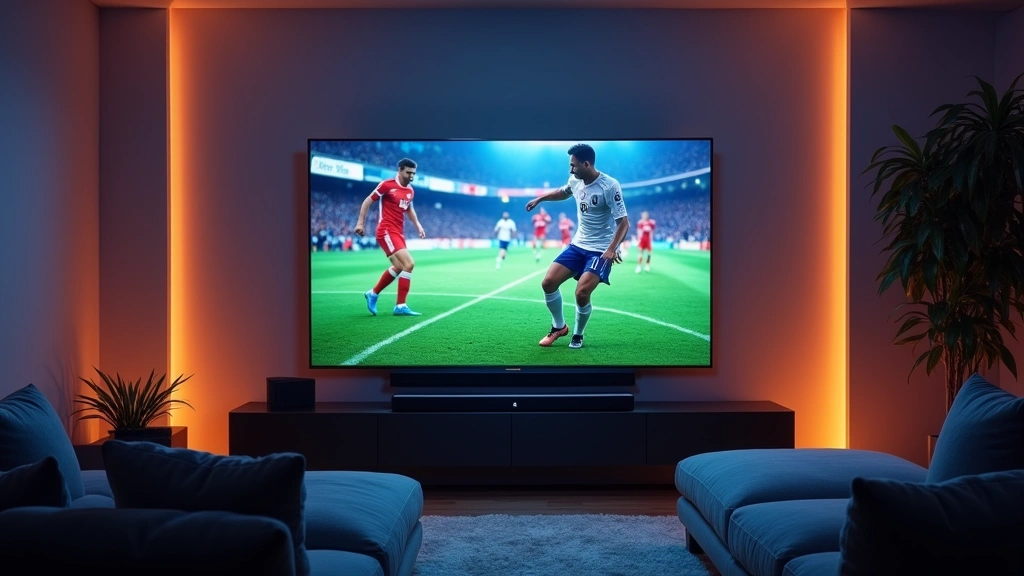
Creating the ideal home viewing environment requires considering multiple technological factors. Your television’s refresh rate, resolution capability, and input lag all impact the viewing experience. Modern TVs supporting 120Hz refresh rates display smooth motion during fast-action sequences, while 4K capability ensures you capture all available detail from premium broadcasts.
The HDMI 2.1 standard, implemented in newer TVs and streaming devices, enables 4K resolution at 120fps with enhanced color depth. Older HDMI 2.0 connections limit 4K output to 60fps, still excellent for sports but missing the smoothness of 120fps capable displays. Check your cable specifications—not all HDMI cables support 2.1 features; certified cables display labeling confirming compatibility.
Streaming device selection significantly impacts picture quality. CNET’s device reviews consistently highlight that premium streaming devices like Apple TV 4K and Nvidia Shield offer superior video processing compared to built-in smart TV apps. These dedicated devices include hardware video decoders optimized for efficient H.265 decoding, reducing processing load and improving battery life on portable devices.
Internet connection optimization deserves attention before game day. Run speed tests from Speedtest.net to verify your download speeds meet streaming requirements. If speeds fall below 15 Mbps, contact your ISP or relocate your router for stronger signal. WiFi positioning matters tremendously—place routers centrally and elevate them above furniture for optimal coverage.
Audio Technology and Surround Sound
Superior audio transforms your game day experience as profoundly as video quality. Dolby Atmos, available on premium broadcasts, creates three-dimensional soundscapes with height channels directing sounds above listening positions. The crowd roar surrounds you completely, while the football’s impact and quarterback calls position precisely in three-dimensional space.
5.1 surround sound, the standard for sports broadcasts, distributes audio across five speakers: center channel for dialogue and play-by-play commentary, left and right channels for ambient crowd noise, and rear surrounds for immersive effects. The subwoofer reproduces low-frequency impacts and crowd rumbles, adding visceral punch to the experience.
Compression algorithms optimize audio delivery over streaming connections. While video receives most attention, audio compression significantly impacts overall quality perception. Bitrates of 128 kbps (stereo) or 192-256 kbps (surround sound) represent streaming standards, though cable broadcasts often deliver 384+ kbps for superior fidelity.
Soundbar selection requires considering your room size and seating arrangement. Premium soundbars with dedicated height channels simulate Dolby Atmos effects, while standard soundbars provide enhanced stereo separation over TV speakers. For optimal experience, position soundbars at ear level when seated, typically 24-36 inches above the floor.
The Technology in Smart Homes: Enhancing Modern Living article discusses audio integration within home entertainment ecosystems, relevant for those building comprehensive game day setups with voice control and multi-room audio capabilities.
Cloud-Based Broadcasting Infrastructure
Behind every smooth broadcast exists sophisticated cloud infrastructure processing terabytes of data. Cloud Computing Benefits for Businesses principles apply equally to sports broadcasting, where redundancy, scalability, and reliability prove essential. Multiple data centers across different geographic regions ensure broadcast continuity—if one facility experiences outages, others immediately assume the load.
Content delivery networks (CDNs) distribute the broadcast stream from servers nearest viewers, reducing latency and improving stability. These networks cache broadcast data at edge locations, serving your stream from servers potentially just miles away rather than cross-country. This architecture reduces latency to approximately 3-5 seconds for live streams, acceptable for real-time sports viewing.
Encoding happens in real-time at broadcast origination points, where powerful GPU-accelerated servers convert camera feeds into multiple quality tiers simultaneously. A single broadcast generates HD and 4K streams at 60fps and 120fps, each requiring separate encoding. This parallel processing demands substantial computational power—a single game broadcast might engage 50+ encoding servers.
FAQ
What streaming service carries Virginia Tech vs BC football?
ACC Network and ESPN+ carry the primary broadcast. Cable provider apps (Comcast Xfinity, Charter Spectrum, AT&T U-verse) offer streaming through TV Everywhere authentication. YouTube TV, Hulu + Live TV, and Sling TV include ACC Network in their channel packages.
What internet speed do I need for 4K streaming?
4K streaming requires minimum 25 Mbps download speed, though 35-50 Mbps ensures consistent quality without buffering. Run speed tests at speedtest.net before game time. If speeds fall short, move closer to your router or contact your ISP about plan upgrades.
Which devices support 4K sports broadcasts?
Apple TV 4K, Nvidia Shield, newer smart TVs (LG, Samsung, Sony models from 2020+), and PlayStation 5 support 4K streaming. Older Roku devices and Fire TV Sticks may only support HD resolution due to hardware limitations.
Does ESPN+ require cable authentication?
ESPN+ standalone subscription doesn’t require cable authentication, but the app includes a TV Everywhere feature for cable subscribers offering additional content. The service costs approximately $11.99 monthly or $119.99 annually.
What’s the typical streaming latency for live games?
Streaming broadcasts typically display 3-5 seconds of latency behind live action, compared to 30+ seconds for over-the-air broadcasts. This slight delay results from encoding, compression, and network transmission processes inherent to digital distribution.
Can I watch replays after the game ends?
Yes, full game replays appear on ESPN+ and ACC Network app typically within 2-4 hours of game conclusion. Individual highlight packages upload even faster, sometimes within 15 minutes of key plays.
What should I do if my stream keeps buffering?
Restart your streaming device, move closer to your WiFi router, or switch to wired ethernet connection. Reduce video quality settings in the app to lower bitrate requirements. Contact your ISP if speeds consistently fall below plan specifications.


