
Bellwright Tech Tree: An In-Depth Guide to Mastering Game Progression
Bellwright stands as one of the most intricate medieval city-building simulation games, demanding strategic resource management and thoughtful technological advancement. The Bellwright tech tree serves as the backbone of your civilization’s progression, unlocking new buildings, crafting capabilities, and economic opportunities. Understanding how to navigate this complex system efficiently separates successful settlements from struggling ones, making this comprehensive guide essential for both newcomers and seasoned players.
Whether you’re planning your first village expansion or optimizing your fifth playthrough, the tech tree’s hierarchical structure requires careful planning and prioritization. This guide breaks down every technology tier, explains dependency chains, and reveals optimal progression paths that professional players use to achieve rapid development. By mastering the Bellwright tech tree mechanics, you’ll transform your approach to city management and unlock the full potential of your gaming experience.

Understanding the Tech Tree Fundamentals
The Bellwright tech tree operates on a prerequisite-based system where technologies unlock sequentially, preventing players from bypassing critical foundational knowledge. Each technology requires specific resources—primarily knowledge points accumulated through your population’s work in administrative buildings. Unlike linear progression games, Bellwright allows multiple advancement paths, but understanding the core mechanics prevents wasted research time.
Technologies in Bellwright fall into five distinct categories: Production, Building, Military, Trade, and Culture. Your settlement’s success depends on balancing advancement across these categories rather than pursuing single-focus strategies. The tech tree’s visual interface displays all available technologies, locked requirements, and current research status, allowing strategic planning before committing resources.
Knowledge accumulation rates directly impact your progression speed, making population happiness and administrative building efficiency critical factors. A settlement with 50 unhappy citizens generates knowledge far slower than one with 100 content residents. This interconnection between game systems and resource management exemplifies why understanding tech tree dependencies matters before rushing into research.
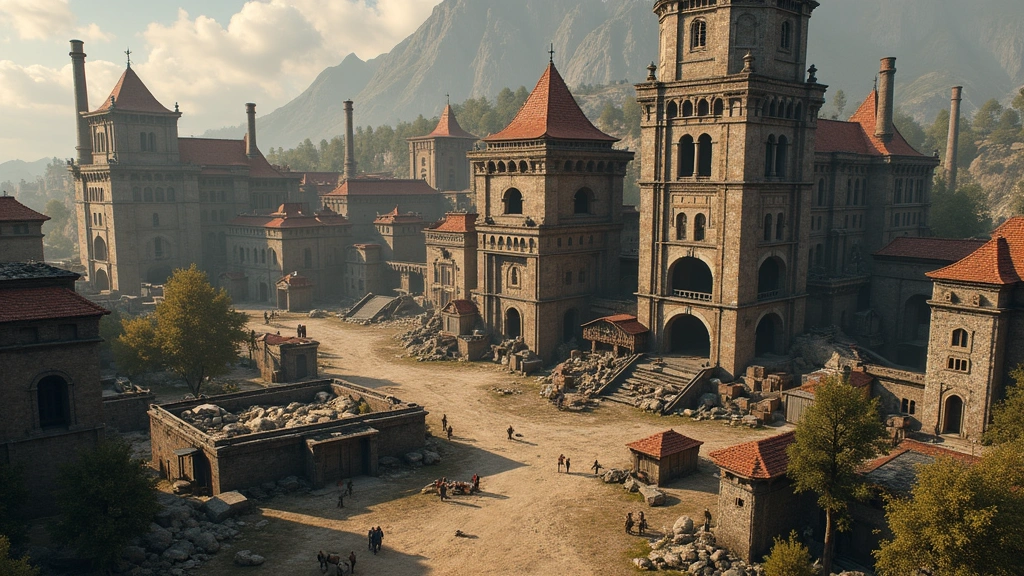
Tier 1: Essential Early Game Technologies
Your initial tech tree decisions establish the foundation for everything that follows. The first tier focuses on survival essentials and basic infrastructure, with technologies like Stone Masonry, Woodworking, and Granary Storage taking priority. These unlock fundamental building types necessary for sustainable food production and resource gathering.
Agriculture represents your most critical first research, enabling crop farming and preventing starvation scenarios. Simultaneously, pursuing Logging ensures steady timber supplies for construction and heating. Many experienced players research both concurrently by splitting knowledge allocation, though this requires maintaining adequate population and administrator assignments.
The early game phase typically spans 30-45 minutes of gameplay, during which you’ll research 4-6 technologies depending on knowledge generation rates. Basic Storage and Resource Management prevent inventory bottlenecks that cripple expansion efforts. Neglecting storage technologies forces inefficient resource dropping and workforce idle time, substantially delaying progression toward Tier 2 breakthroughs.
Military technologies like Basic Weapons can wait until population reaches 40+ residents, as early bandit threats remain manageable with militia training alone. Prioritizing production over military in early phases accelerates wealth accumulation, enabling faster military development later when threats intensify.
Tier 2: Building Your Economic Foundation
Tier 2 technologies unlock the economic systems that transform struggling settlements into thriving cities. Market Trading, Merchant Routes, and Currency Systems introduce commerce mechanics that multiply your resource acquisition capacity. These technologies require substantial knowledge investment—typically 300-500 points each—but generate exponential returns through trade income.
The foundational systems established in Tier 2 create specialized production chains. Metalworking enables blacksmith buildings, producing tools and weapons at higher efficiency than basic crafting. Textiles unlocks cloth production, essential for clothing manufacturing and trade goods. These parallel production systems require careful workforce distribution to maximize output.
Tier 2 represents the inflection point where player skill significantly impacts progression speed. Strategic players establish multiple production facilities simultaneously, creating supply redundancy and preventing bottlenecks. Inefficient players often research technologies without building corresponding facilities, wasting knowledge investment on unavailable production capacity.
Population growth accelerates during Tier 2 as improved housing and food security attract migrants. Managing this growth through housing expansion, food supply increases, and administrative building development becomes critical. A thriving Tier 2 settlement maintains 60-100 residents with 70%+ happiness, generating 20-30 knowledge points per minute.
Tier 3: Advanced Production Systems
Advanced production technologies define mid-game gameplay, introducing complexity through specialized buildings and multi-step crafting chains. Advanced Metalworking, Armor Crafting, and Precision Tools enable production of high-value goods commanding premium trade prices. These technologies require 500-800 knowledge points, representing significant research commitments.
The Bellwright tech tree demonstrates increasing specialization as you progress, allowing players to develop distinct settlement identities. A settlement focused on military production develops differently than one pursuing merchant dominance or cultural advancement. This specialization creates replayability, as different technology paths produce vastly different gameplay experiences.
Tier 3 introduces military technologies like Advanced Weaponry and Fortification, enabling defensive structures and elite soldier training. Settlements facing aggressive bandit activity or rival factions prioritize these technologies, while peaceful players might delay military advancement entirely. The flexibility within Tier 3 allows playstyle customization without restricting progression.
Population typically reaches 120-180 residents during Tier 3 development, requiring sophisticated resource distribution systems. Logistics Networks and Transportation technologies prevent resource movement bottlenecks that plague larger settlements. Implementing efficient supply chains between production facilities, storage buildings, and distribution centers becomes essential for maintaining growth momentum.
Tier 4: Late Game Dominance
Tier 4 technologies represent the pinnacle of Bellwright advancement, unlocking end-game content and specialized buildings. Industrial Production, Advanced Agriculture, and Cultural Centers enable settlement sizes exceeding 250 residents with sophisticated economies supporting specialized populations. These technologies require 1000+ knowledge points and multiple prerequisite technologies.
Late-game progression focuses on optimization rather than expansion, maximizing efficiency across all production chains. Quality Control technologies improve product quality, increasing trade value by 15-30% without additional resource consumption. Administrative Excellence boosts knowledge generation rates, accelerating final technology research.
Military dominance in Tier 4 comes through Elite Training, Siege Warfare, and Advanced Tactics technologies. These enable conquest mechanics and large-scale military operations against rival settlements or monster threats. Players pursuing military victory paths typically achieve Tier 4 military technologies before economic ones, though this requires early military investment.
Cultural technologies in Tier 4 unlock Festival Grounds, Educational Institutions, and Cultural Monuments, enabling peaceful victory conditions. These alternative progression paths appeal to players preferring non-military gameplay, demonstrating Bellwright’s commitment to multiple victory conditions.
Optimization Strategies and Progression Paths
Experienced Bellwright players follow proven optimization strategies that reduce research time by 20-40% compared to casual approaches. The knowledge acceleration strategy prioritizes administrative buildings and happiness improvements before pursuing expensive technologies. Maintaining 90%+ population happiness generates knowledge at maximum rates, justifying early investment in entertainment and housing quality.
The parallel production strategy establishes multiple production chains simultaneously, creating resource diversity that prevents supply crises. Rather than perfecting single production chains, players build redundancy across essential resources. This approach requires careful workforce management but prevents catastrophic shortages when individual production facilities experience disruptions.
Specialists pursuing technological advancement recommend the specialization path, focusing research on specific economy sectors. A settlement might prioritize metalworking and military production, becoming a weapons supplier through merchant routes. Another might develop textile and clothing production, dominating cloth markets. This specialization creates distinct settlement identities and unique trading opportunities.
The rush strategy prioritizes specific high-impact technologies over balanced advancement. Players pursuing this path research Market Trading immediately upon Tier 2 access, establishing merchant routes before competitors. Early trade income finances rapid advancement toward mid-game technologies, often resulting in 15-20% faster progression through Tier 3.
Trade-focused settlements should research merchant route technologies early, establishing trade networks before competitors saturate markets. First-mover advantages in Bellwright include premium trade prices and favorable merchant agreements, creating snowballing economic advantages.
Common Mistakes and How to Avoid Them
Inexperienced players frequently research technologies without establishing corresponding production facilities, wasting knowledge investment on unavailable capabilities. The preparation principle requires building production buildings before researching relevant technologies, ensuring immediate utilization of unlocked capabilities. Planning tech tree progression 3-4 technologies ahead prevents this common mistake.
Another prevalent error involves neglecting happiness and knowledge generation in pursuit of rapid military development. Players focusing exclusively on warrior training and weapon production often find themselves unable to afford subsequent technologies due to insufficient knowledge accumulation. Balanced development prioritizing population welfare alongside military advancement prevents this trap.
Storage management mistakes create inventory bottlenecks that halt production and workforce efficiency. Researching Advanced Storage before establishing multiple production facilities prevents resource pileups that force workers into idle states. Calculating storage capacity requirements before expanding production operations prevents these efficiency losses.
Many players fail to adapt their tech tree progression based on encountered challenges. Settlements facing bandit threats should prioritize military technologies, while those experiencing food shortages should research agricultural improvements. Flexibility and responsiveness to settlement conditions produce superior outcomes compared to rigid predetermined tech paths.
Over-specialization in early game restricts future flexibility and limits adaptation to changing circumstances. While specialization provides advantages, maintaining balanced technology development through Tier 2 ensures flexibility for later strategic pivots. Players discovering mid-game that their chosen specialization doesn’t suit their playstyle often find themselves unable to redirect development efficiently.
Ignoring culture and happiness technologies until late game creates population stagnation despite adequate resources. Modern game design recognizes that happiness directly impacts productivity and knowledge generation. Settlements investing in entertainment and cultural amenities throughout progression typically outpace those ignoring these systems until Tier 3.
FAQ
What’s the fastest tech tree progression route for beginners?
Beginners should prioritize Agriculture, Logging, Basic Storage, and Market Trading in order, establishing stable food production and trade income before pursuing specialized technologies. This balanced approach creates sustainable growth supporting faster progression than specialized early-game strategies.
Should I focus military or economic technologies first?
Economic technologies generally provide faster progression through Tier 2-3, as trade income finances rapid advancement. Delay military research until population reaches 40+ residents, then balance military and economic development. Settlements facing active threats should prioritize military earlier, adapting to circumstances rather than following rigid strategies.
How does population happiness affect tech tree progression?
Population happiness directly determines knowledge generation rates, with 90%+ happiness producing 50% more knowledge than 50% happiness. Maintaining high happiness through housing quality, food variety, and entertainment represents the single most important factor in tech tree progression speed. Neglecting happiness creates bottlenecks that prevent advancement regardless of other optimizations.
Can I respec technologies or change my tech tree path?
Bellwright doesn’t offer technology respecification, making careful planning essential. However, the game’s multiple victory conditions allow players to pursue different technology paths without complete restarts. If your current specialization proves ineffective, you can gradually shift research toward alternative paths, though this creates temporary inefficiency.
What technologies unlock the most valuable trade goods?
Advanced Metalworking, Armor Crafting, and Precision Tools technologies unlock high-value trade goods commanding 3-5x base resource prices. Textiles and Clothing Production also generate valuable trade items with lower production complexity. Prioritizing high-value trade goods enables faster knowledge acquisition and population growth.
How do I unlock Tier 4 technologies efficiently?
Tier 4 unlocks after researching 70%+ of Tier 3 technologies, requiring knowledge investment exceeding 8000 points. Maximize knowledge generation through population happiness, administrative building efficiency, and knowledge acceleration technologies. Establishing multiple high-value trade routes provides the income necessary for final Tier 3 research before Tier 4 becomes available.


