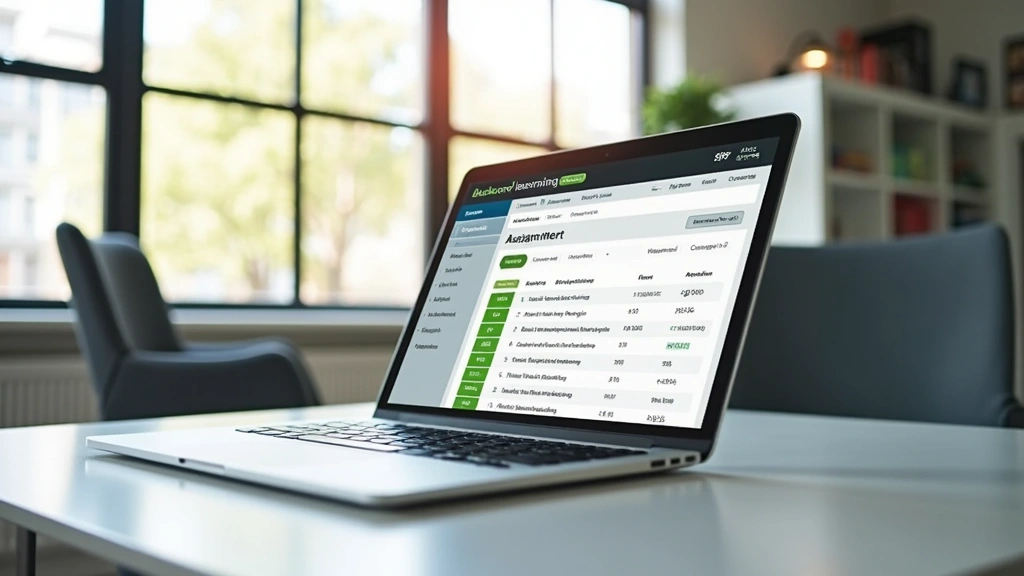
Why Choose Blackboard at Tulsa Tech? Expert Analysis
Blackboard has become the cornerstone learning management system for educational institutions across North America, and Tulsa Tech is no exception. As one of Oklahoma’s premier technical colleges, Tulsa Tech leverages Blackboard’s comprehensive platform to deliver seamless digital education experiences to thousands of students annually. Whether you’re a prospective student, current enrollee, or educator evaluating the institution, understanding how Blackboard integrates into Tulsa Tech’s educational ecosystem is essential for making informed decisions about your academic journey.
The platform serves as the central hub for course delivery, student engagement, and institutional communication at Tulsa Tech. From assignment submission to real-time collaboration, Blackboard provides the technological infrastructure that modern technical education demands. This expert analysis explores the multifaceted reasons why Blackboard remains the preferred learning management system at Tulsa Tech, examining its features, benefits, and practical applications within the institution’s unique educational context.
What Is Blackboard and Why It Matters for Technical Education
Blackboard is a comprehensive learning management system designed to facilitate online and hybrid education delivery across institutions of all sizes. The platform combines course management, content delivery, student collaboration, and assessment tools into a single integrated environment. For technical education institutions like Tulsa Tech, this consolidation is particularly valuable because technical programs often require diverse instructional approaches—from traditional lectures to hands-on laboratory simulations to industry-specific software training.
The significance of Blackboard for technical education extends beyond simple content delivery. Technical programs at institutions like Tulsa Tech demand platforms capable of supporting specialized learning objects, industry certification preparation materials, and real-world project collaboration. Blackboard’s architecture accommodates these requirements while maintaining the stability and security necessary for institutional-level operations. When you’re studying automotive technology, healthcare information systems, or skilled trades at Tulsa Tech, Blackboard serves as your digital workspace where theoretical knowledge meets practical application.
Technical education has undergone significant transformation in recent years. Students no longer expect purely classroom-based instruction; they demand flexibility, accessibility, and integration with contemporary technology. Blackboard addresses these expectations by providing a platform that bridges on-campus and remote learning, enabling Tulsa Tech to serve students with diverse schedules and learning preferences. This is particularly important for adult learners and working professionals pursuing technical certifications through the institution.

Tulsa Tech’s Integration of Blackboard Learning Management System
Tulsa Technology Center has strategically deployed Blackboard across its entire academic infrastructure, making it the institutional standard for all course delivery modalities. The institution’s commitment to Blackboard reflects a broader strategic decision to standardize technology infrastructure, reduce fragmentation across departments, and ensure consistent student experiences regardless of program or campus location. This institutional-level adoption demonstrates that Blackboard’s capabilities align with Tulsa Tech’s mission to provide accessible, high-quality technical education.
The integration process at Tulsa Tech involved substantial planning and professional development initiatives. Faculty members received comprehensive training on Blackboard’s pedagogical features, ensuring that the platform enhances rather than hinders instructional effectiveness. Student orientation programs introduce new enrollees to Blackboard’s interface, navigation systems, and best practices for online collaboration. This intentional implementation strategy distinguishes Tulsa Tech’s Blackboard deployment from institutions that simply adopt the platform without strategic integration.
One of the most important aspects of Tulsa Tech’s Blackboard implementation is its connection to the institution’s broader technology infrastructure and systems integration. The platform connects seamlessly with Tulsa Tech’s student information system, enabling automatic course enrollment, grade synchronization, and academic record management. This integration eliminates manual data entry, reduces errors, and ensures that institutional records remain current and accurate. Students benefit from this integration because their Blackboard enrollment reflects their official registration status immediately.
Key Features That Make Blackboard Essential at Tulsa Tech
Blackboard’s feature set directly addresses the pedagogical and operational requirements of technical education institutions. The platform includes robust content management tools that allow instructors to organize course materials hierarchically, making it easy for students to locate resources. At Tulsa Tech, instructors use these tools to structure courses around competency frameworks and industry certification requirements, ensuring that course content aligns with external standards and employer expectations.
The assignment and assessment functionality within Blackboard enables instructors to create diverse evaluation methods appropriate for technical education. From traditional quizzes that test theoretical knowledge to project-based assignments that simulate real-world scenarios, Blackboard accommodates varied assessment approaches. The platform supports file uploads, allowing students to submit design documents, code repositories, and multimedia projects. Instructors can provide detailed rubrics, making evaluation criteria transparent and supporting student learning through clear expectations.
Blackboard’s collaboration tools foster peer interaction and group work—essential components of technical education. Discussion boards allow asynchronous conversations about course concepts, enabling students to learn from one another while accommodating different time zones and schedules. Virtual classrooms within Blackboard support synchronous sessions where instructors can deliver real-time instruction, demonstrate techniques, and facilitate interactive problem-solving. For Tulsa Tech students balancing work and family obligations with technical studies, these flexible collaboration options are invaluable.
The gradebook functionality provides instructors with sophisticated grade management capabilities. Weighted grading, extra credit options, and customizable grade columns allow instructors to implement grading schemes that reflect their pedagogical philosophies. Students can view their grades in real-time, understand their progress toward course objectives, and identify areas requiring additional effort. This transparency supports academic success by enabling proactive intervention when students fall behind.
Student Experience and Accessibility Benefits
From a student perspective, Blackboard at Tulsa Tech provides a consistent, predictable learning environment across all courses and programs. This consistency reduces the learning curve for navigating different platforms and allows students to focus cognitive resources on course content rather than platform mechanics. New students quickly become comfortable with Blackboard’s interface, and experienced students can efficiently manage multiple courses simultaneously.
Accessibility is a paramount consideration in Blackboard’s design, and Tulsa Tech leverages these capabilities to ensure inclusive education. The platform supports screen readers, keyboard navigation, and adjustable text sizes, enabling students with visual or motor impairments to fully participate in courses. Instructors at Tulsa Tech receive guidance on creating accessible course content—using alt text for images, providing transcripts for video content, and formatting documents for compatibility with assistive technologies. This institutional commitment to accessibility reflects both ethical obligations and legal requirements under the Americans with Disabilities Act.
Mobile accessibility represents another critical dimension of Blackboard’s student experience benefits. Tulsa Tech students can access courses through Blackboard’s mobile application, available on iOS and Android devices. This mobile functionality enables students to review course materials, submit assignments, and check grades from smartphones or tablets. For technical students working on job sites or traveling to internship locations, mobile access ensures that coursework remains accessible regardless of location. The responsive design adapts to various screen sizes, maintaining usability across devices.
Notification systems within Blackboard keep students informed about course updates, assignment deadlines, and instructor announcements. Students can customize notification preferences, choosing which alerts they wish to receive and through which channels. This customization respects individual preferences while ensuring that critical information reaches students promptly. At Tulsa Tech, timely notifications help students stay on track and reduce missed deadlines that could jeopardize academic progress.
Instructor Tools and Course Management Capabilities
Tulsa Tech’s faculty members benefit from Blackboard’s comprehensive instructor toolkit, which empowers educators to design and deliver engaging technical education experiences. The course builder provides intuitive interfaces for organizing content, creating learning paths, and establishing prerequisite requirements. Instructors can sequence course materials in ways that support progressive skill development, crucial for technical programs where foundational knowledge enables more advanced learning.
Content creation within Blackboard supports multimedia integration, allowing instructors to combine text, images, videos, and interactive elements into cohesive learning experiences. Technical instructors at Tulsa Tech leverage this multimedia capability to present complex concepts through multiple modalities. For example, an automotive instructor might combine video demonstrations of engine repair procedures with annotated diagrams, interactive simulations, and written explanations. This multimodal approach accommodates diverse learning preferences and reinforces conceptual understanding through varied representations.
The gradebook’s advanced features enable sophisticated assessment tracking. Instructors can create calculated columns that automatically compute weighted grades, apply curving formulas, or identify students meeting specific performance thresholds. Blackboard’s grade analytics provide insights into class performance distributions, helping instructors identify concepts that require additional instructional attention. At Tulsa Tech, this data-driven approach to instruction ensures that faculty can make evidence-based decisions about pedagogical adjustments.
Rubric functionality within Blackboard standardizes evaluation and provides students with clear performance expectations. Instructors at Tulsa Tech create detailed rubrics aligned with industry standards and institutional learning outcomes. When grading assignments using these rubrics, instructors provide specific feedback corresponding to performance levels, supporting student development of professional competencies. Students understand not only their scores but also how their work aligns with professional standards in their technical fields.
Mobile Learning and On-the-Go Access
Mobile learning has become essential for institutions serving non-traditional students, and Tulsa Tech’s deployment of Blackboard fully embraces mobile-first accessibility. The Blackboard mobile application provides comprehensive course access through smartphones and tablets, enabling students to engage with coursework during commutes, breaks, or whenever they have available time. This flexibility is particularly important for Tulsa Tech’s student population, which includes working professionals, parents, and individuals balancing multiple responsibilities.
The mobile app includes core Blackboard functionality: course navigation, assignment submission, discussion board participation, and grade viewing. Content displays responsively, automatically adjusting to various screen sizes without sacrificing functionality. Video content plays smoothly on mobile devices, and documents render legibly on smaller screens. For technical students accessing course materials from job sites or field locations, mobile access ensures that learning resources remain available regardless of proximity to computer labs or libraries.
Offline functionality represents another valuable mobile feature. Students can download course materials, discussion threads, and assignment details for offline review. This capability proves especially useful for students with inconsistent internet connectivity or those traveling to locations with limited bandwidth. Upon reconnecting to the internet, the app synchronizes changes, ensuring that offline work doesn’t result in lost submissions or missed updates.
Push notifications through the mobile app keep students informed about course announcements, assignment reminders, and grade postings. These notifications can be customized to match individual preferences, ensuring that students receive relevant information without being overwhelmed by excessive alerts. At Tulsa Tech, mobile notifications help students maintain awareness of course deadlines and institutional communications even when they’re away from computers.
Data Analytics and Performance Tracking
Blackboard’s analytics capabilities provide Tulsa Tech with institutional insights into student engagement, course effectiveness, and learning outcomes. The platform tracks student interactions—login frequency, content access patterns, assignment submission timing, and discussion participation. These engagement metrics help instructors identify at-risk students early, enabling proactive intervention before academic difficulties escalate. At Tulsa Tech, this predictive approach to student support has demonstrated measurable improvements in retention and completion rates.
Course-level analytics reveal which instructional content generates the most student engagement and which topics students struggle with most frequently. Instructors use this information to refine course design, allocating more instructional time to challenging concepts and streamlining content where students demonstrate mastery. Over time, this iterative improvement process enhances course quality and student learning outcomes. At Tulsa Tech, this data-driven approach to instructional design represents a commitment to continuous improvement.
Grade distribution analytics provide insights into assessment outcomes and student performance patterns. Instructors can identify questions or assignments where students consistently struggle, suggesting that instructional approaches require adjustment. Comparison of grade distributions across sections or semesters helps identify trends and informs decisions about curriculum modifications. These analytics support institutional accountability by providing evidence of learning outcome achievement aligned with program standards.
Institutional-level analytics enable Tulsa Tech administrators to monitor system utilization, identify training needs, and plan technology infrastructure improvements. Reports on course activity, user engagement, and system performance inform strategic decisions about professional development and platform optimization. This institutional perspective ensures that Blackboard deployment serves organizational objectives while supporting individual student and instructor success.
Security and Compliance Standards
Security represents a critical consideration for any learning management system, particularly at institutions like Tulsa Tech serving diverse student populations and handling sensitive educational records. Blackboard implements enterprise-grade security measures including encryption, secure authentication, and role-based access controls. Student data remains protected through these security protocols, ensuring compliance with federal privacy regulations including the Family Educational Rights and Privacy Act (FERPA).
Blackboard’s infrastructure includes regular security audits, vulnerability assessments, and penetration testing to identify and remediate potential security weaknesses. The platform maintains compliance with industry standards and security frameworks, providing Tulsa Tech with assurance that student data receives appropriate protection. Regular security updates address emerging threats, and Blackboard’s security team actively monitors for suspicious activity.
Access controls within Blackboard ensure that only authorized users can view sensitive information. Instructors access only their own courses and student records, while administrators maintain appropriate permissions for system management. Students access only their enrolled courses and personal grade information. These granular access controls prevent unauthorized data exposure and maintain confidentiality of educational records. At Tulsa Tech, this security architecture protects both student privacy and institutional interests.
Compliance with accessibility standards and educational regulations represents another dimension of Blackboard’s security and integrity framework. The platform adheres to Web Content Accessibility Guidelines (WCAG) standards, ensuring that students with disabilities can access course content. Institutional compliance with accreditation standards and regulatory requirements is supported through Blackboard’s audit trails, which document all system activities and changes. This documentation proves valuable during institutional audits and accreditation reviews.
Comparing Blackboard to Alternative LMS Platforms
While numerous learning management systems exist, Blackboard’s market position and institutional adoption reflect its comprehensive feature set and institutional support infrastructure. Competitors like Canvas, Moodle, and Desire2Learn offer alternative approaches to learning management, each with distinct strengths and limitations. Understanding how Blackboard compares to these alternatives provides context for Tulsa Tech’s platform choice.
Canvas, developed by Instructure, emphasizes user interface simplicity and intuitive design. The platform appeals to institutions prioritizing ease of use, particularly for faculty with limited technical experience. However, Canvas’s feature set, while robust, may lack specialized capabilities required by technical education programs. Moodle, an open-source platform, offers cost advantages and customization flexibility but requires significant technical infrastructure and ongoing maintenance. For institutions like Tulsa Tech prioritizing enterprise-level support and reliability, Blackboard’s managed platform approach offers advantages over self-hosted alternatives.
Desire2Learn (now Brightspace) represents another enterprise LMS competitor with strong analytics capabilities and mobile functionality. The platform competes directly with Blackboard in higher education markets and offers comparable feature sets. However, Blackboard’s longer market history, larger user community, and extensive integration ecosystem provide advantages for institutions like Tulsa Tech seeking established, well-supported technology infrastructure.
Comparison of learning management systems involves evaluating factors including total cost of ownership, feature alignment with institutional needs, vendor support quality, integration capabilities, and user adoption potential. For Tulsa Tech, Blackboard’s proven track record in technical education, comprehensive feature set, and strong institutional support made it the optimal choice. The platform’s integration with emerging technologies positions the institution well for future educational innovation.
Future Developments and Technology Evolution
Blackboard continues evolving to incorporate emerging educational technologies and pedagogical approaches. Artificial intelligence capabilities within the platform enable intelligent tutoring systems, personalized learning recommendations, and automated assessment feedback. These AI-powered features support differentiated instruction, enabling instructors to tailor learning experiences to individual student needs and learning preferences. At Tulsa Tech, AI integration within Blackboard promises enhanced personalization and improved learning outcomes.
Virtual and augmented reality integration represents another frontier for learning management system development. Technical education particularly benefits from immersive learning experiences where students can practice procedures in safe, controlled virtual environments before attempting real-world applications. Blackboard’s evolution toward supporting VR/AR content delivery positions Tulsa Tech to leverage these technologies as they become more accessible and affordable.
Enhanced mobile-first design represents an ongoing development priority for Blackboard. As mobile devices become increasingly central to student life and learning, learning management systems must prioritize mobile experiences. Blackboard’s continued investment in mobile functionality ensures that Tulsa Tech students enjoy seamless access across all devices and platforms. The latest technology trends and platform updates demonstrate this commitment to mobile-first design.
Interoperability and integration with third-party educational tools represents another important development area. Learning management systems increasingly function as hubs connecting diverse educational applications and services. Blackboard’s open architecture and API capabilities enable integration with specialized tools—from industry-specific software to career preparation platforms. This ecosystem approach allows Tulsa Tech to assemble comprehensive technology solutions tailored to technical education requirements.
Analytics advancement continues as Blackboard develops more sophisticated predictive models and visualization tools. Future versions will likely incorporate machine learning algorithms that identify at-risk students with greater precision and recommend targeted interventions. Enhanced dashboards will provide instructors and administrators with more actionable insights from educational data. At Tulsa Tech, these advanced analytics capabilities will support increasingly sophisticated student success initiatives.
The evolution of Blackboard reflects broader trends in educational technology, including personalization, accessibility, mobile-first design, and data-driven decision-making. Tulsa Tech’s continued partnership with Blackboard ensures that the institution benefits from these innovations, maintaining a modern, capable learning management infrastructure that supports institutional mission and student success. As technical education evolves to meet changing workforce demands, Blackboard’s development roadmap suggests the platform will continue adapting to emerging educational requirements.
FAQ
What is the primary purpose of Blackboard at Tulsa Tech?
Blackboard serves as Tulsa Tech’s central learning management system, facilitating course delivery, student engagement, assignment submission, assessment, and communication across all academic programs. The platform enables both on-campus and remote learning, supporting diverse instructional modalities required for technical education.
How do students access Blackboard at Tulsa Tech?
Students access Blackboard through the web browser at Tulsa Tech’s learning portal or via the Blackboard mobile application available for iOS and Android devices. Access requires Tulsa Tech credentials, and enrollment in courses appears automatically based on official registration records synchronized with the institution’s student information system.
Can Tulsa Tech students use Blackboard on mobile devices?
Yes, the Blackboard mobile application provides full access to courses, assignments, discussions, and grades on smartphones and tablets. The app includes offline functionality, allowing students to download course materials for review without internet connectivity. Push notifications keep students informed about course updates and assignment deadlines.
What happens if a student experiences technical difficulties with Blackboard?
Tulsa Tech provides technical support through its Information Technology Help Desk, available via phone, email, and online ticket submission. Support specialists assist with login issues, course access problems, and general platform navigation. Most technical issues can be resolved quickly through help desk support or by consulting Blackboard’s online help resources.
How does Blackboard protect student privacy and data security?
Blackboard implements enterprise-grade security including encryption, secure authentication, and role-based access controls. The platform maintains compliance with FERPA privacy regulations and undergoes regular security audits. Student data is protected through multiple security layers, and access is restricted to authorized users only.
Does Tulsa Tech offer training for Blackboard?
Yes, Tulsa Tech provides orientation sessions for new students introducing Blackboard basics and best practices. Faculty receive comprehensive professional development on Blackboard’s instructional features. Online help resources, tutorials, and documentation are available to all users. The institution’s Learning Technology team provides ongoing support and training opportunities.
How are grades recorded and accessed through Blackboard?
Instructors record grades in Blackboard’s gradebook, which automatically synchronizes with Tulsa Tech’s student information system. Students can view their grades in real-time through Blackboard’s grade portal. Official transcripts and grade records are maintained in the institutional student information system, with Blackboard serving as the operational grading platform.
Can instructors customize Blackboard courses for different technical programs?
Yes, Blackboard’s flexible architecture allows instructors to customize course layouts, content organization, and assessment approaches to align with specific program requirements. Technical program instructors can incorporate industry-specific content, certification preparation materials, and specialized assessment methods. This customization ensures that courses reflect industry standards and employer expectations.


