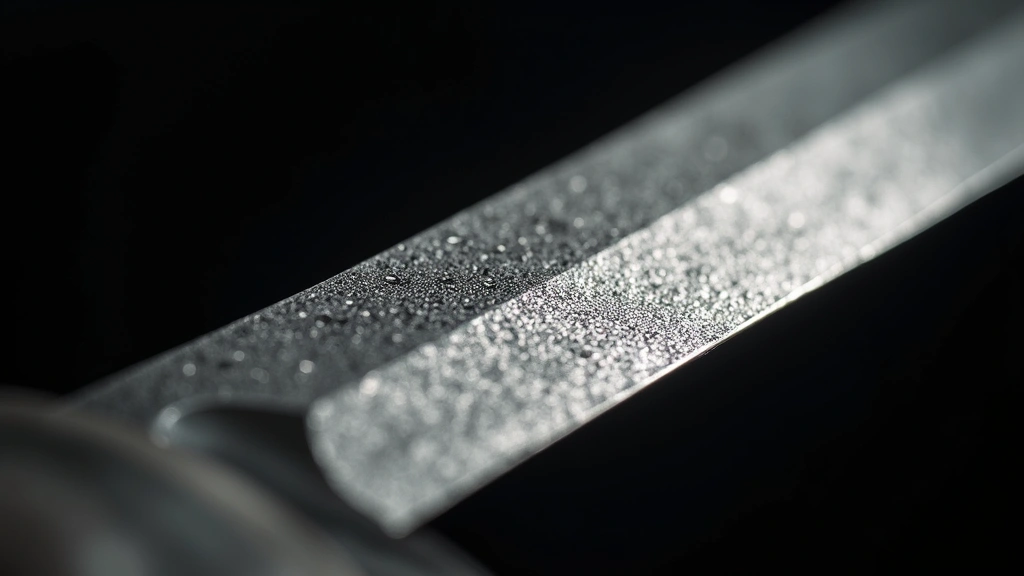
Blade Tech: Is This the Future of Knives?
The knife has remained fundamentally unchanged for centuries—a handle, a blade, and human muscle. But in 2024, we’re witnessing a technological revolution in blade engineering that challenges everything we thought we knew about cutting tools. From advanced metallurgy to AI-assisted design and smart handle technology, modern blade tech represents one of the most underrated innovations in consumer gadgetry. Whether you’re a culinary professional, outdoor enthusiast, or tactical operator, the cutting edge of blade technology is reshaping how we approach one of humanity’s oldest tools.
This comprehensive review explores the latest advancements in blade technology, examining whether these innovations represent genuine improvements or merely marketing hype. We’ll dissect material science breakthroughs, analyze performance benchmarks, and evaluate whether investing in next-generation knives makes practical sense. The intersection of materials science, manufacturing precision, and ergonomic design has created an ecosystem where blade tech now rivals traditional tech gadgets in complexity and capability.

Advanced Materials Revolution
The foundation of modern blade tech rests on material science innovations that would have seemed impossible a decade ago. Contemporary knife manufacturers now employ materials that combine properties previously thought mutually exclusive: extreme hardness paired with flexibility, corrosion resistance married to edge retention, and lightweight construction without sacrificing durability.
Ceramic composite blades represent one of the most significant breakthroughs. Unlike traditional stainless or carbon steel, ceramic materials maintain their edge up to three times longer than conventional blades. Companies like Kyocera pioneered zirconia ceramic blades that resist staining and require minimal maintenance. These materials excel in culinary applications where corrosion resistance matters, though they sacrifice some flexibility compared to steel alternatives.
Damascus steel has evolved beyond aesthetic appeal into a genuine performance category. Modern Damascus blades employ computer-controlled forging to create precise layer patterns that optimize strength and edge retention. The layering technique distributes stress more effectively than monolithic steel, resulting in blades that hold sharper edges while resisting chipping. This represents a fascinating convergence where centuries-old craftsmanship meets contemporary artificial intelligence applications in metallurgical design.
Titanium-enhanced alloys introduce another dimension to blade technology. By incorporating titanium into steel matrices, manufacturers create composites that reduce weight by 20-30% while maintaining or improving edge durability. Aerospace-grade titanium integration, borrowed from aviation technology, brings military-specification materials into consumer knives.
Metallurgical Breakthroughs
Understanding modern blade metallurgy requires grasping several critical performance metrics. Hardness (measured in Rockwell hardness scale), edge retention (how long a blade stays sharp), and corrosion resistance form the holy trinity of blade performance. Contemporary manufacturers optimize these properties through proprietary alloy formulations.
High-carbon stainless steel represents the mainstream sweet spot. Blades like Zwilling J.A. Henckels employ German-engineered X50CrMoV15 steel that achieves 58-60 Rockwell hardness while maintaining excellent corrosion resistance. This hardness level provides edge retention superior to standard stainless while remaining practical for home kitchens and field use.
Nitrogen-enhanced stainless steel introduces an innovative approach to material science. By infusing nitrogen into the steel matrix, manufacturers increase hardness and corrosion resistance simultaneously—typically achieving 62+ Rockwell hardness without the brittleness associated with higher carbon content. This technique, employed by premium manufacturers, creates blades that maintain professional-grade performance in demanding environments.
Powder metallurgy represents perhaps the most sophisticated modern blade manufacturing technique. Rather than traditional forging, powder metallurgy creates steel through controlled compaction and sintering of metal powders. This process eliminates internal defects and segregation, resulting in remarkably uniform microstructures. Blades manufactured via powder metallurgy exhibit superior edge retention and consistency compared to conventionally forged alternatives.
The science extends to edge geometry optimization. Modern blade tech employs computer modeling to determine optimal blade angles for specific applications. Culinary knives typically feature 15-20 degree edges for precise cutting, while utility blades adopt 25-30 degree angles for durability. This precision engineering, informed by materials science and biomechanical analysis, represents a fundamental shift from traditional knife manufacturing.
Smart Blade Technology
The integration of smart technology into knife design might seem incongruous, yet several manufacturers now incorporate sensors and connectivity features that genuinely enhance functionality. Smart blade tech extends beyond gimmickry into practical applications for professional environments.
Temperature-sensing handles represent one practical implementation. Certain premium knives now feature handles with embedded thermochromic materials that change color based on blade temperature—useful for culinary professionals managing multiple cooking stations simultaneously. While seemingly minor, this feature prevents dangerous accidents and improves workflow efficiency in professional kitchens.
Blade condition monitoring systems track edge sharpness through vibration analysis. When blade degradation reaches predetermined thresholds, integrated systems notify users via smartphone connectivity. This technology, borrowed from industrial tool monitoring systems, ensures professional users maintain optimal blade performance without guesswork.
Weight distribution sensors in handles provide real-time feedback on cutting technique. Professional knife manufacturers now offer handles with embedded accelerometers that communicate with mobile applications, analyzing cutting patterns and providing technique optimization suggestions. While this seems excessive for casual users, professional chefs report significant efficiency improvements after analyzing their cutting biomechanics.
RFID-enabled knife systems allow professional kitchens to track blade inventory, maintenance schedules, and usage patterns across entire operations. This enterprise-level blade tech integrates with kitchen management systems, automatically scheduling blade replacement before performance degradation occurs. For high-volume professional environments, these systems justify their investment through improved consistency and reduced food waste.
Manufacturing Precision
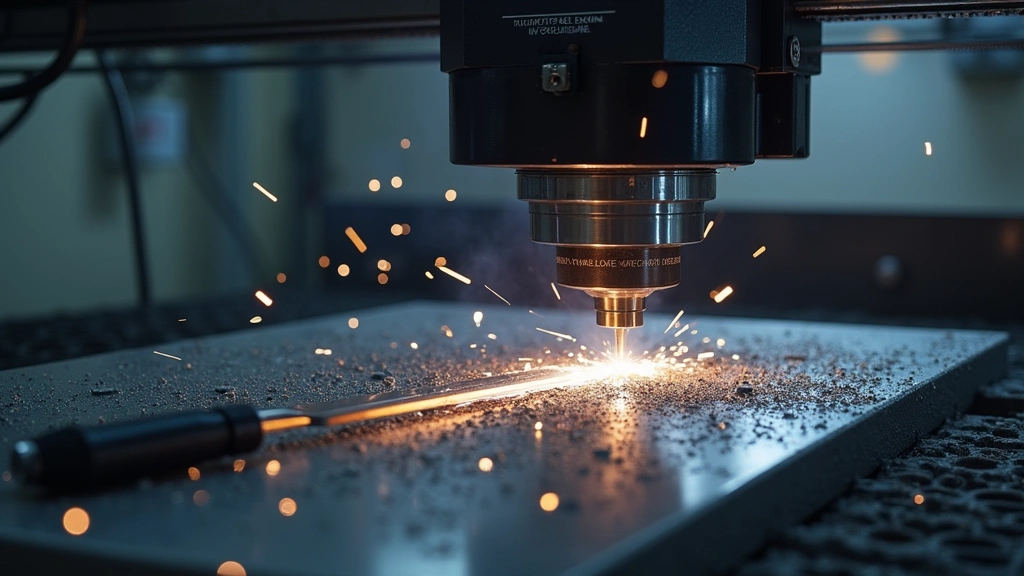
Modern blade tech demands manufacturing precision that rivals semiconductor production. Contemporary knife manufacturers employ laser-cutting technologies, CNC machining, and computer-vision quality control systems that would astound traditional bladesmiths.
Laser blade cutting achieves tolerances within 0.05 millimeters—precision that ensures perfectly consistent blade geometry across entire production runs. This consistency translates to predictable performance and reduced variance between individual units. Unlike hand-forged knives where each blade possesses unique characteristics, laser-manufactured blades deliver manufacturing reproducibility.
Computer numerical control (CNC) machining shapes handles and blade edges with extraordinary precision. Multi-axis CNC systems can create complex ergonomic profiles optimized for specific hand sizes and cutting techniques. This represents a dramatic departure from traditional handle shaping, enabling mass production of ergonomically superior designs.
Electron beam welding joins blade and handle materials with minimal heat distortion. Traditional soldering or riveting introduces thermal stress that can compromise blade integrity. Electron beam technology creates molecular-level bonds without the thermal expansion that weakens traditional connections. This advanced joining technique ensures blade-handle interfaces withstand extreme stress without failure.
Computer vision quality control systems inspect every manufactured blade for microscopic defects invisible to human inspection. These systems measure edge radius, detect micro-fractures, and verify geometric consistency before blades reach consumers. This automated inspection prevents defective units from reaching market—a quality assurance advantage that justifies premium pricing for manufactured blades.
Performance Benchmarks
Evaluating blade tech requires understanding how different designs perform under controlled conditions. Independent testing organizations like The Geek Stuff and CNET have begun rigorous blade testing protocols that provide quantifiable performance metrics.
Edge retention testing measures how many cuts through standardized materials occur before blade sharpness degrades to specific thresholds. Premium ceramic blades consistently outperform traditional stainless steel in edge retention tests, maintaining sharpness for 3,000+ cuts versus 800-1,200 cuts for conventional blades. This substantial performance difference justifies premium pricing for users who prioritize edge retention over initial cost.
Corrosion resistance testing submerges blades in salt water for extended periods, measuring material degradation. Modern nitrogen-enhanced stainless steel demonstrates remarkable corrosion resistance, showing virtually no degradation after 1,000+ hours of salt water exposure. This performance proves particularly valuable for marine environments and professional kitchens where moisture exposure proves constant.
Sharpening efficiency benchmarks evaluate how easily blades can be maintained. Ceramic blades, while maintaining edge retention longer, require specialized sharpening equipment. Traditional steel blades sharpen more easily with conventional whetstones, though they require more frequent maintenance. This represents a practical trade-off between edge longevity and maintenance convenience.
Cutting performance tests evaluate blade effectiveness across different materials. Professional kitchen testing reveals that modern blade geometry, optimized through computer modeling, reduces cutting force requirements by 15-25% compared to traditional designs. This ergonomic improvement reduces hand fatigue during extended use—a significant practical benefit for professional users.
Real-World Applications
Understanding blade tech requires examining how these innovations perform in practical environments. Different applications demand different technological approaches, and modern blade tech has evolved to address specialized requirements across diverse sectors.
Culinary applications represent the largest consumer market for blade tech innovations. Professional chefs report that modern Damascus steel blades with optimized geometry reduce preparation time while improving cut consistency. The combination of enhanced edge retention and ergonomic handle design creates measurable efficiency improvements in professional kitchens. Premium culinary blade tech has become as important as technology investments in other business sectors.
Tactical and outdoor applications benefit from blade tech advances in durability and lightweight construction. Military-specification blades now incorporate materials developed for aerospace applications, creating tools that withstand extreme conditions while remaining portable. Survival knife designs have evolved dramatically, incorporating ergonomic handles informed by biomechanical research and blade geometries optimized for specific tasks.
Medical and surgical applications have undergone transformation through blade tech innovations. Surgical blades now feature molecular-level edge precision that minimizes tissue trauma during procedures. Ophthalmological blades, manufactured to tolerances within micrometers, enable procedures previously impossible with traditional surgical steel. This medical application of blade tech directly improves surgical outcomes and patient recovery times.
Industrial applications leverage blade tech for manufacturing precision. Rotary blades incorporating advanced materials and precision manufacturing cut through industrial materials with greater efficiency than traditional alternatives. Textile, paper, and composite material manufacturing industries have adopted blade tech innovations that improve product quality while reducing material waste.
Investment Value
Determining whether blade tech investments represent genuine value requires honest assessment of cost-benefit relationships. Premium blade tech commands significant price premiums—high-end Damascus knives cost 5-10 times more than basic stainless steel alternatives.
For professional users, blade tech investments demonstrate clear ROI. A professional chef using a premium blade that maintains sharpness 4x longer than conventional alternatives reduces sharpening time and downtime. When multiplied across entire kitchen operations, these efficiency gains justify premium pricing. Similarly, professional outdoor guides and tactical operators benefit from blade tech reliability that prevents equipment failure in critical situations.
For casual home users, blade tech value proposition becomes less compelling. A $300 premium Damascus blade offers minimal practical advantage over a $60 quality stainless steel alternative for occasional home kitchen use. The extended edge retention matters primarily to users who cook frequently enough to notice sharpening requirements.
However, certain blade tech innovations provide value across user categories. Ergonomic handle designs informed by biomechanical research benefit all users by reducing hand fatigue. Corrosion-resistant coatings prevent rust and maintenance issues regardless of usage frequency. These practical improvements justify moderate price premiums even for casual users.
The intersection of blade tech and technology innovation suggests continued advancement in blade materials and manufacturing. As production scales increase and manufacturing techniques mature, premium blade tech pricing should gradually decrease—making advanced materials more accessible to mainstream consumers.
Collectors view blade tech as an emerging investment category. Limited-edition blades incorporating novel materials or manufacturing techniques appreciate in value as production techniques improve and materials become available more broadly. This collector appeal drives premium pricing for pioneering blade tech examples.
FAQ
What blade material offers the best edge retention?
Ceramic composite blades provide superior edge retention, maintaining sharpness 3+ times longer than traditional steel. However, they require specialized sharpening equipment. For steel alternatives, nitrogen-enhanced stainless steel and premium Damascus constructions offer excellent edge retention while remaining practical for conventional sharpening methods.
Are smart blade features genuinely useful?
Smart blade technology proves most valuable in professional environments where efficiency directly impacts profitability. For casual home users, smart features offer minimal practical benefit. Temperature sensing and condition monitoring primarily benefit professional kitchens and industrial applications where usage volume justifies the additional cost.
How does modern blade tech compare to traditional forged knives?
Modern manufactured blades achieve superior consistency and edge geometry precision compared to hand-forged alternatives. However, traditional forging creates unique characteristics some users prefer. The distinction increasingly becomes aesthetic rather than performance-based, as contemporary manufacturing techniques now match or exceed traditional forging in measurable performance metrics.
What’s the practical difference between Damascus and conventional steel?
Modern Damascus steel offers improved edge retention and stress distribution compared to monolithic steel, though the performance advantage depends on blade design. Damascus primarily excels in blades designed to exploit its layered structure. In poorly designed Damascus blades, performance advantages disappear entirely.
Should casual users invest in premium blade tech?
Casual users benefit most from quality mid-range blades offering good ergonomics and corrosion resistance at reasonable prices. Premium blade tech investments make sense primarily for professional users or enthusiasts who use knives frequently enough to appreciate extended edge retention and superior durability.
How does blade tech relate to broader technology innovation?
Blade tech borrows extensively from aerospace, medical device, and semiconductor manufacturing technologies. The convergence of materials science, precision manufacturing, and smart technology integration mirrors broader technology advancement patterns. Understanding blade tech provides insight into how specialized manufacturing techniques transform even ancient tools through contemporary innovation.


