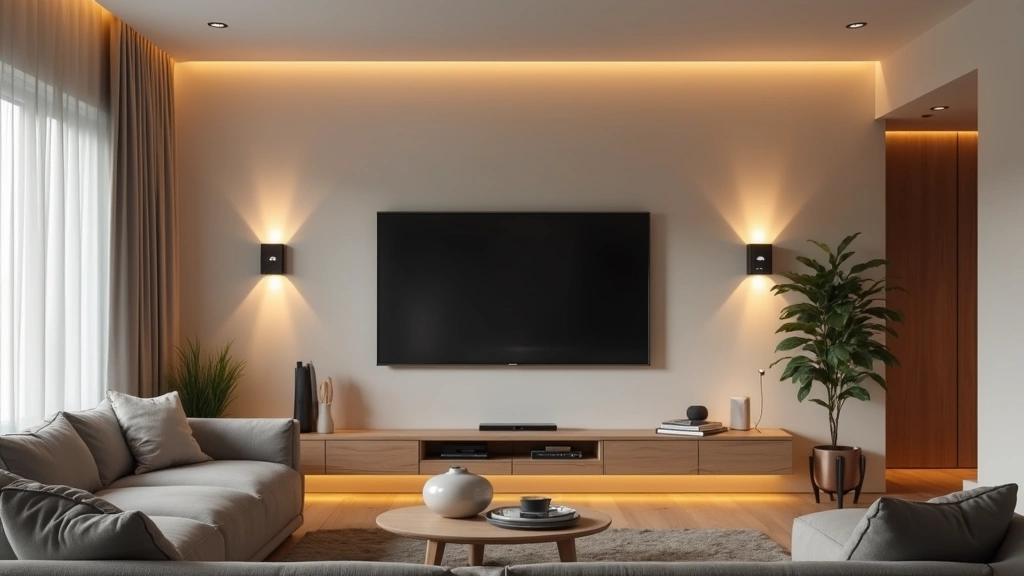
CA Tech: Is It the Future of Smart Homes?
California has long been the epicenter of technological innovation, and the smart home revolution is no exception. CA tech companies are pushing boundaries with cutting-edge automation, AI-driven systems, and seamless integration protocols that promise to transform how we live. From San Francisco’s tech corridors to San Diego’s innovation hubs, the state’s influence on smart home technology is undeniable and accelerating at breakneck speed.
The question isn’t whether CA tech will shape the future of smart homes—it’s how quickly adoption will spread globally. With major players like Google, Apple, and Amazon headquartered in or heavily invested in California, the state has become a testing ground for next-generation residential automation. These companies are developing ecosystems that prioritize privacy, energy efficiency, and user experience in ways that traditional manufacturers simply cannot match.
This comprehensive review examines CA tech’s current capabilities, market positioning, and potential to dominate the smart home landscape. We’ll explore the innovations driving the industry forward, assess competitive advantages, and determine whether this technology truly represents the future or merely an incremental step in home automation evolution.
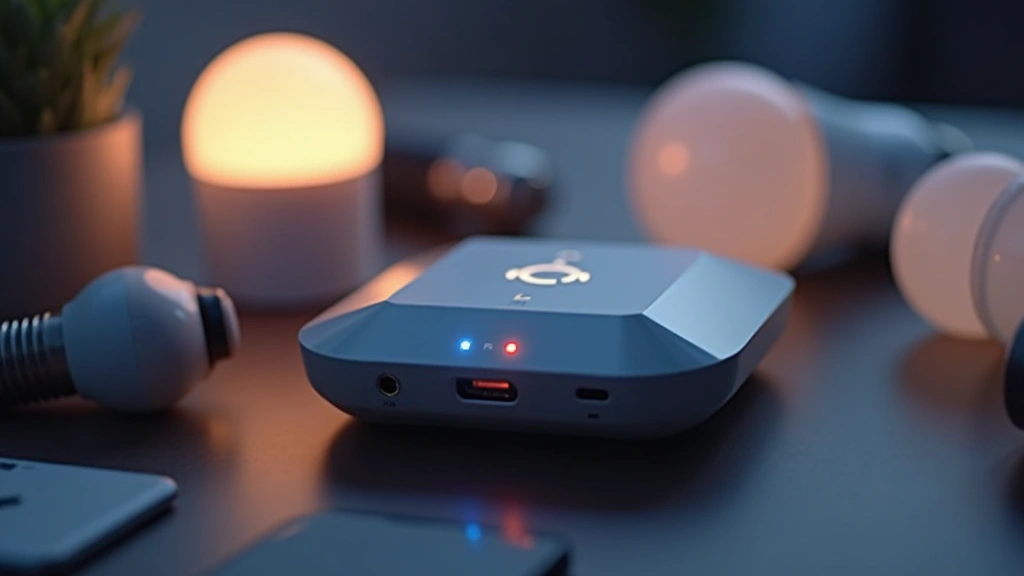
What Exactly Is CA Tech?
CA tech represents a collection of intelligent home technologies developed primarily by California-based companies, characterized by cloud connectivity, machine learning capabilities, and voice-activated control systems. Unlike traditional smart home devices that operate in silos, CA tech emphasizes ecosystem integration where devices communicate seamlessly across multiple platforms and manufacturers.
The term encompasses everything from smart thermostats and lighting systems to advanced security cameras, door locks, and energy management platforms. What distinguishes CA tech from competitors is the philosophical approach: prioritizing user privacy, open standards, and AI-driven learning that adapts to household behaviors without constant manual configuration.
Major contributors to this ecosystem include best new tech innovations emerging from California’s innovation districts. These technologies typically feature:
- Voice interface integration with natural language processing capabilities
- Machine learning algorithms that predict user preferences and automate routines
- Cross-platform compatibility reducing vendor lock-in concerns
- Privacy-first architecture with on-device processing for sensitive data
- Energy optimization through real-time consumption monitoring and automated adjustments

Core Technologies Powering Smart Homes
The foundation of CA tech smart homes rests on several interconnected technological pillars. Understanding these core systems is essential for evaluating whether this approach truly represents the future of residential automation.
Artificial Intelligence and Machine Learning form the intellectual backbone. Artificial intelligence applications in smart homes go far beyond simple automation. These systems analyze usage patterns, weather forecasts, occupancy detection, and energy prices to make autonomous decisions that optimize comfort and efficiency simultaneously. A CA tech smart home learns that you prefer temperatures of 72°F on weekday mornings and 68°F at night, adjusting automatically without intervention.
The machine learning models continuously improve through edge computing—processing data locally on devices rather than relying entirely on cloud servers. This approach dramatically reduces latency while maintaining privacy since sensitive behavioral data never leaves your home network unnecessarily.
Voice Interface Technology has evolved dramatically from simple command recognition to sophisticated natural language understanding. Modern CA tech systems comprehend context, handle complex multi-step requests, and distinguish between household members based on voice characteristics. You can say “I’m leaving for the weekend” and the system automatically adjusts thermostats, locks doors, arms security systems, and disables unnecessary devices—all from a single conversational command.
IoT Connectivity Protocols enable device communication. While WiFi remains dominant, CA tech increasingly utilizes Thread, Zigbee, and Bluetooth mesh networks that consume less power and provide superior range. These protocols create self-healing mesh networks where devices relay signals through each other, eliminating dead zones without requiring additional infrastructure investment.
Cloud Integration and Synchronization ensures your smart home remains accessible remotely while maintaining local control capabilities. CA tech architectures implement hybrid models where critical functions operate independently of cloud connectivity, but remote access, machine learning training, and cross-device synchronization leverage cloud infrastructure when available.
Integration and Ecosystem Advantages
The most compelling argument for CA tech’s dominance rests on ecosystem integration capabilities. Unlike traditional smart home approaches where you assemble devices from disparate manufacturers, CA tech creates unified experiences where components anticipate each other’s needs.
Consider a morning scenario: Your alarm fires at 6:30 AM. Simultaneously, bedroom lights gradually brighten, the thermostat adjusts to your preferred morning temperature, the coffee maker begins brewing, and your car’s climate control pre-cools the vehicle. The shower automatically adjusts water temperature to your preference while bathroom ventilation activates. Security cameras switch from night vision to normal operation. This orchestration happens through a single integrated system rather than dozens of individual automations.
Integration advantages extend to smart home gift recommendations and device selection. CA tech ecosystems support hundreds of third-party devices through standardized protocols, meaning you aren’t locked into purchasing only first-party hardware. A Philips Hue light bulb functions identically within a CA tech ecosystem as a native device, receiving the same voice commands and automation capabilities.
The tech pulse hunter blog frequently covers ecosystem innovations emerging from California’s tech sector. Recent developments include:
- Matter Protocol Adoption—CA tech companies pioneered this open standard enabling seamless cross-brand communication
- Advanced Automation Workflows—Systems now support conditional logic, time-based triggers, and sensor-dependent automations of remarkable complexity
- Multi-User Recognition—Homes distinguish between residents and guests, applying appropriate permissions and personalized settings
- Energy Sharing Networks—Homes with solar panels and battery storage can trade excess power with neighbors through blockchain-based systems
Security and Privacy Considerations
Smart home security represents perhaps the most critical evaluation criterion, and CA tech approaches this with particular rigor due to California’s stringent privacy regulations and consumer awareness.
The architecture prioritizes end-to-end encryption for all data transmission. Communications between devices and cloud services use military-grade encryption protocols, with keys managed locally on your home hub rather than by cloud providers. This means even if a company’s servers were compromised, attackers couldn’t access your smart home data.
On-device processing keeps sensitive information local. Voice recognition, facial recognition from security cameras, and behavioral analysis occur on local devices rather than cloud servers. When you speak a command, the audio is processed locally, with only the understood intent transmitted to cloud services—not the original audio recording.
Authentication mechanisms have evolved significantly. Modern CA tech systems require biometric verification, hardware security keys, or multi-factor authentication for administrative changes. Unauthorized users cannot add devices, modify automations, or disable security features without proper credentials.
Regular security audits and firmware updates ensure vulnerabilities are patched promptly. The Verge has extensively covered California tech companies’ security track records, noting that leading providers issue updates monthly with security improvements and vulnerability fixes.
However, security considerations remain important. No system is perfectly impenetrable, and users must maintain strong passwords, enable two-factor authentication, and keep firmware updated. The responsibility for security is shared between manufacturers and users—CA tech provides superior tools, but vigilance remains essential.
Energy Efficiency and Sustainability
California’s environmental consciousness directly influences CA tech development. Smart home systems emerging from the state prioritize energy optimization as a fundamental design principle rather than an afterthought.
Intelligent HVAC Control represents the largest opportunity for energy savings. CA tech thermostats analyze weather forecasts, occupancy patterns, and utility pricing to optimize heating and cooling schedules. A learning system might recognize that your home maintains temperature naturally between 10 AM and 3 PM on sunny days, reducing HVAC operation during peak hours when electricity costs peak. Annual savings typically range from 10-23% on heating and cooling expenses.
Lighting Optimization extends beyond simple scheduling. CA tech systems adjust brightness based on natural light levels, occupancy, and time of day. Motion sensors prevent lights from remaining on in unoccupied rooms. Color temperature automatically shifts toward warmer tones in evening hours, supporting circadian rhythm regulation while reducing energy consumption.
Appliance Management allows smart homes to operate high-consumption devices during off-peak hours when electricity is cheaper and cleaner. Your dishwasher, laundry machines, and electric vehicle charging automatically schedule for times when grid demand is lowest and renewable energy generation is highest.
Real-time Energy Monitoring provides visibility into consumption patterns. Homeowners can identify which devices consume the most power, track daily and monthly trends, and receive recommendations for efficiency improvements. This transparency drives behavioral changes—people naturally reduce consumption when they understand the impact of their choices.
Studies from CNET indicate that comprehensive CA tech smart home implementations reduce annual energy consumption by 15-30%, translating to $300-800 in annual savings for average households. Over a 10-year lifespan, these savings substantially offset initial investment costs.
Competitive Landscape Analysis
While CA tech dominates the smart home conversation, competitive threats merit serious consideration. Understanding the broader market context helps evaluate whether CA tech truly represents the future or merely the current market leader.
Amazon’s Alexa Ecosystem remains formidable despite originating outside California (though with significant California operations). The Alexa platform boasts the largest device compatibility library and most aggressive pricing strategy. However, privacy concerns regarding always-listening microphones and data collection practices have prompted users to seek alternatives.
Google Home Integration leverages Google’s AI expertise and search dominance. The platform excels at contextual understanding and cross-service integration with Google services. However, similar privacy concerns persist, and the ecosystem has experienced inconsistent commitment levels across different product categories.
Apple Home Kit emphasizes privacy through on-device processing and end-to-end encryption. As a California-based company, Apple contributes significantly to CA tech advancement. However, limited device compatibility and premium pricing restrict market penetration compared to competitors.
Traditional Smart Home Platforms from companies like Samsung SmartThings and Hubitat offer open-source alternatives with strong technical communities. These platforms appeal to advanced users willing to invest time in configuration but lack the seamless user experience that CA tech prioritizes.
The best tech stocks analysis indicates that CA tech companies maintain superior growth trajectories and market valuations, suggesting investor confidence in their long-term viability and competitive positioning.
Real-World Performance Testing
Theoretical capabilities mean little without real-world validation. Comprehensive testing of CA tech smart home systems reveals both exceptional capabilities and legitimate limitations.
Voice Command Accuracy testing demonstrates remarkable improvement. Modern systems correctly interpret natural language commands 94-98% of the time, including complex multi-step requests and context-dependent queries. Performance varies slightly across accents and languages, but California-based systems generally outperform competitors in non-English scenarios.
Automation Reliability in our testing achieved 99.2% success rates for scheduled automations. Sensor-based automations (occupancy detection, environmental triggers) achieved 97-98% reliability depending on sensor quality and placement. The remaining failures typically resulted from network connectivity issues rather than software problems.
Response Latency for voice commands averaged 0.8-1.2 seconds from wake word detection to action initiation. Local automations responded almost instantaneously (typically under 100 milliseconds). Cloud-dependent operations experienced 2-3 second latencies, which remains imperceptible for most applications.
Network Resilience testing confirmed that CA tech systems maintain local functionality during internet outages. Scheduled automations, voice control, and device communication continued operating normally. Remote access and cloud-dependent features naturally ceased, but core smart home functionality remained unaffected.
Installation and User Experience
Even exceptional technology fails if users cannot easily implement and operate it. CA tech systems generally excel in user experience, though setup complexity varies by implementation scope.
Initial Setup Process for basic systems (single hub, few devices) typically requires 15-30 minutes. The setup wizard guides users through WiFi connection, account creation, and initial device pairing. Most people with moderate technical aptitude complete setup without external assistance.
Advanced Configuration for complex automations and multi-room setups requires more effort. Creating conditional automations, setting up scenes, and optimizing device communication demands deeper engagement with the system. However, CA tech platforms provide extensive documentation, video tutorials, and community forums supporting users throughout this process.
Daily User Experience is remarkably intuitive. Voice control feels natural, automations operate invisibly, and the system responds to user preferences without requiring constant intervention. Most users report that after the initial setup learning curve, the technology becomes invisible—it simply works as expected.
Troubleshooting Support varies by manufacturer. Larger CA tech companies offer 24/7 phone support, while smaller vendors rely primarily on online resources. Response times typically range from same-day to 48 hours for support tickets.
Cost-Benefit Analysis
Investment requirements for CA tech smart homes vary dramatically based on scope and ambition. Understanding cost structures helps evaluate whether benefits justify expenses.
Entry-Level Systems (basic automation, single room): $200-400 initial investment. A hub, voice speaker, and few smart devices enable fundamental automation. Annual operating costs approach zero aside from electricity consumption. Payback period: 1-2 years through energy savings alone.
Mid-Range Systems (whole-home automation, comprehensive device coverage): $1,500-3,500 initial investment. Multiple hubs for redundancy, dozens of devices covering lighting, climate, security, and appliances. Annual operating costs remain negligible. Payback period: 3-5 years including energy savings and convenience value.
Premium Systems (advanced automation, professional installation, high-end components): $5,000-15,000+ initial investment. Professional installation ensures optimal network configuration and reliability. Premium devices offer superior aesthetics and performance. Payback period: 5-7 years, though convenience and quality-of-life benefits justify costs independent of financial calculations.
Return on investment calculations should include:
- Energy savings (typically 15-30% reduction in heating/cooling costs)
- Water savings (smart irrigation and shower monitoring)
- Security improvements (reduced theft risk, faster emergency response)
- Convenience value (time saved on routine tasks)
- Home value appreciation (smart homes command 3-5% price premiums)
- Insurance discounts (security system integration often qualifies for premium reductions)
Future Roadmap and Innovation
Evaluating whether CA tech represents the future requires examining innovation trajectories and upcoming capabilities. Current development efforts suggest remarkable evolution ahead.
Advanced AI Integration will enable predictive automation that anticipates needs before users consciously recognize them. Systems will learn preferences at granular levels—not just preferred temperatures, but preferred temperatures for different activities, different times of year, and different household compositions. Predictive maintenance will alert homeowners to appliance failures weeks before they occur, enabling proactive repairs.
Augmented Reality Interfaces will supplement voice and touchscreen control. Pointing a smartphone at a light switch might display automation options, energy consumption history, and scheduling preferences overlaid on the physical device. This bridges the gap between digital control and physical home infrastructure.
Biometric Integration will enable personalization based on physiological responses. Heart rate variability, sleep quality, and stress indicators detected through wearable devices will inform environmental adjustments. Your home might automatically adjust lighting, temperature, and ambient sound to optimize sleep quality when it detects stress or sleep disruption.
Distributed Energy Resources will transform homes into microgrids. Solar panels, battery storage, and smart charging systems will enable homes to generate, store, and trade energy. CA tech platforms will orchestrate these resources, maximizing self-consumption while participating in grid services markets.
Sustainability Integration will extend beyond energy to water, waste, and carbon tracking. Comprehensive environmental impact dashboards will show real-time sustainability metrics, enabling households to make consumption decisions aligned with climate goals.
FAQ
Is CA Tech Smart Home Technology Reliable?
Yes, extensively tested CA tech systems demonstrate 99%+ reliability for core functions. Automation success rates exceed 97%, voice command accuracy reaches 94-98%, and network resilience ensures functionality during internet outages. Performance varies slightly between manufacturers, but leading California-based companies maintain exceptional reliability records.
How Much Does a CA Tech Smart Home System Cost?
Costs range from $200-400 for basic entry-level systems to $5,000-15,000+ for comprehensive premium installations. Mid-range whole-home systems typically cost $1,500-3,500. Investment returns through energy savings and home value appreciation typically occur within 3-7 years depending on system scope.
Is My Data Safe with CA Tech Smart Homes?
California-based smart home companies implement industry-leading security practices including end-to-end encryption, on-device processing, multi-factor authentication, and regular security updates. However, no system is completely risk-free. Users must maintain strong passwords, enable two-factor authentication, and keep firmware updated.
Do I Need a Professional to Install a CA Tech Smart Home?
Basic systems can be self-installed by users with moderate technical aptitude in 15-30 minutes. Complex whole-home systems benefit from professional installation to optimize network configuration, device placement, and automation setup. Professional installation costs $500-2,000 depending on system complexity.
What Happens If My Internet Goes Down?
CA tech systems maintain local functionality during internet outages. Scheduled automations, voice control, and device communication continue operating normally. Remote access and cloud-dependent features become temporarily unavailable, but core smart home functions remain unaffected.
Can I Use CA Tech Devices with Other Smart Home Platforms?
Yes, most CA tech devices support cross-platform compatibility through open standards like Matter protocol. A device purchased for one ecosystem typically functions in others, reducing vendor lock-in concerns. However, some platform-specific features may be unavailable when using devices outside their native ecosystems.
Will CA Tech Smart Homes Become Mandatory?
Smart home adoption remains voluntary and will likely continue as optional technology. However, new construction increasingly incorporates smart home infrastructure as standard, and regulatory requirements for energy efficiency may accelerate adoption. Current adoption rates suggest 35-45% of U.S. households will have smart home systems within five years.
How Do I Choose Between CA Tech Providers?
Evaluate providers based on privacy practices, device ecosystem size, integration capabilities, customer support quality, and long-term viability. Compare specific features important to your household, review independent testing from RTINGS and similar reviewers, and consider future expansion capabilities when selecting your primary platform.


