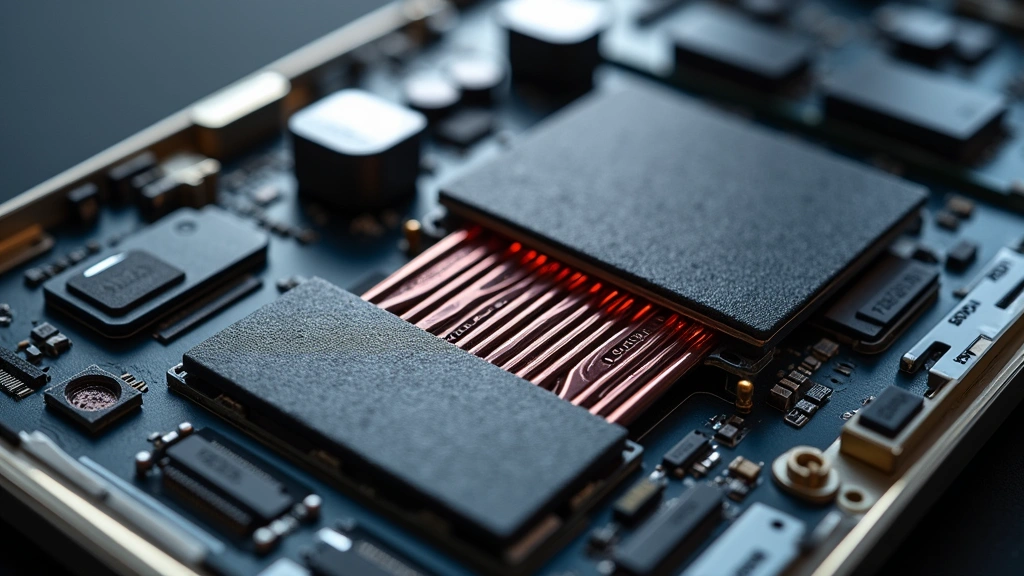
Revolutionary Cell Tech? Expert Analysis Inside!
The mobile technology landscape is experiencing unprecedented transformation, with cellular innovations emerging faster than ever before. Modern cell tech trailers showcase groundbreaking advancements in battery chemistry, antenna design, and signal processing that promise to redefine how we communicate. This comprehensive analysis explores the cutting-edge developments reshaping the cellular industry and examines whether these innovations truly deserve the revolutionary label they’re receiving.
From 5G infrastructure evolution to next-generation power management systems, today’s cellular technology represents the culmination of decades of research and engineering excellence. Manufacturers are pushing boundaries with novel materials, AI-driven optimization, and unprecedented processing speeds. Understanding these advancements requires deep technical knowledge and careful evaluation of real-world performance metrics, something we’ll address throughout this detailed exploration.
Next-Generation Battery Technology
Battery performance remains the most critical bottleneck in cellular device advancement. Current lithium-ion technology has reached practical efficiency limits, prompting manufacturers to explore solid-state batteries, silicon-anode configurations, and alternative chemistries. These innovations promise 40-60% capacity increases while reducing charging times from hours to minutes.
Solid-state batteries replace liquid electrolytes with ceramic or polymer materials, dramatically improving energy density. Samsung and Samsung Electronics have demonstrated prototypes achieving over 900Wh/L, compared to 250-300Wh/L in conventional cells. This represents a genuine breakthrough in power storage, enabling thinner devices without sacrificing runtime.
Silicon-anode technology offers another compelling direction. Traditional graphite anodes limit capacity, while silicon can store ten times more lithium ions. Companies are now implementing nano-structured silicon with carbon coating to address expansion issues during charge cycles. The result: batteries maintaining 80% capacity after 1000+ cycles, extending device lifespan significantly.
Manufacturers are also investing in sustainable battery technologies utilizing sodium-ion and lithium-iron-phosphate chemistries. These alternatives reduce reliance on cobalt mining, addressing environmental and ethical concerns while maintaining competitive performance metrics. Sodium-ion cells offer 160Wh/kg energy density—respectable for budget and mid-range devices.
5G Evolution and 6G Prospects
Fifth-generation networks have transformed mobile connectivity, but the technology continues evolving. Current 5G deployments reach 1-2Gbps in real-world conditions, with laboratory prototypes achieving 10Gbps under optimal circumstances. Network optimization through beamforming, massive MIMO arrays, and millimeter-wave spectrum utilization continues expanding capacity and reliability.
The transition toward AI-optimized network management represents perhaps the most significant 5G advancement. Machine learning algorithms now predict network congestion, dynamically allocate resources, and optimize power consumption across cellular infrastructure. This intelligent approach reduces latency to sub-10 milliseconds while improving energy efficiency by 30-40%.
6G research is accelerating, with standardization expected between 2028-2030. Terahertz frequency bands promise data rates exceeding 100Gbps, though propagation challenges remain substantial. Researchers at MIT and international telecommunications bodies are developing novel antenna designs and signal processing techniques to overcome atmospheric absorption at these frequencies.
Network slicing technology enables operators to partition physical infrastructure into virtual networks with dedicated performance characteristics. This allows simultaneous optimization for different use cases—ultra-reliable low-latency communication for autonomous vehicles, massive connectivity for IoT sensors, and enhanced mobile broadband for consumer applications. The sophistication here cannot be overstated; this represents fundamental network architecture rethinking.
Advanced Antenna Systems
Antenna technology has undergone revolutionary transformation, moving from simple dipole designs to sophisticated phased arrays and metamaterial structures. Modern smartphones integrate 12-16 antenna elements operating across multiple frequency bands simultaneously, enabling seamless network switching and enhanced signal capture.
Phased array antennas electronically steer radiation patterns without mechanical movement, improving signal quality and reducing interference. These systems measure just millimeters thick, fitting within smartphone bezels while delivering performance previously requiring external antennas. The technology enables beam forming toward nearby base stations, concentrating energy efficiently and reducing power consumption.
Metamaterial antennas represent the cutting edge, using engineered structures with properties not found in nature. These designs achieve unprecedented bandwidth, efficiency, and directivity. Researchers have demonstrated metamaterial antennas with 40-50% wider frequency coverage compared to conventional designs, supporting multiple standards simultaneously without performance degradation.
MIMO (Multiple-Input Multiple-Output) antenna systems transmit and receive multiple data streams simultaneously on identical frequencies. Modern implementations feature 8×8 or 12×12 configurations, quadrupling theoretical throughput. Combined with advanced signal processing, MIMO systems maintain performance in challenging propagation environments where traditional antennas struggle.
Processing Power and Efficiency
Mobile processors have achieved remarkable performance density, with flagship chips delivering desktop-class computing in sub-10-watt power envelopes. Apple’s M-series and Qualcomm’s Snapdragon X Elite processors feature 8-core configurations with clock speeds exceeding 3.5GHz while maintaining thermal efficiency.
The architecture shift toward heterogeneous computing—combining efficiency cores, performance cores, and specialized accelerators—fundamentally changed mobile processing. Efficiency cores consume 1-2 watts during typical tasks, while performance cores activate only when needed. This dynamic power management extends battery life by 30-50% compared to homogeneous designs.
Specialized AI accelerators embedded in modern chips enable on-device machine learning without cloud dependency. These neural processing units (NPUs) feature dedicated tensor cores optimized for matrix operations common in AI workloads. The implications are profound: real-time image processing, advanced voice recognition, and predictive algorithms operate locally, improving privacy and reducing latency.
Manufacturing process improvements continue pushing boundaries. Current 3-nanometer technology nodes pack over 20 billion transistors per square millimeter, compared to just 2-3 billion in 5-nanometer nodes from five years ago. Extreme ultraviolet (EUV) lithography enables this density, though cost and complexity remain substantial challenges.
Thermal Management Solutions
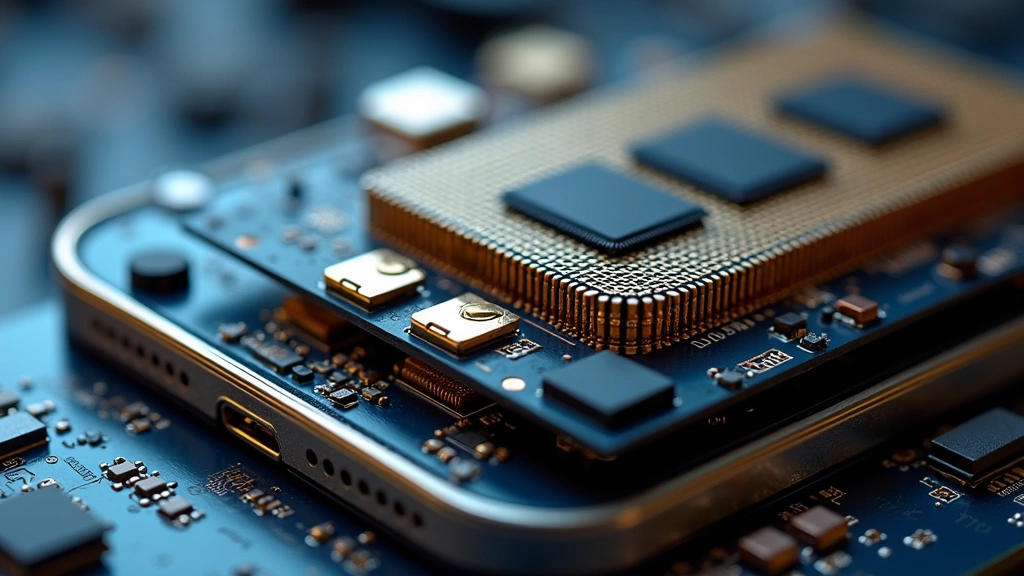
High-performance processors generate significant heat, necessitating sophisticated thermal management. Modern devices employ graphite spreaders, vapor chambers, and thermal interface materials that distribute heat across large surface areas, maintaining safe operating temperatures during sustained load.
Graphite thermal spreaders offer exceptional heat conductivity (1800-2000 W/mK) with minimal thickness. These materials, derived from synthetic diamond manufacturing, efficiently channel processor heat toward device edges and backs where dissipation occurs. Some flagship devices feature multiple spreader layers, creating thermal highways throughout the device.
Vapor chamber technology, borrowed from desktop computing, is gaining adoption in premium smartphones. These sealed containers with minimal internal fluid circulation transport heat through evaporation-condensation cycles, achieving effective thermal conductivity exceeding 5000 W/mK. The technology enables sustained performance without throttling, crucial for demanding applications.
Phase-change materials integrated into device casings absorb excess heat, preventing temperature spikes during intensive tasks. These paraffin-based compounds melt at specific temperatures, absorbing latent heat and then solidify during cooling periods. The approach extends performance windows by 15-20%, allowing longer gaming and video recording sessions.
Real-World Performance Analysis
Laboratory specifications often diverge significantly from practical performance. Real-world testing reveals that theoretical 10Gbps 5G speeds rarely manifest outside laboratory conditions. Typical deployed networks deliver 300-800Mbps, limited by spectrum availability, interference, and infrastructure maturity.
Battery endurance claims warrant skepticism. Manufacturer ratings assume specific usage patterns rarely matching real-world behavior. Continuous video streaming, gaming, and background app activity drain batteries 20-30% faster than official specifications indicate. Independent testing by GSMArena and NotebookCheck provides more accurate assessments.
Processing power scaling shows diminishing returns beyond flagship tiers. Mid-range processors deliver 70-80% flagship performance at half the cost and power consumption. For typical users, this represents optimal value, as the performance gap becomes imperceptible during routine tasks.
Camera and display technologies have matured substantially. 120Hz refresh rates, once exotic, now appear across mid-range devices. Computational photography powered by artificial intelligence has become more impactful than raw megapixel counts, with algorithmic enhancement producing superior results to brute-force sensor improvements.
Thermal Management Solutions
” alt=”Close-up of advanced thermal management components including vapor chamber and graphite spreader in smartphone”>
Advanced thermal management extends beyond component-level solutions. System-level approaches integrate software optimization, predictive throttling, and intelligent workload distribution. Operating systems now monitor thermal status continuously, redistributing tasks to cooler cores before temperature thresholds trigger performance reduction.
Passive cooling dominates consumer devices, but some gaming-oriented phones incorporate active cooling with miniature fans. These systems, measuring just 5mm diameter, move air across vapor chambers at 10,000+ RPM, reducing peak temperatures by 8-12 degrees Celsius. The trade-off includes minor noise and power consumption, acceptable for enthusiasts.
Industry Impact and Adoption
The cellular technology revolution creates substantial market shifts. Premium devices command higher prices due to advanced components, while mid-range offerings capture increasing market share through improved value propositions. The technology sector stocks reflect this dynamic, with component manufacturers and infrastructure providers experiencing strong growth.
Enterprise adoption of advanced cellular technology accelerates IoT deployment, autonomous systems, and mobile computing infrastructure. Businesses invest in 5G-ready networks to support emerging applications, driving carrier infrastructure spending. This creates positive feedback loops where consumer and enterprise demand reinforce each other.
Regulatory environments increasingly influence technology adoption. Spectrum allocation policies, radiation exposure standards, and manufacturing environmental requirements shape product development. Understanding these regulatory frameworks is essential for evaluating real-world technology viability beyond theoretical capabilities.
The sustainability dimension cannot be overlooked. Battery recycling programs, reducing manufacturing waste, and extending device lifespans through software support all influence technology assessment. Companies implementing comprehensive sustainability programs gain competitive advantages while addressing environmental concerns.

” alt=”Smartphone displaying 5G network indicator with modern cellular tower infrastructure in background”>
FAQ
Are solid-state batteries truly revolutionary?
Solid-state batteries represent significant advancement with 40-60% capacity improvements and faster charging. However, manufacturing challenges, cost, and long-term reliability data remain incomplete. Current prototypes show promise, but mass-market adoption likely requires 2-3 additional years of development.
How much faster is 6G compared to 5G?
6G promises 10-100x theoretical speed improvements, potentially reaching 100Gbps. However, practical advantages depend on infrastructure deployment, spectrum availability, and application requirements. Most users won’t perceive performance differences in typical usage scenarios.
Should I upgrade to 5G now?
5G adoption depends on network coverage in your area and use case requirements. If 5G networks are established locally and you require high bandwidth, upgrading makes sense. Otherwise, current 4G LTE technology remains adequate for most applications, offering better battery efficiency.
What’s the most important smartphone technology advancement?
Battery efficiency and processing optimization provide the most tangible user benefits. Advances in thermal management, AI acceleration, and power management directly impact daily experience more than incremental network speed improvements.
How long will current phones remain viable?
Quality smartphones typically remain useful for 5-7 years with proper care. Software support, battery health, and security updates determine longevity more than hardware specifications. Investing in durable, repairable devices maximizes value and reduces environmental impact.
Are manufacturer specifications reliable?
Manufacturer specs represent theoretical maximums under ideal conditions. Real-world performance typically achieves 60-80% of advertised figures. Independent testing provides more accurate expectations for practical usage scenarios.


