Ceramic Capacitor Uses: Expert Insights and Technical Applications
Ceramic capacitors have become indispensable components in modern electronics, powering everything from smartphones to industrial machinery. These tiny but mighty devices store and release electrical energy with remarkable efficiency, making them essential building blocks in contemporary circuit design. Understanding their diverse applications helps tech enthusiasts and professionals appreciate the complexity hidden beneath everyday gadget surfaces.
As a gadget reviewer and tech analyst, I’ve examined countless devices where ceramic capacitors play crucial roles in performance and reliability. Their widespread adoption across industries stems from their exceptional reliability, compact form factor, and cost-effectiveness. Whether you’re upgrading your laptop hardware or exploring computing solutions, ceramic capacitors work silently in the background ensuring stable power delivery.
What Are Ceramic Capacitors and How Do They Work
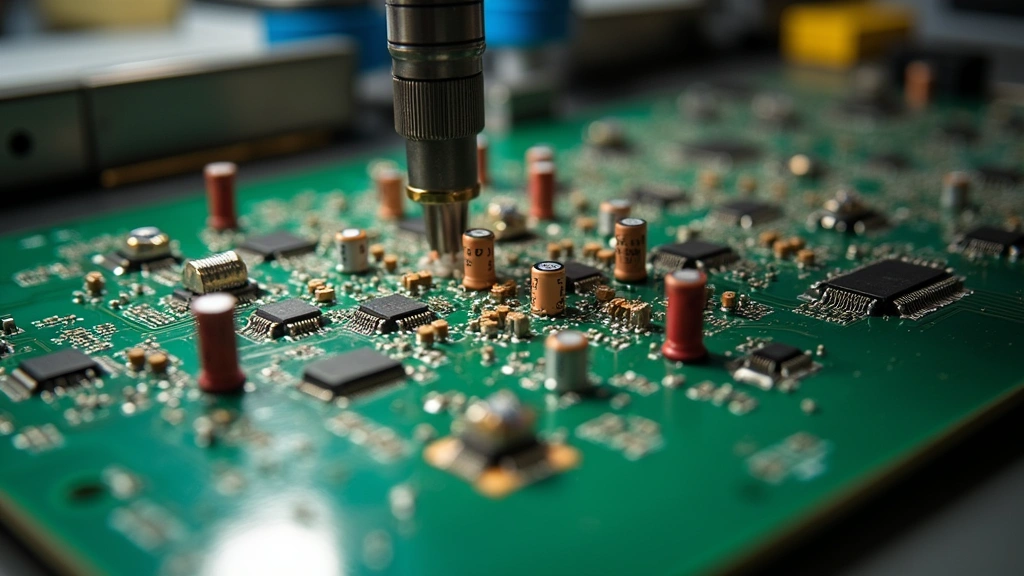
Ceramic capacitors are passive electronic components constructed from ceramic dielectric material sandwiched between metal electrodes. The ceramic material, typically composed of titanium dioxide or other ferroelectric compounds, provides exceptional dielectric properties that enable efficient energy storage. When voltage applies across the electrodes, the ceramic material polarizes, creating an electric field that stores energy in the dielectric.
The fundamental principle governing ceramic capacitors involves Faraday’s law of capacitance. The capacitance value depends on three factors: the dielectric constant of the ceramic material, the plate area, and the distance between electrodes. Manufacturers can precisely control these parameters to produce capacitors ranging from picofarads to microfarads, each serving specific circuit requirements.
Modern ceramic capacitors come in various configurations, including surface-mount devices (SMD) that revolutionized circuit board density and manufacturing efficiency. The ceramic capacitor technology has evolved significantly, with improvements in temperature stability, voltage ratings, and frequency response characteristics. These advancements make ceramic capacitors superior to older technologies in most contemporary applications.
Temperature coefficient ratings categorize ceramic capacitors into different classes. Class 1 capacitors offer excellent stability across temperature ranges, making them ideal for precision timing circuits. Class 2 capacitors provide higher capacitance density but with greater temperature and voltage dependencies, suitable for power supply applications where exact capacitance values matter less than overall performance.
Power Supply Decoupling and Voltage Regulation
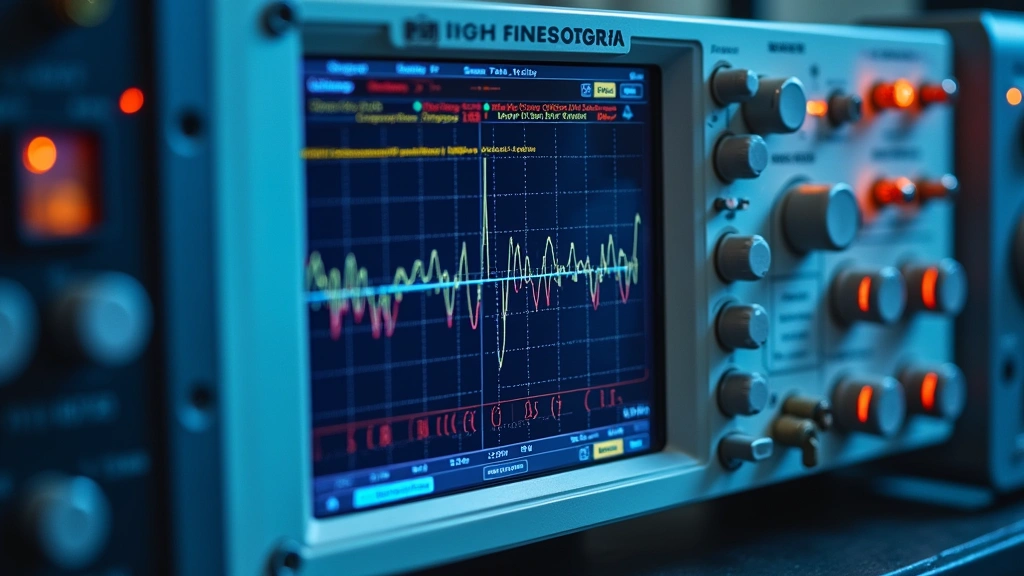
One of the most critical ceramic capacitor uses involves decoupling and bypassing in power supply circuits. When integrated circuits draw current, they create voltage transients that can damage sensitive components or cause logic errors. Ceramic capacitors placed near IC power pins provide low-impedance paths to ground, effectively absorbing these transient spikes before they propagate through the circuit.
Decoupling capacitors work by storing charge during normal operation and releasing it instantaneously when the IC demands sudden current increases. This rapid response capability, measured in nanoseconds, prevents voltage droop that could compromise circuit stability. Engineers typically employ multiple capacitor values in parallel to cover different frequency ranges, creating a multi-layer decoupling strategy.
The importance of proper decoupling cannot be overstated in modern high-speed electronics. As processors operate at gigahertz frequencies, power delivery noise becomes increasingly problematic. Ceramic capacitors with low equivalent series resistance (ESR) and low equivalent series inductance (ESL) provide the responsiveness required for contemporary processors. AI processors and advanced computing systems rely heavily on sophisticated power delivery networks incorporating hundreds of ceramic capacitors.
Voltage regulation circuits benefit tremendously from ceramic capacitors’ ability to maintain stable output voltages despite load variations. Buck converters, boost converters, and linear regulators all employ ceramic capacitors in their output filtering stages. The rapid transient response ensures regulated voltages remain within acceptable tolerance bands, protecting downstream components from damage.
High-Frequency Applications in RF and Wireless
Ceramic capacitors excel in radio frequency and wireless communication applications where frequency stability and minimal signal loss prove essential. Their low-loss characteristics at gigahertz frequencies make them ideal for impedance matching networks, coupling circuits, and resonant tank circuits in transmitters and receivers.
In RF matching networks, ceramic capacitors help transform source impedance to load impedance, maximizing power transfer efficiency. Engineers select specific capacitor values and configurations to achieve desired frequency responses across communication bands. The stability of ceramic dielectrics across temperature and voltage variations ensures consistent impedance matching regardless of operating conditions.
Coupling and blocking applications utilize ceramic capacitors to transfer AC signals while blocking DC components. In multi-stage amplifiers, coupling capacitors between stages prevent DC bias voltages from affecting subsequent stages while allowing signal information to pass. This functionality proves critical in wireless receivers handling extremely weak signals where signal integrity directly impacts reception quality.
Modern smartphones integrate thousands of ceramic capacitors handling RF signal processing. From the antenna matching networks to the power amplifier output filtering, ceramic capacitors enable the sophisticated wireless connectivity that defines contemporary mobile devices. The miniaturization of these components through advanced manufacturing techniques allows engineers to pack increasingly complex RF circuits into compact form factors.
Audio and Signal Processing Uses
Audio electronics applications represent another significant ceramic capacitor use case. In audio amplifiers, ceramic capacitors provide AC coupling between amplification stages, blocking DC while preserving audio frequency content. Their low distortion characteristics make them suitable for high-fidelity applications where signal purity directly impacts listening experience.
Signal conditioning circuits employ ceramic capacitors for filtering and noise reduction. Low-pass filters incorporate capacitors to attenuate high-frequency noise while preserving desired signal components. The frequency response characteristics of ceramic capacitors, when combined with resistive elements, create predictable filter responses that engineers can calculate and optimize for specific applications.
Microphone preamplifiers and audio input stages benefit from ceramic capacitors’ low noise performance. When handling signals in the microvolt range, capacitor noise characteristics become critical. High-quality ceramic capacitors with excellent dielectric stability ensure that the capacitor itself doesn’t introduce noise that would degrade audio quality.
Musical instrument amplifiers and professional audio equipment often feature ceramic capacitors in their signal paths. The cumulative effect of hundreds of capacitors throughout an audio chain influences the overall sound character. Manufacturers carefully select capacitor types and brands to achieve desired sonic characteristics, with some audiophiles claiming to perceive differences between premium capacitor brands.
Consumer Electronics Integration
Ceramic capacitors appear ubiquitously throughout consumer electronics, from smartwatches to televisions. Their reliability, compact size, and cost-effectiveness make them the default choice for consumer device manufacturers. A typical smartphone contains hundreds of ceramic capacitors performing diverse functions across its various circuit boards.
Display drivers, sensor interfaces, and power management circuits all rely on ceramic capacitors for stable operation. The integration of ceramic capacitors into flexible circuit boards enables the complex form factors of modern foldable smartphones and wearable devices. Manufacturers can now produce capacitors small enough to fit into spaces previously considered impossible to populate with electronic components.
USB power delivery systems employ ceramic capacitors extensively. As charging speeds increase and power levels climb, the importance of stable power delivery grows. Ceramic capacitors in the charging circuitry ensure that connected devices receive clean, regulated power without voltage spikes that could damage batteries or sensitive electronics.
Smart home devices benefit from ceramic capacitors’ reliability in always-on applications. These devices operate continuously for months or years without maintenance, demanding components with exceptional longevity. Ceramic capacitors’ proven track record in long-term reliability makes them ideal for applications where replacement would prove inconvenient or impossible.
Industrial and Automotive Applications
Industrial electronics push ceramic capacitors to their limits, operating in extreme temperature ranges and harsh electrical environments. Power conversion equipment, motor drives, and industrial control systems employ ceramic capacitors that can withstand voltage transients and temperature fluctuations that would destroy lesser components.
Automotive electronics represent a particularly demanding application where reliability directly impacts safety. Engine control units, infotainment systems, and advanced driver assistance systems all incorporate ceramic capacitors. The automotive industry’s stringent quality requirements and extended lifespan demands ensure that only the highest-quality ceramic capacitors find their way into vehicles.
Electric vehicle charging infrastructure relies on ceramic capacitors for power factor correction and harmonic filtering. As charging speeds increase to support faster vehicle charging, the electrical stresses on capacitors intensify. Modern ceramic capacitor technology enables safe, efficient charging infrastructure capable of delivering megawatts of power.
Industrial power supplies operating in factories and data centers employ ceramic capacitors in their input and output filtering stages. The harsh electrical environment of industrial facilities, with frequent power transients and occasional lightning strikes, demands robust components. Ceramic capacitors rated for industrial conditions provide the reliability necessary for continuous operation.
Choosing the Right Ceramic Capacitor
Selecting appropriate ceramic capacitors for specific applications requires understanding several critical parameters. Capacitance value, voltage rating, temperature coefficient, and frequency response all influence whether a particular capacitor will perform adequately in a given circuit.
Capacitance value determines how much charge a capacitor can store. Engineers calculate required values based on circuit equations, considering factors like time constants in RC circuits or resonant frequencies in LC circuits. The tolerance rating indicates how much the actual capacitance might deviate from the marked value, with precision applications requiring tighter tolerances.
Voltage rating specifies the maximum voltage the capacitor can safely withstand. Operating a capacitor beyond its voltage rating risks catastrophic failure. Designers typically select capacitors with voltage ratings significantly exceeding maximum expected voltages to ensure safety margins. This conservative approach prevents failures due to unexpected voltage spikes.
Temperature coefficient ratings indicate how capacitance changes across temperature ranges. Class 1 capacitors maintain stable capacitance across wide temperature ranges, making them suitable for precision timing circuits and temperature-sensitive applications. Class 2 capacitors exhibit greater capacitance variation but offer higher capacitance density, making them economical for non-critical applications.
Frequency response characteristics determine how capacitor impedance changes across frequency ranges. At low frequencies, capacitor impedance is high, blocking DC while passing AC signals. As frequency increases, impedance decreases until reaching the capacitor’s self-resonant frequency, where impedance reaches minimum. Beyond resonance, impedance increases due to parasitic inductance effects.
Reliability ratings and failure rate data help engineers predict component longevity. Manufacturers provide derating curves showing how failure rates increase with temperature and voltage stress. Careful application of derating principles ensures that capacitors operate well within safe limits, maximizing circuit reliability and lifespan.
Cost considerations often influence capacitor selection in consumer electronics manufacturing. Bulk purchasing of standard capacitor values reduces component costs, allowing manufacturers to achieve competitive pricing. However, premium applications sometimes justify higher-cost specialty capacitors offering superior performance or reliability characteristics.
Understanding current technology trends and manufacturing innovations helps engineers stay current with ceramic capacitor capabilities. New materials and manufacturing processes continuously improve capacitor performance, enabling applications previously considered impossible.
Sourcing ceramic capacitors from reputable manufacturers ensures consistent quality and genuine specifications. Counterfeit components represent a significant problem in electronics supply chains, with fake capacitors potentially causing field failures. Establishing relationships with authorized distributors protects against counterfeit risks while ensuring access to genuine components with valid warranties.
Environmental considerations increasingly influence capacitor selection. Lead-free manufacturing processes and RoHS compliance have become industry standards, eliminating toxic materials from electronic products. Manufacturers continue developing environmentally responsible capacitor technologies that meet stringent regulatory requirements while maintaining performance.
The expansion of cloud computing infrastructure drives demand for increasingly sophisticated power delivery systems where ceramic capacitors play vital roles. Data centers requiring reliable, efficient power conversion technology benefit from advanced ceramic capacitor designs optimized for modern applications.
FAQ
What distinguishes ceramic capacitors from other capacitor types?
Ceramic capacitors use ceramic dielectric materials offering excellent frequency response, compact size, and cost-effectiveness. Unlike electrolytic capacitors requiring specific polarity, ceramic capacitors work in either direction. Their superior high-frequency performance makes them ideal for RF applications where film or electrolytic capacitors would prove inadequate.
How do temperature coefficients affect ceramic capacitor performance?
Temperature coefficients indicate capacitance variation across temperature ranges. Class 1 capacitors maintain nearly constant capacitance, while Class 2 capacitors show greater variation. Applications requiring stable values across temperature ranges benefit from Class 1 capacitors, while non-critical applications can utilize Class 2 capacitors’ higher capacitance density.
Can ceramic capacitors handle high-frequency applications?
Yes, ceramic capacitors excel at high frequencies, with some designs rated for gigahertz applications. Their low parasitic inductance and resistance enable efficient operation in RF circuits, making them preferred components for wireless communication systems and high-speed digital circuits.
What causes ceramic capacitor failures in the field?
Overvoltage stress, excessive temperature operation, and manufacturing defects represent primary failure causes. Proper derating practices, adequate voltage margins, and sourcing from reputable manufacturers minimize failure risks. Environmental factors like moisture ingress in certain applications can also contribute to failures.
How important is equivalent series resistance in capacitor selection?
ESR significantly impacts capacitor performance in power delivery applications. Lower ESR values reduce heat generation and improve voltage regulation efficiency. High-frequency applications benefit particularly from low-ESR capacitors that minimize impedance at operating frequencies.
Are ceramic capacitors suitable for audio applications?
Modern ceramic capacitors perform excellently in audio circuits, with high-quality designs offering low distortion and minimal noise. Professional audio equipment commonly features ceramic capacitors selected specifically for audio applications, demonstrating their viability in demanding sound reproduction systems.


