Ceramic Capacitor Uses: Expert Insights for Modern Electronics
Ceramic capacitors have become the backbone of modern electronics, powering everything from smartphones to industrial machinery. These tiny but mighty components store and release electrical energy with remarkable efficiency, making them indispensable in contemporary technology. Whether you’re building a custom PC, designing circuit boards, or simply curious about what makes your gadgets tick, understanding ceramic capacitor uses is essential knowledge for any tech enthusiast.
In this comprehensive guide, we’ll explore the multifaceted applications of ceramic capacitors across various industries and devices. From high-frequency filtering to energy storage solutions, these components play critical roles that often go unnoticed by end-users. We’ll break down the technical specifications, real-world applications, and expert insights that make ceramic capacitors the preferred choice for engineers worldwide.
What Are Ceramic Capacitors and How Do They Work
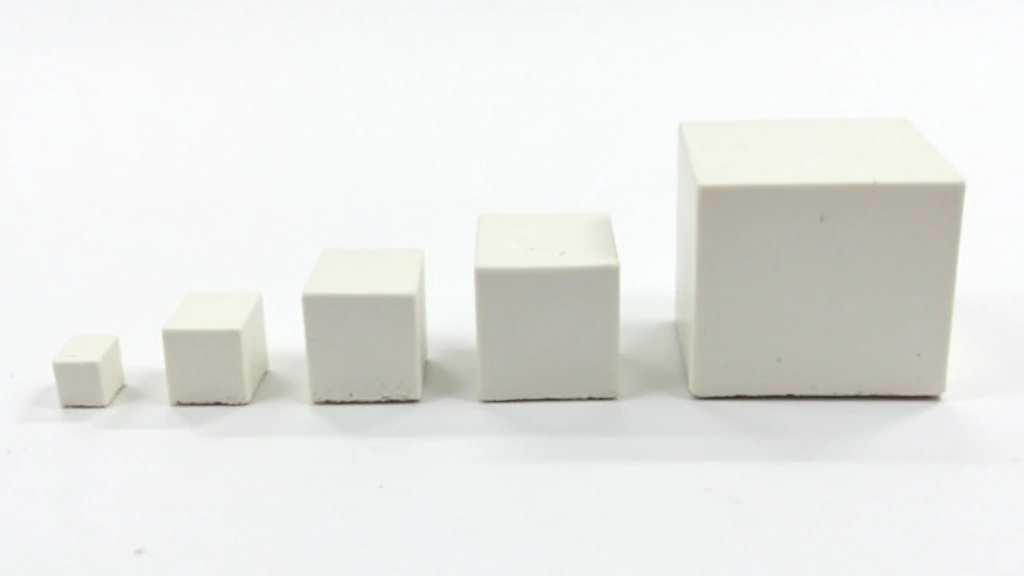
Ceramic capacitors are passive electronic components constructed from ceramic materials sandwiched between two conductive plates. The ceramic material acts as a dielectric, allowing the capacitor to store electrical charge when voltage is applied. Unlike other capacitor technologies, ceramic versions offer exceptional advantages in size, cost, and performance characteristics.
The fundamental principle behind ceramic capacitors involves electrostatic field generation. When electrical potential is applied across the plates, electrons accumulate on one plate while positive charges gather on the other, creating an electrical field within the dielectric material. This charge storage capability makes ceramic capacitors essential for filtering, coupling, and decoupling applications throughout electronic devices.
Modern ceramic capacitors are manufactured using multilayer construction techniques, where hundreds of ceramic and metal layers are stacked to increase capacitance while maintaining compact physical dimensions. This innovative approach has revolutionized component design, allowing engineers to pack more functionality into smaller spaces—a critical requirement in today’s miniaturized gadgets.
The capacitance value, measured in farads, depends on three primary factors: the dielectric constant of the ceramic material, the surface area of the conductive plates, and the distance between them. Manufacturers can fine-tune these parameters to create capacitors ranging from picofarads to microfarads, suitable for virtually any application imaginable.
High-Frequency Applications and Signal Integrity
One of the most critical ceramic capacitor uses in modern technology involves managing high-frequency signals. In RF (radio frequency) circuits, digital signal processors, and wireless communication devices, ceramic capacitors provide essential impedance matching and signal conditioning. Their low equivalent series resistance (ESR) makes them ideal for handling the demanding requirements of contemporary wireless protocols.
High-speed digital circuits operating at gigahertz frequencies require precise impedance control to prevent signal degradation and electromagnetic interference. Ceramic capacitors excel in this environment, offering stable performance across wide frequency ranges. Engineers rely on these components to maintain signal integrity in applications ranging from 5G networking equipment to advanced radar systems used in aerospace and defense sectors.
The self-resonant frequency (SRF) of ceramic capacitors—the frequency at which capacitive and inductive reactances cancel each other—is particularly important for high-frequency work. Quality ceramic capacitors exhibit SRF values well above the operating frequencies of the circuits they serve, ensuring reliable performance without unexpected resonance effects that could compromise signal quality.
Multilayer ceramic capacitors (MLCCs) have become the standard choice for high-frequency applications due to their superior frequency response characteristics. According to industry analysis from CNET, the global demand for high-performance ceramic capacitors continues to surge as 5G infrastructure deployment accelerates worldwide.
Power Supply Decoupling in Digital Circuits
Power supply decoupling stands as perhaps the most ubiquitous application of ceramic capacitors in modern electronics. Every processor, memory chip, and digital integrated circuit requires multiple decoupling capacitors placed strategically on the printed circuit board to maintain stable power delivery and suppress voltage transients.
When digital circuits switch states rapidly, they draw current in sudden bursts, causing momentary voltage dips that could trigger logic errors or system instability. Ceramic capacitors positioned near the power pins of integrated circuits provide local charge storage, supplying the needed current during these transient events while the main power supply stabilizes. This decoupling action is absolutely critical for reliable operation of modern processors and microcontrollers.
Design engineers typically employ a pyramid approach to decoupling, using different capacitor values in specific quantities. Small-value capacitors (like 100nF) handle high-frequency transients, while larger-value capacitors (like 10µF) address lower-frequency power delivery requirements. This multi-layer strategy ensures comprehensive noise suppression across the entire frequency spectrum relevant to the circuit’s operation.
The importance of proper decoupling has increased dramatically as processor clock speeds have risen. Modern CPUs operating at multi-gigahertz frequencies can generate voltage transients lasting only nanoseconds, requiring capacitors with exceptional speed and low ESR characteristics. Ceramic capacitors meet these demanding specifications, making them the default choice for every high-performance computing platform.
Ceramic Capacitors in Consumer Electronics
Walk into any electronics store and examine the internals of modern gadgets—you’ll find ceramic capacitors everywhere. Smartphones contain dozens of these components managing power distribution, filtering audio signals, and stabilizing clock oscillators. The same applies to tablets, laptops, and wearable devices that have become central to our digital lives.
In audio equipment, ceramic capacitors play vital roles in signal coupling and filtering stages. High-quality audio amplifiers use ceramic capacitors to remove DC components from audio signals while preserving the full frequency range audible to human ears. The stability and reliability of these components directly impact the sound quality experienced by users.
When considering best laptops for students and professionals, understanding the internal component quality matters significantly. The ceramic capacitors used in power delivery systems directly influence system stability, battery life, and thermal management. Premium laptops incorporate higher-grade ceramic capacitors with superior temperature coefficients and lower leakage currents.
Display technology represents another crucial area where ceramic capacitors prove essential. Modern LCD and OLED screens require precise voltage regulation across multiple power rails, with ceramic capacitors providing the necessary filtering and stabilization. The visual quality and longevity of modern displays depend partly on having adequate ceramic capacitor support in the power management circuitry.
Television sets, gaming consoles, and streaming devices all rely heavily on ceramic capacitor technology. The power supplies in these devices contain dozens of carefully selected ceramic capacitors rated for different voltages and frequency ranges. The thermal stability of these capacitors ensures reliable operation even during extended gaming sessions or continuous streaming scenarios.
Industrial and Automotive Applications
Industrial equipment and automotive systems operate in harsh environments where component reliability is absolutely non-negotiable. Ceramic capacitors have earned their place in these demanding applications through proven durability and consistent performance under extreme conditions.
In automotive electronics, ceramic capacitors manage power delivery to engine control units, transmission control modules, and advanced driver assistance systems. Modern vehicles contain hundreds of ceramic capacitors distributed throughout various control modules and power distribution networks. The safety-critical nature of automotive applications demands capacitors with exceptional reliability ratings and predictable performance across the full operating temperature range.
Industrial motor drives and variable frequency drives (VFDs) employ ceramic capacitors for DC link filtering and snubbing functions. These high-power applications require capacitors capable of handling significant voltage ripple and transient stress without degradation. Ceramic capacitors rated for industrial-grade applications provide the necessary performance margins to ensure years of trouble-free operation in manufacturing facilities.
Power conversion systems in solar inverters and wind turbine controllers incorporate ceramic capacitors for various filtering and energy storage functions. As industries worldwide transition toward renewable energy technologies, the demand for reliable ceramic capacitors in these applications continues growing exponentially.
According to The Verge’s technology reporting, the shift toward electrified transportation and renewable energy infrastructure is driving substantial investments in high-reliability ceramic capacitor manufacturing capacity.
Renewable Energy and Power Management
The transition to renewable energy sources has created new demands for advanced ceramic capacitor applications. Solar panel microinverters and battery management systems rely extensively on ceramic capacitors for efficient power conversion and voltage regulation. These components help maximize energy harvest from renewable sources while protecting expensive battery packs from voltage transients.
Energy storage systems, from home battery backup solutions to grid-scale installations, depend on ceramic capacitors for power factor correction and harmonic filtering. The stability and efficiency of these systems directly impact how effectively renewable energy can be integrated into existing electrical grids.
Wireless charging systems, increasingly common in consumer electronics and emerging vehicle charging infrastructure, employ ceramic capacitors throughout their power conversion stages. The efficiency of wireless power transfer systems depends partly on having high-quality capacitors managing the resonant energy transfer process.
Smart grid technology and electrical distribution modernization projects incorporate ceramic capacitors in numerous applications, from power conditioning to communication signal filtering. As electrical infrastructure becomes increasingly intelligent and automated, the role of reliable ceramic capacitors becomes ever more critical to system performance and stability.
Selecting the Right Ceramic Capacitor
Choosing appropriate ceramic capacitors for specific applications requires understanding several key specifications and parameters. Capacitance value represents just one consideration; voltage rating, temperature coefficient, equivalent series resistance, and dielectric type all significantly impact component performance in real-world circuits.
Temperature coefficient indicates how capacitance changes with temperature variations. Class 1 ceramic capacitors (like C0G/NP0) offer excellent stability across wide temperature ranges, making them ideal for precision applications and temperature-sensitive circuits. Class 2 and Class 3 ceramics provide higher capacitance density but with greater temperature sensitivity, suitable for applications where exact capacitance values matter less than overall filtering performance.
When upgrading laptop components or building custom systems, understanding power delivery requirements helps determine appropriate ceramic capacitor specifications. Modern high-performance processors require multiple decoupling capacitors with specific voltage and capacitance ratings to ensure stable operation.
Voltage rating selection must account not just for nominal operating voltage, but also for transient overvoltage conditions that might occur during power supply events. Selecting capacitors with adequate voltage derating margins ensures long-term reliability and prevents catastrophic failures from voltage stress.
Lead-free manufacturing processes have become standard in the ceramic capacitor industry, addressing environmental concerns while maintaining performance characteristics. Modern ceramic capacitors use soldering materials and manufacturing techniques that provide equivalent reliability to older lead-based components while reducing environmental impact.
According to Mouser Electronics component specifications, the latest generation of ceramic capacitors offers improved voltage stability and reduced DC bias effects compared to previous generations, enabling more compact and efficient circuit designs.
Quality manufacturers provide detailed technical datasheets specifying performance across operating conditions. Engineers should consult these resources when selecting capacitors for critical applications, ensuring component specifications align with circuit requirements and environmental constraints.
FAQ
What distinguishes ceramic capacitors from electrolytic capacitors?
Ceramic capacitors offer much lower equivalent series resistance (ESR), making them superior for high-frequency applications and decoupling tasks. Electrolytic capacitors provide higher capacitance values in smaller physical sizes but with higher ESR and slower response times, making them better suited for bulk energy storage and power supply filtering rather than high-frequency noise suppression.
Can ceramic capacitors fail unexpectedly?
While ceramic capacitors are generally reliable, they can experience failures if subjected to voltage stress beyond their ratings, excessive thermal cycling, or mechanical stress during assembly. Selecting capacitors with appropriate voltage and temperature derating margins significantly reduces failure risk in real-world applications.
How do multilayer ceramic capacitors achieve such high capacitance values?
Multilayer construction stacks hundreds of alternating ceramic and metal layers, dramatically increasing the effective plate area within a compact physical size. This innovative manufacturing technique allows engineers to achieve capacitance values previously requiring much larger components, enabling miniaturization of modern electronics.
What role do ceramic capacitors play in 5G technology?
Ceramic capacitors are essential for high-frequency signal processing, impedance matching, and power delivery in 5G infrastructure equipment. Their low ESR and stable frequency response characteristics make them ideal for managing the gigahertz-frequency signals used in modern wireless communications.
Are all ceramic capacitors suitable for all applications?
No, ceramic capacitor selection depends on specific circuit requirements including capacitance value, voltage rating, temperature coefficient, and frequency response characteristics. Using inappropriate ceramic capacitors can result in circuit malfunction, reduced performance, or component failure. Always consult circuit design specifications when selecting capacitors.


