
Clothing tech packs represent the backbone of modern fashion design and manufacturing. Whether you’re an emerging designer launching your first collection or an established brand scaling production, understanding how to create comprehensive clothing tech packs is essential for maintaining quality, consistency, and efficiency across all your garments. A tech pack serves as the complete technical blueprint that communicates your design vision to manufacturers, pattern makers, and quality control teams, ensuring every piece produced matches your exact specifications.
In today’s global fashion landscape, where production often spans multiple continents and manufacturers, a well-executed clothing tech pack eliminates ambiguity, reduces costly revisions, and accelerates time-to-market. This guide explores everything designers need to know about creating professional tech packs that manufacturers respect and follow with precision, drawing parallels to how detailed specifications work in technology sectors—much like how comprehensive technical documentation drives digital innovation.

What Is a Clothing Tech Pack?
A clothing tech pack is a comprehensive document package that contains all technical information needed to manufacture a garment. Think of it as the manufacturing equivalent of detailed AI system specifications—every parameter must be precisely documented to achieve consistent results. The tech pack bridges the gap between a designer’s creative vision and the manufacturer’s production capabilities, eliminating language barriers, cultural differences, and interpretation gaps that commonly lead to costly errors.
Professional tech packs typically consist of 5-15 pages depending on garment complexity, including flat sketches, detailed measurements, fabric specifications, construction details, and quality standards. A well-organized tech pack demonstrates professionalism to manufacturers and manufacturers are more likely to prioritize your orders when documentation is thorough and clear. The investment in creating detailed tech packs pays dividends through reduced sampling rounds, faster approvals, and higher first-quality production rates.
For designers working with overseas manufacturers—particularly in Vietnam, China, Bangladesh, and India—the clothing tech pack becomes your primary communication tool. Manufacturers receive hundreds of orders monthly; those with clear, professional tech packs consistently achieve better results because there’s zero ambiguity about expectations.
Essential Components of a Tech Pack
Every professional clothing tech pack should include standardized components that cover all aspects of garment production. The core elements are:
- Cover Page: Style number, name, description, color variations, and intended market
- Flat Technical Drawings: Front, back, and side views showing all design details
- Measurement Specifications: Detailed grading chart with all size specifications
- Fabric and Trim Details: Complete material specifications, supplier information, and color codes
- Construction Details: Seam types, stitching specifications, and assembly sequence
- Hardware and Trim Specifications: Buttons, zippers, labels, and decorative elements
- Color Specifications: Pantone or color reference system for all components
- Quality Standards: Defect tolerance, testing requirements, and acceptance criteria
- Care Instructions: Washing, drying, and maintenance guidelines
- Packaging Details: Folding specifications, labeling, and shipping requirements
Each component serves a specific purpose in the manufacturing chain. The flat technical drawings are perhaps the most critical element, as they provide a visual reference that transcends language barriers. These sketches should be professional-quality, showing precise proportions, seam placements, pocket locations, and all design details with accuracy that rivals technical engineering drawings.
Detailed Measurements and Grading
Measurement specifications form the quantitative foundation of your tech pack. This section must include a complete grading chart that details every dimension of the garment across all size ranges. Measurements typically include:
- Chest/bust width
- Shoulder width
- Sleeve length and circumference
- Waist measurement
- Hip width
- Inseam and outseam length
- Armhole depth
- Neckline opening diameter
- Pocket dimensions
- Cuff and hem widths
- Button placement from seams
- Zipper tape width and length
Precision in measurements cannot be overstated. A difference of just 0.5 inches across multiple sizes can result in hundreds of garments being unusable. Many designers use cloud-based collaboration tools to share and track measurement updates with manufacturers and pattern makers, ensuring everyone works from the latest specifications.
Grading ratios must be mathematically consistent and account for how garments scale across sizes. A size S to M might grade differently than M to L due to how human proportions change. Experienced designers reference industry grading standards specific to their target market—European sizing, US sizing, and Asian sizing all follow different progression ratios.
Design Specifications and References
Visual design documentation includes flat sketches, technical drawings, and reference images that communicate design intent. The flat technical drawing (also called a “flat”) shows the garment from a two-dimensional perspective with all design elements clearly indicated. Professional flats include:
- Accurate proportions matching actual measurements
- All seams, darts, and construction lines
- Pocket placements with specific measurements
- Button and hardware locations with exact spacing
- Collar and cuff construction details
- Sleeve cap ease and armhole depth visualization
- Hem and seam allowance specifications
- Decorative elements and embellishments
Many designers now use specialized computer systems with enhanced processing power to run design software like CLO 3D, Gerber, or Adobe Illustrator, which allow creation of photorealistic 3D garment renderings alongside technical flats. These digital tools enable designers to visualize how fabric drapes and moves, catching design issues before samples are cut.
Including detailed reference images—inspiration boards, market comparisons, and similar styles—helps manufacturers understand the overall aesthetic direction. Close-up photos of seam types, stitching patterns, and special construction techniques provide additional clarity.
Material and Fabric Documentation
Fabric specifications are critical because material choice directly impacts garment performance, drape, care requirements, and cost. Your tech pack should document:
- Fiber Content: Exact percentage composition (e.g., 95% cotton, 5% elastane)
- Weight: Measured in grams per square meter (gsm) or ounces per square yard
- Weave Type: Jersey, twill, poplin, sateen, etc.
- Thread Count: Relevant for woven fabrics
- Color: Pantone number, color name, and physical fabric swatch
- Finish: Any special treatments like preshrinking, brushing, or coating
- Supplier Information: Manufacturer name, contact details, and order codes
- Minimum Order Quantities: Fabric lot minimums and lead times
- Care Instructions: Washing temperature, drying method, and special handling
- Performance Standards: Shrinkage limits, color fastness requirements, pilling resistance
For trims and notions, create similar detailed specifications. A button specification might include material (wood, plastic, metal), size in millimeters, color code, quantity per garment, and supplier details. Zippers should specify slider type, tape material, length, and color. Labels require font specifications, text content, print method, and attachment details.
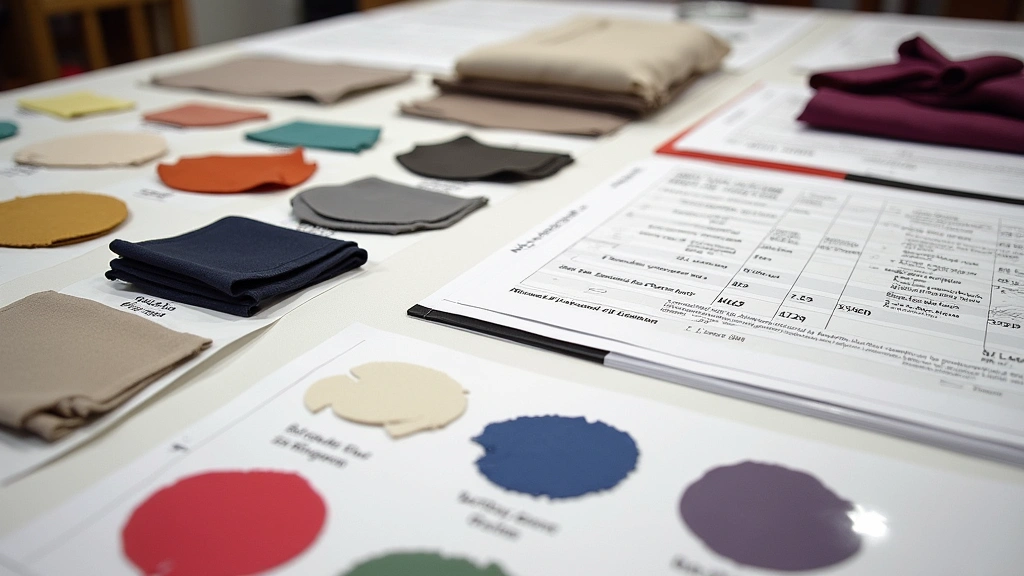
Including physical fabric and trim swatches attached to your tech pack is invaluable. Manufacturers can reference these if digital color specifications seem unclear. Many designers create a separate “swatch sheet” that’s attached to or included with the tech pack.
Construction and Assembly Details
This section details exactly how the garment should be assembled, seam by seam. It includes:
- Seam Types: Flat fell, French seam, bound seam, safety stitch, etc.
- Stitch Count: Number of stitches per inch (typically 12-16 for most apparel)
- Thread Specifications: Thread type, weight, color, and supplier
- Assembly Sequence: Step-by-step order of garment construction
- Hem Details: Width, stitch type, and finish method
- Seam Allowances: Standard allowances and any variations
- Pressing Details: Which seams are pressed open, which are pressed to one side
- Special Techniques: Topstitching widths, bartacks, reinforcement stitching
Diagrams showing seam placements, reinforcement areas, and construction flow help manufacturers understand complex assembly requirements. Many brands include detailed photos of approved samples showing exactly how seams should appear, how hems should be finished, and what stitching quality is acceptable.
Quality Standards and Testing
Quality specifications establish acceptable standards and testing protocols. This section should define:
- Appearance Standards: Allowable defects by severity (critical, major, minor)
- Measurement Tolerance: Acceptable variance from spec measurements (typically ±0.5 to 1 inch depending on measurement)
- Color Matching: Acceptable color variance using industry standards like AAMA or CMC
- Seam Strength: Minimum breaking strength requirements
- Shrinkage Limits: Maximum acceptable shrinkage after washing
- Colorfastness: Washing, rubbing, and light fastness standards
- Pilling Resistance: Grade levels for fabric pilling
- Testing Procedures: Which tests are performed and on what percentage of production
Reference industry standards like ASTM International standards or AATCC testing standards for scientific credibility. Many manufacturers already perform these tests; citing specific standards shows you understand quality requirements professionally.
Digital Tools for Tech Pack Creation
Modern designers have access to specialized software that streamlines tech pack creation and management. Professional options include:
- CLO 3D: Industry-leading 3D design software allowing photorealistic garment visualization and technical flat generation
- Adobe Creative Suite: Illustrator for flats, Photoshop for detailed specification documents
- Gerber AccuMark: Professional grading and pattern-making software used by major manufacturers
- Browzwear: 3D design and sample management platform with integrated tech pack features
- Specifio: Specialized tech pack software designed specifically for fashion brands
- Google Sheets/Excel: Cost-effective option for measurement specifications and grading charts
Many emerging designers start with Adobe Illustrator and spreadsheets, then graduate to specialized fashion software as their business scales. The key is consistency—whatever tools you use, ensure your tech packs maintain professional standards and include all necessary information.
Digital collaboration platforms allow manufacturers to download tech packs, ask clarifying questions, and submit samples directly through cloud systems, similar to how data management systems maintain version control and file integrity. This reduces email confusion and creates an audit trail of all communications.
FAQ
How many pages should a clothing tech pack be?
Most tech packs range from 5-15 pages depending on garment complexity. A basic t-shirt might require 5-7 pages, while structured jackets or dresses with multiple components may need 12-15 pages. Include every detail necessary to eliminate ambiguity, but avoid unnecessary redundancy.
Can I use the same tech pack for multiple manufacturers?
While the core design specifications remain constant, you may need to adjust measurements and construction details slightly based on each manufacturer’s capabilities and equipment. Some manufacturers prefer specific seam types or have different minimum trim quantities. Review and adjust tech packs for each production partner.
What’s the best file format for sharing tech packs?
PDF format is industry standard because it preserves formatting across different computers and prevents accidental edits. Create a master editable version (Adobe Illustrator, InDesign, or Word) but distribute tech packs as PDFs with password protection if you want to prevent copying. Include version numbers and dates on every tech pack.
How detailed should my flat sketches be?
Flats should show every design detail visible on the garment—every seam, pocket, button, and construction element. Proportions should accurately reflect actual measurements. Professional flats are clean, precise technical drawings, not fashion illustrations. Invest time in learning proper flat-drawing techniques or hire a professional flat sketcher.
Should I include cost information in tech packs?
No. Keep cost information completely separate from design tech packs. Cost data should be shared only with approved manufacturers during pricing discussions. Tech packs focus purely on design and quality specifications, not financial terms.
How often should I update tech packs?
Update tech packs whenever design specifications change, but maintain version control. Date every version and clearly mark what changed. If a style remains in production across multiple seasons, review measurements quarterly to ensure they still reflect your quality standards and current manufacturing capabilities.


