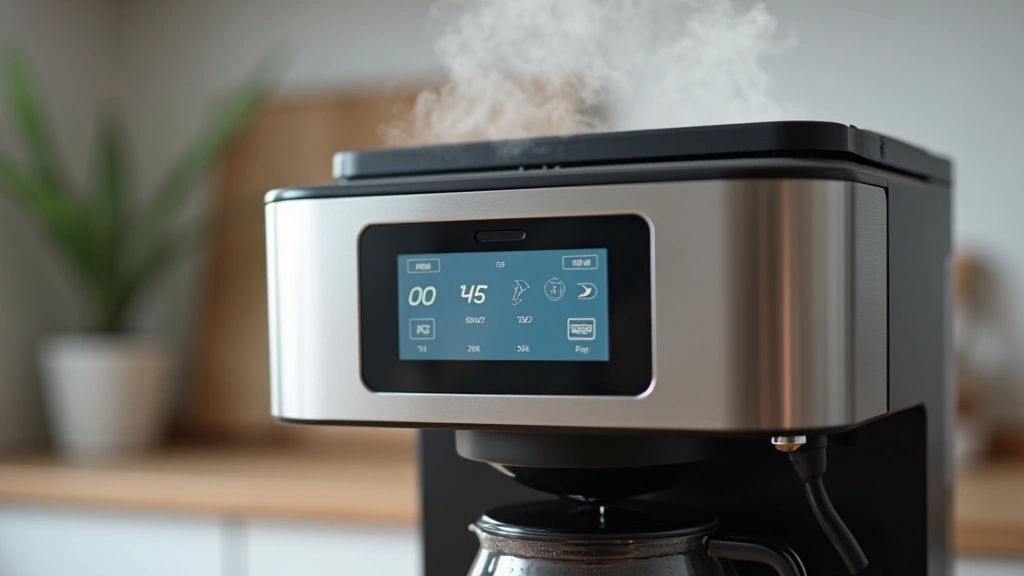
Is Smart Coffee Maker Worth It? Expert Review of Coffee Tech Innovation
The smart coffee maker has evolved from a novelty gadget into a legitimate contender for your kitchen countertop. With features like WiFi connectivity, voice control, and mobile app integration, these devices promise to revolutionize your morning routine. But do they deliver on that promise, or are you simply paying a premium for unnecessary complexity? This comprehensive review examines whether investing in a smart coffee maker makes financial and practical sense for different user types.
Modern coffee enthusiasts are increasingly turning to connected kitchen appliances as part of their broader smart home ecosystem. The coffee tech landscape has matured significantly, with established brands like Nespresso, Breville, and Moccamaster introducing intelligent features alongside traditional brewing excellence. Understanding the real-world benefits versus marketing hype is crucial before making a purchasing decision that typically ranges from $150 to $500.
What Defines a Smart Coffee Maker
A smart coffee maker is fundamentally a traditional brewing device enhanced with digital connectivity and automated controls. Unlike conventional coffee makers that operate through manual switches or basic timers, smart models integrate WiFi, Bluetooth, smartphone applications, and sometimes voice assistant compatibility. The distinction separates these devices from their “dumb” counterparts through programmable features accessible remotely or through voice commands.
The spectrum of smart coffee technology varies considerably. Entry-level smart makers might offer only WiFi-enabled scheduling and basic notifications. Premium models incorporate machine learning algorithms that remember your preferences, adjust brewing parameters based on environmental factors, and integrate with broader smart home ecosystems. Some devices feature built-in grinders with granularity control, water temperature sensors, and brew strength adjustment—capabilities that blur the line between coffee maker and espresso machine.
Understanding this technology category requires recognizing that “smart” doesn’t automatically mean “better.” A smart coffee maker is simply a coffee maker with connected features. The actual brewing quality depends on traditional factors: water temperature consistency, extraction time, grind uniformity, and water-to-coffee ratio. Technology enhances convenience, not necessarily the final cup quality.
Key Features and Technology
Modern smart coffee makers pack impressive feature sets that justify their premium pricing for certain users. The most common technological additions include:
- WiFi and Mobile Control: Schedule brewing from bed using your smartphone, even when away from home. This feature gains appeal during winter mornings or when entertaining guests.
- Voice Assistant Integration: Compatibility with Amazon Alexa, Google Assistant, and Apple Siri enables hands-free operation. Simply say “brew coffee” while your hands are full.
- Customizable Brew Profiles: Save multiple preference settings for different coffee types, bean origins, or desired strength levels. Switch between profiles instantly.
- Temperature Control: Precise water temperature management ensures optimal extraction. Most specialty coffee requires 195-205°F water temperature.
- Brew Strength Adjustment: Digital controls allow fine-tuning strength independent of bean quantity, useful for experimenting with different roasts.
- Grind Size Settings: Integrated grinders with 30+ adjustment levels accommodate various brewing methods within one device.
- Automatic Shut-Off: Safety features that power down the device after 30 minutes prevent accidental damage and reduce energy consumption.
- Water Filter Monitoring: Sensors track filter life and notify you when replacement is necessary, maintaining consistent water quality.
These features represent genuine technological advancement. However, their utility depends entirely on your lifestyle and coffee habits. A commuter who leaves home at 6:30 AM daily benefits differently from a remote worker with flexible mornings.
Performance and Brewing Quality
The critical question: does smart technology improve coffee quality? The answer is nuanced. Smart features don’t inherently produce better-tasting coffee than well-engineered traditional makers. However, they can enhance consistency and enable optimization that leads to superior results over time.
According to The Verge’s tech analysis, the best smart coffee makers maintain water temperatures within ±2°F of the target, compared to ±5°F for basic machines. This precision matters for specialty coffee extraction. When brewing lighter roasts or single-origin beans, temperature stability directly impacts flavor clarity and complexity.
Brew time consistency also improves with smart technology. Programmable machines deliver water at predetermined rates and temperatures, eliminating variables introduced by manual operation. Over hundreds of brewing cycles, this consistency compounds into noticeably better-tasting coffee—not because the machine is “smarter,” but because it’s more precise.
However, the brewing vessel itself matters more than smart features. A $300 smart drip coffee maker won’t outperform a $150 Chemex pour-over in the hands of a skilled user. Smart coffee tech optimizes mechanical performance, not the fundamental brewing method. If you’re currently using a basic 10-year-old coffee maker, upgrading to any quality machine—smart or not—will improve your coffee significantly.
Real-World Convenience Benefits
Setting aside brewing quality, the genuine convenience advantages of smart coffee makers deserve examination. These practical benefits vary dramatically based on your daily routine:
Morning Time Savings: Scheduling your coffee maker to start brewing 5 minutes before your alarm eliminates the wait for coffee while you shower. Over a year, this saves roughly 30 hours—the difference between convenience and gimmick depends on how much you value that time.
Temperature Maintenance: Smart makers with thermal carafe technology keep coffee hot for 2-4 hours without degrading flavor. You can brew at 6 AM and enjoy a perfect cup at 9 AM. Non-smart thermal carafes offer identical benefits, but smart versions add remote temperature adjustments.
Experimentation Tracking: Premium models log brewing parameters, allowing you to replicate successful batches. If a particular setting produces exceptional results, you’ll remember exactly which grind size, water temperature, and brew time created it.
Guest Management: When hosting, you can brew fresh coffee without leaving conversation. Voice commands enable seamless integration into social situations—this genuinely matters for entertaining.
Travel Integration: Some smart makers connect to cloud computing systems, maintaining your preferences and brewing history across multiple devices. For frequent travelers, this synchronization provides consistency.
The convenience premium becomes questionable when acknowledging that a $20 mechanical timer accomplishes schedule brewing without WiFi complexity. The added value of smart connectivity justifies cost primarily for users who value remote control and voice integration.
Cost Analysis and Value Proposition
Smart coffee makers typically cost 40-60% more than equivalent non-smart models. A quality traditional drip maker runs $80-120, while smart versions range $150-300. Premium models with espresso capabilities reach $400-500. This price differential demands rigorous justification.
The value equation shifts based on usage frequency and integration desires. Daily coffee drinkers benefit more from consistency improvements than occasional users. Someone brewing coffee twice weekly won’t recoup the smart features’ value. Similarly, if you already own a quality kitchen appliance ecosystem, adding a smart coffee maker integrates logically with existing WiFi networks and smart home hubs.
According to CNET’s testing methodology, the actual performance difference between a $150 smart maker and a $300 premium smart maker is minimal for most users—typically less than 5% in brewing consistency metrics. This suggests that mid-range smart models ($150-200) offer the best value, avoiding both entry-level limitations and premium pricing for marginal improvements.
Resale value presents another consideration. Smart appliances depreciate faster than mechanical equivalents because connectivity features become outdated. A traditional Moccamaster retains 60-70% value after five years; smart makers often drop to 30-40% value as newer models with updated apps emerge.
Connectivity and App Integration
The smartphone app experience significantly impacts daily usability. Premium brands invest heavily in intuitive interfaces; budget smart makers sometimes feature clunky, poorly-updated apps that frustrate users.
Nespresso’s Vertuo app, for instance, offers seamless scheduling, machine maintenance tracking, and subscription-based coffee ordering integration. The app design prioritizes simplicity—you can schedule brewing in three taps. Conversely, lesser-known brands provide apps requiring multiple menu navigation steps for basic functions.
Voice assistant integration quality varies considerably. Google Assistant and Amazon Alexa compatibility differs across models. Some machines respond to basic commands (“brew coffee”) while others require specific syntax. Testing different voice assistants with your household’s ecosystem matters before purchasing.
Cloud synchronization enables managing multiple smart appliances through unified dashboards. If you’re building comprehensive smart home technology infrastructure, choosing compatible brands streamlines management. Mismatched ecosystems create frustration when some devices require separate apps.
Security considerations warrant attention. Connected coffee makers store WiFi credentials and potentially brewing preference data. Reputable manufacturers provide regular security updates; smaller brands sometimes abandon products after a year, leaving devices vulnerable to exploits. Check manufacturer update history before purchasing.
Maintenance and Longevity
Smart coffee makers introduce electronic components that require maintenance beyond traditional mechanical cleaning. Descaling intervals remain identical (every 2-3 months depending on water hardness), but smart makers require occasional software updates and sensor calibration.
The good news: smart technology adds minimal failure points. Water sensors, temperature probes, and WiFi modules are robust components with excellent reliability records in modern appliances. Most failures occur in the heating element or pump—identical to non-smart machines.
The concerning aspect: manufacturer support longevity. Traditional coffee makers function indefinitely with basic repairs. Smart makers depend on app servers remaining operational. Some manufacturers discontinue apps after 5-7 years, rendering newer features inaccessible even if hardware functions perfectly. This planned obsolescence affects smart appliances more severely than traditional devices.
Warranty coverage typically matches non-smart equivalents (1-2 years), though some premium brands extend to 3 years. Extended warranties for smart makers cost more due to electronic component coverage. Evaluate whether warranty extension justifies the cost given typical appliance lifespans.
Top Models Comparison
The smart coffee maker market divides into distinct categories. Understanding the landscape helps identify which model suits specific needs:
Nespresso Vertuo Plus: $350-400. Capsule-based system with excellent app integration and milk frothing capabilities. Best for convenience-focused users who prioritize speed over brewing customization. Single-serve format suits small households or varied coffee preferences. Ongoing capsule costs offset initial savings.
Breville Smart Grinder Pro: $400-450. Integrated grinder with precise temperature control and brew strength adjustment. Excellent for specialty coffee enthusiasts who already own quality beans. Steeper learning curve than pod systems but superior customization. Best value for serious coffee drinkers.
Moccamaster Cup-One: $320. Premium traditional brewer with WiFi scheduling. Maintains the brand’s excellent heating consistency while adding smart features. Ideal for users wanting proven brewing quality with modern convenience. Higher price reflects brand heritage rather than technological advancement.
Cafe Affetto: $250-300. Mid-range option offering solid performance, decent app functionality, and reasonable pricing. Good entry point for smart coffee exploration without premium investment. Reviews indicate reliable operation with intuitive interface.
GE Appliances Café: $200-250. Budget-friendly smart maker with basic WiFi scheduling and Alexa compatibility. Adequate for casual users wanting smart features without premium pricing. Simpler app with fewer customization options than expensive models.
The comparison reveals that “best” depends entirely on priorities. Budget-conscious buyers benefit most from mid-range models ($200-300) that balance features and affordability. Enthusiasts justify premium pricing for precision and customization. Casual users might find basic smart features sufficient.
FAQ
Do I need a smart coffee maker if I already have a good traditional machine?
Probably not. If your current machine produces excellent coffee, the smart upgrade provides convenience enhancements rather than quality improvements. Consider upgrading only if remote scheduling or voice control genuinely fits your lifestyle. Otherwise, save the money.
Will my smart coffee maker work if WiFi goes down?
Yes. Most smart makers include manual operation modes and mechanical buttons. WiFi disconnection disables app control and voice commands but doesn’t prevent basic brewing. However, some features like remote scheduling become unavailable without connectivity.
How often do smart coffee maker apps receive updates?
Reputable manufacturers push updates monthly or quarterly. Lesser-known brands sometimes go years without updates. Check manufacturer update history on app stores before purchasing—this indicates long-term support commitment.
Can smart coffee makers integrate with existing smart home systems?
Yes, if compatible. Most models support Amazon Alexa or Google Assistant. Check specific compatibility before purchasing. Some brands offer dedicated smart home integration through platforms like Apple HomeKit or Samsung SmartThings.
What’s the average lifespan of a smart coffee maker?
Typically 5-7 years. Electronic components may require replacement after this period. Traditional machines often function for 10+ years. Smart maker longevity depends more on manufacturer app support than hardware durability.
Are smart coffee makers worth it for renters?
Yes, potentially. Since renters can’t install permanent smart home infrastructure, portable devices like smart coffee makers provide flexibility. You can take the machine when moving to new apartments.
Do smart coffee makers save energy?
Marginally. Automatic shut-off features reduce standby consumption, but the difference is minimal—typically $1-3 annually. Don’t purchase a smart maker primarily for energy savings; the smart features themselves consume small amounts of power.
What happens if the manufacturer discontinues my smart coffee maker model?
The machine continues functioning, but app features become inaccessible once server support ends. This represents the primary risk of smart appliance ownership. Buy from established brands with strong market presence to minimize this risk.


