
Top 1-Year Radiology Tech Programs: Expert Picks
The healthcare technology landscape is evolving rapidly, and radiology technicians are at the forefront of this transformation. If you’re considering a career in medical imaging, 1-year radiology tech programs offer an accelerated pathway to entry-level certification and employment. These intensive programs combine theoretical knowledge with hands-on clinical training, preparing graduates to operate sophisticated diagnostic imaging equipment and assist radiologists in patient care.
Unlike traditional four-year degree programs, one-year radiology technology certifications focus specifically on the competencies required for the ARRT (American Registry of Radiologic Technologists) exam. With healthcare facilities experiencing increased demand for skilled imaging professionals, these programs have become increasingly popular among career changers and recent high school graduates seeking rapid workforce entry. The compressed timeline doesn’t compromise quality—accredited programs maintain rigorous standards while delivering comprehensive education in X-ray physics, patient positioning, radiation safety, and image quality assessment.
This comprehensive guide examines the top-tier 1-year radiology tech programs available today, analyzing program structure, accreditation status, employment outcomes, and cost considerations. Whether you’re exploring accelerated radiology technology certifications or comparing program options, this resource provides expert insights to guide your decision-making process.
Accreditation Standards and Program Requirements
Legitimate 1-year radiology technology programs must maintain accreditation from JRCERT (Joint Review Committee on Education in Radiologic Technology). This accreditation ensures programs meet established educational standards, maintain qualified faculty, provide adequate clinical facilities, and deliver curriculum aligned with professional competencies. When evaluating programs, verify current JRCERT accreditation status through the official database before enrolling.
The ARRT certification examination represents the gold standard in radiologic technology credentialing. Graduates from accredited programs are eligible to sit for the ARRT exam, which tests knowledge across five domains: radiation protection, equipment operation, image acquisition, radiographic positioning, and medical terminology. Most employers require ARRT certification or eligibility as a condition of employment, making accreditation status a critical selection criterion.
One-year programs typically require 24-36 months of equivalent full-time study compressed into 12 months through intensive coursework and clinical rotations. Students complete didactic instruction in radiographic physics, patient care, anatomy, and pathology while simultaneously gaining hands-on experience in clinical settings. This integration of theory and practice distinguishes accelerated programs from traditional part-time options.
The minimum clinical experience requirement for ARRT eligibility includes 6,000 hours of supervised clinical practice. Accredited one-year programs ensure students accumulate these hours through structured rotations in various imaging modalities. Program graduates must also demonstrate competency in specific radiographic procedures, positioning techniques, and patient safety protocols before completing their certification requirements.

Top-Rated 1-Year Radiology Tech Programs
Institutions offering exceptional 1-year radiology tech programs share common characteristics: JRCERT accreditation, experienced faculty with current clinical credentials, partnerships with major medical facilities, and strong employment placement rates. Leading programs typically feature state-of-the-art equipment, small class sizes enabling individualized instruction, and comprehensive clinical training in diverse imaging environments.
The University of Arkansas for Medical Sciences offers one of the nation’s most respected accelerated radiology technology programs. Their intensive curriculum combines rigorous didactic coursework with clinical rotations at affiliated teaching hospitals. The program emphasizes radiation safety, evidence-based positioning techniques, and patient communication skills. Graduates report high ARRT pass rates and rapid employment placement in healthcare facilities across the region.
Community College of San Francisco provides an accessible, community-based alternative to university-affiliated programs. Their one-year radiology technology certificate includes comprehensive training in conventional radiography, fluoroscopy, and basic cross-sectional imaging principles. The program’s affordability and location in a major metropolitan area attract diverse cohorts of students seeking rapid career advancement in healthcare technology.
Sinclair Community College in Dayton, Ohio maintains JRCERT accreditation and offers intensive clinical training through partnerships with regional hospitals. Their program emphasizes practical competency development, with students rotating through departments including trauma imaging, orthopedic radiography, and chest radiography. The college’s placement rate consistently exceeds 90%, with graduates securing positions within three months of program completion.
Gateway Community College in Phoenix, Arizona delivers accelerated radiology technology education tailored to the Southwest’s growing healthcare demands. Their one-year program combines online didactic components with intensive on-campus clinical rotations, accommodating working professionals seeking career transitions. The program’s flexible scheduling and employer partnerships create pathways for immediate employment upon graduation.
Curriculum Overview and Specializations
Comprehensive 1-year radiology tech programs structure curriculum around core competency areas required for clinical practice and ARRT certification. The curriculum typically divides into three components: didactic instruction, laboratory practice, and clinical experience, with progression from foundational concepts to advanced applications.
Didactic coursework covers radiographic physics and equipment operation, teaching students how X-ray systems function, how to optimize image quality, and how to maintain equipment safety. Students learn about radiation interactions with matter, exposure techniques, image receptors, and quality control procedures. This theoretical foundation enables technicians to troubleshoot equipment issues, adapt techniques for patient variations, and understand the scientific principles underlying diagnostic imaging.
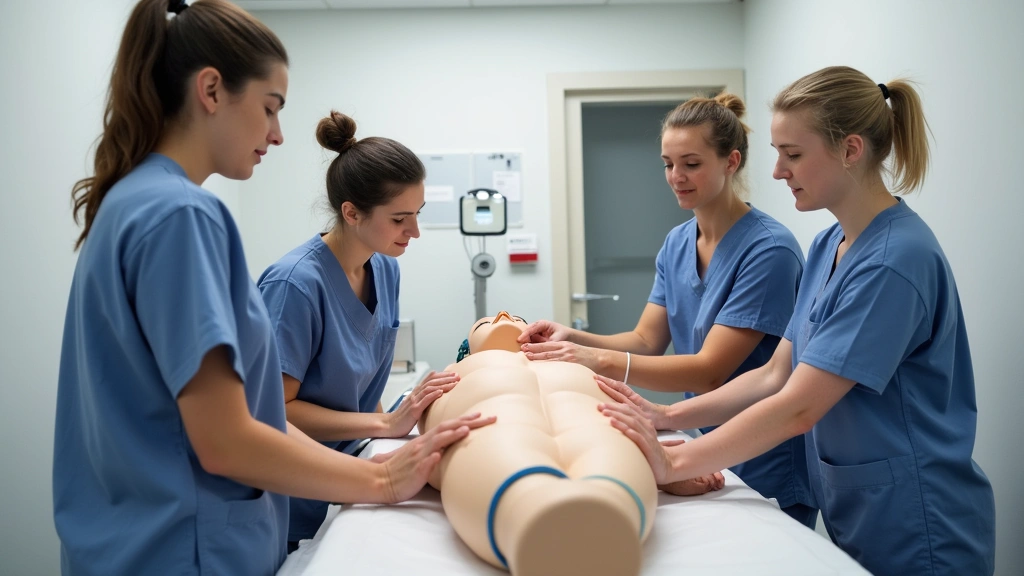
Patient positioning and anatomy instruction represents another critical curriculum component. Students memorize standard radiographic projections, learn anatomical landmarks for positioning accuracy, and practice techniques on mannequins and fellow students before clinical application. Mastery of positioning directly impacts diagnostic image quality and patient safety, making this competency central to radiology technology practice.
Radiation protection and safety protocols receive extensive emphasis throughout the curriculum. Students learn about radiation biology, dose calculation, shielding techniques, and regulatory requirements. Understanding cumulative radiation exposure risks enables technicians to minimize patient and personnel doses while maintaining diagnostic image quality. This knowledge proves essential for compliance with state and federal radiation safety regulations.
Many advanced 1-year programs include introduction to specialized imaging modalities beyond conventional radiography. Basic fluoroscopy principles, computed tomography (CT) fundamentals, and magnetic resonance imaging (MRI) overview courses prepare graduates for potential advancement into specialized technologist roles. Some programs offer optional specialization tracks in specific modalities, though comprehensive coverage of all specialties typically requires additional certification programs.
Clinical competency assessment integrated throughout the program ensures students develop practical skills systematically. Students progress from supervised observation to assisted procedures to independent practice under technologist supervision. Competency checklists document mastery of specific procedures, positioning techniques, and safety protocols before students progress to more complex imaging scenarios.
Admission Requirements and Prerequisites
Admission standards for accredited 1-year radiology tech programs typically include high school diploma or GED, minimum 2.0 GPA, and completion of prerequisite coursework. Common prerequisites include high school biology, chemistry, mathematics through algebra, and sometimes anatomy and physiology. Some programs accept prerequisite courses completed within the past 5-7 years, while others require recent coursework to ensure foundational knowledge currency.
Competitive programs may require higher GPA thresholds, standardized test scores (SAT or ACT), and prerequisite coursework completion within 2-3 years. Programs emphasizing rapid progression through intensive coursework often select students demonstrating strong academic preparation and time management capabilities. Application materials typically include official transcripts, letters of recommendation, personal statements, and sometimes entrance examinations.
Healthcare experience or volunteer background, while not universally required, strengthens applications to competitive programs. Students with prior clinical exposure demonstrate commitment to healthcare careers and familiarity with medical environments. Many programs value applicants who’ve worked as nursing assistants, medical office staff, or patient care technicians, as this experience indicates patient interaction comfort and healthcare workplace understanding.
Physical requirements for radiology technology positions include ability to lift 50+ pounds regularly, stand for extended periods, and perform repetitive motions without limitation. Some programs require or strongly recommend physical examination documentation confirming ability to perform essential job functions. Students with mobility limitations should discuss accommodations with program coordinators before enrollment.
Background check and immunization requirements increasingly appear in program admission criteria. Most healthcare facilities require criminal background clearance, tuberculosis screening, and proof of immunity to communicable diseases including measles, mumps, and rubella. Students should complete these requirements before program start dates to avoid delays.
Employment Outcomes and Career Prospects
Employment prospects for radiology technologists remain exceptionally strong, with the U.S. Bureau of Labor Statistics projecting 7% job growth through 2032. This growth rate exceeds average for all occupations, driven by aging population demographics, increased cancer screening, and expanding diagnostic imaging utilization in healthcare. One-year program graduates enter a robust job market with multiple employment opportunities across diverse healthcare settings.
Hospitals represent the primary employment setting for radiologic technologists, with approximately 70% of technologists working in hospital radiology departments. However, employment opportunities extend to outpatient imaging centers, private practices, urgent care facilities, and specialty clinics. This employment diversity provides graduates flexibility in selecting work environments aligned with personal preferences and career goals.
Starting salaries for radiologic technologists with ARRT certification typically range from $35,000-$45,000 annually, depending on geographic location, facility type, and shift assignment. Experienced technologists earn significantly higher compensation, particularly those working night shifts or in specialized imaging modalities. Career advancement opportunities include specialization in CT, MRI, or other imaging modalities, supervisory positions, and educator roles.
Program placement rates provide valuable indicators of graduate success. Top-tier 1-year programs report 85-95% employment placement rates within 3-6 months of graduation. These statistics reflect both program quality and graduate preparedness for clinical practice. When comparing programs, request specific employment outcome data, including placement rates, average starting salaries, and employer satisfaction ratings.
ARRT examination pass rates represent another important outcome metric. Accredited programs typically achieve 85-95% first-time pass rates on the ARRT certification exam. Programs consistently achieving higher pass rates demonstrate effective curriculum design, quality instruction, and appropriate student selection. Inquire about specific pass rates when evaluating program options.
Many graduates pursue additional specialization certifications after completing their one-year program and gaining clinical experience. CT technologist certification, MRI technologist credentials, and nuclear medicine technology certifications represent common advancement paths. The foundational knowledge gained in one-year programs provides essential preparation for these specialized certifications, enabling career progression and increased earning potential.
Program Cost and Financial Aid Options
Program costs for 1-year radiology tech programs vary significantly based on institution type, geographic location, and specific program components. Community college programs typically cost $8,000-$15,000 for tuition and fees, while university-affiliated programs may range from $15,000-$30,000. These costs typically exclude textbooks, clinical supplies, exam fees, and certification application expenses, which add $2,000-$4,000 to total program investment.
Financial aid options for radiology technology students include federal student loans, grants, and work-study opportunities. Students completing FAFSA (Free Application for Federal Student Aid) qualify for federal aid programs regardless of institution type. Federal Pell Grants provide need-based assistance requiring no repayment, while Stafford Loans offer low-interest borrowing for eligible students. Community college students often access federal aid more readily than university students, making these programs financially accessible options.
Employer sponsorship programs provide valuable funding alternatives for students committed to post-graduation employment. Many healthcare systems sponsor employees seeking radiology technology credentials, offering tuition reimbursement or direct program payment in exchange for employment commitment periods. Prospective students should inquire about employer partnership programs at local healthcare facilities before program enrollment.
Scholarship opportunities specific to healthcare professions and radiology technology exist through professional organizations, community foundations, and educational institutions. The American Society of Radiologic Technologists (ASRT) administers scholarship programs supporting radiology technology education. Research scholarship databases and contact program financial aid offices for information about available funding sources.
Return on investment for 1-year radiology tech programs proves favorable compared to longer educational pathways. With program costs between $10,000-$30,000 and starting salaries around $40,000 annually, graduates typically recover program costs within 6-12 months of employment. Long-term earning potential, career advancement opportunities, and job security make radiology technology education a sound financial investment.
Technology Integration in Modern Programs
Contemporary 1-year radiology tech programs increasingly incorporate advanced educational technologies enhancing learning outcomes and clinical preparation. Virtual reality simulation systems allow students to practice patient positioning and radiographic techniques in realistic clinical environments before hands-on clinical rotations. These immersive learning experiences reduce errors during actual clinical practice and accelerate competency development.
Digital imaging technology has transformed radiographic education and practice. Programs now emphasize Picture Archiving and Communication Systems (PACS), digital radiography fundamentals, and image post-processing techniques. Understanding digital workflow, image optimization, and quality control procedures prepares graduates for modern healthcare environments where digital imaging predominates.
Learning management systems and online educational platforms enable flexible curriculum delivery while maintaining rigorous standards. Many programs combine online didactic instruction with intensive on-campus clinical rotations, accommodating working professionals and students with scheduling constraints. This blended learning approach maintains educational quality while increasing accessibility for diverse student populations.
Artificial intelligence and machine learning applications in diagnostic imaging represent emerging topics in progressive radiology technology programs. While technologists don’t require expertise in AI algorithm development, understanding how AI assists radiologists in image analysis and how technologists interact with AI-integrated systems prepares graduates for evolving practice environments. Forward-thinking programs introduce these concepts to ensure graduate relevance in rapidly advancing healthcare technology.
Mobile health applications and telemedicine platforms increasingly integrate into radiology workflow. Programs introducing students to remote image review, digital communication systems, and technology-enabled patient care prepare graduates for modern healthcare delivery models. This technology integration reflects real-world practice changes and enhances graduate preparedness for contemporary employment environments.
Quality management software and radiation dose monitoring systems have become standard in modern radiology departments. Progressive programs train students on these technologies, enabling graduates to contribute immediately to quality improvement initiatives and radiation safety programs. Familiarity with dose tracking systems, quality control procedures, and regulatory compliance documentation enhances graduate value in clinical settings.
FAQ
How long does it take to complete a 1-year radiology tech program?
Accredited 1-year radiology tech programs compress the equivalent of 24-36 months of full-time study into 12 months through intensive coursework and clinical rotations. Most programs require full-time attendance, with classes and clinical rotations typically scheduled Monday through Friday, often 8 AM to 4 PM or similar schedules. Some programs offer evening or weekend components for working professionals, potentially extending to 18-24 months. Program duration specifications should be clarified during application inquiry.
Do I need prerequisites before enrolling in a 1-year program?
Yes, most accredited programs require high school diploma or GED plus prerequisite coursework including biology, chemistry, mathematics, and often anatomy and physiology. Prerequisite coursework must typically be completed within the past 5-7 years to ensure knowledge currency. Some programs offer prerequisite courses or accept students on conditional admission pending prerequisite completion. Contact specific programs about prerequisite requirements and completion timelines.
What is the ARRT certification exam like, and how should I prepare?
The ARRT radiography exam consists of 200 multiple-choice questions covering five content areas: radiation protection, equipment operation, image acquisition, positioning and procedures, and medical terminology. The exam requires 75% correct responses to pass. Most programs include comprehensive ARRT exam preparation throughout their curriculum, and many offer review courses before graduation. ARRT’s official website provides detailed exam specifications and preparation resources.
Can I work while attending a 1-year radiology tech program?
Most students attend full-time, making full-time employment incompatible with program demands. However, some programs accommodate part-time study extending over 18-24 months. Students should discuss scheduling flexibility with program coordinators. Many students work during summer breaks or after program completion while awaiting ARRT exam results. Some employers offer tuition assistance for employees pursuing radiology technology credentials.
What is the job outlook for radiologic technologists?
The U.S. Bureau of Labor Statistics projects 7% job growth for radiologic technologists through 2032, faster than average for all occupations. Aging demographics, increased cancer screening, and diagnostic imaging expansion drive demand. Employment opportunities exist in hospitals, outpatient imaging centers, clinics, and specialized practices. Strong job outlook and multiple employment settings make radiology technology a stable, growing career field. BLS occupational outlook data provides comprehensive employment projections.
Can I specialize after completing the 1-year program?
Yes, many graduates pursue additional certifications in specialized imaging modalities including CT, MRI, nuclear medicine, or sonography. These specializations typically require 1-2 years of additional education and clinical experience. The foundational knowledge from one-year programs prepares graduates well for specialized certification programs. Understanding technology integration in healthcare enhances readiness for specialized imaging modalities.
What are typical starting salaries for new radiologic technologists?
Starting salaries for ARRT-certified radiologic technologists typically range from $35,000-$45,000 annually, varying by geographic location, facility type, and shift assignment. Night shift and weekend work often command premium pay. Experienced technologists and those with specializations earn significantly higher compensation. Salary databases provide current compensation data by location and employer type.
How competitive are 1-year radiology tech program admissions?
Competitiveness varies by program prestige, location, and reputation. Top-tier programs may receive multiple applications per available seat, requiring strong academic records and healthcare experience. Community college programs typically have more accessible admission standards. Most programs consider GPA, prerequisite coursework, entrance exams, and personal statements. Applying to multiple programs increases admission likelihood, particularly for highly competitive options.
Are online 1-year radiology tech programs available?
True fully-online radiology tech programs don’t exist because clinical practice requires hands-on training in actual clinical settings. However, many programs offer hybrid models combining online didactic instruction with intensive on-campus clinical rotations. Students should verify JRCERT accreditation for any program, regardless of delivery method. Ensure clinical components meet the 6,000-hour requirement for ARRT eligibility.
What happens if I don’t pass the ARRT exam on my first attempt?
Students may retake the ARRT exam after waiting periods specified by ARRT regulations. Most programs provide remedial instruction and exam preparation resources for students needing additional preparation. While most graduates pass on first attempt, retesting remains an option. Discuss retake policies and remedial support availability with program coordinators during enrollment conversations.


