
4D Tech Revolution: Expert Insights
The technology landscape is experiencing a seismic shift as 4D technology emerges from research laboratories into mainstream applications. Unlike traditional three-dimensional visualization, 4D tech integrates the fourth dimension—time—creating dynamic, interactive experiences that respond in real-time. This revolutionary approach is transforming industries from healthcare and manufacturing to entertainment and education, fundamentally changing how we interact with digital and physical worlds.
Industry experts predict that 4D technology will become as commonplace as smartphones within the next decade. Companies investing in this frontier are positioning themselves at the forefront of innovation, while those lagging behind risk obsolescence. The convergence of advanced sensors, artificial intelligence, and computational power has finally made 4D applications economically viable and practically deployable at scale.
Understanding 4D Technology Fundamentals
4D technology represents a paradigm shift in how we conceptualize and interact with data. The fourth dimension—time—adds temporal dynamics to spatial information, enabling systems to predict, adapt, and respond to changes in real-time. This is fundamentally different from static 3D models; 4D applications track movement, transformation, and evolution across time sequences.
At its core, 4D tech combines several technological pillars: advanced sensors that capture real-time data, powerful processors that handle complex computations, and sophisticated algorithms that interpret temporal patterns. When exploring how technology and artificial intelligence are transforming our future, 4D emerges as a critical enabler. The technology captures not just where objects are, but how they move, deform, and interact over time.
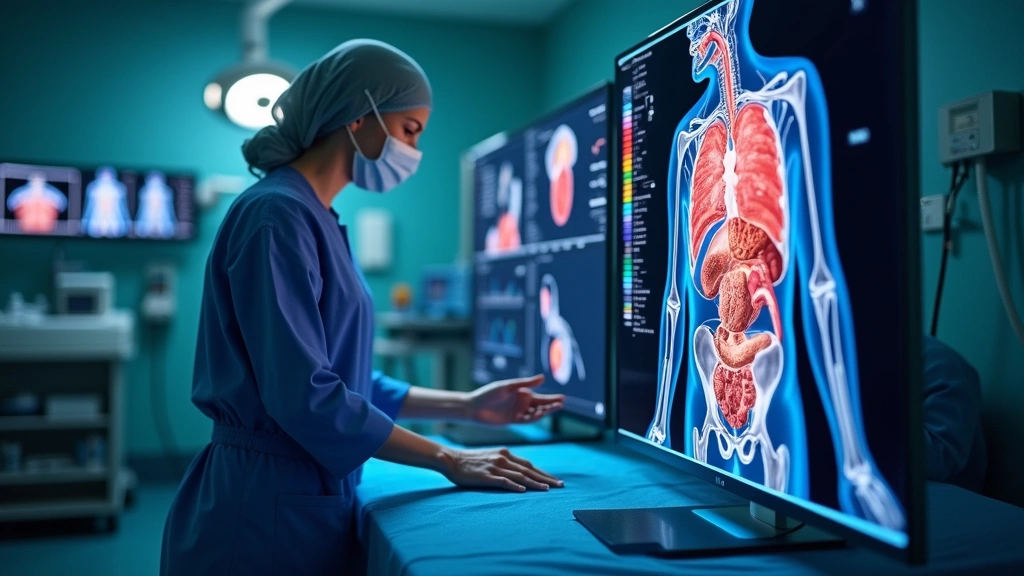
Medical imaging represents one of the purest applications. Traditional CT scans provide 3D snapshots; 4D imaging captures organ movement during respiration or cardiac cycles. This temporal dimension allows surgeons to plan interventions with unprecedented precision, accounting for anatomical movement during procedures. Similarly, manufacturing uses 4D simulations to predict material behavior under stress over time, optimizing designs before production.
The processing requirements for 4D technology are substantial. A single second of high-resolution 4D data can generate terabytes of information. This necessitates sophisticated data compression algorithms, edge computing capabilities, and cloud infrastructure. The computational demands have historically limited 4D adoption, but recent breakthroughs in GPU acceleration and tensor processing units have made real-time 4D processing increasingly feasible.
Key technical components include:
- Time-series sensors capturing sequential spatial data at millisecond intervals
- Real-time processing engines handling massive data throughput
- Machine learning models trained on temporal patterns
- Visualization systems rendering dynamic 4D information intuitively
- Integration layers connecting 4D systems with existing infrastructure

Core Applications Across Industries
The versatility of 4D technology enables transformative applications across virtually every sector. Healthcare leads adoption, where 4D imaging revolutionizes surgical planning and diagnosis. Interventional radiologists use 4D imaging to guide minimally invasive procedures, watching organs move in real-time while navigating instruments through complex anatomical pathways. This precision reduces complications, shortens recovery times, and improves patient outcomes significantly.
Manufacturing and engineering benefit tremendously from 4D simulation and analysis. Engineers can model how materials behave under dynamic loads, predicting failure points and optimizing designs for durability and efficiency. Automotive companies use 4D crash simulations to understand injury mechanisms with granular detail, designing vehicles that better protect occupants. This approach reduces physical testing requirements, accelerating development cycles and reducing costs.
Entertainment and gaming represent explosive growth areas for 4D technology. The Tech Pulse Hunter Blog has documented how immersive experiences are reshaping consumer expectations. 4D motion capture systems now track performers with sub-millimeter accuracy across time, enabling hyper-realistic digital characters and animation. Video games leverage 4D physics engines that simulate cloth, fluid, and rigid body dynamics with stunning realism, creating more engaging and believable virtual worlds.
Architecture and urban planning harness 4D visualization for complex projects. Architects simulate how buildings respond to environmental factors—wind, temperature fluctuations, seismic activity—across extended timeframes. Urban planners use 4D modeling to predict traffic flow patterns, optimize public space usage, and plan sustainable cities. These simulations reveal inefficiencies invisible in static 3D representations.
The agricultural sector employs 4D sensing to monitor crop health and growth trajectories. Multispectral drones equipped with 4D sensors track vegetation indices over time, enabling precision irrigation and fertilization. This temporal analysis optimizes resource utilization, increases yields, and reduces environmental impact—critical considerations as global food demands intensify.
Industry-specific implementations:
- Healthcare: Surgical planning, cardiac imaging, oncology monitoring
- Manufacturing: Material simulation, quality control, predictive maintenance
- Entertainment: Motion capture, game physics, virtual production
- Architecture: Environmental analysis, structural simulation, urban planning
- Agriculture: Crop monitoring, yield prediction, resource optimization
Hardware Requirements and Infrastructure
Deploying 4D technology demands substantial hardware infrastructure. The computational requirements exceed those of most contemporary systems by orders of magnitude. Processing 4D data streams requires specialized hardware: GPUs with high memory bandwidth, TPUs optimized for tensor operations, and CPUs with exceptional multi-core performance. Modern 4D systems typically employ heterogeneous computing architectures, distributing workloads across multiple processor types.
Storage represents another critical bottleneck. A single minute of 4D video at 8K resolution with full temporal resolution can consume 50-100 terabytes of raw storage. While compression algorithms reduce this substantially, storage infrastructure remains expensive and power-intensive. Data centers supporting 4D applications require redundant systems, backup capacity, and sophisticated data management protocols. Concerns about system performance led many organizations to explore how to fix slow computer performance, but 4D workloads demand purpose-built infrastructure rather than optimization of consumer systems.
Networking infrastructure must support massive bandwidth requirements. Transmitting 4D data streams over standard networks creates bottlenecks. Many organizations implement dedicated fiber optic connections and edge computing nodes that process data locally before transmission. This distributed approach reduces bandwidth requirements while enabling near-real-time response capabilities essential for interactive 4D applications.
Sensor technology advances have driven 4D adoption. Modern sensors capture data with unprecedented resolution and frame rates. LiDAR systems now achieve 100+ frames per second with millimeter-scale precision. Multispectral cameras capture data across dozens of wavelength bands simultaneously. Thermal sensors detect minute temperature variations. The integration of these diverse sensor modalities creates rich, multi-dimensional datasets that feed 4D algorithms.
Power consumption represents an often-overlooked challenge. Continuous 4D processing consumes enormous electrical power. Data centers supporting 4D applications require dedicated cooling systems and renewable energy sources to manage costs and environmental impact. Researchers are exploring more efficient algorithms and specialized hardware to reduce power demands, but energy efficiency remains a significant hurdle for widespread 4D deployment.
AI Integration and Smart Systems
Artificial intelligence serves as the crucial enabler for practical 4D applications. Machine learning algorithms trained on temporal datasets can extract meaningful patterns from overwhelming data volumes. Deep learning networks, particularly recurrent neural networks and transformer architectures, excel at understanding temporal sequences and predicting future states.
The intersection of 4D technology and AI represents a frontier transformation. Artificial intelligence applications transforming the future increasingly depend on 4D data streams. Autonomous vehicles, for instance, process 4D sensor data to understand not just static obstacles but dynamic environmental changes. AI systems predict how pedestrians will move, how traffic patterns will evolve, and how weather conditions will impact driving conditions—all critical temporal factors.
In medical diagnostics, AI algorithms trained on 4D imaging datasets detect subtle abnormalities that human radiologists might miss. These systems learn to recognize pathological patterns across time, identifying diseases in early stages when intervention proves most effective. The temporal dimension enables AI to distinguish between benign fluctuations and genuine pathology, significantly improving diagnostic accuracy.
Predictive maintenance systems leverage 4D sensor data combined with machine learning to anticipate equipment failures before they occur. By monitoring equipment vibrations, temperatures, and acoustic signatures over extended periods, AI systems identify degradation patterns. This enables preventive maintenance, reducing downtime and extending equipment lifespan dramatically. Cloud computing benefits for businesses include centralized processing of these 4D predictive models, enabling organizations to manage complex equipment portfolios efficiently.
Natural language processing combined with 4D analysis creates new possibilities for human-computer interaction. Systems can now understand gestures, facial expressions, and body language captured in 4D sequences, enabling more intuitive and natural interfaces. Virtual assistants equipped with 4D understanding can interpret context and intent more accurately, providing more relevant and helpful responses.
AI-enabled 4D capabilities:
- Predictive analytics forecasting future states from temporal patterns
- Anomaly detection identifying unusual temporal sequences
- Pattern recognition extracting meaningful structures from 4D data
- Autonomous decision-making responding to dynamic environments in real-time
- Personalization adapting systems to individual temporal patterns
Market Growth and Investment Trends
The 4D technology market is experiencing explosive growth. Market analysts project the sector will reach $50+ billion by 2030, with compound annual growth rates exceeding 25%. This rapid expansion reflects genuine technological breakthroughs and expanding practical applications. Venture capital firms are pouring billions into 4D startups, recognizing the transformative potential and competitive advantages early adopters will enjoy.
Major technology companies have made substantial investments in 4D capabilities. Tech giants are acquiring 4D startups, building internal research teams, and integrating 4D features into consumer products. These investments signal confidence in 4D’s mainstream viability and competitive importance. Companies that fail to develop 4D capabilities risk losing market share to more innovative competitors.
Enterprise adoption is accelerating across industries. Healthcare systems are upgrading to 4D imaging equipment, recognizing improved diagnostic and surgical capabilities justify the investment. Manufacturing firms are implementing 4D simulation software to optimize production processes. Entertainment companies are investing in 4D motion capture studios and effects rendering capabilities. This enterprise enthusiasm validates 4D technology’s practical value proposition.
Government funding also supports 4D research and development. Defense agencies fund 4D surveillance and autonomous systems research. Healthcare agencies support 4D medical imaging research. Educational institutions establish 4D research centers. This diverse funding ecosystem accelerates innovation and validates 4D’s importance for future competitiveness.
The competitive landscape is intensifying as established players and startups vie for market leadership. Early movers enjoy significant advantages, but the field remains dynamic with frequent breakthroughs and shifts in competitive positioning. Organizations must stay informed about emerging technologies and market trends to maintain competitive advantage.
Challenges and Limitations
Despite tremendous potential, 4D technology faces substantial challenges. Data management represents perhaps the most pressing issue. 4D systems generate enormous data volumes that exceed storage and processing capacities of many organizations. Developing efficient compression algorithms, distributed processing architectures, and intelligent data retention policies remains an active research area.
Cost represents another significant barrier. 4D-capable hardware, software, and infrastructure require substantial capital investment. Many organizations lack the financial resources to deploy 4D systems, creating a digital divide between well-funded enterprises and smaller competitors. As costs decline with scale and maturation, adoption will accelerate, but current pricing limits market penetration.
Technical standardization remains underdeveloped. Unlike mature technologies with established standards and interoperability protocols, 4D systems often employ proprietary formats and interfaces. This fragmentation complicates integration and limits ecosystem development. Industry consortiums are working to establish 4D standards, but progress remains incomplete.
Talent scarcity poses significant challenges. 4D technology requires expertise spanning sensors, signal processing, machine learning, and domain applications. Few professionals possess this diverse skill set. Universities are developing 4D-focused curricula, but the talent pipeline cannot yet meet demand. Organizations struggle to hire and retain qualified 4D specialists.
Privacy and security concerns accompany 4D technology deployment. Continuous temporal monitoring raises surveillance concerns. 4D data contains intimate information about behavior patterns, movement trajectories, and personal habits. Protecting this sensitive information while enabling beneficial applications requires robust security frameworks and privacy policies. Regulatory frameworks governing 4D data remain underdeveloped, creating legal uncertainty.
Computational efficiency improvements are essential for broader adoption. Current 4D systems consume enormous power, limiting deployment in power-constrained environments. Developing more efficient algorithms, specialized hardware, and edge computing architectures will expand 4D applicability.
Future Roadmap and Predictions
The 4D technology roadmap extends far beyond current applications. Near-term developments will focus on cost reduction, efficiency improvements, and standardization. Hardware costs will decline as manufacturing scales increase. Software tools will mature, reducing development complexity. Industry standards will emerge, enabling ecosystem development. These trends will drive mainstream adoption across industries.
Medium-term predictions suggest 4D will become embedded in everyday consumer products. Smartphones will incorporate 4D sensors and processing. Home security systems will use 4D monitoring. Fitness devices will track movement in 4D space. Virtual reality systems will leverage 4D capture for hyper-realistic experiences. These consumer applications will normalize 4D technology and drive ecosystem development.
Long-term possibilities are genuinely transformative. Fully immersive 4D environments could revolutionize remote work, enabling teams to collaborate as if co-located. 4D holographic displays could replace traditional screens. Augmented reality systems overlaying 4D digital information onto physical environments could fundamentally alter how we perceive and interact with the world. These possibilities, while speculative, represent logical extensions of current technological trajectories.
Integration with emerging technologies will amplify 4D impact. Quantum computing could solve currently intractable 4D processing problems. Brain-computer interfaces could enable direct 4D perception without intermediate visualization. Nanotechnology could create microscopic 4D sensors enabling new applications. The convergence of these technologies could unleash capabilities we can barely imagine today.
Societal impacts will be profound. 4D technology could revolutionize education, enabling students to learn through immersive temporal experiences. Healthcare transformation could extend human lifespans and improve quality of life dramatically. Environmental monitoring could enable more effective conservation efforts. However, these benefits will only materialize if societies thoughtfully address ethical, privacy, and equity concerns accompanying 4D deployment.
Organizations must begin preparing now for the 4D era. Developing 4D literacy among employees, investing in foundational infrastructure, and exploring pilot applications will position organizations advantageously. Those that wait until 4D becomes mainstream risk falling behind competitors who have already navigated the learning curve and established 4D capabilities. For leaders seeking to understand broader technology transformation, exploring best laptops for students 2025 provides insights into how cutting-edge technology is reaching new users. Similarly, understanding technology and artificial intelligence transforming our future provides crucial context for 4D’s role in broader technological evolution.
FAQ
What exactly is 4D technology?
4D technology integrates the fourth dimension—time—into spatial data. Unlike static 3D representations, 4D systems capture how objects, environments, and phenomena change and evolve over time, enabling dynamic analysis and real-time interaction with temporal information.
How does 4D technology differ from 3D?
3D technology captures spatial relationships at a single moment in time. 4D adds temporal sequences, showing how spatial configurations change across time. This enables prediction, analysis of dynamic processes, and more sophisticated simulations impossible with static 3D data alone.
Which industries benefit most from 4D technology?
Healthcare, manufacturing, entertainment, architecture, and agriculture represent early adopter industries. However, 4D applications span virtually every sector including finance, transportation, retail, and education.
What are the main barriers to 4D adoption?
Cost, computational requirements, data management challenges, talent scarcity, and standardization gaps represent primary obstacles. As these challenges resolve through technological maturation and market development, adoption will accelerate significantly.
How will 4D technology impact employment?
4D technology will create new job categories in 4D engineering, data science, and applications development. However, automation enabled by 4D systems may displace workers in certain roles. Overall employment impacts remain uncertain, likely involving both job creation and displacement across different sectors.
When will 4D technology become mainstream?
Expert predictions suggest 5-10 years for mainstream consumer adoption, with enterprise adoption accelerating more rapidly. Early adopters are already deploying 4D systems, gaining competitive advantages that will drive broader market adoption.
What companies are leading 4D development?
Major technology companies including Microsoft, Google, Apple, and NVIDIA are investing heavily in 4D capabilities. Specialized companies like GE, Siemens, and various startups are developing industry-specific 4D applications.
Is 4D technology secure?
Security concerns accompany 4D deployment, particularly regarding surveillance and privacy. Robust encryption, access controls, and privacy policies are essential. Regulatory frameworks governing 4D data are still developing, creating ongoing uncertainty.


