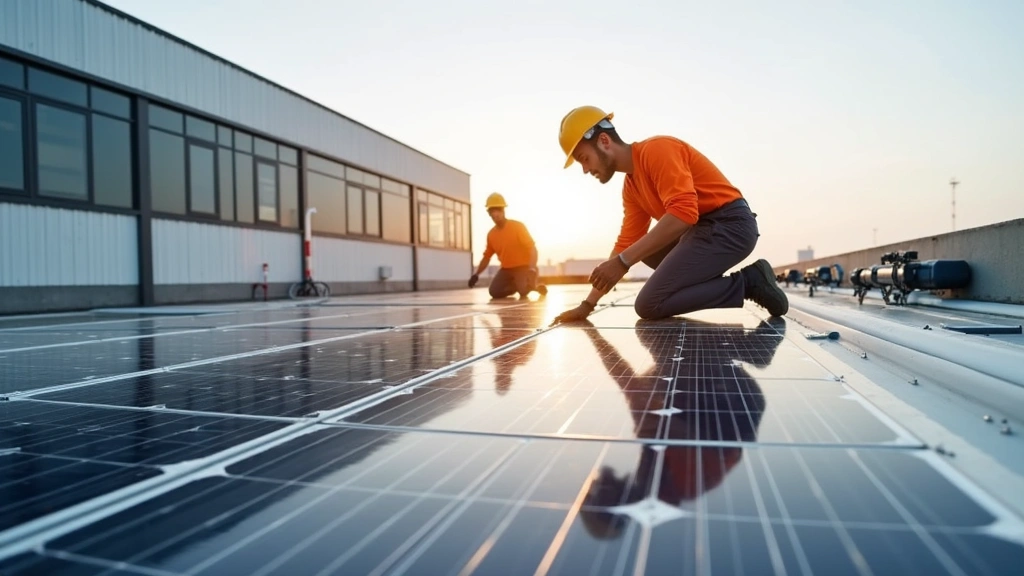
Acrew Capital’s Climate Tech Impact: Expert Insight into Venture-Backed Innovation
Acrew Capital has emerged as a significant force in climate technology investment, backing transformative solutions that address some of the planet’s most pressing environmental challenges. As a venture capital firm deeply committed to climate sustainability, Acrew Capital’s portfolio demonstrates how strategic funding and expert guidance can accelerate the development of clean energy technologies, carbon reduction platforms, and sustainable infrastructure. This comprehensive analysis explores Acrew Capital’s climate tech investments, their measurable impact, and what makes their approach distinct in the competitive venture capital landscape.
The climate technology sector represents one of the fastest-growing investment categories globally, with billions flowing into startups developing renewable energy systems, carbon capture technologies, and sustainable manufacturing processes. Acrew Capital’s involvement in this space reflects both the urgency of climate action and the tremendous opportunity for innovation-driven solutions. Their portfolio companies span multiple verticals, from energy efficiency software to advanced materials science, each contributing meaningful progress toward decarbonization goals.

Understanding Acrew Capital’s Climate Tech Strategy
Acrew Capital’s investment thesis centers on identifying climate technologies that demonstrate both environmental impact and commercial viability. Unlike traditional venture capital firms that prioritize rapid growth metrics alone, Acrew Capital evaluates companies based on their potential to reduce greenhouse gas emissions, improve resource efficiency, and create sustainable business models. This dual-focus approach attracts founders committed to solving climate challenges while building profitable enterprises.
The firm’s strategy involves early-stage investment in companies developing transformative technologies that leverage artificial intelligence, data analytics, and advanced engineering. Acrew Capital partners with entrepreneurs who understand both the technical requirements and market dynamics of climate solutions, providing not just capital but strategic guidance, industry connections, and operational expertise.
Acrew Capital’s team includes veterans from energy, sustainability, and technology sectors, bringing deep domain knowledge to investment decisions. This expertise enables them to assess which climate technologies are likely to achieve scale and which may face insurmountable technical or regulatory barriers. Their cloud computing infrastructure investments also support climate tech companies by providing scalable computational resources for data analysis and modeling.
Portfolio Companies and Real-World Impact
Acrew Capital’s portfolio encompasses diverse climate technology solutions addressing multiple environmental challenges. Companies backed by the firm are working on carbon capture and utilization, renewable energy optimization, sustainable agriculture, green building materials, and circular economy platforms. Each investment represents a calculated bet on technologies that can achieve meaningful environmental outcomes while serving growing market demand.
One area of significant focus involves energy efficiency software platforms that help industrial and commercial facilities optimize power consumption. These AI-driven energy management systems analyze usage patterns, identify waste, and recommend operational adjustments that can reduce energy consumption by 15-30%. Companies in this space have demonstrated measurable carbon reductions while improving client profitability, creating aligned incentives for adoption.
Acrew Capital has also invested in materials science startups developing sustainable alternatives to carbon-intensive products. These companies work on bio-based polymers, recycled composite materials, and low-carbon cement formulations that maintain performance characteristics while dramatically reducing embodied carbon. Such innovations are crucial for industries like construction, automotive, and consumer goods where material selection directly impacts lifecycle emissions.
Additionally, Acrew Capital supports agricultural technology companies focused on regenerative practices and soil carbon sequestration. These platforms help farmers implement sustainable land management while accessing carbon credit markets, creating revenue streams that incentivize environmental stewardship. The intersection of technology, finance, and agriculture represents a frontier where climate impact and profitability increasingly align.
Technology and Innovation Focus Areas
Acrew Capital’s climate tech investments span several technology verticals, each representing different pathways to environmental impact. Understanding these focus areas reveals the firm’s comprehensive approach to addressing climate change through innovation.
Renewable Energy Integration: Companies in Acrew Capital’s portfolio work on grid modernization, battery storage optimization, and smart microgrid technologies. These solutions address the intermittency challenges of renewable energy sources, enabling higher penetration of wind and solar power in electrical systems. National Renewable Energy Laboratory research indicates that advanced grid management technologies could enable 80% renewable electricity penetration, and Acrew Capital-backed companies are developing critical components of this infrastructure.
Carbon Monitoring and Verification: Acrew Capital invests in platforms providing transparent carbon accounting and emissions tracking. These technologies use satellite imagery, IoT sensors, and machine learning to measure actual emissions reductions, enabling reliable carbon credit generation and compliance reporting. Accurate emissions measurement is essential for both corporate sustainability initiatives and regulatory compliance frameworks.
Circular Economy Solutions: The firm backs companies developing technologies that extend product lifecycles, enable material recovery, and reduce waste. This includes software platforms for waste management optimization, hardware for recycling process automation, and marketplaces connecting material suppliers with industrial users seeking recycled inputs.
Climate Adaptation Technologies: Beyond mitigation, Acrew Capital recognizes the importance of adaptation solutions. Investments in drought-resistant agriculture, flood-resilient infrastructure, and climate-informed water management systems help communities prepare for unavoidable climate impacts while maintaining productivity and quality of life.
Measuring Environmental Outcomes
One distinctive aspect of Acrew Capital’s approach involves rigorous measurement of environmental impact alongside financial returns. Rather than assuming that profitable climate tech companies automatically generate environmental benefits, the firm implements frameworks to quantify actual emissions reductions, resource conservation, and ecosystem improvements.
This measurement approach typically involves establishing baseline emissions or resource consumption, tracking changes following technology deployment, and attributing improvements to specific interventions. Companies in Acrew Capital’s portfolio often undergo third-party verification of environmental claims, ensuring credibility and enabling accurate impact reporting. This commitment to measurement transparency distinguishes climate-focused venture capital from traditional investment approaches.
Acrew Capital portfolio companies collectively report preventing millions of metric tons of CO2 equivalent from entering the atmosphere annually. These figures derive from deployed solutions across energy, transportation, agriculture, and industrial sectors. As technologies scale, environmental impact compounds, creating exponential benefits that justify early-stage investment despite technical and market risks.
The firm also tracks co-benefits beyond carbon reduction, including improvements in air quality, water conservation, biodiversity preservation, and community resilience. Many climate technologies generate multiple environmental benefits simultaneously, and comprehensive impact measurement captures this complexity rather than reducing outcomes to single metrics.
Expert Perspectives on Climate Venture Capital
Industry experts recognize Acrew Capital as a thoughtful participant in climate venture capital, balancing ambitious environmental goals with realistic assessments of technology maturity and market readiness. Climate investors face unique challenges compared to traditional venture capital, including longer development timelines, regulatory uncertainty, and the need to compete against entrenched incumbent industries.
MIT Technology Review has highlighted Acrew Capital’s role in identifying breakthrough technologies that might otherwise lack funding due to perceived market risks. The firm’s expertise in distinguishing between genuinely transformative innovations and incremental improvements helps allocate capital toward solutions with potential for meaningful scale.
Acrew Capital’s approach also reflects evolving understanding of climate finance’s role in addressing climate change. While government policy and corporate capital allocation remain essential, venture capital specializes in identifying and accelerating emerging technologies before they achieve mainstream adoption. This innovation acceleration function is critical for meeting climate targets that require rapid technological transformation across multiple sectors.
Climate venture capital also serves important signaling functions, demonstrating market viability of clean technologies and attracting subsequent rounds of funding from larger institutional investors. When reputable venture firms like Acrew Capital validate a technology’s potential, it reduces perceived risk for later-stage investors, enabling companies to access the capital needed for manufacturing scale-up and market deployment.
Challenges in Climate Tech Investment
Despite Acrew Capital’s success, climate technology investment faces substantial challenges that shape the firm’s decision-making and risk management approaches. Understanding these obstacles provides context for understanding why climate venture capital requires specialized expertise and patient capital.
Technical Risk: Many climate technologies operate at the frontier of scientific knowledge, creating uncertainty about achievability and timeline to commercialization. Battery chemistry innovations, carbon capture processes, and advanced materials may face unexpected technical hurdles requiring substantial additional research investment. Acrew Capital mitigates this risk through technical due diligence and partnerships with research institutions.
Regulatory Uncertainty: Climate policy varies dramatically across geographies and changes with political administrations. Technologies optimized for specific regulatory frameworks may face disruption if policies shift. Successful climate tech companies must develop business models resilient to policy variation or focus on markets with stable, supportive regulatory environments.
Incumbent Competition: Established energy, transportation, and industrial companies often possess advantages including existing infrastructure, manufacturing capabilities, customer relationships, and capital resources. Climate startups must differentiate through superior technology, cost advantages, or access to new market segments rather than attempting direct competition with entrenched incumbents.
Capital Intensity: Scaling climate technologies often requires substantial capital investment in manufacturing facilities, infrastructure deployment, and supply chain development. Venture capital, while significant, may prove insufficient for companies needing billions in deployment capital. Successful climate ventures often transition to later-stage funding from infrastructure investors, strategic corporate investors, and public markets.
Measurement and Attribution: Accurately measuring environmental impact remains challenging, particularly for technologies addressing complex systems like energy grids or agricultural landscapes. Overstatement of environmental benefits damages credibility and undermines confidence in climate finance, making rigorous measurement essential even when costly.
Future Trajectory and Growth Potential
Acrew Capital’s climate technology investments position the firm to benefit from accelerating climate action across government, corporate, and consumer domains. Increasing climate policy stringency, corporate sustainability commitments, and consumer preference for sustainable products create expanding markets for climate solutions.
The firm’s focus on emerging technologies positions portfolio companies to lead markets as they transition from niche segments to mainstream adoption. Early investors in solar photovoltaics, wind energy, and electric vehicles benefited enormously from these technology transitions, and similar opportunities likely exist in advanced battery chemistry, green hydrogen, and industrial decarbonization.
Acrew Capital’s expertise in identifying commercially viable climate solutions while assessing genuine environmental impact creates competitive advantages in an increasingly crowded climate venture capital landscape. As more capital flows into climate technology, the ability to distinguish high-potential opportunities from less promising ventures becomes increasingly valuable.
The firm’s approach also aligns with evolving understanding that climate change represents both an existential threat and an unprecedented opportunity for economic transformation. McKinsey research suggests climate technology markets could reach trillions of dollars annually by 2050, and early-stage investors backing transformative technologies today position themselves to capture significant returns as these markets mature.
Looking forward, Acrew Capital’s climate tech portfolio likely expands into emerging areas including direct air capture at scale, sustainable aviation fuels, advanced nuclear fission and fusion energy, and climate-positive agriculture. Each represents technological frontiers where venture capital can accelerate development and deployment of solutions essential for achieving climate goals.
FAQ
What types of climate technologies does Acrew Capital invest in?
Acrew Capital invests across multiple climate technology verticals including renewable energy integration, carbon monitoring platforms, energy efficiency software, sustainable materials, circular economy solutions, and climate adaptation technologies. The firm prioritizes companies demonstrating both environmental impact and commercial viability.
How does Acrew Capital measure environmental impact?
The firm implements rigorous frameworks to quantify emissions reductions, resource conservation, and ecosystem improvements. Acrew Capital portfolio companies often undergo third-party verification of environmental claims, ensuring credibility and enabling accurate impact reporting beyond financial metrics.
What makes climate venture capital different from traditional venture investment?
Climate venture capital emphasizes environmental outcomes alongside financial returns, involves longer development timelines, navigates regulatory uncertainty, and competes against entrenched incumbent industries. Successful climate investors require specialized expertise in both technology and environmental science.
How can I learn more about climate technology careers?
Exploring coding and technical skills provides foundation for climate tech careers. Additionally, understanding technology tools and platforms used in climate solutions helps identify career paths aligned with environmental interests.
What is the future outlook for climate technology investment?
Climate technology markets are expected to expand dramatically as policy stringency increases, corporate sustainability commitments deepen, and consumer demand for sustainable products grows. Early investors backing transformative climate technologies today position themselves to benefit from this market expansion.
How does Acrew Capital support portfolio companies beyond capital?
Beyond funding, Acrew Capital provides strategic guidance, industry connections, operational expertise, and access to networks of technical advisors. This comprehensive support helps companies navigate technical challenges, regulatory environments, and market dynamics specific to climate technology sectors.