Abstract Tech: What Does It Really Mean?
The term “abstract tech” has become increasingly prevalent in Silicon Valley boardrooms, academic institutions, and tech industry discussions, yet many people struggle to define it precisely. At its core, abstract tech refers to technology concepts, architectures, and frameworks that exist at higher levels of conceptualization rather than in physical, tangible forms. Unlike a smartphone you can hold in your hand or a laptop you can place on a desk, abstract tech encompasses the invisible infrastructure, algorithms, and theoretical foundations that power modern computing.
Understanding abstract tech is essential for anyone seeking to grasp how contemporary technology actually works beneath the surface. Whether you’re interested in technology and artificial intelligence transforming our future or simply want to comprehend the digital world surrounding us, recognizing the distinction between abstract and concrete technology is fundamental. This comprehensive guide explores what abstract tech truly means, its applications, and why it matters in today’s rapidly evolving technological landscape.
Defining Abstract Tech in Modern Context
Abstract tech represents the conceptual layer of technology that operates independently of physical hardware. It encompasses software architectures, programming paradigms, data structures, algorithms, cloud computing frameworks, and theoretical computational models. When we discuss abstract tech, we’re talking about the blueprints, designs, and logical systems that developers use to create functional applications and services.
The distinction matters significantly because abstract tech doesn’t require you to understand electrical engineering or semiconductor physics. Instead, it focuses on how information flows, how problems get solved computationally, and how systems interact with one another. This abstraction allows developers to work at higher levels of thinking without constantly worrying about the underlying hardware specifications.
Consider how artificial intelligence applications are transforming the future through abstract frameworks and neural network architectures. These AI systems operate through abstract mathematical models and computational theories rather than requiring specific physical configurations.
Core Components and Examples
Abstract tech comprises several fundamental components that work together to create modern software ecosystems. Understanding these elements helps clarify what abstract tech actually encompasses:
- APIs (Application Programming Interfaces): These abstract interfaces allow different software components to communicate without exposing internal complexity. They define how software should interact through standardized protocols and requests.
- Data Structures: Arrays, linked lists, trees, and graphs represent abstract ways of organizing and storing information that don’t depend on specific hardware implementations.
- Algorithms: Step-by-step computational procedures for solving problems, independent of the programming language or device executing them.
- Design Patterns: Reusable solutions to common programming problems that provide templates for structuring code.
- Microservices Architecture: Breaking applications into smaller, independently deployable services that communicate through defined interfaces.
- Virtual Machines: Software-based computing environments that abstract away hardware differences, allowing code to run identically on different physical systems.
Real-world examples of abstract tech include containerization technologies like Docker, which abstract away operating system differences; blockchain protocols that abstract financial transactions into cryptographic records; and machine learning frameworks that abstract complex mathematical operations into user-friendly functions.
Abstract Tech vs. Concrete Technology
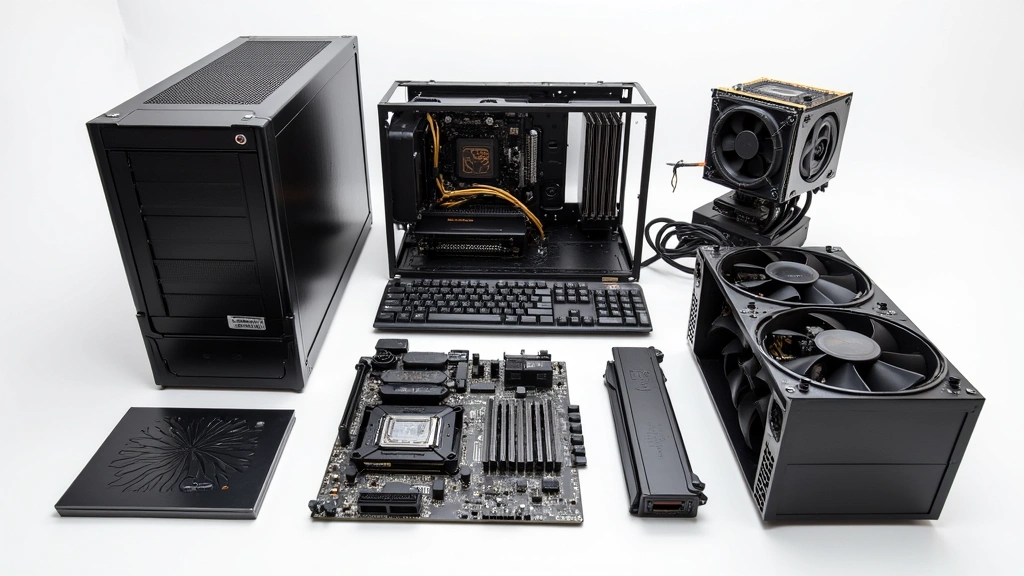
The relationship between abstract and concrete technology resembles the relationship between a blueprint and an actual building. Concrete technology consists of physical components you can touch and measure: processors, memory chips, cables, displays, and circuit boards. Abstract tech, conversely, exists in the realm of ideas, mathematics, and logical structures.
When you purchase a new laptop for students or professionals, you’re acquiring concrete technology—tangible hardware with specific specifications. However, the operating system running on that laptop, the applications installed, and the cloud services it connects to all represent abstract tech. Both layers work together seamlessly, but they operate according to fundamentally different principles.
This distinction becomes especially important when discussing scalability and innovation. Abstract tech innovations can be deployed across millions of devices without manufacturing new hardware, making them significantly more cost-effective and faster to implement than concrete technology improvements.
Key differences include:
- Concrete tech requires physical manufacturing; abstract tech requires only software deployment
- Concrete tech has fixed capacity; abstract tech scales dynamically
- Concrete tech innovation cycles measured in years; abstract tech in months or weeks
- Concrete tech limited by physics; abstract tech limited primarily by logic and mathematics
Applications Across Industries
Abstract tech applications permeate virtually every modern industry, fundamentally transforming how organizations operate. Financial institutions rely on abstract tech for transaction processing systems, risk analysis algorithms, and automated trading platforms. Healthcare providers use abstract tech in electronic health records systems, diagnostic algorithms, and telemedicine platforms.
Manufacturing industries implement abstract tech through production planning algorithms, supply chain optimization software, and predictive maintenance systems. Retail companies leverage abstract tech for inventory management, personalized recommendation engines, and dynamic pricing algorithms. The entertainment industry uses abstract tech for content recommendation systems, streaming protocols, and digital rights management.
Educational institutions increasingly depend on abstract tech through learning management systems, student information systems, and adaptive learning platforms. Government agencies utilize abstract tech for data analysis, citizen services, and infrastructure management. The common thread across all these applications is that abstract tech enables organizations to solve complex problems, improve efficiency, and scale operations without proportional increases in physical infrastructure.
The Role of Cloud Infrastructure
Cloud computing represents perhaps the most visible manifestation of abstract tech in contemporary business. When organizations migrate to the cloud, they’re fundamentally embracing abstract technology principles. Cloud computing benefits for businesses extend far beyond simple cost savings—they represent a philosophical shift toward abstraction.
Cloud infrastructure abstracts away physical server management, allowing organizations to focus on application development and business logic. Instead of worrying about hardware procurement, maintenance, and upgrades, companies can simply provision computing resources on-demand. This abstraction layer enables unprecedented flexibility and scalability.
Major cloud providers like AWS, Microsoft Azure, and Google Cloud Platform exemplify how abstract tech operates at massive scale. These platforms provide services ranging from basic computing power to sophisticated machine learning capabilities, all accessed through standardized APIs. The user never interacts with the physical hardware; they interact entirely with abstract interfaces and services.
Serverless computing takes this abstraction even further, allowing developers to write functions without managing any infrastructure whatsoever. The cloud provider handles all hardware provisioning, scaling, and maintenance transparently. This represents abstract tech at its most refined—users think purely in terms of business logic and data flow, while the underlying infrastructure becomes completely invisible.
Abstract Tech in Artificial Intelligence
Artificial intelligence exemplifies how abstract tech creates revolutionary capabilities without requiring new physical hardware. Modern AI systems operate through mathematical abstractions like neural networks, transformers, and attention mechanisms. These abstract models can be trained on existing hardware infrastructure but produce capabilities that seem almost magical to end users.
The success of large language models like GPT and specialized systems demonstrates abstract tech’s power. These systems don’t require specialized hardware beyond what already exists in data centers. Instead, they leverage sophisticated abstract architectures and training methodologies. The improvements come entirely from the algorithmic and architectural abstractions, not from hardware innovation.
This represents a fundamental shift in how technology innovation occurs. Rather than waiting for Moore’s Law to deliver faster chips, researchers can innovate through abstract methodologies. A better algorithm or architecture can be deployed globally instantly, benefiting billions of users without manufacturing anything physical.
If you’re interested in understanding these transformations more deeply, explore our guide on AI applications transforming the future for detailed insights into specific implementations.

Developer Perspectives and Implementation
Software developers work almost exclusively with abstract tech, rarely interacting with concrete hardware. When developers write code, they use programming languages, libraries, and frameworks—all abstract constructs. They don’t typically think about individual transistors or memory cells; instead, they reason about objects, functions, data structures, and algorithms.
Modern development practices emphasize abstraction at multiple levels. Frameworks abstract common patterns, libraries abstract complex functionality, and design patterns abstract proven solutions. This layered abstraction allows developers to be productive and create sophisticated applications without mastering every underlying detail.
The rise of low-code and no-code platforms represents abstract tech’s evolution toward ultimate accessibility. These platforms provide visual interfaces and pre-built components that abstract away programming entirely, allowing non-technical users to create applications. This democratization of development capability demonstrates how effective abstraction removes barriers to entry.
When considering how to upgrade laptop memory, you’re interacting with concrete tech concerns. However, the software running on that upgraded system represents abstract tech that benefits from the improved hardware capacity without requiring code changes.
Future Trends in Abstract Technology
The future of abstract tech points toward even higher levels of abstraction and automation. Quantum computing represents an abstract tech frontier—these systems operate according to quantum mechanical principles that are fundamentally abstract compared to classical computing. As quantum computing matures, it will introduce entirely new abstract frameworks for solving previously intractable problems.
Edge computing and distributed computing architectures represent growing abstract tech trends. Rather than centralizing computation in cloud data centers, these approaches abstract computation across geographically distributed systems. This requires new abstract frameworks for managing consistency, synchronization, and distributed state.
Artificial intelligence increasingly influences abstract tech development itself. AI systems now help design algorithms, optimize code, and discover new abstract architectures. This recursive application of AI to technology development suggests an accelerating innovation cycle.
For comprehensive context on technology’s evolution, visit our tech blog for ongoing coverage of emerging abstract tech trends and their practical implications.
Blockchain and distributed ledger technologies represent abstract tech innovations that challenge traditional centralized systems. These technologies abstract trust and verification through cryptographic and consensus mechanisms rather than relying on central authorities. As these technologies mature, they’ll likely influence how we design abstract systems across multiple domains.
The convergence of abstract tech innovations—AI, cloud computing, edge computing, and blockchain—suggests a future where systems become simultaneously more powerful and more distributed. This requires new abstract frameworks for managing complexity, ensuring reliability, and maintaining security across heterogeneous environments.

FAQ
What’s the simplest explanation of abstract tech?
Abstract tech refers to technology concepts and systems you can’t physically touch, like software, algorithms, and cloud services. It contrasts with concrete tech like hardware devices you can hold in your hand.
Why does abstract tech matter for businesses?
Abstract tech enables businesses to scale operations, innovate rapidly, and reduce costs without proportional hardware investments. It’s typically where the most significant competitive advantages emerge in modern industries.
How does abstract tech relate to cloud computing?
Cloud computing is fundamentally built on abstract tech principles. It abstracts away physical hardware management, allowing users to access computing resources and services through standardized interfaces without managing underlying infrastructure.
Can abstract tech exist without concrete hardware?
No, abstract tech ultimately requires physical hardware to execute. However, the same abstract tech can run on different hardware configurations, and hardware can be upgraded without changing abstract tech implementations.
Is machine learning considered abstract tech?
Yes, machine learning represents abstract tech at its most sophisticated. ML systems operate through mathematical abstractions and algorithms that can run on various hardware platforms, producing intelligent capabilities without explicit programming.
How does understanding abstract tech benefit consumers?
Understanding abstract tech helps consumers recognize why software updates matter, how cloud services work, and why technological innovation increasingly comes from software rather than hardware improvements.