Top AI Tech Stacks: Developer Insights for 2025
Building modern artificial intelligence applications requires more than just choosing a single framework—it demands a comprehensive understanding of the entire technology stack. From machine learning libraries to cloud infrastructure, developers today must navigate an increasingly complex ecosystem of tools, platforms, and services designed specifically for AI workloads. Whether you’re developing large language models, computer vision systems, or predictive analytics platforms, the choices you make at every layer of your stack will directly impact performance, scalability, and time-to-market.
The landscape of AI tech stacks has evolved dramatically over the past few years, with new tools emerging constantly while established frameworks continue to mature. This comprehensive guide breaks down the most popular and effective combinations that leading developers and enterprises are using today, providing actionable insights into why certain technologies work better together and how to evaluate which stack aligns with your specific project requirements.
Understanding AI Tech Stack Architecture
An AI tech stack is fundamentally different from traditional software development stacks because it incorporates specialized components for data handling, model training, and inference optimization. The typical architecture consists of five interconnected layers: the data layer, processing layer, framework layer, infrastructure layer, and application layer. Each component must work harmoniously with others to create a cohesive system capable of handling massive datasets, complex computations, and real-time predictions.
The data layer serves as the foundation, responsible for ingesting, storing, and managing vast quantities of structured and unstructured information. This is where tools like Apache Kafka, AWS S3, and Google Cloud Storage become essential. The processing layer handles data cleaning, transformation, and feature engineering—tasks typically managed by Apache Spark, Pandas, and Dask. Understanding cloud computing benefits for businesses becomes crucial when scaling these operations across distributed systems.
What makes modern AI stacks unique is the emphasis on reproducibility, versioning, and monitoring. Unlike traditional software where you deploy code once and iterate, machine learning systems require continuous retraining, A/B testing, and performance monitoring. This necessitates specialized tools for experiment tracking (MLflow, Weights & Biases), model versioning (DVC, Model Registry), and pipeline orchestration (Airflow, Kubeflow). The complexity increases further when considering regulatory requirements, bias detection, and explainability frameworks that modern organizations increasingly demand.
Core Machine Learning Frameworks
The framework layer represents the heart of any AI tech stack, and the choice here cascades through your entire architecture. TensorFlow and PyTorch remain the dominant forces, each with distinct advantages. TensorFlow, developed by Google, excels in production environments with its comprehensive ecosystem including TensorFlow Serving for model deployment and TensorFlow Lite for edge devices. Its static computation graph approach provides optimization opportunities that benefit large-scale deployments.
PyTorch, backed by Meta, has become the preferred choice for research and development due to its dynamic computation graphs and intuitive Python-first design. The framework’s flexibility makes it ideal for prototyping novel architectures, and its growing production capabilities through TorchServe have made it increasingly viable for enterprise deployments. Recent benchmarks from The Verge indicate PyTorch adoption in production environments has increased by 40% year-over-year.
Beyond these two giants, specialized frameworks address specific use cases. JAX provides functional programming capabilities with automatic differentiation, appealing to researchers working on cutting-edge algorithms. Hugging Face Transformers has become the de facto standard for natural language processing, offering pre-trained models and easy fine-tuning capabilities. XGBoost and LightGBM dominate gradient boosting applications, particularly in tabular data scenarios where they consistently outperform deep learning approaches.
For computer vision tasks, OpenCV remains essential for image preprocessing, while specialized libraries like Detectron2 (built on PyTorch) and MediaPipe provide pre-built solutions for object detection and pose estimation. The choice of framework directly influences your hiring decisions, as each has distinct developer communities and skill requirements. Learning to learn coding fast becomes important when adopting new frameworks within your team.

Data Processing and ETL Pipelines
No machine learning model performs better than the data it trains on, making data processing the most critical component of any AI tech stack. Apache Spark remains the industry standard for distributed data processing, offering APIs in Python, Scala, and SQL. Spark’s ability to handle both batch and streaming data makes it invaluable for building comprehensive data pipelines. Its MLlib library provides distributed implementations of common algorithms, though most practitioners prefer using Spark for preprocessing and feeding data to dedicated ML frameworks.
For smaller teams or specific use cases, Pandas and Polars offer excellent single-machine performance. Polars, a newer entrant written in Rust, provides significant performance improvements over Pandas for large datasets, with approximately 10-100x faster operations depending on the workload. When working with streaming data, Apache Flink provides superior capabilities compared to Spark Streaming, particularly for complex event processing and stateful computations.
Data orchestration and workflow management require specialized tools. Apache Airflow dominates this space with its Python-based DAG (Directed Acyclic Graph) approach, making it accessible to data scientists. Prefect and Dagster offer modern alternatives with improved error handling and dynamic pipeline generation. These tools ensure data freshness, handle dependencies, and provide monitoring capabilities essential for production systems. Understanding how technology and artificial intelligence are transforming our future requires appreciating these infrastructure components.
Feature engineering platforms like Tecton and Feast have emerged to solve the feature store problem—maintaining consistent, versioned features across training and inference. This prevents training-serving skew, a common source of model performance degradation in production. Many organizations implement feature stores as a central component, improving collaboration between data science and engineering teams.
Cloud Platforms for AI Deployment
Cloud infrastructure has become non-negotiable for serious AI development. AWS, Google Cloud Platform, and Microsoft Azure each offer comprehensive AI/ML services, though with different strengths. AWS dominates market share with SageMaker providing an integrated platform for model development, training, and deployment. SageMaker’s AutoML capabilities and built-in algorithms accelerate development cycles, while its integration with other AWS services simplifies infrastructure management.
Google Cloud Platform emphasizes BigQuery for data analytics and Vertex AI for end-to-end machine learning workflows. GCP’s strength lies in its integration with TensorFlow (developed by Google) and its superior data analytics capabilities. Organizations heavily invested in data warehousing often find GCP’s approach more cohesive. Azure targets enterprises already committed to Microsoft’s ecosystem, offering excellent integration with enterprise tools and strong support for both PyTorch and TensorFlow.
For specialized workloads, Lambda Labs and Paperspace provide GPU-optimized cloud services at competitive pricing. These platforms excel for computationally intensive training jobs where you need maximum flexibility. Hugging Face Spaces offers a free tier for deploying models, making it ideal for prototypes and demonstrations. According to CNET’s recent analysis, cloud-based AI training costs have decreased by 35% over the past two years due to increased competition and optimization improvements.
Container orchestration through Kubernetes provides the flexibility to run AI workloads across multiple cloud providers or on-premises infrastructure. Docker containerization ensures reproducibility and simplifies deployment pipelines. Many organizations use Kubernetes with specialized operators like Kubeflow to manage the complete ML lifecycle, from data preparation through model serving.
Popular Production AI Stacks
Real-world implementations combine these components into coherent stacks. The PyTorch + FastAPI + Docker + Kubernetes stack represents a modern approach favored by startups and tech companies. PyTorch handles model development, FastAPI provides a lightweight web framework for serving predictions, Docker ensures reproducibility, and Kubernetes manages scaling. This combination offers flexibility, strong developer experience, and excellent performance characteristics.
The TensorFlow + TensorFlow Serving + Kubernetes stack appeals to enterprises requiring maximum production maturity. TensorFlow Serving provides optimized model deployment with built-in versioning and A/B testing capabilities. This stack excels in high-throughput scenarios where model serving performance is critical. Many financial institutions and large tech companies rely on this combination for mission-critical applications.
For organizations prioritizing ease of use and time-to-market, the Hugging Face Transformers + Streamlit + AWS SageMaker stack accelerates development significantly. Streamlit enables rapid prototyping of ML applications without extensive frontend development. This stack works particularly well for NLP applications and proof-of-concept projects. Accessing the TechPulse Hunter Blog provides additional insights on emerging stack combinations.
Data-intensive organizations often implement the Apache Spark + Airflow + XGBoost + Kubernetes stack for traditional machine learning workloads. This combination handles feature engineering at scale, maintains data pipelines, and serves predictions efficiently. Organizations working with tabular data and requiring explainability frequently choose this approach over deep learning solutions.
The JAX + Optax + Flax stack appeals to researchers and organizations developing cutting-edge algorithms. JAX’s functional approach and Optax’s optimization library provide flexibility for implementing novel architectures. Flax, a neural network library built on JAX, simplifies model definition while maintaining the framework’s capabilities. This stack dominates in research institutions and AI labs.
Development Tools and Monitoring
Beyond the core components, successful AI stacks include robust tooling for development, debugging, and monitoring. Jupyter Notebooks remain essential for exploratory data analysis and model development, though JupyterLab provides a more comprehensive IDE experience. VS Code with appropriate extensions has gained significant adoption for AI development, offering superior performance and extensibility compared to traditional notebook environments.
Experiment tracking platforms like MLflow, Weights & Biases, and Neptune solve the reproducibility problem by logging hyperparameters, metrics, and artifacts. These tools prevent the common scenario where developers cannot reproduce previous results. Weights & Biases particularly excels with its visualization capabilities and integration with popular frameworks. Their benchmarking suite provides detailed performance comparisons across different hardware configurations.
Model versioning through DVC (Data Version Control) or Git LFS ensures reproducibility and enables collaboration. DVC integrates seamlessly with Git workflows while handling large model files efficiently. Model registries like MLflow Model Registry provide centralized model management, version control, and deployment tracking. This becomes increasingly important as organizations manage dozens or hundreds of production models.
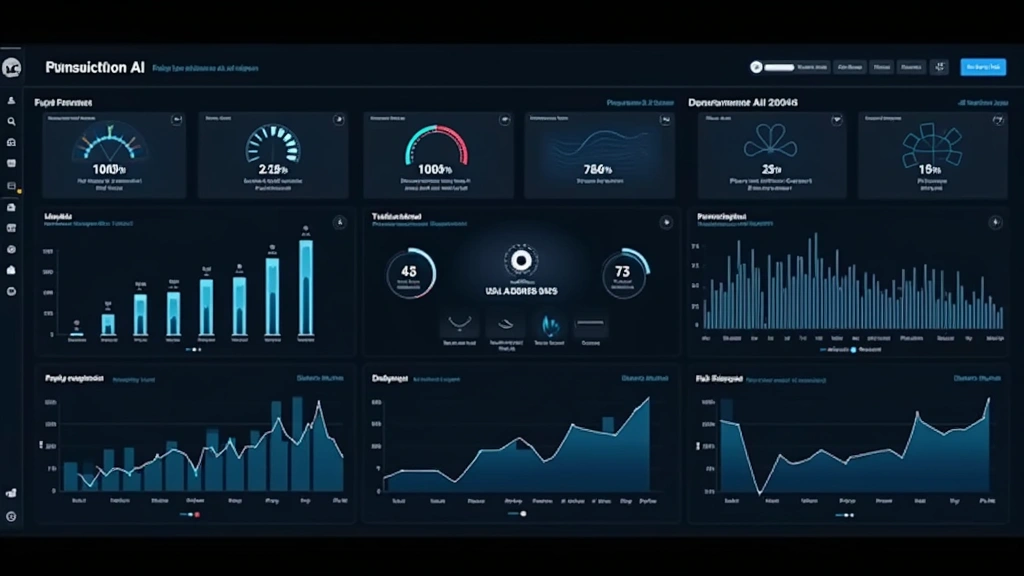
Monitoring production models requires specialized tools addressing data drift, prediction drift, and performance degradation. Evidently AI, WhyLabs, and Arize provide comprehensive monitoring solutions specifically designed for ML models. These platforms detect when model performance degrades due to data distribution shifts, enabling proactive retraining. Organizations deploying models to production cannot ignore this critical component.
Hyperparameter optimization tools like Optuna, Ray Tune, and Hyperband automate the traditionally manual process of tuning model parameters. Ray Tune particularly stands out with its distributed nature, enabling parallel hyperparameter searches across multiple machines. This capability can reduce training time from days to hours.
Choosing Your Stack
Selecting an AI tech stack requires balancing multiple considerations beyond raw technical capabilities. Team expertise significantly influences this decision—adopting PyTorch when your team knows TensorFlow creates unnecessary friction. Project requirements matter tremendously: NLP applications benefit from Hugging Face Transformers, while tabular data problems favor XGBoost. Scalability needs determine whether single-machine tools suffice or distributed frameworks become necessary.
Cost considerations extend beyond compute resources to include personnel costs and operational overhead. Simpler stacks with fewer components reduce maintenance burden and enable smaller teams to manage production systems. However, cutting corners on monitoring, versioning, or orchestration typically costs more in the long run through debugging time and production incidents. Understanding the future of artificial intelligence helps inform decisions about technology longevity and community support.
Organizational maturity matters significantly. Early-stage startups benefit from stacks emphasizing rapid development, while enterprises require stacks with strong governance, compliance, and integration capabilities. Mid-stage companies should choose stacks that grow with them rather than requiring complete rewrites as they scale. The best laptops for students and developers should support your chosen stack’s development environment.
Integration with existing infrastructure influences stack selection heavily. Organizations invested in Kubernetes benefit from Kubernetes-native tools. Companies using specific cloud providers should leverage native services where possible. Legacy systems requiring integration with existing data pipelines necessitate stacks with strong interoperability. Avoid technology decisions made in isolation from your broader technical ecosystem.
Community support and ecosystem maturity provide important long-term stability. Popular frameworks like PyTorch and TensorFlow have extensive documentation, large communities, and abundant third-party libraries. Choosing niche frameworks for production systems introduces risk, as community support may diminish or the technology could become obsolete. Evaluate whether your stack choice will still be relevant in three to five years.
FAQ
What is an AI tech stack?
An AI tech stack comprises the integrated set of tools, frameworks, platforms, and services used throughout the machine learning lifecycle—from data collection and preprocessing through model training, evaluation, and production deployment. It differs from traditional software stacks by including specialized components for handling large datasets, distributed computing, and continuous model retraining.
Is PyTorch or TensorFlow better for production?
Both frameworks excel in production environments. TensorFlow offers mature serving solutions and comprehensive optimization tools, making it ideal for high-throughput applications. PyTorch provides flexibility and has improved production capabilities through TorchServe. The choice depends on your specific use case, existing expertise, and performance requirements rather than one being universally superior.
Do I need Kubernetes for AI applications?
Kubernetes becomes valuable when managing multiple models, requiring auto-scaling, or deploying across distributed infrastructure. Simple applications with single models can use serverless platforms or simpler deployment options. However, Kubernetes provides significant benefits for complex production systems, making it worth learning for organizations serious about AI deployment.
How important is a feature store?
Feature stores solve critical problems in production ML systems by maintaining consistent features across training and serving. They become increasingly important as you manage multiple models sharing features. For simple applications with few features, feature stores add unnecessary complexity, but they provide substantial value in mature ML platforms managing dozens of models.
Should I use cloud platforms or on-premises infrastructure?
Cloud platforms offer superior flexibility, managed services reducing operational burden, and easy scaling. They work well for most organizations unless you have specific compliance requirements, proprietary data concerns, or cost structures favoring on-premises infrastructure. Hybrid approaches combining cloud and on-premises infrastructure provide flexibility but add complexity.
How often should I retrain my models?
Retraining frequency depends on data drift severity and model performance degradation. Some models require daily retraining due to rapidly changing data, while others remain stable for months. Implement monitoring to detect performance degradation and trigger retraining automatically. This prevents models from silently degrading performance in production.