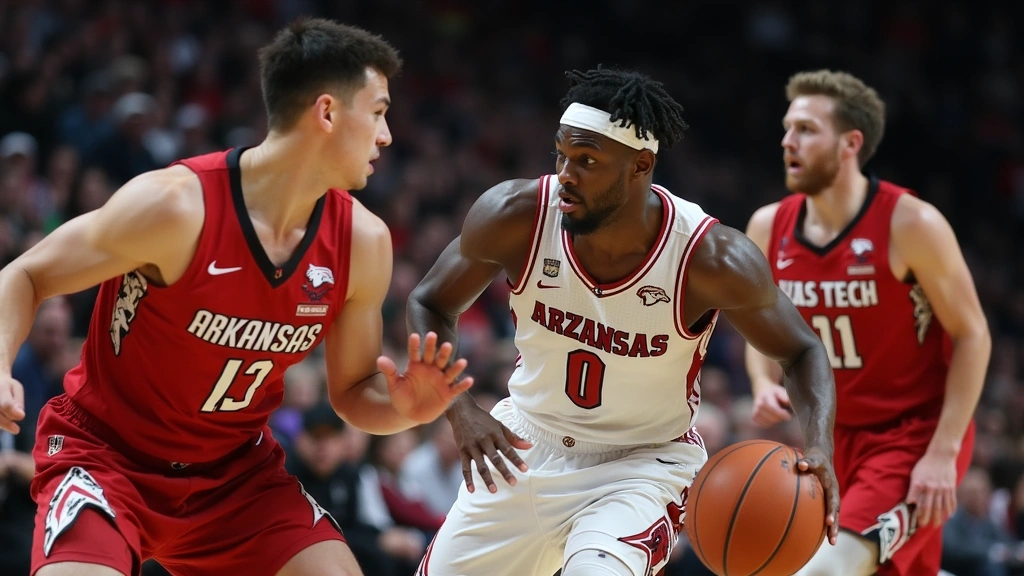
Arkansas vs Texas Tech Basketball: Who Will Prevail?
The matchup between Arkansas and Texas Tech represents one of college basketball’s most compelling rivalries, showcasing two programs with distinct playing styles, coaching philosophies, and championship aspirations. When these two powerhouses collide on the court, fans witness a clash of defensive intensity, offensive innovation, and tournament-caliber talent that has captivated audiences throughout recent seasons. Understanding the nuances of both programs requires deep analysis of their roster compositions, statistical performances, and historical head-to-head records.
This comprehensive examination explores every facet of the Arkansas versus Texas Tech basketball competition, from player matchups to coaching strategies to tournament implications. Whether you’re a dedicated fan, a sports analyst, or someone interested in following the latest updates in college athletics, this guide provides detailed insights into what makes this rivalry so compelling and who possesses the advantage heading into their next meeting.
Program Overview and Historical Context
Arkansas basketball has experienced a remarkable resurgence under current leadership, transforming the program into a perennial NCAA Tournament contender. The Razorbacks program boasts a rich history dating back decades, with multiple Elite Eight appearances and a National Championship in 1994. Recent seasons have demonstrated the program’s commitment to recruiting elite talent and developing players for professional basketball. The team’s identity centers on defensive excellence, board control, and transition basketball that creates scoring opportunities in open court situations.
Texas Tech, conversely, has built its reputation as one of college basketball’s most defensively suffocating programs. The Red Raiders’ defensive prowess has become legendary, with multiple seasons featuring historic defensive ratings and tournament deep runs. Texas Tech’s approach emphasizes pressure defense, shot-clock management, and forcing opponents into uncomfortable situations. The program’s recent tournament appearances and competitive regular season records demonstrate sustained excellence and consistent player development.
The historical context between these programs reveals competitive balance, though Arkansas has demonstrated improved trajectory in recent seasons. When examining their educational and athletic partnerships, understanding regional dynamics provides additional perspective on their rivalry’s significance within conference play.
Roster Composition and Key Players
Arkansas enters matchups with versatile roster construction featuring multiple scoring threats across different positions. The team’s backcourt typically includes guards capable of creating offensive opportunities, facilitating ball movement, and executing pick-and-roll actions effectively. Forward positions showcase length and athleticism, with players capable of defending multiple positions and contributing on the glass. The Razorbacks’ frontcourt depth provides flexibility in matchup situations and allows coaching staff to deploy various lineup combinations depending on opponent tendencies.
Key Arkansas players demonstrate NBA-caliber skills and basketball intelligence. Guard play emphasizes decision-making and three-point shooting, essential components of modern college basketball. Forward positions feature players with defensive versatility and offensive skill development. Center rotation includes shot-blockers and rebounding specialists who anchor defensive schemes and provide interior scoring options.
Texas Tech similarly constructs rosters with specific positional needs and defensive requirements. The Red Raiders prioritize defensive specialists who excel in pressure situations and understand complex defensive schemes. Backcourt players demonstrate ball-handling expertise and three-point range, enabling Texas Tech to space the floor while maintaining defensive intensity. Forward and center positions include players with length and athleticism, crucial components of Texas Tech’s defensive philosophy.
Key Texas Tech players showcase defensive prowess alongside offensive contributions. Guard depth provides ballhandling security and perimeter shooting capability. Forward positions feature athletes capable of defending guards through switches and maintaining position defensively. Center rotation includes defensive anchors who protect the rim and contest shots effectively.
Defensive Strategies and Matchup Analysis
Defensive execution determines Arkansas versus Texas Tech outcomes more significantly than offensive firepower. Arkansas employs aggressive man-to-man principles with occasional zone looks, prioritizing individual defensive responsibility and communication. The team’s defensive identity emphasizes length utilization, forcing difficult shots, and creating turnovers through pressure. Transition defense remains critical, as the Razorbacks work to contain fast-break opportunities before they develop into easy scoring chances.
Texas Tech’s defensive system represents one of college basketball’s most complex and effective schemes. The Red Raiders utilize aggressive full-court pressure, creating chaos and forcing turnovers before offensive sets develop. Their defensive versatility includes switching capabilities, zone principles, and unconventional coverage disguises that confuse opposing offenses. Shot-clock management becomes tactical weapon, forcing opponents into uncomfortable late-clock decisions and poor shot selections.
Matchup analysis reveals critical individual defensive assignments that determine game flow. Perimeter defense critically impacts three-point shooting percentages and ball movement. Interior defense influences rebounding battles and post-scoring opportunities. Understanding these matchups provides insight into who possesses defensive advantage in specific situations.
Offensive Capabilities and Scoring Patterns
Arkansas basketball generates offense through multiple scoring channels, emphasizing three-point shooting, transition scoring, and pick-and-roll actions. The team’s offensive identity values ball movement, creating open looks through spacing and cutting. Guard playmaking facilitates offensive flow, enabling teammates to attack defensive weaknesses. Forward versatility provides scoring threats from multiple positions, complicating defensive assignments and creating mismatches.
Scoring patterns typically feature balanced contributions across lineup positions. Arkansas excels in transition situations, converting defensive stops into fast-break opportunities. Half-court offense relies on spacing principles, forcing defenders into difficult help decisions. Three-point shooting represents critical offensive component, with multiple players capable of creating and converting from distance.
Texas Tech’s offensive approach emphasizes efficiency over volume, accepting lower scoring totals in exchange for high-quality shot opportunities. The Red Raiders’ ball movement creates spacing and open looks for three-point shooters. Guard play orchestrates offensive sets, directing teammates into favorable positions. Forward and center scoring contributions typically result from pick-and-roll actions, post-ups, and putback opportunities rather than perimeter shooting.
Scoring efficiency metrics reveal Texas Tech’s offensive philosophy prioritizes shot quality. The Red Raiders accept fewer overall shots to ensure better looks at basket. Three-point shooting remains important, though Texas Tech doesn’t force volume from distance. Interior scoring provides reliable offensive outlet when perimeter shots don’t fall.
Coaching Philosophy Comparison
Arkansas coaching emphasizes player development, recruiting excellence, and modern basketball principles. The coaching staff prioritizes defensive intensity while empowering players with offensive freedom. Roster construction reflects commitment to multi-skilled athletes capable of contributing across different positions. Game planning includes detailed opponent scouting, identifying defensive vulnerabilities and offensive strengths. The program’s success reflects coaching staff’s ability to attract talent and develop players for professional basketball careers.
Texas Tech coaching represents defensive innovation and meticulous game planning. The coaching philosophy emphasizes defensive discipline, requiring players to execute complex schemes with precision. Offensive approach remains secondary to defensive principles, accepting lower-scoring games as tradeoff for defensive excellence. Player development focuses on defensive skill improvement and basketball intelligence. Recruiting emphasizes defensive versatility and coachability, prioritizing system fit over individual scoring ability.
Both coaching staffs demonstrate tournament success and consistent winning records. Arkansas coaches emphasize player empowerment and modern offensive principles, while Texas Tech coaches prioritize defensive execution and systematic discipline. These philosophical differences create distinct team identities and matchup dynamics.
Statistical Performance Metrics
Comprehensive statistical analysis reveals important performance indicators determining game outcomes. Field goal percentage, three-point shooting percentage, and free-throw percentage directly impact scoring efficiency. Rebounds per game, particularly offensive rebounds, influence second-chance scoring opportunities and defensive rebounding security. Assists per game indicate ball movement quality and offensive flow. Turnovers per game reflect offensive execution and defensive pressure effectiveness.
Advanced metrics provide deeper insight into team performance. Defensive efficiency measurements indicate points allowed per possession, crucial indicator of defensive excellence. Offensive efficiency measurements indicate points generated per possession, revealing offensive execution quality. Turnover rates demonstrate ball security and decision-making. Free-throw rate indicates offensive aggressiveness and drawing fouls.
When examining Arkansas versus Texas Tech statistics, defensive metrics typically favor Texas Tech due to their defensive-first philosophy. Offensive efficiency metrics may favor Arkansas depending on three-point shooting performance. Rebounding statistics often determine game outcomes, particularly offensive rebounding battles. Turnover management significantly impacts both teams, as Texas Tech’s pressure defense creates forced mistakes while Arkansas values ball security.
For those interested in technology supporting sports analysis, modern analytics platforms provide detailed statistical breakdowns enabling comprehensive game preparation and performance evaluation.
Tournament Seeding and Bracket Implications
NCAA Tournament seeding significantly impacts Arkansas versus Texas Tech matchup probabilities. Higher seeds receive favorable bracket positioning and home-court advantages in earlier rounds. Both programs’ tournament histories demonstrate capability to advance through multiple rounds and compete for championships. Regular season performance, conference tournament results, and strength-of-schedule metrics influence final seeding decisions.
Bracket implications extend beyond individual games, affecting conference representation and tournament narrative development. Arkansas and Texas Tech matchups potentially influence conference tournament dynamics and NCAA Tournament selection Sunday positioning. Understanding seeding implications provides context for game significance and tournament advancement probabilities.
Historical tournament performance by both programs demonstrates competitive capability. Arkansas has advanced to Elite Eights and Final Fours in recent seasons. Texas Tech similarly demonstrated tournament success, reaching Elite Eights and competing for championships. These tournament experiences provide confidence and experience crucial for deep tournament runs.
Head-to-Head Historical Record
The historical record between Arkansas and Texas Tech reveals competitive balance with slight variations depending on specific time periods examined. Recent seasons have produced competitive matchups with outcomes determined by specific game situations and performance execution. Home-court advantage appears significant, with teams performing better when playing at home facilities. Neutral-court matchups provide cleaner comparison of team quality without home-court benefits.
Specific game outcomes often hinged on critical moments, defensive stops, and clutch shooting. Three-point shooting differential frequently determined game results, reflecting modern basketball’s emphasis on perimeter scoring. Rebounding battles influenced possession counts and second-chance opportunities. Turnover management impacted game flow and scoring opportunities.
Recent matchups demonstrate both programs’ ability to execute at high levels. Arkansas victories typically featured balanced scoring and strong three-point shooting. Texas Tech victories reflected defensive dominance and opponent shot-selection struggles. Understanding historical patterns provides insight into matchup tendencies and potential game outcomes.

Prediction and Final Analysis
Predicting Arkansas versus Texas Tech outcomes requires comprehensive analysis of multiple factors including roster composition, coaching philosophy, statistical performance, and situational context. Arkansas possesses advantages in offensive versatility, three-point shooting depth, and scoring balance. Texas Tech maintains advantages in defensive execution, pressure application, and shot-clock management.
Game location significantly impacts prediction accuracy. Arkansas likely performs better when playing at home with crowd support. Texas Tech similarly benefits from home-court advantages and familiar defensive schemes. Neutral-court venues provide more balanced competitive environments.
Recent form, injury status, and motivation levels influence game outcomes beyond statistical analysis. Teams performing well entering matchups typically sustain momentum and execution. Injured key players significantly impact team capability and performance projections. Tournament motivation or conference championship implications may affect team focus and intensity.
Overall prediction suggests competitive matchup with outcome determined by specific game execution rather than predetermined quality difference. Arkansas enters with offensive versatility and scoring capability advantages. Texas Tech enters with defensive excellence and pressure application advantages. Three-point shooting performance, rebounding battle results, and turnover management will likely determine final outcome.
For those interested in sports analytics and data science careers, college basketball provides fascinating datasets for predictive modeling and performance analysis.
External analysis from The Verge’s technology coverage and CNET’s tech reviews provide context for understanding sports technology advancements. Official NCAA statistics and tournament information offer authoritative performance data. ESPN’s comprehensive college basketball coverage provides real-time updates and expert analysis.
FAQ
What are the key differences between Arkansas and Texas Tech basketball styles?
Arkansas emphasizes offensive versatility, three-point shooting, and transition basketball with balanced scoring contributions. Texas Tech prioritizes defensive excellence, pressure application, and controlled offensive execution. These contrasting philosophies create distinct matchup dynamics and game flow patterns.
How important is three-point shooting in Arkansas versus Texas Tech games?
Three-point shooting significantly impacts game outcomes, particularly for Arkansas which relies on perimeter shooting for offensive balance. Texas Tech’s defensive pressure attempts to limit three-point opportunities, while their offensive approach values three-point shooting less than Arkansas. Three-point differential often determines final game results.
Which team has the defensive advantage?
Texas Tech typically possesses defensive advantages due to their systematic defensive approach, pressure application, and complex coverage schemes. Arkansas maintains solid defensive capability but emphasizes offensive balance more than Texas Tech’s defensive-first philosophy.
How do home-court advantages affect Arkansas versus Texas Tech outcomes?
Home-court advantages significantly impact both programs, with teams performing better in familiar environments with crowd support. Arkansas benefits from home crowds and familiar facilities. Texas Tech similarly leverages home-court advantages for defensive intensity and fan support. Neutral-court venues provide cleaner competitive comparisons.
What historical trends favor each program?
Recent Arkansas success reflects improved program trajectory and recruiting excellence. Texas Tech’s consistent tournament appearances demonstrate sustained excellence. Historical trends suggest competitive balance with slight variations depending on specific time periods and roster compositions examined. Understanding data analysis and sports analytics enables deeper trend identification and pattern recognition.
How do coaching decisions impact game outcomes?
Coaching decisions regarding lineup composition, defensive schemes, and offensive play-calling significantly influence game results. Arkansas coaches typically allow more offensive freedom and player empowerment. Texas Tech coaches emphasize defensive discipline and systematic execution. Game adjustments during timeouts and halftime often determine momentum shifts and final outcomes.


