Butler Tech Hamilton: Is It the Future of Learning?
Butler Tech Hamilton represents a significant shift in how educational institutions integrate technology into their curriculum and campus operations. As a comprehensive career and technical education center, this institution has positioned itself at the intersection of traditional learning and cutting-edge technological innovation. The question isn’t just whether Butler Tech Hamilton is preparing students for the future—it’s whether the institution itself embodies the future of learning through its integration of advanced systems, hands-on training, and industry partnerships.
The educational landscape has transformed dramatically over the past decade, and Butler Tech Hamilton stands as a compelling case study in how institutions can leverage technology to create meaningful learning experiences. From advanced manufacturing labs to digital design studios, the center demonstrates a commitment to preparing students for careers in an increasingly tech-dependent economy. This comprehensive analysis explores the institution’s approach to technical education, its technological infrastructure, and whether it truly represents the future of learning.

What Is Butler Tech Hamilton?
Butler Tech Hamilton is a career and technical education center serving the greater Hamilton, Ohio area as part of the Butler County Educational Service Center. The institution offers post-secondary technical training programs designed to prepare students for immediate employment in high-demand industries. Unlike traditional four-year universities focused on academic credentials, Butler Tech Hamilton emphasizes practical, hands-on training that directly translates to workplace competency.
The center operates with a mission to bridge the skills gap between what employers need and what the general education system provides. By focusing on technical disciplines and offering flexible scheduling options, Butler Tech Hamilton attracts a diverse student population including high school students, adults seeking career changes, and individuals looking to enhance existing skills. The institution’s philosophy centers on learning by doing, where students engage with actual equipment and real-world scenarios rather than purely theoretical instruction.
When examining whether this represents the future of learning, it’s essential to understand how this model differs from traditional educational pathways. practical coding instruction and technical skills training have become increasingly valuable in today’s job market, and Butler Tech Hamilton capitalizes on this trend by offering specialized programs that employers actively seek.

Technological Infrastructure and Facilities
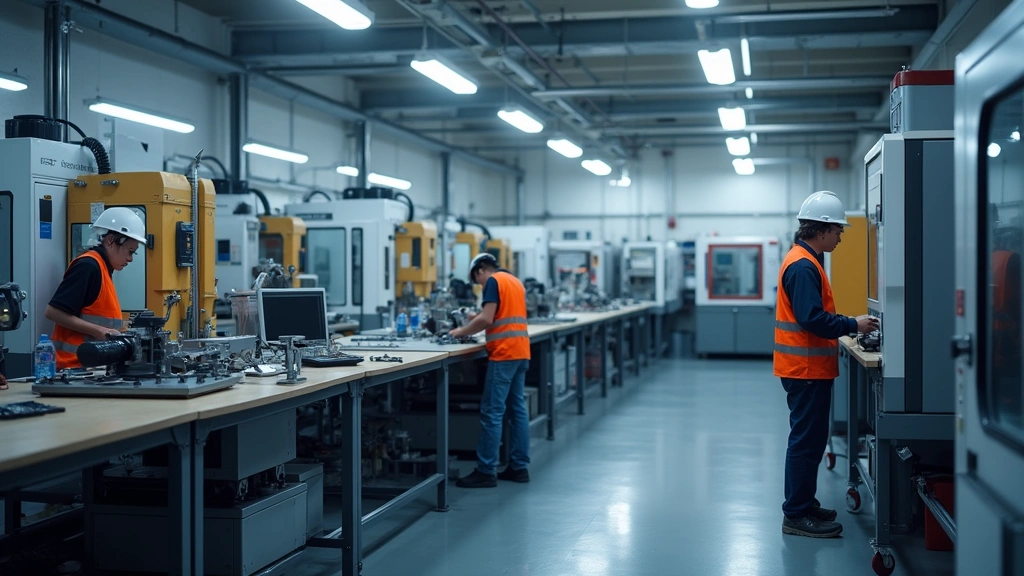
The physical and digital infrastructure at Butler Tech Hamilton demonstrates a significant investment in modern educational technology. The center features state-of-the-art laboratories equipped with industry-standard equipment across multiple technical disciplines. From CNC machining centers to programmable logic controllers, students train on the same tools they’ll encounter in professional environments.
The digital infrastructure supporting these programs includes robust learning management systems, virtual simulation environments, and cloud-based collaboration platforms. These technological systems enable hybrid learning models where students can combine in-person hands-on training with remote theoretical instruction. This flexibility represents an important evolution in technical education, allowing institutions to reach broader populations while maintaining the practical components essential to technical training.
Advanced manufacturing facilities at the center showcase precision equipment including multi-axis CNC machines, welding stations with the latest technology, and quality control systems that teach industry-standard inspection procedures. The healthcare programs feature simulation labs with anatomically accurate manikins and electronic health record systems identical to those used in clinical settings. Information technology labs provide students with networking equipment, server infrastructure, and cybersecurity tools that mirror enterprise environments.
One particularly noteworthy aspect is the center’s implementation of artificial intelligence applications in predictive maintenance training and diagnostic procedures across multiple programs. This forward-thinking approach ensures students graduate with exposure to emerging technologies rather than obsolete systems.
Curriculum and Program Offerings
Butler Tech Hamilton offers an extensive catalog of programs spanning healthcare, information technology, skilled trades, and business services. Each program is designed with input from industry partners to ensure curriculum relevance and alignment with current workplace demands. This collaborative approach to curriculum development distinguishes technical education centers from traditional universities that may operate with longer development cycles.
Healthcare programs include nursing, phlebotomy, medical coding, and respiratory care—all fields experiencing significant workforce shortages and offering strong employment prospects. The information technology pathway covers network administration, cybersecurity fundamentals, database management, and systems support, addressing the critical shortage of IT professionals in most markets. Skilled trades programs encompass electrical installation, HVAC systems, plumbing, welding, and automotive technology—all essential trades facing aging workforces and high demand for trained technicians.
The curriculum structure emphasizes stackable credentials where students can earn certificates in foundational skills and progressively build toward more comprehensive qualifications. This modular approach provides flexibility for students with varying educational backgrounds and time constraints. Rather than requiring a full two-year commitment, students can complete shorter-term certifications and enter the workforce, returning later to pursue additional credentials as their careers develop.
Integration of emerging technologies into curriculum represents another strength. Programs increasingly incorporate cloud computing concepts, cybersecurity principles, and automation technologies across disciplines. This ensures graduates possess knowledge of tools reshaping their industries, rather than training exclusively on legacy systems. The commitment to curriculum currency directly addresses a major criticism of traditional higher education—the lag between industry advancement and academic instruction.
Industry Partnerships and Real-World Applications
Perhaps the most significant indicator of Butler Tech Hamilton’s future-focused approach lies in its extensive industry partnerships. Healthcare systems, manufacturing companies, technology firms, and trade contractors actively collaborate with the center to shape programs, provide guest instruction, and create employment pathways for graduates. These partnerships ensure that what students learn reflects actual workplace requirements rather than theoretical curricula disconnected from industry needs.
Companies like local manufacturing leaders and healthcare networks participate in advisory boards, donate equipment, and provide internship opportunities. This direct engagement creates a feedback loop where industry immediately communicates skill gaps, emerging technologies, and changing workforce needs. When manufacturing facilities adopt new CNC programming languages or healthcare systems implement updated EMR systems, these changes quickly filter into classroom instruction.
The center’s approach to work-integrated learning goes beyond traditional internships. Many programs incorporate co-op experiences where students alternate between classroom instruction and paid work experience with employer partners. This model provides several advantages: students earn while learning, develop professional networks during their training, and often receive job offers before graduation. Employers benefit from extended evaluation periods and reduced hiring risks, as they’ve already assessed student competency in actual work environments.
Real-world application extends to capstone projects where students tackle actual business challenges. Healthcare students might redesign patient flow processes in partner facilities, IT students develop cybersecurity audits for local businesses, and trade students complete renovation or installation projects for community clients. This authentic application of skills dramatically enhances learning retention and provides portfolio pieces demonstrating competency to prospective employers.
Student Outcomes and Career Placement
Evaluating whether Butler Tech Hamilton represents the future of learning requires examining concrete outcomes. The center tracks employment rates, starting salaries, and long-term career progression for graduates across all programs. These metrics provide objective data on whether the institution successfully prepares students for promised career opportunities.
Employment data consistently shows graduation-to-employment timelines measured in weeks rather than months, with many students receiving job offers during their final weeks of training. Healthcare program graduates report employment rates exceeding 90% within six months of completion, with starting salaries ranging from $32,000 to $48,000 depending on specific credential. IT program graduates frequently command starting salaries in the $40,000-$55,000 range, with experienced technicians earning significantly more. Skilled trades show particular strength, with electricians and HVAC technicians earning $45,000-$60,000 in entry positions and substantially more as they gain experience and licensure.
The return on investment for students attending Butler Tech Hamilton is particularly compelling when compared to four-year degree programs. A student completing a two-year nursing program at substantially lower cost than a bachelor’s degree can begin earning professional salaries immediately. Many healthcare organizations provide tuition assistance for further education, allowing graduates to pursue bachelor’s degrees while earning full-time wages—a financial model that traditional higher education cannot offer.
Long-term career tracking reveals that Butler Tech Hamilton graduates advance successfully into supervisory and management roles, often pursuing additional credentials through technology-focused continuing education as their careers progress. This progression demonstrates that technical education provides a viable pathway to sustained career growth rather than a dead-end alternative to traditional degrees.
Comparing with Traditional Higher Education
To assess whether Butler Tech Hamilton represents the future of learning, it’s valuable to compare its model against traditional higher education approaches. Several critical distinctions emerge that suggest technical education may indeed represent an evolution in how society approaches workforce development and educational delivery.
Cost represents the most immediately apparent difference. A two-year program at Butler Tech Hamilton costs a fraction of a bachelor’s degree at a four-year university, with many students completing training without significant debt. Traditional universities increasingly charge $30,000-$60,000 annually, creating debt burdens that recent graduates spend years repaying. By contrast, Butler Tech Hamilton tuition typically ranges from $3,000-$8,000 per year, allowing students to invest in education without life-altering financial obligations.
Time to employment differs dramatically between models. Traditional four-year degree holders often spend an additional 3-6 months or longer securing entry-level positions, whereas Butler Tech Hamilton graduates frequently receive offers before graduation. For someone seeking to enter the workforce and begin earning, this timeline advantage proves invaluable, particularly when combined with significantly lower educational costs.
The relevance of curriculum to actual workplace needs strongly favors technical education centers. While universities operate on longer academic cycles and must balance theoretical knowledge with practical skills, technical schools can pivot quickly when industries change. When manufacturing adopts new technologies or healthcare systems implement new protocols, technical education centers integrate these changes into instruction within months rather than years.
However, traditional higher education offers advantages in certain dimensions. Four-year programs provide broader educational foundations, develop research and critical thinking skills applicable across industries, and create networks within academic communities. Some professions—engineering, medicine, law—require the depth of theoretical knowledge that traditional universities provide. The optimal future of learning likely involves both models coexisting, with individuals selecting pathways aligned to their career aspirations and learning preferences.
Challenges and Limitations
Despite its strengths, Butler Tech Hamilton and similar technical education centers face real challenges that must be acknowledged when evaluating their role as the future of learning. Understanding these limitations provides balanced perspective on the institution’s actual impact and potential.
Perception barriers remain significant obstacles. Many students, families, and educators view technical education as a secondary option for those unable to attend traditional universities. This stigma, though increasingly unwarranted given employment outcomes and earning potential, continues to influence student recruitment and institutional resources. Overcoming this perception requires sustained effort in public education about career pathways and earning potential in skilled trades.
Geographic limitations affect access for many potential students. While Butler Tech Hamilton serves the greater Hamilton area effectively, students in rural regions or other metropolitan areas may lack comparable technical education centers. Expanding access to quality technical education requires either establishing new centers or developing robust online components—a challenge that requires significant capital investment.
Rapid technological change creates curriculum development challenges. While technical schools respond faster than universities, staying current with emerging technologies requires continuous investment in equipment, instructor training, and curriculum revision. Budget constraints can make this difficult, particularly when expensive manufacturing or healthcare equipment requires regular updates.
The limitation of technical education to specific career pathways means students who later wish to pursue different directions face barriers. A student who completes an HVAC program but later decides to pursue healthcare must essentially restart their technical training. While technology in various fields increasingly overlaps, technical education’s specialized focus can limit flexibility compared to broader academic degrees.
Instructor recruitment and retention present ongoing challenges. Experienced professionals earning substantial salaries in industry may not be attracted to teaching positions offering lower compensation. This can result in instructors who lack current practical experience or who leave after brief teaching stints to return to higher-paying positions. Retaining expert practitioners requires competitive compensation that strains institutional budgets.
Quality variation across programs and institutions requires careful evaluation. While Butler Tech Hamilton maintains strong standards, not all technical education centers operate with equivalent rigor or industry engagement. Prospective students must research specific programs and institutions carefully to ensure quality and relevance.
FAQ
What programs does Butler Tech Hamilton offer?
Butler Tech Hamilton offers programs across healthcare (nursing, medical coding, respiratory care), information technology (network administration, cybersecurity), skilled trades (electrical, HVAC, plumbing, welding), and business services. Each program is designed with industry input to ensure current relevance and employment alignment.
How long do Butler Tech Hamilton programs take?
Most programs range from one to two years in length. Many programs offer stackable certificates where students can earn shorter credentials and build progressively toward comprehensive qualifications, allowing flexible timeframes based on individual circumstances.
What are typical starting salaries for Butler Tech Hamilton graduates?
Starting salaries vary by program but generally range from $32,000-$60,000. Healthcare professionals start around $32,000-$48,000, IT specialists $40,000-$55,000, and skilled trades $45,000-$60,000. Many positions offer rapid salary growth with experience and additional certifications.
How does Butler Tech Hamilton compare to four-year universities?
Butler Tech Hamilton offers faster time to employment, significantly lower costs, more directly applicable curriculum, and stronger industry partnerships. Traditional universities provide broader theoretical foundations and credentials required for certain professions. The best choice depends on individual career goals and learning preferences.
What is the employment rate for Butler Tech Hamilton graduates?
Employment rates exceed 90% within six months of graduation across most programs, with many graduates receiving job offers during their final weeks of training. This significantly outpaces traditional higher education employment metrics.
Does Butler Tech Hamilton offer financial aid?
Yes, Butler Tech Hamilton participates in federal financial aid programs including Pell Grants and federal loans. Many students qualify for grants that do not require repayment, and tuition costs remain substantially lower than university alternatives even without aid.
Can Butler Tech Hamilton credits transfer to universities?
Transfer policies vary by program and receiving institution. Many universities recognize technical credentials and may grant credit for specific coursework, though formal articulation agreements should be verified with target institutions before enrollment.
Is Butler Tech Hamilton the future of learning?
Butler Tech Hamilton represents an important evolution in educational delivery that addresses significant gaps in workforce preparation. While not suitable for all career paths or learning preferences, its model of industry-aligned, practical, affordable education increasingly represents how many people will develop career skills. The future likely involves both technical education centers and traditional universities serving complementary roles.


