
Georgia Tech’s Latest Gadgets: Are They Innovative?
Georgia Institute of Technology continues to push the boundaries of modern engineering and technological innovation. As one of the nation’s leading research institutions, Georgia Tech consistently develops cutting-edge gadgets and devices that challenge conventional thinking and establish new industry standards. From advanced wearables to revolutionary robotics, the latest innovations emerging from Georgia Tech’s laboratories demonstrate a commitment to solving real-world problems through sophisticated technology.
The question of innovation isn’t merely academic—it’s practical. When comparing Georgia Tech’s technological output to other major research institutions, including those in different regions like Cincinnati, we see distinct approaches to problem-solving and development. This comprehensive review examines Georgia Tech’s latest gadgets, evaluating their genuine innovation potential, practical applications, and market viability.
Advanced Wearables and Health Tech
Georgia Tech’s wearable technology division has produced some of the most sophisticated health monitoring devices currently in development. These gadgets go far beyond standard fitness trackers, incorporating advanced biometric sensors, machine learning algorithms, and real-time health analytics. The latest generation of Georgia Tech wearables can monitor multiple physiological parameters simultaneously, providing users with unprecedented insights into their health status.
The innovation in this category extends to flexible electronics and smart textiles. Researchers have developed fabric-integrated sensors that can monitor heart rate, respiration, body temperature, and even detect irregular heartbeats without traditional chest straps or bulky devices. This represents a significant leap forward in non-invasive health monitoring technology. The integration of artificial intelligence applications enables predictive health analytics, allowing users to receive early warnings about potential health issues.
One particularly noteworthy development is Georgia Tech’s bio-integrated sensors that can be worn directly on skin without causing irritation. These ultra-thin devices utilize nanomaterial technology and represent years of research into biocompatible electronics. The practical applications include continuous glucose monitoring for diabetics, athletic performance optimization, and early disease detection.
Key specifications of current wearable innovations include:
- Real-time heart rate variability monitoring with ±1 BPM accuracy
- Continuous ECG recording capabilities
- Blood oxygen saturation tracking (SpO2)
- Skin temperature monitoring for fever detection
- Integration with cloud-based health platforms for data analysis
- Battery life extending 5-7 days on single charge
- Waterproof rating up to 50 meters

Robotics and Automation Systems
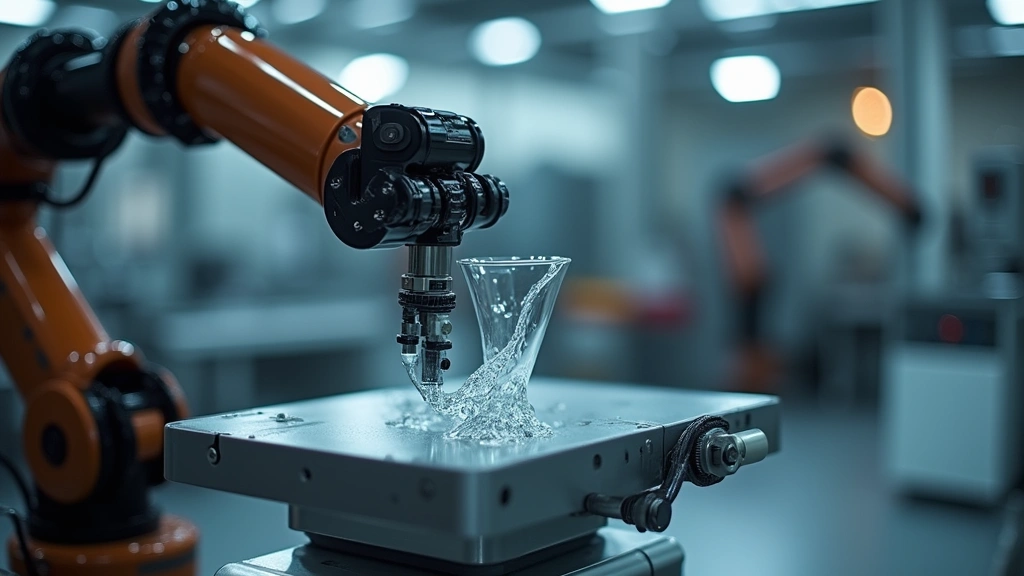
The robotics laboratory at Georgia Tech has emerged as a powerhouse for innovative automation solutions. Their latest robotic systems demonstrate advanced artificial intelligence, sophisticated motion control, and unprecedented dexterity. These aren’t merely industrial robots—they represent the next generation of collaborative machines designed to work alongside humans safely and efficiently.
One standout innovation is Georgia Tech’s multi-limbed robot with adaptive gripper technology. This system can manipulate delicate objects with precision equivalent to human hands while maintaining industrial-grade strength for heavy lifting tasks. The robot’s AI system learns optimal grasping techniques through reinforcement learning, continuously improving its performance.
Another significant development involves autonomous navigation systems for both terrestrial and aerial robots. Georgia Tech’s quadruped robots can traverse challenging terrain, climb stairs, and navigate obstacles in real-time without pre-programmed paths. The sensor fusion technology integrating LIDAR, computer vision, and inertial measurement units provides robust environmental awareness.
These robotics innovations have direct applications in manufacturing, search and rescue operations, hazardous environment exploration, and healthcare assistance. The technology is already attracting significant commercial interest from major automation companies and industrial manufacturers.
Sustainable Technology Solutions
Georgia Tech’s commitment to environmental sustainability is reflected in their latest gadget innovations. The research into renewable energy innovations has produced breakthrough technologies in energy harvesting and storage.
The latest development includes flexible perovskite solar cells that can be integrated into building materials, clothing, and portable devices. These cells achieve efficiency rates exceeding 20% while maintaining flexibility and lightweight properties. Unlike traditional silicon panels, these innovative solar solutions can generate power from diffuse light, making them viable even on cloudy days.
Another major innovation is Georgia Tech’s advanced battery technology utilizing novel cathode materials derived from abundant elements. These batteries promise significantly higher energy density, faster charging times, and extended cycle life compared to current lithium-ion technology. Early prototypes have demonstrated 1000+ charge cycles with minimal degradation.
Water purification gadgets developed at Georgia Tech utilize advanced graphene filters and UV-LED technology to eliminate contaminants, bacteria, and viruses. Portable versions can purify one liter of water in under five minutes, making them invaluable for emergency situations and developing regions without reliable water infrastructure.
AI and Machine Learning Integration
The integration of artificial intelligence across Georgia Tech’s gadget ecosystem represents perhaps the most transformative innovation currently underway. Unlike standalone AI applications, Georgia Tech’s approach embeds machine learning directly into hardware, enabling edge computing capabilities that reduce latency and improve privacy.
Their latest AI-enabled devices can perform complex analytical tasks without requiring cloud connectivity. A wearable health device can diagnose irregular heart rhythms on-device, a robotic arm can optimize its movement patterns in real-time, and autonomous drones can make split-second navigation decisions without external communication. This represents a fundamental shift in how gadgets process and utilize data.
The machine learning models powering these devices are trained on massive datasets, enabling them to recognize patterns and make predictions with remarkable accuracy. Georgia Tech researchers have published papers demonstrating AI systems that can predict equipment failures before they occur, optimize energy consumption in buildings, and personalize user experiences based on behavioral patterns.
Comparative Analysis: Georgia Tech vs Cincinnati Innovation
When examining the Cincinnati vs Georgia Tech technology landscape, distinct differences emerge in research focus and innovation strategy. Both institutions maintain strong engineering programs, but their approaches to gadget development differ significantly.
Georgia Tech emphasizes large-scale systems integration, robotics, and autonomous technologies. Their research infrastructure supports ambitious projects requiring extensive computational resources and specialized manufacturing facilities. The institution’s partnerships with major technology companies like The Verge and leading manufacturers facilitate rapid prototyping and commercialization.
Cincinnati-based institutions and research centers focus on precision manufacturing, materials science, and industrial automation with strong emphasis on practical manufacturing applications. Their innovations tend toward incremental improvements in existing technologies and specialized solutions for regional industries.
In terms of patent generation, Georgia Tech consistently ranks among top universities nationally. Their technology transfer office has successfully commercialized innovations in software, hardware, and biotechnology. The innovation pipeline includes hundreds of projects in various development stages, from early-stage research to market-ready products.
For students seeking education in cutting-edge technology, Georgia Tech’s resources provide unparalleled opportunities. The institution’s involvement in best laptops for students initiatives ensures that emerging engineers have access to professional-grade computing tools necessary for their research.
Practical Applications and Market Impact
The innovation emerging from Georgia Tech extends beyond academic research into tangible market applications. Several gadgets have already reached commercial stages or are in advanced development with manufacturing partners.
Healthcare providers are piloting Georgia Tech’s wearable monitoring systems in clinical settings. Early results show promise for reducing hospital readmissions through continuous remote patient monitoring. The cost-effectiveness of these solutions compared to traditional monitoring infrastructure makes them particularly attractive to healthcare systems managing large patient populations.
Manufacturing companies are deploying Georgia Tech’s collaborative robots in production facilities worldwide. These systems increase productivity while maintaining high safety standards for human workers. The return on investment typically occurs within 18-24 months, making them economically viable even for small manufacturing operations.
The sustainable technology innovations are capturing attention from environmental organizations and government agencies focused on climate change mitigation. Pilot projects for building-integrated solar cells and advanced water purification systems are underway in multiple countries. These applications demonstrate Georgia Tech’s commitment to addressing global challenges through technological innovation.
For those interested in understanding how these technologies integrate with personal computing, resources on upgrading laptop memory and optimizing personal devices become relevant. As gadgets become increasingly sophisticated, understanding hardware fundamentals remains essential.
Future Outlook and Development Pipeline
Georgia Tech’s innovation pipeline suggests exciting developments in coming years. The institution is investing heavily in quantum computing research, advanced materials science, and next-generation communication technologies including 6G infrastructure.
Emerging projects focus on brain-computer interfaces, autonomous systems for space exploration, and advanced prosthetics utilizing neural integration. These represent moonshot innovations that could fundamentally transform multiple industries if successfully developed.
The collaborative approach between Georgia Tech researchers and industry partners accelerates commercialization timelines. Companies like CNET regularly cover Georgia Tech innovations, and their technology reviews provide valuable market feedback that influences product development decisions.
Investment in startup incubation through Georgia Tech’s entrepreneurship programs ensures that innovative gadgets don’t remain confined to academic settings. Successful spinoff companies have created significant economic value while advancing technological frontiers in their respective fields.
For comprehensive understanding of how emerging technologies impact existing systems, exploring resources about data recovery and system maintenance becomes increasingly important as gadgets become more integrated with personal and professional workflows.
The TechPulseHunter Blog main hub provides ongoing coverage of technological innovations from leading research institutions, including Georgia Tech’s latest developments.
FAQ
What makes Georgia Tech gadgets different from commercial products?
Georgia Tech innovations typically represent research-grade technology developed with emphasis on performance and capability over cost optimization. While commercial products prioritize manufacturability and profit margins, academic innovations push technical boundaries and explore novel approaches to problem-solving.
How long does it take for Georgia Tech research to reach market?
Timeline varies significantly depending on technology complexity and commercialization pathway. Simple software innovations may reach market within 1-2 years, while hardware innovations requiring manufacturing partnerships and regulatory approval can take 5-10 years. Some foundational research never reaches commercial markets but influences industry standards and practices.
Are Georgia Tech innovations accessible to consumers?
Some innovations are commercialized through spinoff companies or licensing agreements with established manufacturers. Others remain specialized tools for professional use in healthcare, manufacturing, or research environments. Georgia Tech’s technology transfer office actively works to make innovations commercially available when market demand exists.
How does Georgia Tech’s innovation compare to other top universities?
Georgia Tech consistently ranks among top universities for patent generation and technology commercialization. Comparable institutions include MIT, Stanford, and Carnegie Mellon. Each institution has distinct strengths—Georgia Tech particularly excels in engineering applications and robotics.
Can students access Georgia Tech’s innovative gadgets?
Graduate and undergraduate students working in relevant research laboratories have access to cutting-edge equipment and participate in gadget development. The institution’s commitment to student involvement in research ensures that emerging engineers gain practical experience with innovative technologies.
What is Georgia Tech’s approach to sustainable innovation?
Sustainability is integrated throughout Georgia Tech’s research agenda. Multiple centers focus specifically on renewable energy, environmental protection, and sustainable materials. This institutional commitment ensures that innovations address not just technical challenges but also environmental and social responsibility.


