Civil War Tech: Unseen Innovations Revealed
The American Civil War (1861-1865) stands as a pivotal moment in military history, but its technological significance often gets overshadowed by its political and social narratives. Yet this conflict witnessed revolutionary innovations that fundamentally transformed warfare, communication, and industrial production. From telegraph systems that revolutionized command structures to ironclad warships that rendered wooden vessels obsolete, the Civil War era introduced technologies that would define the modern military landscape for generations to come.
What makes Civil War technology particularly fascinating is how these innovations emerged from necessity and desperation. Both Union and Confederate forces pushed the boundaries of existing technology, adapting industrial machinery for warfare and developing entirely new systems to gain strategic advantages. The engineers, inventors, and military strategists of this period created solutions that would echo through military doctrine and technological development well into the twentieth century and beyond.
Telegraph Communication Systems
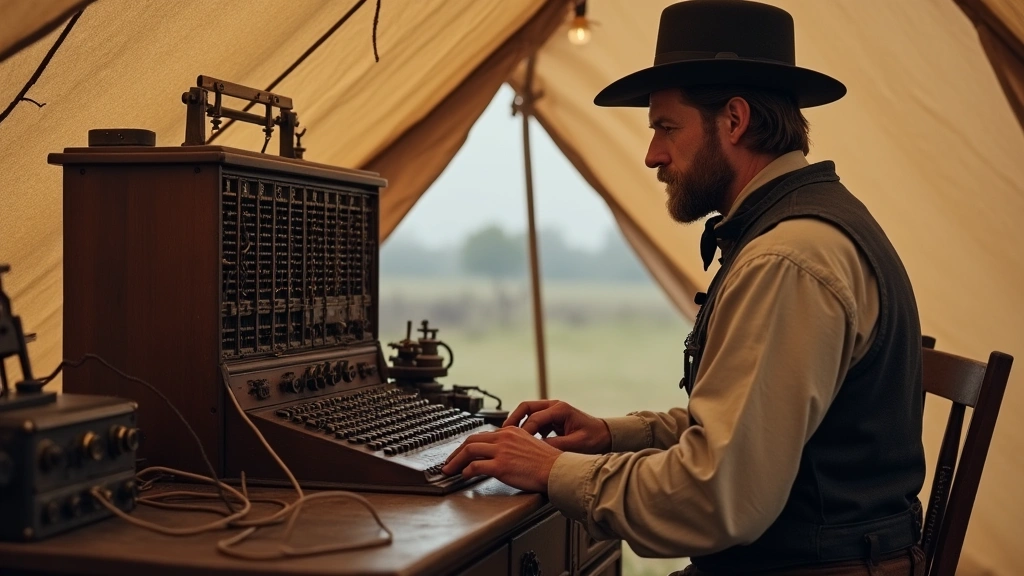
The telegraph represented the most transformative communication technology of the Civil War era. Samuel Morse’s invention, perfected in the 1840s, became the backbone of military command and control during the conflict. The Union Army Signal Corps, established and led by Major Albert James Myer, deployed thousands of miles of telegraph wire across battlefields and supply lines, creating an unprecedented network for real-time communication between commanders and troops.
What made Civil War telegraph systems particularly innovative was their mobile deployment. Rather than remaining stationary in cities, telegraph operators moved with armies, setting up temporary stations near command centers. This allowed generals like Ulysses S. Grant to coordinate complex multi-theater operations with precision previously impossible. The Confederate Army, hampered by inferior industrial capacity, struggled to match Union telegraph infrastructure, a disparity that contributed significantly to Union strategic advantages as the war progressed.
The telegraph’s impact extended beyond battlefield coordination. Supply chain management, troop movement scheduling, and intelligence gathering all depended on instantaneous communication. This technological advantage helped the Union maintain cohesive strategy across vast distances, while the Confederacy found itself increasingly isolated and unable to coordinate effectively between separated command centers. The technology news landscape of modern times often overlooks how nineteenth-century communication innovations set precedents for contemporary networked command systems.
The telegraph operators themselves became specialized technicians, requiring training in Morse code, equipment maintenance, and field installation. This created one of the first military technical specialist roles, establishing a precedent for modern military IT and communications personnel. The Signal Corps evolved into today’s military communications and information technology branches, demonstrating telegraph technology’s lasting institutional impact.
Ironclad Warship Technology
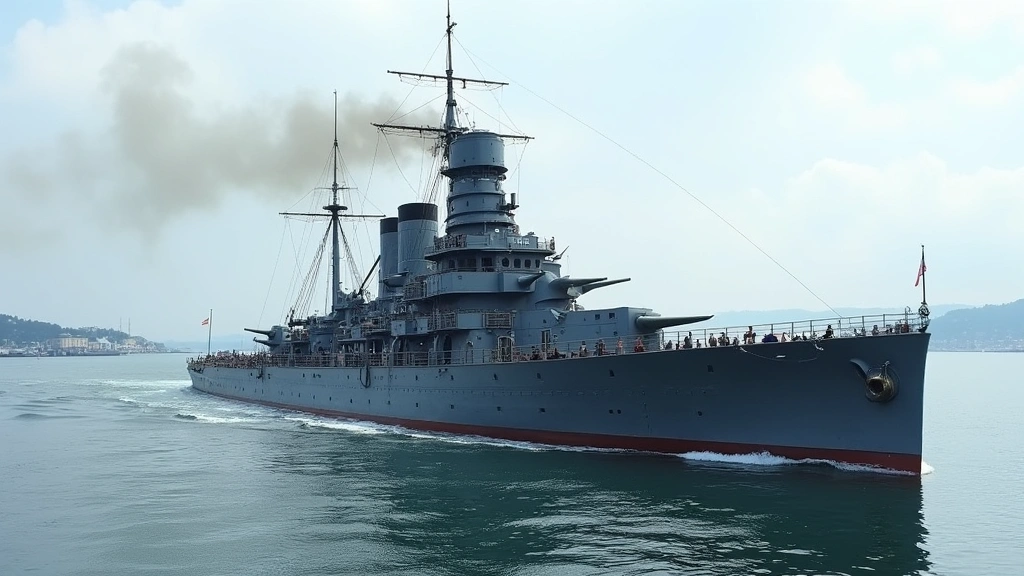
The clash between USS Monitor and CSS Virginia (Merrimack) on March 9, 1862, fundamentally revolutionized naval warfare. The Monitor’s innovative rotating turret design, conceived by Swedish engineer John Ericsson, represented a radical departure from traditional broadside-firing wooden warships. This single engagement rendered centuries of naval tradition obsolete overnight, demonstrating that armor plating and rotating gun turrets could defeat conventional wooden vessels decisively.
Ironclad technology forced both Union and Confederate navies to completely reimagine naval strategy and ship design. The Union, with superior industrial capacity, rapidly constructed dozens of ironclad variants, each incorporating lessons learned from previous engagements. The Confederacy, despite severe resource constraints, managed to produce several ironclad designs, including the CSS Atlanta and CSS Albemarle, which demonstrated that innovation could partially compensate for industrial disadvantage.
The engineering challenges of ironclad construction were formidable. Creating watertight armor plating, designing effective gun mounting systems, developing adequate steam propulsion for heavier vessels, and solving ventilation problems for crew compartments all required cutting-edge metallurgy and mechanical engineering. These innovations pushed industrial manufacturing techniques forward, establishing precedents for armored military vehicle production that would dominate the twentieth century.
Ironclad technology also influenced broader industrial development. The demand for iron plating stimulated American iron production, and the need for powerful steam engines accelerated marine propulsion research. These technological spinoffs contributed to post-war industrial expansion, demonstrating how military innovation can drive civilian technological advancement. Modern cloud computing benefits for businesses often trace conceptual lineage to military logistical innovations of this era.
Rifled Muskets and Small Arms
The widespread adoption of rifled muskets during the Civil War transformed infantry tactics and casualty rates. The Springfield Model 1861 and Enfield rifles, with their superior accuracy and range compared to smoothbore muskets, made frontal assaults exponentially more costly. Rifled barrels, which spin projectiles for greater accuracy and distance, had existed for decades but were refined and mass-produced during this conflict at unprecedented scales.
The minié ball ammunition used in these rifles caused devastating injuries due to its soft lead construction and high velocity impact. Medical records from the war document the horrific wounds these projectiles inflicted, leading to amputation rates that shocked contemporary observers. This technological advancement in small arms essentially made traditional linear infantry formations suicidal, yet commanders took years to adapt tactics accordingly, resulting in massive casualty rates at engagements like Gettysburg and the Somme.
Civil War rifle innovation extended beyond basic muskets. The Spencer repeating rifle, adopted late in the war by Union cavalry units, provided rapid-fire capability that gave cavalry units unprecedented firepower. The Henry rifle, though less widely adopted, demonstrated that lever-action repeating rifles were technologically feasible. These innovations established design principles that would dominate infantry small arms for the next century.
Manufacturing these rifles required precision engineering and standardized production methods. American armories developed assembly line techniques and interchangeable parts systems to produce thousands of rifles monthly. This manufacturing innovation laid groundwork for mass production techniques that would define twentieth-century industrial manufacturing, influencing everything from automobile assembly to modern consumer electronics production.
Railroad Innovation and Logistics
Railroads became the circulatory system of Civil War logistics and strategy. Both armies depended entirely on rail transport for moving supplies, ammunition, artillery, and troops across vast distances. The Union’s superior railroad network and industrial capacity to manufacture and maintain locomotives and rail cars provided decisive logistical advantages throughout the conflict. General William Tecumseh Sherman’s famous Atlanta campaign depended almost entirely on rail logistics for success.
Military railroad engineers developed innovative solutions for rapid track construction and repair. The United States Military Railroad, established by the Union, employed specialized crews capable of rebuilding destroyed rail lines in days rather than weeks. This rapid-repair capability allowed Union armies to maintain supply lines even as Confederate forces attempted destruction and disruption. The Confederacy, lacking equivalent industrial capacity, could never match Union railroad reconstruction speed.
Civil War railroads pioneered specialized military applications including armored trains, railroad-mounted artillery, and mobile repair shops. These innovations represented early examples of railway militarization that would intensify during subsequent conflicts. The logistical principles developed during the Civil War—supply line security, railway capacity calculation, and transportation scheduling—became foundational to modern military logistics doctrine.
Railroad technology also demonstrated how industrial infrastructure could determine military outcomes. The Union’s advantage in railroad mileage, locomotive production capacity, and rail manufacturing facilities translated directly into superior strategic mobility. This lesson influenced military thinking for generations, establishing railroads (and later highways and air transport) as critical strategic assets. Modern military doctrine still emphasizes control of transportation networks as essential to operational success.
Aerial Reconnaissance Balloons
The Civil War witnessed the first systematic military use of aerial observation platforms through hot air balloons. Professor Thaddeus S.C. Lowe established the Union Army Aeronautical Corps, deploying tethered balloons for reconnaissance missions that provided unprecedented elevated perspectives of enemy positions and terrain. These balloons, suspended by ropes and equipped with observation platforms, allowed commanders to literally see over hills and through forests, revolutionizing battlefield intelligence gathering.
Balloon reconnaissance provided real-time information about enemy movements, fortification positions, and supply convoys. Observers in balloon baskets could sketch maps and identify tactical opportunities invisible from ground level. Telegraph operators stationed in baskets transmitted observations directly to command centers, creating an early integrated intelligence system combining elevated observation with instant communication. This synergy between balloon reconnaissance and telegraph technology represented cutting-edge information warfare for the 1860s.
The Confederacy attempted to develop competing balloon programs but lacked industrial capacity to manufacture balloons and hydrogen-generating equipment. This technological disadvantage meant Union commanders consistently enjoyed superior battlefield intelligence, particularly during sieges and defensive operations. The principle of aerial reconnaissance established during the Civil War would evolve through dirigibles, fixed-wing aircraft, and modern drones, making the balloon corps a direct ancestor of modern military aviation and reconnaissance systems.
Despite its effectiveness, balloon reconnaissance faced significant limitations. Wind conditions restricted deployment, and Confederate artillery occasionally targeted balloons with some success. Nevertheless, the concept of gathering intelligence from elevated perspectives became permanently embedded in military doctrine, establishing principles that would guide military aviation development throughout the twentieth century.
Submarine and Naval Mines
The CSS H.L. Hunley achieved a grim distinction as the first submarine to sink an enemy warship in combat. On February 17, 1864, this hand-cranked submersible attacked the USS Housatonic, using a spar-mounted explosive charge to destroy the Union blockade ship. Though the Hunley itself was lost in the attack, it demonstrated that submarines represented a viable naval weapon, fundamentally challenging traditional surface naval superiority.
The Hunley’s design was primitive by modern standards—a metal tube with hand-powered propulsion, limited visibility, and no sophisticated ballast systems. Crew members operated foot pedals connected to a propeller shaft, requiring coordinated effort to achieve any meaningful speed. Despite these limitations, the vessel’s success proved that underwater warfare was technologically feasible, spurring submarine research that would accelerate dramatically in subsequent decades.
Naval mines, called “torpedoes” during the Civil War era, became increasingly sophisticated weapons. Both Union and Confederate forces deployed anchored explosive devices in harbors and river channels, forcing naval commanders to develop mine-sweeping techniques and defensive tactics. The psychological impact of mines exceeded their actual effectiveness—the threat of hidden underwater explosives made commanders extraordinarily cautious, effectively denying waterway access even when mines were relatively sparse.
These underwater weapons innovations established principles that would dominate twentieth-century naval warfare. Submarine technology would evolve from the Hunley’s hand-cranked design to diesel-electric and nuclear-powered vessels capable of remaining submerged for months. Mine technology would become increasingly sophisticated, with acoustic, magnetic, and pressure-activated detonation systems. Civil War submarine and mine development essentially created an entire category of naval warfare that remains strategically significant today.
Trench Warfare Engineering
As the Civil War progressed, particularly during the Petersburg Campaign (1864-1865), trench warfare systems became increasingly sophisticated. Union and Confederate forces developed complex fortification networks including multiple trench lines, communication trenches, artillery emplacements, and obstacle systems. These engineering innovations transformed warfare from mobile campaigns to positional siege warfare, foreshadowing the trench stalemate that would characterize World War I.
Civil War fortification engineers applied geometric principles and earthwork construction techniques refined over centuries, but adapted them for modern rifled artillery and small arms. The challenge was creating defensive positions that provided protection from long-range rifle fire while maintaining fields of fire for defending garrison troops. Engineers solved these problems through careful entrenchment depth, parapet construction, and strategic placement of defensive obstacles.
The Petersburg trenches extended for over 30 miles, creating a continuous fortified line that neither side could break through for nearly a year. This static warfare demonstrated that defending entrenched positions provided enormous advantages against attacking forces, even with numerical superiority. This lesson would be relearned catastrophically during World War I, when similar principles of trench warfare resulted in millions of casualties with minimal territorial gains.
Trench warfare required new engineering specialties and construction techniques. Military engineers became essential for designing defensive systems, calculating sight lines, and determining optimal entrenchment dimensions. The logistics of maintaining extensive trench systems—drainage, sanitation, supply distribution, and ammunition storage—created organizational challenges that necessitated specialized support structures. These administrative and logistical innovations established precedents for modern military engineering and infrastructure management.
Medical Technology Advances
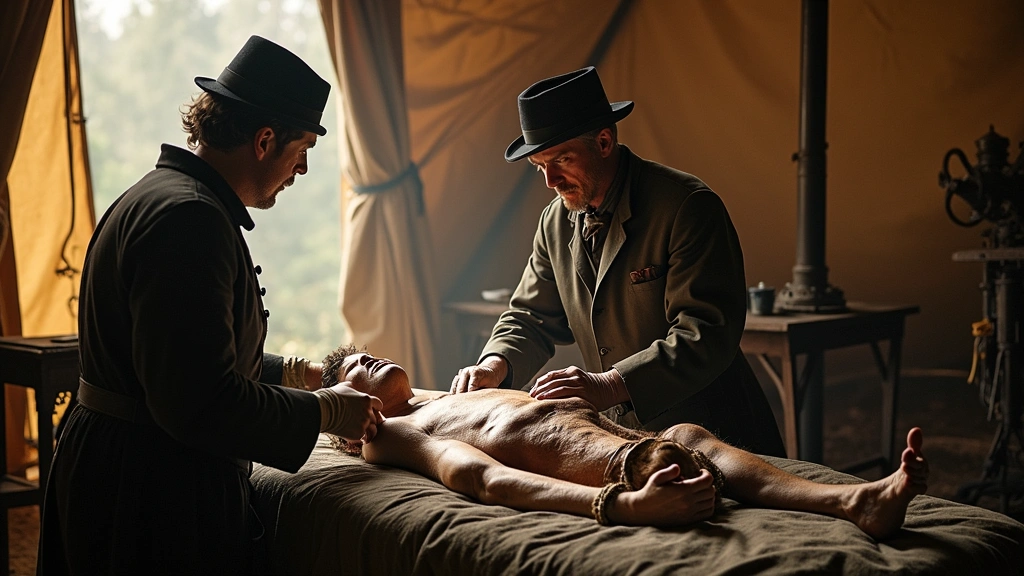
Civil War medical technology, though primitive by modern standards, represented significant advancement in battlefield medicine and surgical technique. The development of anesthesia—particularly chloroform and ether—allowed surgeons to perform complex procedures that would have been impossible on conscious patients. Though infection rates remained horrifyingly high by contemporary standards, anesthesia dramatically improved surgical outcomes compared to pre-Civil War era medicine.
Ambulance corps organization represented another crucial innovation. Rather than leaving wounded soldiers on battlefields, organized ambulance services systematized casualty evacuation, triage, and transportation to field hospitals. This innovation, championed by Jonathan Letterman, established principles that remain foundational to modern military medical operations. The Letterman system—rapid evacuation, field triage, and tiered hospital care—became the template for military medical logistics that persists today.
Surgeons during the Civil War faced unprecedented challenges treating massive casualty volumes. The minié ball wounds mentioned earlier required specialized surgical techniques, and infection prevention was poorly understood. Nevertheless, surgeons developed improved amputation procedures, infection management protocols, and pain relief methods. The massive documentation of surgical procedures and outcomes during the Civil War created the first comprehensive database of surgical experience, contributing significantly to post-war medical advancement.
Medical technology also advanced through necessity-driven innovation. Artificial limbs improved substantially during and after the war, driven by demand from thousands of amputees. The artificial intelligence applications of modern prosthetics trace conceptual lineage to Civil War-era artificial limb engineering. Though early prosthetics were crude by modern standards, the engineering principles and manufacturing techniques developed during this period established the foundation for contemporary prosthetic technology.
Civil War medical innovation extended to hospital administration and sanitation. Florence Nightingale’s nursing reforms, implemented during the Crimean War, influenced Union Army hospital organization. Dorothea Dix and other reformers advocated for improved sanitation, better nutrition, and professional nursing care. Though mortality rates from disease remained appallingly high, these innovations reduced preventable deaths and established standards for military hospital operations that influenced modern medical facility design and management.
FAQ
What was the most important Civil War technology?
Telegraph communication technology arguably had the greatest impact, as it enabled unprecedented coordination of complex military operations across vast distances. The Union’s superior telegraph infrastructure provided decisive strategic advantages throughout the conflict. However, ironclad warships and rifled muskets fundamentally transformed their respective domains of warfare, making any single answer debatable depending on analytical framework.
Did Confederate forces have technological innovations?
Yes, despite industrial disadvantages, Confederate engineers developed notable innovations including CSS Virginia ironclad design, explosive torpedoes, and the CSS H.L. Hunley submarine. However, the Confederacy lacked industrial capacity to mass-produce these innovations or maintain technological parity with Union production. This disparity in production capacity ultimately proved more decisive than individual innovations.
How did Civil War technology influence subsequent conflicts?
Civil War innovations established fundamental principles in naval warfare (ironclads), infantry tactics (rifled muskets and entrenchment), military logistics (railroads and supply chains), and communication (telegraph systems). These principles directly influenced military doctrine and technology development through World War I and beyond. World War I commanders often failed to adapt to technological realities established during the Civil War, resulting in catastrophic casualties.
Were Civil War weapons more advanced than contemporary European weapons?
American Civil War weapons were broadly comparable to contemporary European military technology. The Spencer repeating rifle represented genuine innovation, but most Civil War small arms were adaptations of existing designs. However, American industrial capacity allowed mass production at scales European armies found impressive, demonstrating that manufacturing capability could provide strategic advantages equal to technological innovation.
How did Civil War medical innovations influence modern medicine?
Civil War medicine established ambulance corps organization, triage systems, and anesthesia protocols that remain foundational to modern emergency medical services. The Letterman ambulance system became the template for military medical logistics. Comprehensive documentation of surgical procedures created the first large-scale surgical database, contributing significantly to post-war medical advancement and surgical technique development.
What happened to Civil War technology after the conflict ended?
Civil War innovations influenced subsequent military development extensively. Ironclad principles dominated naval design through the twentieth century. Telegraph technology evolved into wireless communication and eventually modern digital networks. Rifled small arms and artillery designs influenced weapons development for generations. Railroad logistics principles became foundational to military doctrine. Perhaps most significantly, the organizational and administrative systems developed during the Civil War established precedents for modern military institutional structures.


