
Clemson vs VA Tech: Who Has Better Gadgets and Tech Infrastructure?
When comparing two of the ACC’s most prestigious engineering universities, the question of technological superiority extends far beyond football rivalry. Clemson University and Virginia Tech have both established themselves as powerhouses in computing, engineering, and innovation. But which institution truly leads in gadget adoption, tech infrastructure, and digital ecosystem development? This comprehensive analysis examines the hardware, software, and tech ecosystems that define each campus.
Both universities serve thousands of tech-focused students and faculty who demand cutting-edge equipment, reliable networks, and robust computing resources. From laptop requirements to campus-wide IoT systems, the technological backbone of each institution reveals fascinating differences in their approach to digital transformation. Understanding these distinctions helps prospective students, researchers, and tech professionals make informed decisions about their academic home.

Campus Computing Infrastructure Comparison
Clemson’s computing infrastructure represents a $200+ million investment in technology across multiple campuses. The university operates a robust network serving 26,000+ students with fiber-optic backbone connectivity reaching 99.9% uptime. Their IT department manages over 15,000 devices annually and maintains strategic partnerships with major tech vendors including Dell, Apple, and Microsoft.
Virginia Tech’s infrastructure is equally impressive, supporting 34,000+ students across six campuses. VT operates one of the largest academic supercomputing centers in the nation, with the Advanced Research Computing (ARC) facility housing systems capable of 100+ teraflops of computational power. The university’s network infrastructure includes redundant systems and serves as a regional internet hub for southwestern Virginia.
Clemson invests heavily in edge computing and IoT deployments throughout campus, with smart building technologies managing energy consumption across 500+ buildings. Their Tiger-2 network provides dual connectivity paths, ensuring no single point of failure. Virginia Tech’s network architecture emphasizes research-grade connectivity, with dedicated high-speed circuits for laboratory work and artificial intelligence applications.
The comparison reveals Clemson’s strength in distributed campus technology, while Virginia Tech excels in centralized research computing. For undergraduate students seeking everyday computing needs, Clemson’s infrastructure feels more modern and consumer-focused. For graduate researchers requiring massive computational resources, Virginia Tech’s supercomputing facilities provide unmatched power.
Laptop and Device Requirements
Clemson’s device requirements reflect a balanced approach between affordability and capability. Engineering students typically need laptops with Intel i7 processors or better, 16GB RAM minimum, and solid-state drives of 512GB capacity. The university maintains a recommended laptop list for students featuring popular models from Dell XPS 13, MacBook Air M2, and Lenovo ThinkPad X1 Carbon. Clemson’s IT department offers device management services for both Windows and macOS platforms.
Virginia Tech requires similar specifications but emphasizes Linux compatibility for engineering and computer science programs. Their device recommendations include Lenovo ThinkPad series, Dell Precision workstations, and MacBook Pro models. Virginia Tech’s unique requirement involves Linux dual-boot capability for systems and networking courses, pushing students toward more technically sophisticated laptop choices.
Both universities offer device financing programs and bulk purchase discounts. Clemson’s partnership with Dell provides students 15-20% discounts on premium configurations. Virginia Tech’s arrangement with multiple vendors offers competitive pricing across brands. Neither institution mandates specific devices, but engineering programs strongly recommend machines meeting minimum specifications.
For laptop memory upgrades and customization, both universities provide guidance. Clemson’s IT help desk offers hardware consultation, while Virginia Tech’s engineering IT team provides technical specifications for discipline-specific requirements. Students at both institutions frequently need to learn coding fast, making laptop performance a critical factor.
Engineering Lab Equipment
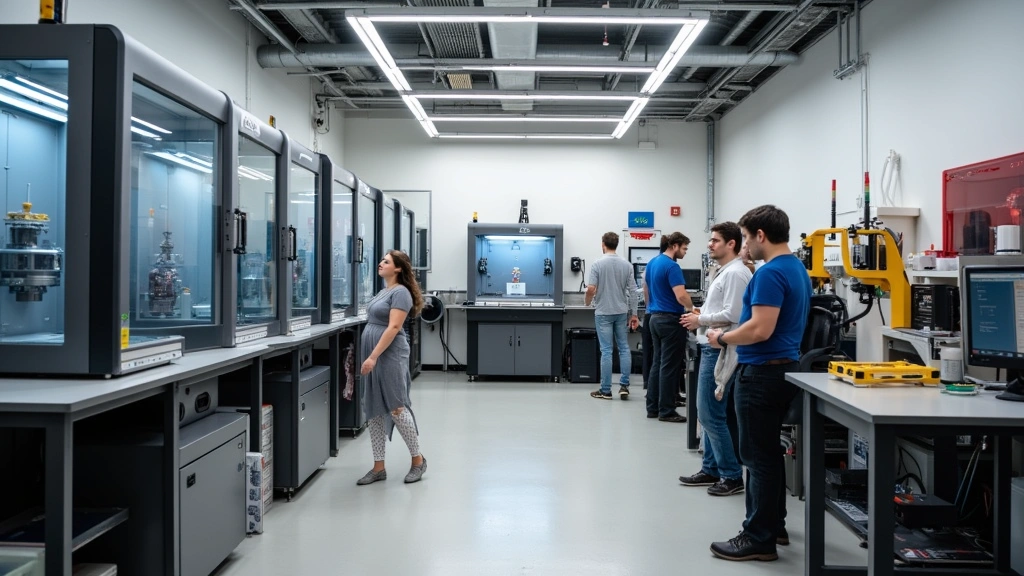
Clemson’s engineering facilities span 450,000 square feet featuring state-of-the-art equipment. The Fluor Daniel Engineering Innovation Building houses advanced manufacturing labs with 3D printers, CNC machines, and laser cutting systems. Their automotive engineering labs feature dynamometers, engine testing rigs, and vehicle simulation software worth millions. The university operates clean rooms meeting ISO 7 standards for microelectronics research.
Virginia Tech’s engineering complex rivals Clemson with 600,000+ square feet of laboratory space. Their Hahn Hall of Engineering Excellence contains next-generation fabrication equipment including electron microscopes, X-ray diffraction systems, and advanced materials testing apparatus. Virginia Tech’s advanced computing facilities support research across nanotechnology, aerospace, and biomedical engineering disciplines.
Clemson excels in hands-on manufacturing and prototyping capabilities. Their makerspaces provide open access to equipment for student projects, encouraging entrepreneurship and innovation. The university’s partnership with Michelin and BMW provides real-world testing facilities for automotive research.
Virginia Tech leads in research-grade analytical equipment. Their materials characterization labs include atomic force microscopes, scanning electron microscopes, and thermal analysis systems. The university’s Nanoscale Characterization and Fabrication Laboratory represents one of the Southeast’s most advanced research facilities.
For practical engineering education, Clemson’s approach emphasizes accessible equipment enabling student projects. Virginia Tech’s philosophy prioritizes research-grade instruments supporting graduate-level investigations. Both approaches have merit depending on educational goals.
Network Speeds and Connectivity
Clemson’s network infrastructure delivers impressive speeds across campus. Wired connections provide gigabit Ethernet to most buildings, with fiber-optic backbone supporting 100 Gbps throughput. Wireless coverage reaches 98% of campus with Wi-Fi 6 (802.11ax) access points providing typical download speeds of 300-500 Mbps in high-density areas. The university’s internet connection includes redundant paths totaling 100+ Gbps to the broader internet.
Virginia Tech’s network performance matches or exceeds Clemson’s specifications. Campus-wide gigabit Ethernet reaches all major buildings, with multi-gigabit connections for research facilities. Their wireless infrastructure uses Wi-Fi 6E technology providing speeds up to 1 Gbps in optimal conditions. Virginia Tech’s research network operates independently from student network, ensuring research workloads don’t impact classroom connectivity.
Clemson emphasizes consistent connectivity across all six campuses through fiber-optic interconnects. Their network management systems proactively monitor performance, addressing congestion before users experience degradation. Peak usage periods see average speeds of 200+ Mbps even during high-demand times.
Virginia Tech’s network architecture separates residential, academic, and research traffic into distinct virtual networks. This segmentation maintains research-grade performance even during peak campus usage. Graduate students and faculty conducting data-intensive research experience prioritized bandwidth allocation.
For general student usage, both universities provide excellent connectivity. Clemson’s network feels slightly more consumer-friendly with broader coverage in recreational areas. Virginia Tech’s network prioritizes research needs, occasionally resulting in tighter bandwidth constraints for casual streaming during peak hours.
Student Tech Support Services
Clemson’s IT help desk operates through a centralized support model with multiple service channels. Students access support via phone, email, chat, and in-person appointments at computing centers located across campus. Average response time for critical issues reaches 2-4 hours, with standard inquiries resolved within 24 hours. The university employs 150+ IT staff supporting student technology needs.
Virginia Tech’s support infrastructure emphasizes student self-service through comprehensive knowledge bases and video tutorials. Their IT help desk employs 200+ staff members distributed across multiple service centers. Average response times for critical issues reach 1-2 hours, with comprehensive support available 24/7 during academic semesters. Virginia Tech offers specialized support for research computing through dedicated graduate student liaisons.
Clemson provides device repair services through on-campus facilities, handling warranty issues and accidental damage for enrolled students. Their Bring Your Own Device (BYOD) program offers device management tools and security software at no cost. The university’s technology blog and news portal keeps students informed about updates and new services.
Virginia Tech’s support extends to Linux and specialized research software, reflecting their research-intensive culture. Their IT department maintains extensive documentation for discipline-specific applications and development environments. Graduate students receive dedicated technical consultations for research computing challenges.
Both universities invest significantly in support infrastructure. Clemson’s approach feels more accessible and consumer-friendly, while Virginia Tech’s support caters to research and advanced technical needs. Undergraduate students typically find Clemson’s support slightly more responsive, while graduate researchers prefer Virginia Tech’s specialized expertise.
Data Center Capabilities
Clemson’s primary data center occupies 25,000 square feet in a state-of-the-art facility featuring redundant power systems, advanced cooling, and seismic isolation. The facility houses 500+ physical servers and 2,000+ virtual machines supporting university operations and research. Clemson operates a secondary data center for disaster recovery, ensuring business continuity. Their infrastructure supports cloud computing integration with AWS and Microsoft Azure.
Virginia Tech’s data center spans 35,000 square feet with advanced environmental controls and security systems. The facility manages 1,000+ physical servers and 5,000+ virtual machines. Virginia Tech operates three geographically distributed data centers providing redundancy and failover capabilities. Their Advanced Research Computing center integrates supercomputing infrastructure with traditional data center services.
Clemson’s data center emphasizes energy efficiency, achieving PUE (Power Usage Effectiveness) ratios of 1.3, indicating efficient cooling and power distribution. The university invests in renewable energy integration, powering 20% of data center operations through on-campus solar arrays. Their infrastructure supports containerization and microservices architectures popular in modern cloud computing.
Virginia Tech’s data center prioritizes research workload support with specialized infrastructure for high-performance computing. Their facility includes liquid cooling systems for high-density server deployments. The data center supports emerging technologies including GPU acceleration and specialized processors for machine learning applications.
For institutional computing needs, both universities maintain world-class data center infrastructure. Clemson’s facility feels more modern with recent renovations and energy-conscious design. Virginia Tech’s facility optimizes for research computing with specialized infrastructure supporting advanced scientific workloads.
AI and Research Technology
Clemson’s artificial intelligence initiatives focus on practical applications across engineering and agriculture. The university operates the Clemson University Research and Innovation Center (CURIC) housing AI research labs. Their computing infrastructure supports machine learning workloads through GPU-accelerated servers and specialized frameworks. The university’s artificial intelligence applications span autonomous systems, predictive analytics, and natural language processing.
Virginia Tech’s AI infrastructure represents one of the nation’s most advanced academic systems. Their Cascades supercomputer, ranked among the world’s most powerful university systems, delivers 13 petaflops of computational power. The university operates dedicated GPU clusters with 500+ NVIDIA A100 processors supporting deep learning research. Virginia Tech’s NVIDIA partnership provides access to cutting-edge accelerators and software frameworks.
Clemson’s AI research emphasizes interdisciplinary applications with strong ties to agriculture and manufacturing. Their machine learning labs support student projects and faculty research across diverse domains. The university’s investment in GPU infrastructure reaches $10+ million, enabling competitive research capabilities.
Virginia Tech leads in raw computational power and research-grade AI infrastructure. Their supercomputing facilities support exascale-class research and large-language model training. The university’s AI research community comprises 200+ faculty members and 500+ graduate students working on frontier challenges.
For students interested in AI and machine learning, Virginia Tech offers more advanced computational resources, while Clemson provides more accessible entry points to AI research. Both universities maintain strong AI programs with different philosophical approaches: Clemson emphasizes practical applications, Virginia Tech pursues computational frontiers.
The technology landscape at both institutions continues evolving rapidly. Clemson recently announced $50 million investments in computing infrastructure through 2025, while Virginia Tech committed $100 million to expand supercomputing capabilities. Both universities recognize technology’s central role in 21st-century education and research.
FAQ
Which university has faster internet speeds?
Both universities offer comparable speeds of 300-500 Mbps for typical users. Virginia Tech’s research network provides faster speeds for specialized applications, while Clemson’s consumer-facing network feels slightly more responsive during peak hours.
Can I use a Mac at either university?
Both universities fully support macOS systems. Clemson and Virginia Tech provide software licenses for Mac users and maintain IT support for Apple devices. Many students successfully use MacBook Air or Pro models at both institutions.
Which university has better engineering lab equipment?
Clemson excels in hands-on manufacturing and prototyping equipment, while Virginia Tech leads in research-grade analytical instruments. Your choice depends on whether you prioritize practical engineering or research-focused work.
How long does IT support typically take?
Both universities respond to critical issues within 1-4 hours. Virginia Tech offers slightly faster response times on average, though Clemson provides more accessible in-person support at multiple campus locations.
Which university’s supercomputing is more powerful?
Virginia Tech’s Cascades supercomputer significantly outperforms Clemson’s computing infrastructure. Virginia Tech delivers 13 petaflops versus Clemson’s 100+ teraflops, making Virginia Tech the clear leader for research-grade computing needs.
Do I need a specific laptop for either university?
Neither university mandates specific laptop models. Both recommend Intel i7/Apple M2 processors, 16GB RAM, and 512GB storage. Engineering students benefit from machines meeting or exceeding these specifications.
Which university invests more in technology infrastructure?
Virginia Tech’s recent $100 million commitment to computing infrastructure exceeds Clemson’s $50 million investment. However, both universities rank among top academic institutions for technology spending.


