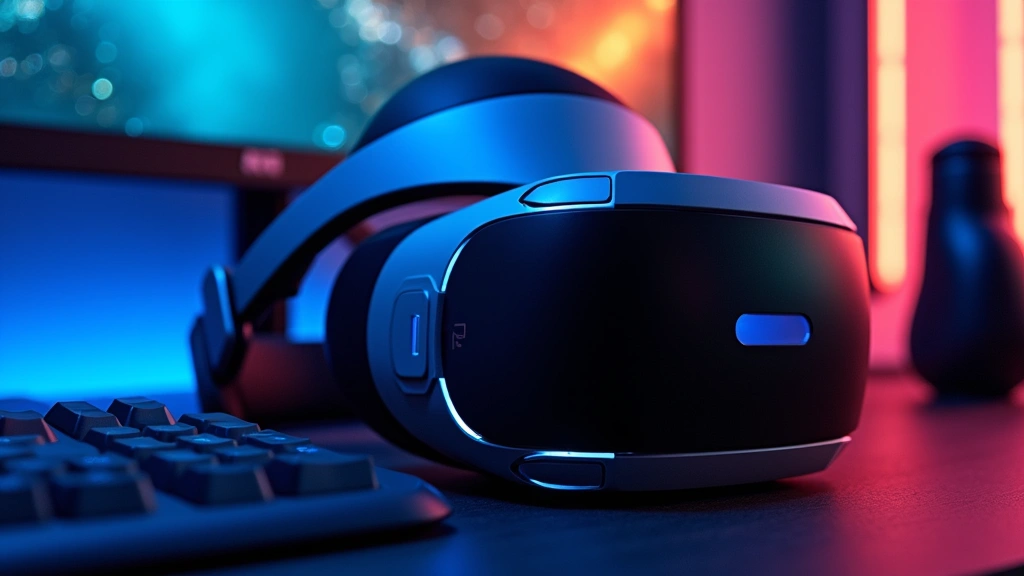
Which VR Headset Reigns Supreme? Expert Review
The virtual reality landscape has evolved dramatically over the past few years, transforming from a niche gaming curiosity into a legitimate mainstream technology. Whether you’re a hardcore enthusiast, a casual gamer, or a professional exploring enterprise applications, choosing the right VR headset can feel overwhelming. With options ranging from budget-friendly standalone devices to premium PC-tethered powerhouses, understanding the differences between leading contenders like Meta Quest 3, PlayStation VR2, HTC Vive XR Elite, and Valve Index is essential for making an informed purchase decision.
This comprehensive guide breaks down the current VR headset market, examining the specifications, performance metrics, design considerations, and real-world user experiences that separate the winners from the rest. We’ll analyze what makes each headset unique, who they’re best suited for, and whether the premium pricing justifies the advanced features. If you’re interested in how technology shapes entertainment experiences, you might also explore our coverage of artificial intelligence in gaming, which increasingly influences VR development.

Meta Quest 3: The Accessible Champion
Meta’s Quest 3 represents the most significant advancement in standalone VR technology to date. Priced competitively at $299 for the 128GB model and $399 for 512GB storage, this headset democratizes premium VR experiences without requiring a gaming PC or console. The device features Qualcomm’s Snapdragon XR Gen 2 processor, delivering desktop-class performance in a wireless form factor that weighs just 515 grams—making it remarkably comfortable for extended play sessions.
The Quest 3’s killer feature is its mixed reality capabilities through full-color passthrough cameras. Unlike competitors that offer monochromatic passthrough, Meta’s implementation allows seamless blending of digital content with your real environment. This opens possibilities for productivity applications, fitness tracking, and hybrid gaming experiences. The 2064 x 2208 resolution per eye provides crisp visuals, though it falls slightly short of premium alternatives in raw pixel density.
Performance-wise, the Quest 3 handles demanding titles like Resident Evil 4 VR, Half-Life: Alyx, and Contractors with impressive graphical fidelity. The 90Hz refresh rate maintains smooth motion tracking, crucial for reducing motion sickness and maintaining immersion. Battery life spans approximately 2.5 hours of continuous gameplay, though quick-charge capabilities allow 30-minute power boosts. The extensive Meta Quest ecosystem offers over 500 native applications, with backward compatibility to thousands of Quest 2 titles.
One consideration: Meta’s privacy policies and account requirements may concern some users. The headset requires a Meta account for full functionality, and the company’s data collection practices warrant review before purchase.
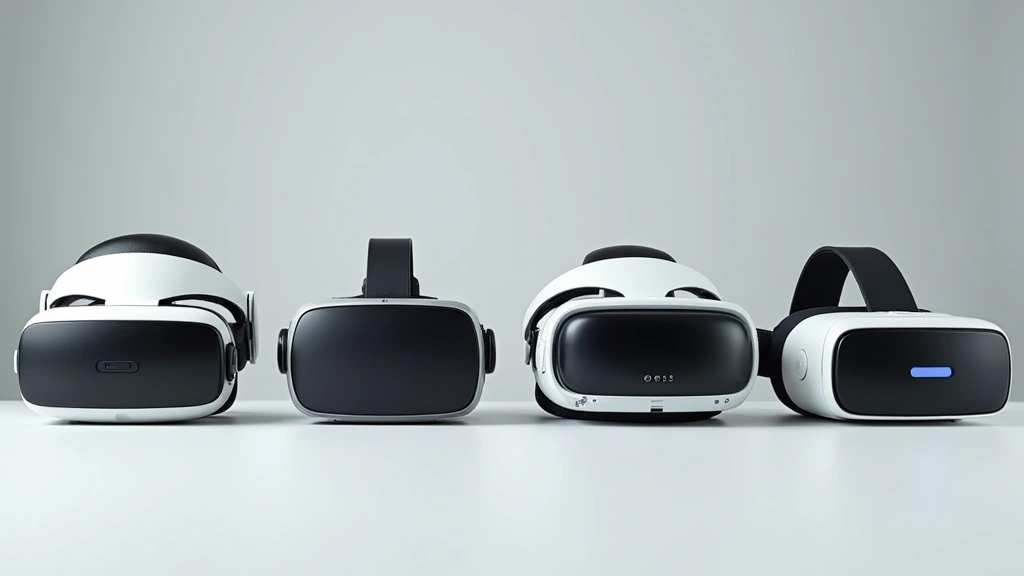
PlayStation VR2: Console Gaming Excellence
Sony’s PlayStation VR2 exclusively connects to PlayStation 5 consoles, positioning it as the premium choice for console gamers. At $549, it’s positioned as a premium investment, but the integration with PS5’s hardware delivers uncompromised performance. The headset features dual 2000 x 2040 OLED displays (per eye), providing superior contrast ratios and deeper blacks compared to LCD alternatives found in competing models.
The OLED technology makes a tangible difference in visual quality—darker environments appear genuinely dark rather than washed out, and high-contrast scenes pop with remarkable clarity. The 110-degree field of view matches industry standards, while the 90-120Hz adaptive refresh rate automatically adjusts based on content demands, optimizing both performance and visual quality.
PlayStation VR2’s standout feature is its advanced eye-tracking system integrated directly into the headset, enabling foveated rendering and unprecedented gaze-based interactions. Combined with haptic feedback in the controllers and headset itself, the immersion level reaches new heights. Games like Horizon Call of the Mountain, Gran Turismo 7 VR, and Firewall Ultra showcase the platform’s capabilities.
The primary limitation is platform exclusivity—you must own a PlayStation 5 to use this headset. Additionally, the PSVR2’s library, while growing, remains smaller than Quest 3’s ecosystem. However, the quality-over-quantity approach ensures most available titles represent premium experiences optimized for the hardware.
HTC Vive XR Elite: Enterprise Powerhouse
HTC’s Vive XR Elite targets professionals and serious enthusiasts willing to invest $1,699 for cutting-edge technology. This premium standalone headset runs Android-based Viveware OS, offering flexibility for enterprise applications. The dual 1920 x 1920 AMOLED displays deliver exceptional color accuracy and brightness levels, making it suitable for professional visualization tasks.
The Vive XR Elite distinguishes itself through dual front-facing cameras for advanced passthrough capabilities, enabling sophisticated mixed reality applications. The 110-degree field of view and 120Hz refresh rate maintain smooth performance during intensive professional workloads. The headset weighs 626 grams, slightly heavier than competitors, but the balanced weight distribution minimizes neck strain.
For enterprise users, the Vive XR Elite excels in architectural visualization, medical training, industrial design, and collaborative remote work environments. The device supports advanced security protocols and enterprise management features critical for business deployments. The modular design allows attachment of external modules for specialized applications.
The consumer-facing limitation is pricing—at nearly triple the cost of Quest 3, the value proposition requires specific professional use cases. The smaller consumer application library also means fewer entertainment-focused titles compared to competitors.
Valve Index: PC Precision Gaming
Valve’s Index remains the gold standard for PC-based VR gaming, demanding a capable gaming computer (RTX 2070 or equivalent) for optimal performance. Priced at $999, it represents a significant investment but delivers unmatched tracking precision and controller innovation. The dual 1440 x 1600 LCD displays operate at an industry-leading 144Hz refresh rate, providing the smoothest motion possible in consumer VR.
The Index’s controller design revolutionized VR interaction through finger-tracking technology that detects individual finger movements without button presses. This enables more natural and intuitive interactions within virtual environments, elevating immersion significantly. The haptic feedback system provides precise tactile responses, from subtle vibrations to forceful impacts.
The Lighthouse tracking system uses external base stations for millimeter-level accuracy, supporting room-scale play up to 5×5 meters. This precision makes the Index ideal for competitive gaming titles like Half-Life: Alyx, Pavlov VR, and Beat Saber. The 130-degree field of view ranks among the widest available, though some competitors offer marginally broader peripheral vision.
Considerations include the PC requirement (minimum RTX 2070, preferably RTX 3080 or better for demanding titles), the wired connection limiting movement freedom, and the lack of built-in audio (requires external headphones). However, for serious PC gamers prioritizing performance and precision, the Index remains unmatched.
Specs Comparison and Performance Metrics
Comparing VR headsets requires understanding key specifications and their real-world implications:
- Resolution: Quest 3 (2064 x 2208), PSVR2 (2000 x 2040), Vive XR Elite (1920 x 1920), Index (1440 x 1600). Higher resolution reduces screen-door effect but demands greater processing power.
- Refresh Rate: Index leads at 144Hz, followed by PSVR2’s 90-120Hz adaptive, Quest 3 and Vive XR Elite at 90Hz. Higher refresh rates reduce motion sickness and improve responsiveness.
- Field of View: Valve Index (130°), HTC Vive XR Elite (110°), Meta Quest 3 (110°), PSVR2 (110°). Wider FOV increases immersion but may introduce distortion at edges.
- Weight: Quest 3 (515g), PSVR2 (560g), Vive XR Elite (626g), Index (809g). Lighter headsets reduce neck fatigue during extended sessions.
- Processing Power: PSVR2 leverages PS5’s custom CPU/GPU, Index relies on connected PC capabilities, Quest 3 uses Snapdragon XR Gen 2, Vive XR Elite employs Snapdragon 8 Gen 1.
For gaming performance, the The Verge and CNET consistently benchmark these headsets under real-world gaming conditions, providing invaluable performance data.
Display Technology Deep Dive
Display technology fundamentally impacts VR visual quality and overall experience. OLED displays (PSVR2, Vive XR Elite) offer superior contrast ratios with perfect blacks and vibrant colors, ideal for cinematic experiences and high-contrast gaming. LCD displays (Quest 3) provide better brightness levels and improved color accuracy across the spectrum, benefiting outdoor passthrough and well-lit environments.
The screen-door effect—visible pixelation from individual pixels—diminishes as resolution increases. PSVR2’s 2000 x 2040 resolution nearly eliminates this artifact, while Quest 3’s 2064 x 2208 also minimizes it effectively. Index’s lower resolution makes the effect more noticeable, though many users acclimate quickly.
Refresh rate stability matters significantly for comfort. A consistent 90Hz provides smoother motion than variable refresh rates, reducing eye strain during extended sessions. PSVR2’s adaptive refresh rate technology intelligently adjusts between 90-120Hz based on content demands, optimizing battery life without sacrificing smoothness.
Motion Tracking and Controllers
Tracking precision directly correlates to immersion quality and gameplay accuracy. Lighthouse tracking (Valve Index) uses external base stations for millimeter-precision tracking across large play spaces. Inside-out tracking (Quest 3, PSVR2, Vive XR Elite) uses integrated cameras to track controllers and headset position without external hardware, offering convenience at the cost of precision in large-scale play areas.
Controller design varies significantly across platforms. PSVR2’s controllers feature haptic feedback and adaptive triggers providing nuanced tactile sensations. Quest 3’s Touch Plus controllers offer hand-tracking capabilities, enabling gesture-based interactions. Valve Index controllers introduce finger-tracking technology that detects individual finger positions, enabling more natural interactions.
For large-scale room-scale VR experiences, Lighthouse tracking (Index) excels. For convenience-focused gaming and mixed reality applications, inside-out tracking proves superior. The choice depends on your primary use case and space constraints.
Content Library Ecosystem
No headset matters without quality content. Meta Quest 3 boasts the largest library with 500+ native titles and thousands of Quest 2 backward-compatible games. Popular titles include Beat Saber, Supernatural, Thrill of the Fight, and Resident Evil 4 VR. The Meta App Lab provides early-access experimental titles, expanding creative possibilities.
PlayStation VR2’s library focuses on quality over quantity, featuring exclusive AAA titles optimized for PS5’s hardware. Horizon Call of the Mountain showcases stunning visuals, while Gran Turismo 7 VR delivers authentic racing simulation. The library continues expanding with publisher support from major studios.
PC VR (Index, Vive) benefits from SteamVR’s massive library exceeding 5,000 titles, including indie gems and AAA experiences. This platform offers unparalleled variety and creative freedom. The HTC Vive XR Elite also supports SteamVR through wireless connectivity, providing access to this extensive ecosystem.
For casual gaming, Quest 3 dominates. For premium console experiences, PSVR2 leads. For diverse PC gaming options, Valve Index or Vive XR Elite excel. If you’re building a gaming setup, understanding how to build a personal computer becomes essential for PC VR headset owners.
Price-to-Performance Analysis
Value assessment depends on your specific needs and budget constraints:
Budget-Conscious Gamers: Meta Quest 3 ($299-$399) offers the best value proposition. The standalone capabilities, mixed reality features, and massive content library justify the modest investment. You’re not sacrificing significant performance compared to alternatives costing three times more.
Console Gamers: PlayStation VR2 ($549) makes sense if you own a PS5. The OLED displays, eye-tracking, and exclusive AAA titles provide premium experiences justifying the premium price. Without a PS5, the headset becomes inaccessible.
PC Gaming Enthusiasts: Valve Index ($999) suits gamers with capable PCs (RTX 3070+) who prioritize precision and performance. The 144Hz refresh rate, finger-tracking controllers, and Lighthouse precision justify the investment for serious gamers. Alternatively, upgrading laptop memory might not support PC VR requirements, making desktop builds necessary.
Professional Users: HTC Vive XR Elite ($1,699) targets enterprises needing advanced passthrough, security features, and modular expandability. The pricing reflects enterprise-grade capabilities, not consumer gaming performance.
The Meta Quest official specifications and PlayStation VR2 technical details provide official benchmarks and specifications.
Overall, Meta Quest 3 reigns as the supreme value champion, PSVR2 dominates console gaming, and Valve Index leads PC precision gaming. Your “supreme” headset depends entirely on your use case, budget, and existing gaming ecosystem.
FAQ
Which VR headset has the best graphics?
PlayStation VR2 delivers the best overall graphics quality thanks to its OLED displays with superior contrast, combined with PS5’s dedicated GPU optimization. However, Valve Index’s 144Hz refresh rate provides the smoothest motion, and Meta Quest 3 offers excellent visual quality at a fraction of the cost.
Can I use VR headsets with different gaming platforms?
Most VR headsets are platform-exclusive. PSVR2 requires PlayStation 5, Valve Index requires a PC, and Meta Quest 3 is standalone but can connect to PCs for SteamVR games. HTC Vive XR Elite offers the most flexibility, supporting both standalone and PC connectivity.
What’s the difference between inside-out and Lighthouse tracking?
Inside-out tracking (Quest 3, PSVR2) uses integrated cameras—convenient but less precise in large spaces. Lighthouse tracking (Valve Index) uses external base stations for millimeter-precision tracking across larger play areas but requires hardware setup.
Is VR worth buying in 2024?
Absolutely. VR technology has matured significantly, offering legitimate entertainment and productivity value. Quest 3 at $299 provides accessible entry, while PSVR2 and Index deliver premium experiences for enthusiasts. The decision depends on your budget and interests, not technological viability.
How much PC power do I need for PC VR?
Minimum: RTX 2070 or RTX 5700XT equivalent. Recommended: RTX 3080 or better for demanding titles at high settings. The NVIDIA GeForce specifications provide detailed performance benchmarks for VR gaming.
Which headset has the best content library?
Meta Quest 3 offers the largest selection with 500+ native titles. However, PC VR (via SteamVR) provides the most diverse content with 5,000+ titles. PSVR2 focuses on quality AAA exclusives rather than quantity.


