Crime Scene Tech? Expert Insights Into Forensic Innovation
Law enforcement agencies worldwide are undergoing a technological revolution that’s fundamentally transforming how crimes are investigated, evidence is collected, and justice is served. From advanced DNA analysis systems to AI-powered facial recognition platforms, crime scene technology has evolved far beyond the fingerprint dusting and magnifying glasses of decades past. These cutting-edge tools are not only improving investigation accuracy but also accelerating case resolution times and reducing wrongful convictions.
The integration of sophisticated gadgets and software into forensic workflows represents one of the most significant shifts in criminal justice in modern history. Today’s crime scene investigators work with technologies that seemed purely fictional just fifteen years ago—portable spectrometers that identify substances in seconds, drones equipped with thermal imaging for search operations, and machine learning algorithms that can match evidence across thousands of cases simultaneously. This comprehensive guide explores the most impactful crime scene technologies, examines how they’re reshaping investigations, and provides expert perspectives on what the future holds for forensic innovation.
Digital Evidence Collection and Analysis
The shift from analog to digital evidence collection has revolutionized how crime scenes are documented and preserved. Modern digital evidence systems capture comprehensive crime scene data with unprecedented precision, creating permanent, tamper-proof records that withstand legal scrutiny. This transition represents a fundamental change in forensic methodology, replacing traditional photography and hand-drawn sketches with three-dimensional digital models and high-resolution imaging.
Professional-grade digital cameras used in crime scene investigation now feature resolutions exceeding 50 megapixels, coupled with specialized lenses that can capture minute details from macro-level evidence to wide-angle scene overviews. These cameras integrate with secure evidence management platforms, ensuring chain-of-custody integrity throughout the investigation lifecycle. The Tech Pulse Hunter Blog regularly covers innovations in forensic imaging technology that are reshaping investigative practices.
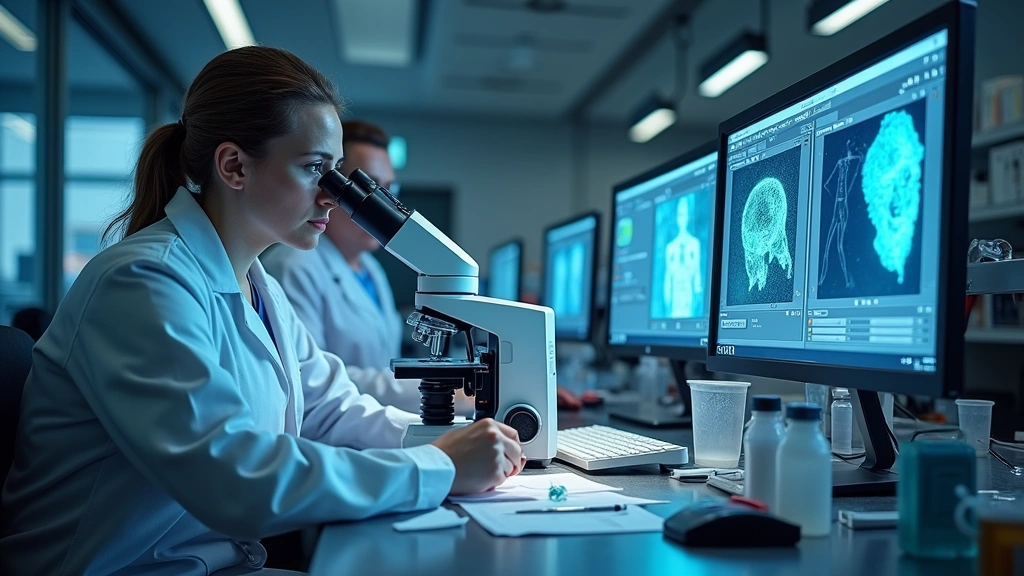
Spectroscopic analysis tools have become essential components of modern crime labs. These instruments identify chemical compositions of substances—from drug residues to explosive materials—within minutes. Raman spectroscopy, Fourier-transform infrared spectroscopy, and mass spectrometry systems provide definitive identification of trace evidence that might otherwise remain inconclusive. The accuracy and speed of these technologies have dramatically reduced the backlog in many forensic laboratories, accelerating investigations that previously took months to complete.
Digital forensics specifically addresses cybercrime and digital evidence extraction. Specialized software recovers deleted files, traces digital communications, and analyzes encrypted data—critical capabilities as criminal activity increasingly moves online. Forensic analysts use tools like EnCase and FTK (Forensic Toolkit) to examine computers, smartphones, and cloud storage systems, extracting evidence that proves essential in modern criminal cases.
AI and Machine Learning in Forensics
Artificial intelligence represents perhaps the most transformative technology entering crime scene investigation. Machine learning algorithms now analyze forensic data with accuracy rates exceeding human experts, identifying patterns across massive datasets that would be impossible to process manually. These systems learn from thousands of previous cases, continuously improving their predictive accuracy and analytical capabilities.
Facial recognition technology, powered by deep learning neural networks, has become controversial yet undeniably effective. These systems can identify individuals from crime scene photographs, surveillance footage, and witness descriptions with increasingly impressive accuracy rates. MIT Technology Review has extensively documented both the capabilities and ethical considerations surrounding AI-powered facial recognition in law enforcement.
Gunshot detection algorithms use AI to identify gunfire locations in urban environments, enabling rapid emergency response. These systems analyze audio signatures from multiple sensors, triangulating shot locations with remarkable precision. Similarly, ballistic analysis software compares bullet and cartridge case markings across massive databases, connecting crimes that might otherwise appear unrelated.
Pattern recognition AI excels at analyzing forensic evidence that’s inherently complex. Blood spatter analysis algorithms reconstruct crime scenes by analyzing droplet patterns, impact angles, and distribution characteristics. These systems provide objective analysis that complements human expertise, reducing subjective interpretation that has historically led to wrongful convictions.
The integration of AI into forensic workflows raises important questions about transparency, bias, and accountability. Experts emphasize that artificial intelligence should augment rather than replace human forensic experts. Creative Tech innovations demonstrate how technology can enhance rather than substitute professional judgment in sensitive investigative contexts.
3D Imaging and Crime Scene Reconstruction
Three-dimensional imaging technology has transformed crime scene documentation from two-dimensional photographs into complete spatial reconstructions. LiDAR (Light Detection and Ranging) scanners create point clouds containing millions of data points, capturing every surface, object, and spatial relationship at the crime scene. These digital models serve multiple purposes: they preserve evidence for future review, facilitate remote expert consultation, and enable virtual crime scene walkthroughs during trial proceedings.
Photogrammetry software reconstructs three-dimensional models from overlapping photographs, creating accurate spatial representations without requiring specialized scanning equipment. This democratization of 3D documentation technology has enabled smaller police departments to implement sophisticated crime scene reconstruction capabilities previously available only to large metropolitan agencies.
Virtual reality crime scene reconstruction allows investigators, prosecutors, and juries to experience crime scenes immersively. Rather than viewing flat photographs or diagrams, participants don VR headsets and navigate the complete three-dimensional environment, examining evidence placement and spatial relationships from any perspective. This technology has proven particularly effective in courtroom presentations, helping juries understand complex spatial evidence that traditional exhibits cannot adequately convey.
Drone technology equipped with advanced imaging sensors provides aerial perspectives essential for large crime scenes, outdoor investigations, and search operations. Thermal imaging drones detect human heat signatures in darkness or through obscuring vegetation, accelerating missing persons searches. CNET’s coverage of drone technology innovation includes extensive analysis of law enforcement applications.
Portable Field Technology
Modern crime scene investigators carry laboratory-grade analysis equipment directly into the field. Portable spectrometers, handheld DNA analyzers, and mobile forensic workstations enable preliminary evidence analysis at crime scenes, informing immediate investigative decisions without awaiting laboratory results.
Rapid DNA analysis instruments process biological samples in approximately 90 minutes, compared to traditional DNA analysis requiring days or weeks. These portable systems allow investigators to obtain genetic profiles from suspects or missing persons immediately, enabling real-time investigative decisions. The technology has proven invaluable in sexual assault investigations, where rapid victim DNA confirmation can be psychologically critical.
Portable fingerprint scanners with wireless connectivity to national databases enable on-scene identification of suspects. Officers can capture fingerprints and receive identification confirmation within minutes, transforming arrest procedures and reducing false identifications. Integration with AFIS (Automated Fingerprint Identification System) databases provides instantaneous comparison against millions of existing prints.
Mobile forensic examination kits consolidate essential analysis tools into portable configurations. These systems include digital cameras, spectrometers, magnification equipment, and secure evidence containers, enabling comprehensive preliminary analysis before evidence transport to central laboratories. Corporate Tech innovations demonstrate how mobile workstations are optimizing field operations across various professional sectors, including law enforcement.
Thermal imaging technology extends crime scene investigation into darkness and through obscuring materials. Handheld thermal cameras detect temperature variations that reveal hidden evidence, trace suspect movements, and locate concealed weapons or contraband. These devices have become standard equipment in tactical operations and major crime scene investigations.
Biometric Identification Systems
Biometric technologies provide definitive personal identification through unique biological characteristics. Modern crime scene investigation leverages fingerprint recognition, iris scanning, facial recognition, and voice analysis to establish suspect identity and link crimes across jurisdictions.
Integrated Automated Fingerprint Identification Systems (IAFIS) maintain databases containing prints from hundreds of millions of individuals. When investigators submit crime scene fingerprints, automated systems perform rapid comparisons, typically returning candidate matches within minutes. Human examiners then verify matches, providing definitive identification evidence admissible in court proceedings.
Iris recognition technology offers identification accuracy exceeding 99.9%, making it increasingly valuable in law enforcement applications. The unique patterns of the iris remain stable throughout life and are nearly impossible to replicate, providing extremely reliable identification. Modern iris scanning systems operate at distance, enabling identification without subject cooperation—a capability particularly valuable in surveillance and investigative contexts.
Facial recognition systems have become ubiquitous in law enforcement, though their deployment remains controversial. These AI-powered systems compare crime scene photographs against driver’s license databases, mugshot repositories, and surveillance footage, identifying suspects with increasing accuracy. Recent improvements in deep learning algorithms have reduced misidentification rates, though concerns about bias and privacy remain significant.
Voice analysis technology identifies individuals through unique acoustic characteristics of their speech. These systems prove particularly valuable in cases involving recorded communications—ransom calls, threatening messages, or witness statements. Voice biometrics can authenticate speaker identity with remarkable accuracy, supporting cases where audio evidence is central to prosecution.
Data Management and Integration
Modern crime scene technology generates enormous volumes of data—gigabytes from 3D scans, terabytes from surveillance footage, and complex databases containing forensic profiles. Effective data management systems integrate information from multiple sources, enabling investigators to identify connections and patterns that drive case resolution.
Case management software consolidates evidence, witness statements, investigative notes, and forensic reports into unified platforms. These systems provide secure access to authorized personnel, maintain comprehensive audit trails, and facilitate collaboration among multiple agencies investigating related crimes. Cloud-based platforms enable real-time information sharing, accelerating investigations that cross jurisdictional boundaries.
Interoperability standards enable different forensic systems to communicate seamlessly. When fingerprint databases connect with DNA registries, facial recognition systems, and ballistic analysis platforms, investigators can identify connections across multiple evidence types. These integrated systems have proven transformative in solving serial crimes, where pattern recognition across multiple incidents reveals perpetrator identity.
Crime analysis software identifies patterns in criminal activity that might escape human notice. By analyzing geographic data, temporal patterns, and evidence characteristics, these systems help investigators focus resources on high-probability leads. Predictive analytics forecast where crimes are likely to occur, enabling proactive law enforcement deployment.
The Best New Tech innovations in data management continue to enhance investigative capabilities, with emerging technologies like blockchain providing immutable evidence records and advanced encryption protecting sensitive investigative information.

Privacy and data security represent critical concerns as crime scene technology becomes increasingly sophisticated. Biometric databases contain sensitive personal information, and surveillance systems raise civil liberties questions. Law enforcement agencies must balance investigative effectiveness against constitutional protections, implementing robust security measures and oversight mechanisms to prevent misuse.
The convergence of multiple technologies creates powerful investigative capabilities. When facial recognition identifies a suspect, fingerprint databases confirm identity, DNA analysis establishes presence at the crime scene, and ballistic analysis links the suspect to previous crimes, the evidentiary foundation becomes overwhelming. This technological synergy has dramatically improved case clearance rates and conviction certainty.
Expert forensic practitioners emphasize that technology serves to enhance rather than replace professional judgment. The most effective investigations combine sophisticated technological tools with experienced investigator expertise, creating investigative approaches that leverage both computational power and human insight. Cool Tech innovations demonstrate how emerging technologies can solve complex problems when properly integrated with professional expertise.
Training and certification remain essential as crime scene technology evolves. Forensic professionals must understand not only how to operate sophisticated equipment but also the scientific principles underlying their analyses. Courts require expert testimony demonstrating comprehensive knowledge of forensic methodologies, technological capabilities, and limitations.
The future of crime scene technology promises even more transformative capabilities. Quantum computing will enable analysis of forensic data at unprecedented scales. Augmented reality systems will overlay digital evidence onto physical crime scenes, enhancing investigator understanding. Artificial intelligence will continue improving, potentially achieving human-level forensic expertise across multiple disciplines.
The Verge provides ongoing coverage of emerging technologies that will likely impact law enforcement, from quantum computing advances to artificial intelligence developments reshaping forensic analysis.

International cooperation in crime scene technology deployment has improved dramatically. Interpol and other international law enforcement organizations coordinate standardized approaches to forensic analysis, enabling investigations to span national boundaries seamlessly. When fingerprints or DNA profiles from one country match evidence in another, automated systems alert relevant agencies, facilitating international criminal apprehension.
The cost of crime scene technology continues declining, enabling smaller agencies to implement sophisticated tools previously available only to well-funded metropolitan police departments. This democratization of forensic capability has improved investigation quality across all law enforcement organizations, reducing the disparity between resource-rich and resource-limited agencies.
Ethical considerations surrounding crime scene technology deployment remain actively debated. Facial recognition systems may disproportionately impact minority communities. DNA databases raise questions about genetic privacy. Predictive policing algorithms may perpetuate historical biases in law enforcement. These concerns drive ongoing policy discussions about appropriate technology use, oversight mechanisms, and civil liberties protections.
The integration of crime scene technology into legal proceedings requires careful attention to admissibility standards. Courts must ensure that forensic evidence meets scientific validity requirements and that expert testimony demonstrates reliable methodology. As technology becomes more sophisticated, legal standards must evolve to ensure that innovation doesn’t outpace evidentiary scrutiny.
FAQ
What is the most important crime scene technology innovation?
Rapid DNA analysis represents perhaps the most transformative recent innovation. The ability to obtain genetic profiles within hours rather than weeks has accelerated investigations dramatically, particularly in sexual assault cases where victim identification and suspect exclusion are critical investigative elements.
How accurate is facial recognition technology in crime scene investigation?
Modern facial recognition systems achieve accuracy rates exceeding 95% under optimal conditions, though accuracy decreases with poor image quality, obscured faces, or significant aging since the reference photograph. Law enforcement agencies emphasize that facial recognition serves as investigative lead generation rather than definitive identification, with human verification essential before arrest.
Can crime scene technology be challenged in court?
Yes, forensic evidence and the technologies used to generate it remain subject to legal challenge. Defense attorneys regularly contest the scientific validity of forensic methodologies, the qualifications of expert witnesses, and the reliability of technological systems. Courts apply rigorous standards to ensure that forensic evidence meets scientific validity requirements.
What training do crime scene investigators require for modern technology?
Forensic professionals typically require certification in specific technologies, understanding of underlying scientific principles, and continuing education as technologies evolve. Many agencies require college-level education in forensic science, supplemented by specialized training in particular analytical techniques and equipment.
How does crime scene technology protect against wrongful convictions?
Advanced forensic technologies improve investigative accuracy by providing objective evidence independent of eyewitness testimony, which research demonstrates is surprisingly unreliable. DNA analysis has exonerated hundreds of wrongfully convicted individuals. When multiple technological approaches independently confirm investigative conclusions, evidentiary reliability increases dramatically.
What privacy concerns exist regarding crime scene technology?
Biometric databases contain sensitive personal information accessible to law enforcement. Surveillance systems used in crime scene investigation raise questions about citizen privacy. Facial recognition technology may be deployed without subject knowledge or consent. These concerns drive ongoing policy discussions about appropriate oversight, warrant requirements, and civil liberties protections.
How is artificial intelligence improving forensic analysis?
Machine learning algorithms analyze forensic evidence with consistency and speed exceeding human capabilities. AI systems identify patterns across massive datasets, connect seemingly unrelated crimes, and predict investigative outcomes. However, experts emphasize that AI should augment rather than replace human forensic expertise, as complex cases require professional judgment that technology cannot yet replicate.
What emerging technologies will impact crime scene investigation?
Quantum computing will enable analysis of forensic data at unprecedented scales. Advanced augmented reality systems will enhance crime scene reconstruction. Blockchain technology may provide immutable evidence records. Continued AI development will expand forensic automation capabilities while raising important questions about human oversight and accountability.


