
1980s Tech Gadgets: Nostalgic Review of Innovation That Changed Everything
The 1980s represented a transformative decade for technology enthusiasts and everyday consumers alike. This era witnessed the birth of personal computing, the rise of portable entertainment, and innovations that fundamentally reshaped how humanity interacted with machines. From the iconic Apple Macintosh to the legendary Walkman, 1980s tech gadgets established foundations for modern digital life. These devices weren’t merely functional tools—they were cultural phenomena that captured imaginations and inspired generations of engineers and innovators.
Walking through the technological landscape of the 1980s reveals a fascinating period of experimentation, competition, and breakthrough achievements. Unlike today’s incremental upgrades, 1980s innovations represented genuine leaps forward in capability and accessibility. The decade saw computers transition from corporate mainframes to household items, gaming systems evolve from simple arcade cabinets to sophisticated home consoles, and communication devices begin their journey toward ubiquity. Understanding these gadgets provides crucial context for appreciating how technology and artificial intelligence continue transforming our future today.

Personal Computers Revolution: The Foundation of Digital Age
The 1980s marked the definitive era when personal computers transitioned from hobbyist projects to mainstream consumer products. The Apple Macintosh, launched in January 1984, revolutionized user interface design with its groundbreaking graphical interface and mouse-based navigation. This machine represented a philosophical shift in how computers should interact with users, prioritizing intuitive design over complex command-line instructions. The Macintosh’s $2,495 price point seemed astronomical at the time, yet it attracted creative professionals, designers, and forward-thinking businesses who recognized its potential.
Meanwhile, the IBM PC and its numerous compatible clones dominated the business world and eventually captured significant home market share. IBM’s decision to use standardized components and allow third-party manufacturers to create compatible machines unleashed unprecedented competition and innovation. Companies like Compaq, Dell, and Gateway emerged as serious contenders, driving prices downward while performance capabilities increased exponentially. The IBM PC’s architecture became the industry standard, a position it maintains today in the form of x86 and x64 processors.
The Commodore 64 deserves special mention as perhaps the best-selling single computer model of all time, with approximately 17 million units sold throughout the 1980s and beyond. This machine democratized computing by offering impressive graphics and sound capabilities at an affordable $595 price point. The Commodore 64 wasn’t merely a productivity tool—it was a gaming powerhouse and creative platform that inspired countless programmers and artists. Its legacy demonstrates how accessible tech innovations featured on Tech Pulse Hunter Blog shaped entire industries.
The Sinclair ZX Spectrum in Europe and the Apple II in North America also contributed significantly to personal computing adoption. Each platform offered unique advantages: the Apple II’s expandability, the Spectrum’s affordability, and the Commodore 64’s multimedia capabilities. These competing systems drove innovation forward, with manufacturers constantly introducing new features, faster processors, and expanded memory configurations. By decade’s end, personal computers had become common in offices, schools, and increasingly, homes.
Gaming Consoles and Entertainment Systems
The 1980s gaming landscape was dominated by the Nintendo Entertainment System (NES), which virtually single-handedly revived the home gaming industry after the catastrophic 1983 crash. Nintendo’s strategic approach—positioning the NES as an entertainment system rather than a game console, emphasizing game quality through rigorous testing standards, and creating beloved franchises like Super Mario Bros.—restored consumer confidence in home gaming. The NES sold over 61 million units worldwide, establishing Nintendo’s dominance that persists today.
The Atari 2600 continued its reign as the 1980s began, though it gradually lost market share to newer competitors. Despite its declining fortunes, the Atari 2600 demonstrated remarkable longevity, with thousands of games available and a dedicated community of developers. Atari’s later attempts to recapture market share with the 5200 and 7800 systems achieved modest success but couldn’t compete with Nintendo’s cultural phenomenon status.
Sega entered the console market with the Master System in 1985, offering superior graphics and processing power compared to the NES. While the Master System attracted hardcore gamers and performed strongly in certain markets, particularly Europe and Brazil, it couldn’t overcome Nintendo’s installed base advantage and software library dominance. Sega’s persistence set the stage for their more successful Genesis console, which would define 1990s gaming.
Arcade cabinets remained cultural fixtures throughout the 1980s, with games like Pac-Man, Donkey Kong, Galaga, and Street Fighter captivating audiences in arcades, restaurants, and shopping malls. These cabinets featured cutting-edge graphics and sound for their time, pushing technological boundaries and demonstrating what was possible in interactive entertainment. The arcade experience created a social dimension to gaming that complemented home systems, establishing gaming as a legitimate entertainment medium.
Portable Devices and Music Technology
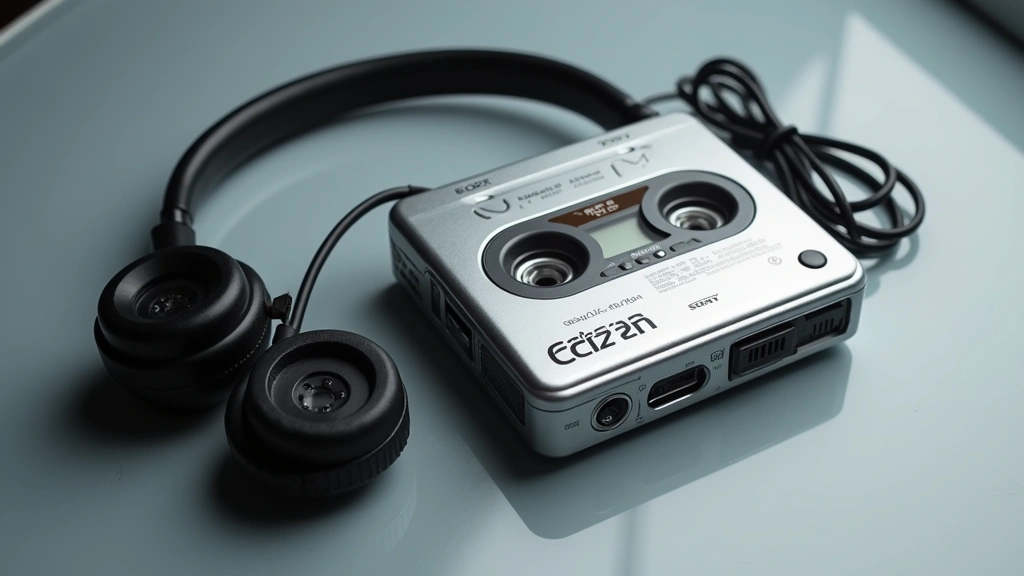
The Sony Walkman, introduced in 1979 but achieving massive popularity throughout the 1980s, fundamentally changed how people consumed music. This portable cassette player liberated music from the home stereo, enabling people to enjoy their favorite songs while commuting, exercising, or traveling. The Walkman’s cultural impact cannot be overstated—it transformed portable audio from a novelty to an essential accessory, influencing fashion and social behavior. Various manufacturers produced competing models, but Sony’s brand reputation and continuous refinement maintained market leadership.
The Nintendo Game Boy, launched in 1989, represented another revolutionary portable device that dominated the decade’s final years and beyond. Despite featuring a monochrome green screen when competitors offered color displays, the Game Boy’s superior battery life, durability, and exceptional game library—particularly Tetris—made it the undisputed portable gaming champion. The Game Boy’s success demonstrated that technology specifications matter less than overall user experience and software quality. This principle remains relevant for understanding how best laptops for students 2025 are evaluated beyond raw processing power.
Digital watches evolved significantly during the 1980s, with LED and LCD displays becoming standard features. Casio’s calculator watches and various digital sports watches attracted consumers who valued functionality and modern aesthetics. These devices represented early steps toward wearable technology, establishing design principles that persist in today’s smartwatches and fitness trackers.
The Sony Discman, introduced in 1984, brought compact disc technology to portable audio. While more fragile and expensive than cassette-based Walkmans, the Discman offered superior sound quality and eventually became the portable audio standard as CD technology matured and prices decreased. This transition from analog to digital audio represented a significant technological shift with lasting implications for music distribution and storage.
Communication Technology and Telecommunications
The 1980s witnessed dramatic evolution in communication technology, though mobile phones remained largely experimental and prohibitively expensive. The Motorola DynaTAC 8000X, released in 1983, represented the first commercially available handheld cellular telephone, weighing approximately 2.2 pounds and costing $3,995. Despite its limitations and astronomical price, the DynaTAC demonstrated that mobile telephony was technically feasible, inspiring competitors and investors to pursue this emerging market.
Personal computers enabled new communication methods, with early bulletin board systems (BBS) and services like CompuServe and The WELL creating the foundation for online communities. These systems, accessed through modems connected to telephone lines, demonstrated the potential for digital communication and information sharing. Early internet development during this period, though not yet consumer-facing, established protocols and architectures that would enable the modern web.
Fax machines became increasingly common business tools during the 1980s, enabling fast transmission of documents across distances. While fax technology existed earlier, 1980s refinements improved reliability, reduced costs, and expanded adoption, making fax transmission a standard business practice. This technology represented an important bridge between analog paper-based communication and digital data transmission.
Other Notable Innovations and Gadgets
The Sony Betamax and VHS videocassette recorders dominated the home video recording market throughout the 1980s, with VHS eventually achieving format supremacy despite Betamax’s technical advantages. This format war demonstrated that technological superiority doesn’t guarantee market success—software availability, pricing, and industry support matter equally. The ability to record television programs and watch rented movies at home represented a revolutionary shift in entertainment consumption patterns.
Pocket calculators continued their evolution from expensive scientific instruments to affordable consumer products. Texas Instruments, Casio, and other manufacturers competed to offer increasingly sophisticated calculation capabilities in compact, battery-powered packages. Programmable calculators appealed to engineers and students, while simple four-function calculators became ubiquitous household items.
The Sony Walkman AM/FM radio variant combined music listening with radio reception, while various manufacturers produced portable television sets featuring small screens and battery operation. These devices represented early attempts at convergence technology, combining multiple functions in single portable units.
Digital cameras remained experimental and impractical for consumer use during the 1980s, though prototype development proceeded steadily. The first commercial digital camera wouldn’t appear until the 1990s, but 1980s research and development laid essential groundwork for this technology’s eventual consumer adoption.
The Enduring Legacy of 1980s Technology
The gadgets and innovations of the 1980s established technological paradigms that persist today. Personal computers evolved from the Macintosh and IBM PC to modern laptops and desktops, maintaining similar architectures and user interface principles. Gaming consoles trace their lineage directly to the NES and Sega systems of this era, with modern platforms refining rather than fundamentally reinventing established concepts.
The 1980s demonstrated that consumer technology succeeds through combination of innovation, affordability, software ecosystem development, and marketing acumen. Companies that balanced cutting-edge specifications with practical usability and compelling applications achieved market dominance. Understanding these principles proves essential for evaluating modern technology, whether assessing how to fix a slow computer with effective tips and solutions or selecting appropriate devices for specific needs.
The 1980s also established business models that shaped technology markets for decades. The open architecture approach championed by IBM created the competitive PC market, while Nintendo’s strict quality control and vertical integration model influenced console gaming strategies. These business frameworks continue influencing how technology companies operate and compete.
Modern understanding of artificial intelligence applications transforming the future benefits from recognizing how 1980s computing power limitations shaped early AI research. Contemporary AI development builds upon foundational concepts developed during this era, even though processing capabilities have increased exponentially.
The transition from 1980s technology to modern systems also reflects evolving consumer expectations and technological capabilities. Where 1980s gadgets emphasized individual functions—a device was primarily a computer, game console, or music player—contemporary devices integrate multiple capabilities seamlessly. Yet the core principles of usability, reliability, and compelling software ecosystems remain constant.
Nostalgia for 1980s technology reflects more than mere sentimentality. These gadgets represented genuine innovation, solved real problems, and created new possibilities for human interaction and entertainment. The industrial design of many 1980s devices—the clean lines of the Macintosh, the ergonomic controllers of the NES, the distinctive styling of the Walkman—influenced aesthetic principles that designers reference today. Understanding cloud computing benefits for businesses and modern infrastructure requires appreciating how 1980s computing limitations necessitated different approaches to data storage and processing.
FAQ
What was the most popular personal computer of the 1980s?
While the IBM PC and its clones dominated business and eventually the home market, the Commodore 64 achieved the highest total unit sales, with approximately 17 million machines sold. The Apple Macintosh revolutionized user interface design despite higher pricing, while the Sinclair ZX Spectrum dominated European markets. Each platform served different market segments effectively.
Did mobile phones exist in the 1980s?
Yes, mobile phones existed but remained experimental and prohibitively expensive. The Motorola DynaTAC 8000X, released in 1983, represented the first commercially available handheld cellular telephone, weighing 2.2 pounds and costing $3,995. These early phones were primarily business tools for wealthy individuals and corporations, with limited battery life and network coverage.
Why did Nintendo dominate 1980s gaming?
Nintendo’s success resulted from multiple factors: positioning the NES as an entertainment system rather than a game console, implementing rigorous quality control standards, creating beloved exclusive franchises like Super Mario Bros., and using innovative marketing strategies. Their vertical integration of hardware and software, combined with strategic third-party publisher relationships, created an ecosystem that competitors couldn’t easily replicate.
How did 1980s technology influence modern gadgets?
Modern technology directly evolved from 1980s innovations. Personal computers maintain architectural principles from the IBM PC and Macintosh. Gaming consoles refine concepts established by the NES and Sega systems. Portable audio devices descended from the Walkman lineage. Modern business practices and technological standards often originated from 1980s developments and market competitions.
Were there any failed 1980s gadgets worth remembering?
Several notable failures include the Atari 5200 and 7800 game consoles, which couldn’t compete with Nintendo’s dominance. The Betamax videocassette format, despite technical superiority, lost format wars to VHS. Various early personal computers failed to achieve market traction, while some portable devices proved impractical or too expensive for mainstream adoption. These failures often taught valuable lessons that influenced subsequent successful products.


