Brooklyn Tech’s Acceptance Rate: A Deep Dive Into One of NYC’s Most Competitive Schools
Brooklyn Technical High School stands as one of the most prestigious and selective public high schools in New York City, attracting thousands of applicants annually who dream of joining its rigorous engineering and technology-focused curriculum. The Brooklyn Tech acceptance rate hovers around 3-5%, making it statistically harder to gain admission than many Ivy League universities. This extraordinarily competitive landscape reflects the school’s reputation for producing some of the nation’s brightest STEM minds and its limited capacity to accommodate the overwhelming demand from talented students across the five boroughs.
Understanding what drives these acceptance numbers requires examining everything from application trends and demographic shifts to the specific criteria that admissions officers evaluate. For prospective students and parents navigating the NYC specialized high school landscape, grasping these metrics becomes essential for setting realistic expectations and developing strategic application approaches. This comprehensive guide breaks down the numbers, explores the factors behind them, and provides actionable insights for anyone considering applying to this elite institution.

Acceptance Rate Overview: The Numbers Behind the Selectivity
Brooklyn Tech’s acceptance rate of approximately 3-5% places it in the upper echelon of competitive high schools nationally. To contextualize this figure, the school receives roughly 13,000-15,000 applications annually while maintaining a freshman class size of approximately 800-900 students. This mathematical reality means that for every student admitted, approximately 15-20 qualified candidates receive rejection letters. The acceptance rate has remained consistently low over the past decade, with slight fluctuations based on application volume and demographic trends in New York City’s school-age population.
What makes these numbers particularly striking is that Brooklyn Tech is a public high school, not a private institution charging tuition. This accessibility in cost combined with exceptional academic rigor creates the perfect storm of demand. The school’s tuition-free model democratizes access to elite STEM education, which paradoxically intensifies competition as talented students from all socioeconomic backgrounds view it as an attainable dream school. The acceptance rate has trended downward over the last five years, suggesting that either application volume continues rising or the school maintains consistent enrollment caps.
The acceptance rate varies slightly by gender and demographic categories, though the overall figure remains brutally selective. Recent data indicates that the school receives applications from students representing over 100 different countries and all five NYC boroughs, with the majority coming from Queens and Brooklyn. Understanding these baseline statistics provides crucial context for anyone seriously considering application, as it emphasizes that excellence alone may not guarantee admission in such a saturated applicant pool.
Application Trends and Growth: Why Demand Keeps Surging
The explosive growth in applications to Brooklyn Tech reflects broader trends in STEM education demand and the school’s rising prominence in both local and national conversations about tech talent pipelines. Over the past fifteen years, applications have nearly doubled, driven by increased awareness of technology careers’ earning potential and job security. Parents increasingly recognize that technical skills provide competitive advantages in the job market, fueling interest in schools like Brooklyn Tech that specialize in engineering and computer science curricula.
Social media and online communities have amplified Brooklyn Tech’s reputation exponentially. College counselors, tech industry professionals, and successful alumni frequently highlight the school’s role in their career trajectories across platforms like LinkedIn, Reddit, and educational forums. This organic marketing has made Brooklyn Tech a household name among achievement-oriented families throughout New York City and beyond. Additionally, the path to becoming a software developer increasingly begins with strong foundational education in high school, making Brooklyn Tech an attractive launching pad.
The COVID-19 pandemic temporarily disrupted application patterns when remote learning was implemented, but demand rebounded powerfully post-pandemic as students and families prioritized in-person STEM instruction and hands-on laboratory work. International interest has also grown substantially, with students from immigrant families viewing specialized high schools as pathways to elite universities and technology careers. This cultural shift, combined with New York City’s status as a global tech hub, continues driving applications upward year after year.
Admission Criteria and the SHSAT: The Gateway Exam
Unlike most American high schools that rely on GPA, essays, and recommendations, Brooklyn Tech’s primary admission vehicle is the Specialized High School Admissions Test (SHSAT). This standardized exam emphasizes mathematical reasoning, reading comprehension, and logical problem-solving—skills critical for success in the school’s rigorous curriculum. The SHSAT consists of approximately 150 questions across verbal and mathematics sections, administered over three hours, with scores ranging from 0 to 800.
The SHSAT’s structure makes test preparation intensely competitive. Families invest thousands of dollars in private tutoring, prep courses, and study materials to gain marginal score improvements. A student scoring in the 90th percentile on the SHSAT might still face rejection due to Brooklyn Tech’s extreme selectivity. The school typically sets a cutoff score that admits only the top performers, and this threshold varies annually based on the applicant pool’s overall strength. Recent years have seen cutoff scores hovering around 500-520 out of 800, meaning students must demonstrate exceptional proficiency in both verbal and mathematical reasoning.
The SHSAT’s emphasis on standardized testing has generated ongoing debate among education advocates who argue that the exam disadvantages students from lower-income backgrounds and underrepresented minorities who have less access to expensive test prep resources. Despite these criticisms, the TechPulse Hunter Blog and educational analysts consistently note that the SHSAT remains the official gateway, and understanding its structure is essential for prospective applicants. Students typically take the SHSAT in eighth grade, making middle school years critical for building foundational math and reading skills that translate to strong test performance.
Demographic Breakdown: Who Gets In?
Brooklyn Tech’s student body reflects significant demographic diversity, though representation gaps persist in certain categories. Asian American students comprise approximately 50-55% of the enrollment, followed by white students at 20-25%, Hispanic students at 15-20%, and Black students at 5-10%. These percentages have shifted incrementally over the past decade, with Asian American representation increasing and some other groups experiencing relative decline. The gender split has historically favored males, particularly in engineering concentrations, though female representation in computer science tracks has grown meaningfully.
Socioeconomic diversity presents a more complex picture. While Brooklyn Tech is tuition-free, students from families with higher incomes and parental education levels are overrepresented, largely because they have greater access to test prep resources and cultural knowledge about specialized high school applications. Students receiving free or reduced-price lunch represent approximately 30-40% of the student body, somewhat lower than the city average, suggesting that poverty remains a barrier to admission despite the school’s public status. The school has implemented various initiatives to increase low-income student recruitment, but the SHSAT’s structure continues creating obstacles for disadvantaged applicants.
Geographic representation is also noteworthy. While the school draws students from all five boroughs, Queens residents comprise roughly 35-40% of the student body, followed by Brooklyn at 25-30%, Manhattan at 15-20%, the Bronx at 5-10%, and Staten Island at 2-5%. This distribution reflects both population density and cultural emphasis on education within different communities. Understanding these demographic patterns helps prospective applicants contextualize where they fit within the broader competitive landscape and recognize whether their background aligns with typical admitted cohorts.
Comparison With Other Specialized Schools: The Competitive Landscape
New York City operates nine specialized high schools, each with distinct focuses and acceptance rates. Brooklyn Tech’s 3-5% acceptance rate places it in the most selective tier, comparable to Bronx Science (approximately 4-6% acceptance) and Stuyvesant (approximately 3-4% acceptance). These three schools represent the apex of the specialized school hierarchy, with Stuyvesant typically being the most selective. Other specialized schools like Brooklyn Latin, High School of American Studies, and Queens High School for the Sciences maintain acceptance rates in the 8-12% range, still extraordinarily competitive but somewhat less brutal than the top three.
Stuyvesant, located in Manhattan, often edges out Brooklyn Tech in national rankings and receives slightly higher application volumes relative to class size. However, Brooklyn Tech has cultivated a distinct identity emphasizing engineering and applied technology, which appeals particularly to students interested in hands-on STEM work rather than pure theoretical science. Bronx Science, the third member of the elite trio, maintains comparable prestige and selectivity. When examining big tech acquisitions and industry partnerships, all three schools maintain robust connections with major technology companies, providing students with internship and mentorship opportunities.
The specialized school system’s structure creates interesting strategic considerations for applicants. Students can list multiple schools on their application, with admissions determined by a single SHSAT score. This means a student might achieve a score high enough for Brooklyn Tech but not Stuyvesant, or vice versa. Understanding each school’s historical cutoff scores helps applicants calibrate realistic expectations. The competitive dynamics have intensified since the city partially dismantled the specialized high school system’s testing requirement in 2019 (later reversed), creating periods of uncertainty and shifting application patterns across the nine schools.
Preparation Strategies for Success: Maximizing Admission Chances
Successful SHSAT preparation typically begins in sixth or seventh grade, providing adequate time to develop strong foundational skills before the test administration in eighth grade. Students should prioritize mathematics mastery, as the math section often determines competitive differentiation among top performers. Geometry, algebra, and number theory concepts appear frequently on the exam, and students need not merely understand these topics but apply them to novel problem-solving scenarios under time pressure.
Reading comprehension preparation should emphasize understanding complex passages, identifying main ideas, and making inferences—skills equally applicable to academic success regardless of test performance. Many successful Brooklyn Tech applicants report that consistent reading practice, including challenging texts across science, history, and literature, proved invaluable. The verbal section rewards students who can quickly parse dense prose and extract essential information, skills that benefit from sustained practice rather than last-minute cramming.
Test prep resources vary widely in quality and cost. Reputable options include Khan Academy (free), official NYC Department of Education practice materials, and established test prep companies offering group classes or private tutoring. Students from lower-income backgrounds should explore free or reduced-cost preparation options through school-based programs and nonprofit organizations focused on educational equity. Learning top programming languages in 2025 won’t directly help with the SHSAT, but developing general technical thinking through coding practice can strengthen logical reasoning skills.
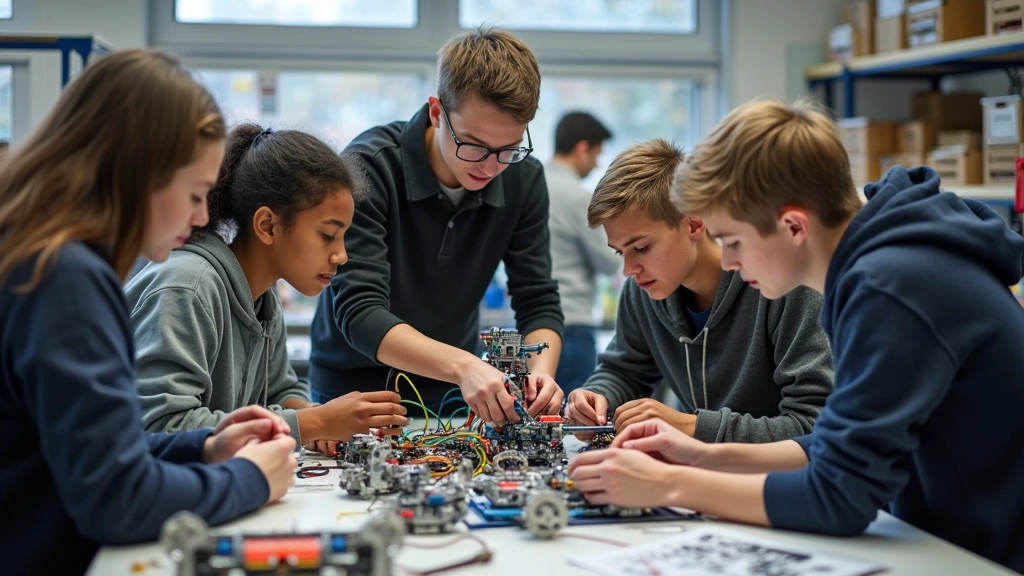
Beyond test preparation, students should cultivate genuine interest in STEM fields. Brooklyn Tech’s rigorous curriculum demands intellectual curiosity and self-direction, qualities that successful students typically demonstrate before admission. Participating in science fairs, robotics clubs, coding competitions, or other STEM activities not only strengthens applications but also prepares students for the school’s demanding environment. Admission officers recognize that test scores alone don’t predict success; intrinsic motivation and passion for technical learning matter enormously.
Students should also develop strong time management and study habits before arriving at Brooklyn Tech. The school’s demanding coursework, including advanced mathematics, physics, chemistry, and engineering classes, requires sustained intellectual effort. Successful applicants often report that their preparation process itself—learning to study effectively, manage stress, and persist through challenging material—proved as valuable as the test score itself.
Career Outcomes and Alumni Success: Measuring the Value
Brooklyn Tech’s acceptance rate matters primarily because the school produces remarkable outcomes for its graduates. Alumni include executives at major technology companies, successful entrepreneurs, accomplished researchers, and leaders across finance, medicine, and academia. The school’s alumni network extends globally, with graduates occupying influential positions at companies like Google, Microsoft, Goldman Sachs, and countless startups. This network provides invaluable mentorship and opportunity access for current students and recent graduates.
College acceptance rates for Brooklyn Tech graduates exceed 95%, with the vast majority attending highly selective universities including MIT, Stanford, Columbia, Cornell, and other top-tier institutions. The school’s rigorous curriculum, combined with strong teacher recommendations and demonstrated STEM capability, makes Brooklyn Tech graduates exceptionally competitive in college admissions. Many students graduate having completed advanced placement or college-level coursework, reducing college requirements and enabling earlier specialization.
The career trajectories of Brooklyn Tech alumni demonstrate that the school’s selective admissions process identifies students with genuine potential for high achievement. Graduate earnings data, though difficult to track systematically, suggests that Brooklyn Tech alumni earn substantially above median salaries in their respective fields, reflecting both the quality of education received and the professional networks developed during and after high school. Companies actively recruit Brooklyn Tech graduates, recognizing the school as a reliable source of talented technical talent.
Beyond individual career success, Brooklyn Tech alumni contribute significantly to technological innovation and societal progress. The school has produced founders of successful companies, patent holders, published researchers, and thought leaders shaping the technology industry’s future. When evaluated against the acceptance rate, these outcomes suggest that the school’s selective process effectively identifies students capable of exceptional achievement, validating the rigor of the admissions process despite its controversial reliance on standardized testing.
External validation of Brooklyn Tech’s quality comes from numerous sources. US News & World Report consistently ranks Brooklyn Tech among the nation’s best high schools, and Niche ratings place it in the top tier of New York schools. These independent assessments corroborate the school’s reputation and justify the intense competition for admission spots.
FAQ
What is Brooklyn Tech’s exact acceptance rate?
Brooklyn Tech’s acceptance rate ranges from 3-5%, making it one of America’s most selective high schools. The exact percentage fluctuates annually based on application volume and enrollment targets, but the school consistently admits only the highest-performing SHSAT test takers.
How many students apply to Brooklyn Tech annually?
Approximately 13,000-15,000 students apply to Brooklyn Tech each year, competing for roughly 800-900 freshman seats. This massive applicant pool relative to enrollment capacity explains the extraordinarily low acceptance rate.
What SHSAT score do I need for Brooklyn Tech?
Cutoff scores vary annually but typically fall between 500-520 out of 800, depending on the applicant pool’s overall strength. Students scoring at or above the cutoff score in their demographic category receive admission offers, making the SHSAT the primary determinant of acceptance.
Does Brooklyn Tech consider factors beyond the SHSAT?
The SHSAT is the primary admission criterion for Brooklyn Tech. Unlike many high schools, the school does not heavily weight GPA, essays, or extracurricular activities in the admissions decision, though these factors may play minor roles in rare edge cases.
How does Brooklyn Tech’s acceptance rate compare to other specialized schools?
Brooklyn Tech’s 3-5% acceptance rate is comparable to Stuyvesant (3-4%) and slightly lower than Bronx Science (4-6%), making these three schools the most selective in NYC’s specialized high school system. Other specialized schools maintain acceptance rates of 8-12%, still highly competitive but somewhat more accessible.
What is the demographic composition of Brooklyn Tech’s student body?
Brooklyn Tech’s enrollment is approximately 50-55% Asian American, 20-25% white, 15-20% Hispanic, and 5-10% Black. About 35-40% of students come from Queens, 25-30% from Brooklyn, with remaining students from Manhattan, the Bronx, and Staten Island.
Can I apply to multiple specialized schools?
Yes, applicants can list up to twelve specialized schools on their application. A single SHSAT score determines admission to all eligible schools, so students might gain admission to some schools but not others based on their score and each school’s cutoff.
Is test prep necessary for Brooklyn Tech admission?
While test prep is not strictly necessary, the competitive landscape makes structured preparation highly advantageous. Most successful applicants engage in at least six months of focused SHSAT preparation through tutoring, prep courses, or independent study using quality resources.
What are Brooklyn Tech’s graduation and college acceptance rates?
Brooklyn Tech maintains a graduation rate exceeding 95%, with college acceptance rates similarly high. The vast majority of graduates attend selective four-year universities, with many enrolling at Ivy League and other top-tier institutions.
How competitive is Brooklyn Tech compared to private schools?
Brooklyn Tech’s 3-5% acceptance rate rivals or exceeds the selectivity of elite private schools. Statistically, it is harder to gain admission to Brooklyn Tech than to many Ivy League universities, making it one of America’s most competitive high schools regardless of sector.