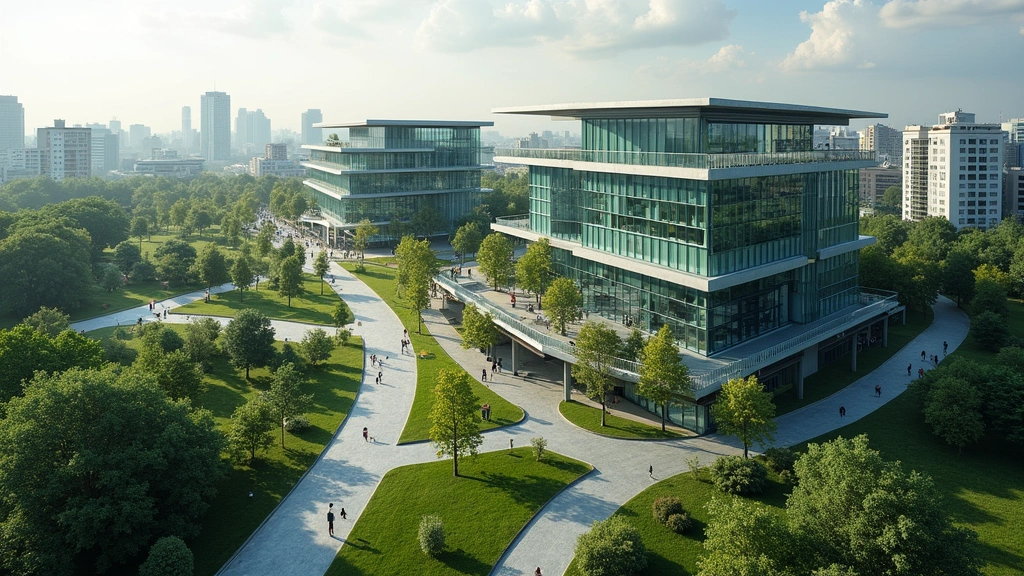
Tech Innovation Districts: Are They the Future? Expert Insights
Tech innovation districts have emerged as transformative urban ecosystems, reshaping how companies collaborate, innovate, and scale. These concentrated hubs—blending office spaces, research facilities, residential areas, and recreational venues—represent a fundamental shift in how technology companies operate and interact with their communities. Cities worldwide are investing billions to develop these districts, betting that physical proximity breeds innovation and economic growth. But do they truly deliver on their promise, or are they merely expensive real estate ventures? We’ve analyzed expert insights and market data to answer this critical question.
The concept of tech innovation districts extends beyond traditional business parks. These are vibrant, mixed-use neighborhoods designed to foster serendipitous encounters between entrepreneurs, investors, researchers, and creative professionals. From Silicon Valley’s evolution to emerging hubs in Austin, Seattle, and international cities like Singapore and Toronto, the model continues to attract significant capital and talent. Understanding whether these districts represent the future requires examining their economic impact, innovation metrics, and sustainability challenges.

What Defines a Tech Innovation District?
A tech innovation district isn’t simply a collection of tech companies housed in modern buildings. According to Brookings Institution research, these districts are characterized by specific elements: anchor institutions (universities, research labs), diverse talent pools, venture capital presence, quality-of-life amenities, and supportive regulatory environments. The 16 tech innovation district framework identifies key metrics for evaluating district maturity and effectiveness.
The physical layout matters significantly. Successful districts typically feature walkable neighborhoods, mixed-use development, and intentional design that encourages spontaneous interactions. Companies like Google, Apple, and Meta have invested in campus designs that prioritize collaboration spaces. The blend of startups, established tech firms, and research institutions creates a dynamic ecosystem where knowledge transfer accelerates. Residential components ensure that workers can live near their offices, reducing commute times and fostering community engagement.
Tech innovation districts also require robust infrastructure: high-speed internet, reliable power systems, modern transportation networks, and accessible meeting spaces. They function as innovation engines where intellectual property generation, talent development, and capital formation occur simultaneously. The economic model depends on creating positive externalities—when one company’s innovation benefits the entire ecosystem, attracting more talent and investment.

Global Leaders: Case Studies of Success
Silicon Valley remains the archetypal tech innovation district, though its dominance is declining. Spanning from San Jose to San Francisco, it generated $2.8 trillion in economic output annually at its peak. However, housing costs (median home prices exceed $1.3 million), traffic congestion, and regulatory challenges have prompted many companies to relocate or establish secondary hubs.
Austin, Texas represents the new generation of successful innovation districts. With lower cost of living, business-friendly policies, and strong university partnerships (University of Texas), Austin attracted companies like Tesla, Apple, and Oracle. The district added over 40,000 tech jobs between 2015-2023. The technology and artificial intelligence transforming Austin’s economy demonstrates how strategic positioning attracts talent and capital.
Seattle built its innovation district around Amazon, Microsoft, and Boeing, creating a diverse tech ecosystem spanning cloud computing, aerospace, and biotech. The region’s proximity to top universities and venture capital firms solidified its position as a secondary tech hub with $140+ billion in annual tech sector revenue.
International examples show global adoption. Singapore’s one-north district attracts biotech and digital media companies. Berlin hosts Europe’s largest startup ecosystem with over 2,500 startups. Shenzhen evolved from a fishing village to China’s primary innovation hub, housing Huawei, Tencent, and DJI. These examples demonstrate that innovation districts can succeed in diverse geographic and cultural contexts.
Economic Impact and Job Creation
The economic contributions of tech innovation districts are substantial. A McKinsey analysis found that mature innovation districts generate 5-10 times more jobs per square foot than conventional office parks. For Austin, the tech sector contributes $160 billion annually to the regional economy, supporting 190,000+ direct jobs.
Job creation extends beyond tech companies. Innovation districts stimulate demand for hospitality, real estate, transportation, and professional services. Austin’s growth attracted hundreds of restaurants, hotels, and retail establishments. However, this rapid expansion creates challenges: wage growth for tech workers outpaces overall population income, creating affordability crises.
Real estate values surge in successful districts. Austin’s commercial real estate appreciated 35% between 2018-2023. While beneficial for property owners and municipalities (increased tax revenue), this inflates operational costs for businesses, particularly startups. best laptops for students and tech talent development programs increasingly locate outside prime districts to reduce costs.
Venture capital concentration in innovation districts remains significant. San Francisco Bay Area firms manage 40% of U.S. venture capital, though this share declined from 60% in 2010. Austin, Denver, and Miami have attracted increasing capital allocation, suggesting geographic diversification of innovation funding.
Innovation Metrics: Measuring Real Impact
Quantifying innovation output remains challenging. Common metrics include patent filings, startup formation rates, and acquisition activity. Silicon Valley generates 25,000+ patents annually, though quality varies significantly. Austin’s patent filings increased 45% since 2015, suggesting genuine innovation acceleration.
Startup ecosystem health provides another indicator. Austin spawned 150+ companies valued at $1B+ (unicorns) since 2010. Exit activity—acquisitions and IPOs—demonstrates market validation. In 2022, Austin-based companies were acquired for $42 billion combined value, though this declined 60% in 2023 due to venture capital contraction.
Research output from anchor institutions matters profoundly. University of Texas generates 800+ patents annually, attracting corporate partnerships and spinoff companies. MIT’s proximity to Boston’s innovation district created a $200+ billion biotech and software ecosystem. The artificial intelligence applications transforming industries often originate from research-intensive innovation districts.
However, some metrics prove misleading. Patent quantity doesn’t equal innovation quality. A company filing 100 patents annually might generate less economic value than a competitor filing 10 high-impact patents. Similarly, startup formation rates don’t measure sustainable businesses—many fail within five years. Success metrics should emphasize long-term value creation, talent retention, and knowledge diffusion across industries.
Challenges and Sustainability Concerns
Despite benefits, tech innovation districts face mounting challenges. Affordability crises threaten ecosystem sustainability. San Francisco’s median rent for one-bedroom apartments exceeds $2,800 monthly. This forces workers to live 50+ miles away, negating proximity benefits and increasing environmental impact. Austin faces similar pressures—median home prices increased 45% since 2018.
Gentrification displaces existing communities. Austin’s rapid growth pushed longtime residents out; the city’s Black population declined 5% between 2010-2020 despite overall growth. This raises ethical concerns about whether innovation districts benefit entire cities or just newcomers and investors.
Environmental sustainability demands attention. Tech workers commuting from distant suburbs generate significant carbon emissions. Dense development strains water systems and electricity grids. Data centers powering cloud computing consume enormous energy quantities. Responsible innovation districts must integrate renewable energy, efficient transportation, and water conservation.
Dependency risks concern economists. Austin’s heavy reliance on tech sector employment creates vulnerability to industry downturns. The 2023 tech layoffs eliminated 260,000+ jobs nationally, with Austin losing 15,000+ positions. Diversified economies prove more resilient.
Talent saturation increasingly challenges districts. As tech workers migrate to secondary hubs, competition intensifies. Compensation expectations rise, pressuring companies’ profitability. Additionally, housing shortages limit talent pool expansion—Austin needs 100,000+ new housing units by 2030 to accommodate projected growth.
The Role of Emerging Technologies
Artificial intelligence, blockchain, and quantum computing are reshaping innovation district dynamics. AI development requires specialized talent, significant computational resources, and substantial capital. Cities investing in AI research clusters—like Toronto with Vector Institute and Beijing with AI development zones—attract related industries and talent.
Remote work capabilities, accelerated by pandemic necessities, fundamentally altered district value propositions. Companies discovered that distributed teams function effectively, reducing location dependency. However, this doesn’t eliminate district advantages—many firms maintain offices for collaboration, onboarding, and culture-building. Hybrid models blend remote flexibility with occasional in-person interaction.
Cryptocurrency and blockchain industries created new innovation clusters. Miami aggressively marketed itself as a crypto hub, though regulatory uncertainty and market volatility have tempered growth. El Salvador’s Bitcoin adoption attempt demonstrated risks of overreliance on single technologies.
Biotech and life sciences innovation districts emerged as distinct ecosystems. Boston, San Diego, and San Francisco lead biotech innovation, requiring specialized infrastructure (labs, clinical trial facilities) and regulatory expertise. These districts complement rather than compete with traditional tech hubs.
Future Outlook and Expert Predictions
Expert consensus suggests tech innovation districts will remain important but evolve significantly. Forbes Technology coverage highlights emerging trends: geographic decentralization, increased focus on sustainability, and integration of diverse sectors beyond pure technology.
Decentralization accelerates as remote work normalizes. Secondary cities like Nashville, Raleigh, and Denver develop competitive tech ecosystems with lower costs and quality-of-life advantages. However, these secondary hubs typically specialize in specific sectors rather than replicating Silicon Valley’s diversity.
Sustainability becomes increasingly critical. Forward-thinking districts incorporate carbon neutrality targets, renewable energy, and circular economy principles. Copenhagen’s innovation districts, for example, prioritize environmental responsibility alongside innovation metrics.
The Tech Pulse Hunter Blog explores how districts adapt to changing workforce expectations. Younger professionals increasingly prioritize quality of life, community engagement, and environmental consciousness over maximum salary. Districts offering walkability, cultural amenities, and work-life balance attract premium talent.
Consolidation and specialization appear likely. Rather than competing as general-purpose tech hubs, cities will develop distinctive identities: Austin for software and AI, San Diego for biotech, Seattle for cloud computing, Miami for fintech and cryptocurrency (pending regulatory clarity). This specialization reduces redundancy and leverages regional advantages.
How to address affordability remains contentious. Solutions include inclusionary zoning (requiring affordable units in new developments), community land trusts, and remote work policies enabling talent distribution. Without deliberate affordability strategies, innovation districts risk becoming exclusive enclaves inaccessible to average workers.
Expert opinion diverges on whether current district models prove sustainable long-term. Optimists argue that innovation clustering benefits outweigh challenges and that cities will implement solutions addressing affordability and sustainability. Pessimists contend that remote work, environmental costs, and affordability crises will undermine district value propositions, leading to geographic dispersion.
FAQ
What makes a successful tech innovation district?
Successful districts combine anchor institutions (universities/research labs), diverse talent pools, venture capital access, walkable neighborhoods, quality infrastructure, and supportive policies. Economic diversity, affordability, and environmental sustainability increasingly matter.
Are tech innovation districts worth the investment?
Returns vary significantly. Mature districts generate substantial economic value—Austin’s tech sector contributes $160 billion annually. However, success requires sustained investment and strategic planning. Failed or struggling districts waste resources without delivering promised benefits.
How do how to fix a slow computer issues relate to innovation districts?
While seemingly unrelated, how to fix a slow computer effective tips reflect broader tech infrastructure challenges. Innovation districts depend on robust IT infrastructure; inadequate systems hinder productivity and innovation.
Will remote work eliminate innovation districts?
Unlikely. While remote work reduces location dependency, districts offer collaboration benefits, talent concentration, and ecosystem effects that distributed teams cannot replicate. However, remote work will diminish districts’ advantages and encourage geographic decentralization.
Which emerging cities might become major tech innovation districts?
Miami, Nashville, Raleigh, Denver, and Montreal show strong potential. These cities offer lower costs than established hubs, quality universities, supportive policies, and lifestyle amenities attracting talent. However, specialization rather than Silicon Valley replication seems more likely.
How do innovation districts address affordability challenges?
Strategies include inclusionary zoning, community land trusts, remote work policies enabling geographic distribution, and deliberate efforts limiting speculative real estate investment. Success requires political will and long-term commitment.


