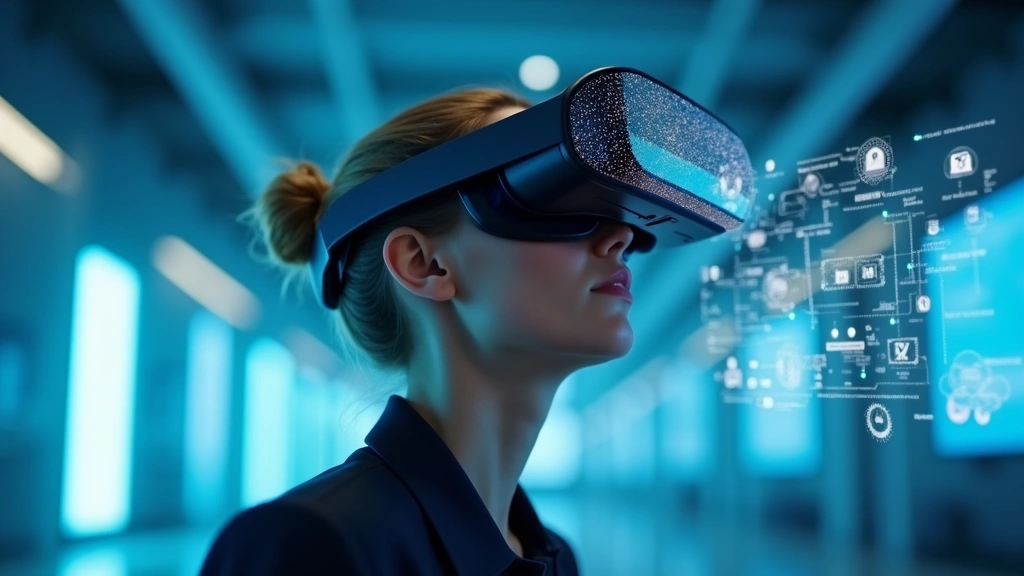
The Future of Virtual Reality? Expert Insights on VR’s Next Evolution
Virtual reality has transitioned from science fiction fantasy to a tangible technology reshaping how we work, play, and communicate. What once seemed like an exclusive gaming novelty has evolved into a sophisticated ecosystem spanning enterprise training, medical applications, architectural visualization, and social platforms. The question isn’t whether VR will matter—it already does—but rather how rapidly the technology will mature and which innovations will define the next decade of immersive experiences.
Industry experts, hardware manufacturers, and software developers are converging on a consensus: the future of VR depends on solving three critical challenges—accessibility, comfort, and killer applications that justify the investment. Current headsets like the Meta Quest 3, PlayStation VR2, and HTC Vive XR Elite represent significant technological leaps, yet adoption rates remain constrained by price points, technical barriers, and limited content libraries that truly leverage immersive capabilities. Understanding where VR is heading requires examining emerging technologies, market trends, and insights from leading researchers who are actively shaping this landscape.

Current State of VR Technology
The VR landscape has matured considerably since the consumer boom of 2016. Today’s headsets deliver 4K resolution per eye, advanced hand tracking, haptic feedback systems, and processing power that rivals gaming PCs. The Meta Quest 3 pioneered mixed reality integration, allowing users to seamlessly blend digital content with their physical environment—a critical evolution beyond pure VR isolation. PlayStation VR2 demonstrated that console-grade graphics could deliver visceral immersive experiences, while enterprise solutions like the HTC Vive XR Elite cater to professionals requiring standalone power and comprehensive tracking ecosystems.
Current VR adoption stands at approximately 171 million active users globally, with the market valued at $15.81 billion in 2023 and projected to reach $87 billion by 2030. These figures reveal both the technology’s growing acceptance and the vast untapped potential. Unlike previous tech cycles, VR isn’t struggling with fundamental viability—it’s refining execution. Content libraries have expanded dramatically, with titles ranging from narrative-driven experiences like Half-Life: Alyx to fitness applications like Beat Saber that have attracted mainstream audiences beyond hardcore gamers. The integration of VR into medical training, architectural design, and corporate onboarding demonstrates that immersive technology has transcended entertainment.
However, current limitations persist. Display technology still falls short of true human-eye resolution; most headsets achieve approximately 1832×1920 pixels per eye, while human vision theoretically requires 8K-equivalent density for perfect clarity. Battery life remains constrained—wireless headsets typically last 2-3 hours before requiring recharging. Motion sickness, caused by latency between head movement and visual rendering, continues to affect approximately 25-30% of users. These aren’t insurmountable barriers, but they represent the technical ceiling that next-generation innovation must exceed.

Hardware Innovations on the Horizon
The next wave of VR hardware will prioritize three engineering objectives: reducing weight and improving ergonomics, increasing visual fidelity beyond current limitations, and extending battery performance. Leading manufacturers are pursuing distinct technological paths that will define competitive positioning through 2030.
Display Technology Evolution: Micro-OLED displays represent the near-term breakthrough, offering superior contrast ratios, faster response times, and significantly improved color accuracy compared to current LCD and OLED implementations. Samsung and Sony are investing heavily in micro-OLED production, with industry analysts predicting mainstream integration by 2025-2026. Varifocal displays—which dynamically adjust focal depth to match where users are looking—are advancing through research phases. These systems reduce eye strain during extended sessions and create more convincing depth perception by eliminating the “accommodation-convergence conflict” that plagues current fixed-focus headsets.
Pancake optics continue refining, enabling thinner, lighter headset designs without sacrificing field of view. The Meta Quest 3’s pancake lens implementation reduced thickness by approximately 40% compared to Quest 2 while maintaining a 110-degree field of view. Next iterations will push toward 150+ degree horizontal FOV—approaching human peripheral vision—while maintaining weight under 300 grams. Apple’s Vision Pro demonstrated that premium materials and engineering can justify higher price points for consumers prioritizing comfort and aesthetics, establishing a design philosophy that competitors will emulate.
Processing Power and Wireless Technology: Qualcomm’s Snapdragon XR Gen 2 processor represents a significant computational leap, delivering performance improvements exceeding 50% over previous generations while maintaining thermal efficiency. This enables more complex physics simulations, higher-resolution rendering, and real-time AI processing directly on the headset—reducing latency and eliminating dependency on external computing resources. WiFi 7 and emerging 5G standards will provide sufficient bandwidth for cloud-based VR experiences, allowing users to access rendering-intensive applications without local GPU limitations.
Battery innovation remains challenging but critical. Solid-state batteries promise 40-50% density improvements over lithium-ion technology, potentially extending wireless headset operation to 6-8 hours. However, commercial viability at consumer price points remains 3-4 years away. In the interim, manufacturers are optimizing power consumption through more efficient processors and display technologies, with realistic near-term targets of 4-5 hour sessions.
Eye-tracking and facial expression capture are becoming standard rather than premium features. Advanced eye-tracking enables foveated rendering—concentrating graphical processing power on where users are actually looking—which can reduce computational demands by 30-40%. Facial tracking allows avatars to mirror user expressions with remarkable fidelity, dramatically improving social presence in multiplayer environments. These capabilities transform VR from a visual-only medium into a comprehensive sensory platform.
AI Integration and Intelligent Experiences
Artificial intelligence represents the most transformative force shaping VR’s future trajectory. Unlike previous technological cycles where AI served peripheral roles, immersive AI integration is fundamentally reimagining what VR experiences can accomplish. This convergence aligns with broader trends explored in our analysis of technology and artificial intelligence transforming our future, where immersive platforms emerge as critical deployment environments.
Dynamic Content Generation: AI-powered procedural generation creates vast, infinitely explorable virtual worlds without requiring artists to manually craft every asset. Procedural generation algorithms can generate photorealistic environments, populate them with contextually appropriate NPCs exhibiting sophisticated behavior, and adapt scenarios based on user actions in real-time. This technology dramatically reduces content production costs and enables personalized experiences that respond intelligently to individual user preferences and skill levels.
Natural Language Interaction: Advanced language models enable VR environments where users can communicate naturally with AI characters and systems. Rather than navigating predetermined dialogue trees, users can speak conversationally with NPCs who understand context, maintain consistent personalities, and respond intelligently to unexpected queries. This transforms VR from a passive consumption medium into an interactive dialogue platform where exploration and discovery feel organic rather than scripted.
Adaptive Learning Systems: Educational VR applications leveraging AI can customize difficulty, pacing, and instructional methods based on real-time assessment of user comprehension. Medical students performing virtual surgical procedures receive AI-guided feedback on technique, while language learners encounter adaptive conversation partners who adjust vocabulary complexity and cultural context. These personalized experiences dramatically improve learning outcomes—research indicates VR-based training reduces time-to-competency by 30-40% compared to traditional methods.
The integration of the future of artificial intelligence with immersive platforms creates feedback loops where user behavior within VR environments trains increasingly sophisticated AI models, which subsequently generate more compelling experiences. This virtuous cycle accelerates innovation velocity and creates competitive advantages for platforms investing early in AI infrastructure.
Enterprise and Professional Applications
While consumer VR captures media attention, enterprise applications represent the most immediate growth opportunity. Organizations across healthcare, manufacturing, architecture, and corporate training are investing substantially in VR solutions because the ROI is demonstrable and measurable.
Medical and Surgical Training: VR surgical simulations allow physicians to practice complex procedures thousands of times before performing them on actual patients. These systems provide haptic feedback simulating tissue resistance, bleeding responses, and anatomical variations. Studies from leading medical institutions demonstrate that surgeons trained partially in VR complete actual procedures 20-30% faster with fewer errors than those trained exclusively through observation. As haptic feedback technology advances, the fidelity gap between simulation and reality will narrow further, potentially enabling VR-based credentialing and certification.
Manufacturing and Maintenance: VR training for equipment operation, maintenance procedures, and safety protocols reduces training time by 50% while improving retention. Assembly line workers can practice procedures in risk-free environments, identifying ergonomic issues before they cause injury. Technicians can receive remote expert guidance through shared VR environments where specialists annotate equipment and provide real-time instruction—eliminating expensive on-site visits.
Architectural and Design Visualization: Architects and clients can walk through buildings before construction begins, identifying spatial issues and design conflicts that would be costly to correct post-construction. These immersive walkthroughs enable stakeholder feedback earlier in the design process, reducing revision cycles and accelerating project timelines. Real estate developers are leveraging VR to showcase properties to investors and potential buyers across geographic distances, expanding market reach without requiring physical property access.
Corporate Training and Onboarding: Organizations are deploying VR for soft skills training, customer service scenarios, and leadership development. Trainees practice high-stakes interactions—negotiating difficult conversations, managing crisis situations, or presenting to hostile audiences—in controlled environments where failure carries no real consequences. This experiential learning approach produces more confident, competent employees than traditional classroom instruction.
Enterprise adoption is accelerating because VR delivers measurable business value: reduced training costs, improved safety records, faster time-to-productivity, and decreased error rates. Unlike consumer VR, which requires killer applications to justify hardware investment, enterprise VR justifies itself through operational efficiency gains and risk mitigation.
Social VR and Metaverse Development
Social presence—the sensation of being genuinely present with other people—represents VR’s most compelling differentiator from traditional digital communication. Video conferencing approximates physical presence; VR transcends it by providing spatial awareness, body language interpretation, and environmental context that fundamentally improve human connection.
Meta’s investment in social VR platforms like Horizon Worlds demonstrates the strategic importance of social experiences, though current implementations have struggled to achieve mainstream adoption. The technical barriers are surmountable—avatar fidelity, latency management, and presence technology are advancing rapidly. The challenge is cultural: people must perceive sufficient value in VR social experiences to justify headset adoption and ongoing platform engagement.
However, specialized social VR communities are thriving. Musicians are performing live concerts in VR venues where audiences from across the globe attend simultaneously, experiencing shared presence despite geographic dispersion. Educational VR classrooms enable international student cohorts to collaborate on projects while maintaining non-verbal communication cues impossible in traditional video conferencing. Therapeutic VR communities provide safe spaces for individuals with social anxiety or autism spectrum conditions to practice social interaction with reduced pressure.
The metaverse concept—persistent shared virtual worlds where avatars represent users engaged in commerce, entertainment, and social interaction—remains aspirational rather than realized. Current implementations are fragmented, platform-specific, and lack interoperability that would enable seamless avatar and asset portability between environments. Industry consensus suggests that true metaverse infrastructure requires technological maturation (particularly regarding standards adoption and interoperability protocols) and cultural shifts in how people conceptualize digital identity and presence. Realistic timelines for mainstream metaverse adoption extend beyond 2030.
Challenges Facing Mainstream Adoption
Despite impressive technological progress, VR faces persistent barriers to mainstream consumer adoption that extend beyond engineering challenges.
Cost Barriers: Premium VR headsets cost $1,500-$3,500, positioning them as luxury purchases rather than mass-market consumer electronics. While standalone headsets like the Meta Quest 3 ($299-$649) address price sensitivity, they sacrifice processing power and visual fidelity compared to PC-tethered systems. Mass-market adoption requires headsets delivering console-quality experiences at smartphone price points—a technical and economic challenge manufacturers haven’t yet solved.
Content Library Limitations: While VR content has expanded significantly, the library remains shallow compared to traditional gaming and entertainment. Most VR users engage with a handful of popular titles rather than enjoying diverse experiences that would justify continuous platform engagement. Creating compelling VR content requires specialized development expertise and represents significantly higher per-title investment than traditional game development. This chicken-and-egg problem—publishers hesitate investing in VR content because the audience is limited, while consumers hesitate purchasing headsets because content is limited—perpetuates slow adoption cycles.
Health and Safety Concerns: Motion sickness, eye strain, and musculoskeletal issues from extended headset use remain genuine concerns for a significant user percentage. While technology is addressing these issues, public perception lags reality. Parents express hesitation about children spending extended periods in VR, citing concerns about developmental impacts and social isolation. These perceptions, though not uniformly supported by research, influence purchasing decisions and create headwinds for adoption.
Social Stigma: VR headsets remain culturally positioned as niche gaming devices rather than mainstream communication or entertainment tools. The image of solitary users wearing bulky headsets conflicts with social media’s emphasis on shared experiences and community. Until VR becomes sufficiently ubiquitous that wearing a headset feels as natural as using a smartphone, mainstream adoption will remain constrained by perception rather than capability.
Fragmentation and Standards: Unlike smartphone ecosystems that converged on iOS and Android, VR remains fragmented across proprietary platforms with limited interoperability. Users purchasing Meta headsets access Meta’s ecosystem; PlayStation VR users are confined to PlayStation content. This fragmentation reduces network effects and prevents the scale economies that drive consumer technology adoption. Industry progress toward open standards remains limited, with manufacturers preferring proprietary ecosystems that maximize lock-in and profit margins.
Expert Predictions for 2025-2030
Leading VR researchers, venture capitalists, and industry executives have articulated surprisingly consistent predictions about the next five years, though timelines vary regarding specific milestones.
Display and Optics: Micro-OLED displays will become standard in mid-to-premium headsets by 2026, delivering superior image quality at reduced power consumption. Varifocal displays will transition from research to commercial deployment in high-end systems by 2027-2028. Field of view will expand toward 150+ degrees horizontally, approaching human peripheral vision. Weight will decrease to 250-300 grams for premium headsets, making extended wear sessions comfortable for the majority of users. These improvements will reduce barriers to adoption by addressing current pain points that constrain usage duration.
Processing Architecture: Cloud-based VR rendering will mature sufficiently for mainstream deployment, enabling users to access graphically complex experiences without high-end local hardware. Edge computing infrastructure will proliferate, positioning rendering servers geographically proximate to users to minimize latency. This architectural shift parallels evolution in gaming toward cloud-based services, reducing hardware investment requirements and democratizing access to premium experiences. The technical infrastructure will exist by 2027; commercial viability depends on internet infrastructure maturation and pricing models that achieve consumer acceptance.
AI Integration: AI-powered personalization will become standard across VR platforms, with experiences adapting dynamically to user preferences, skill levels, and engagement patterns. Natural language interaction will enable conversational interfaces within VR environments, eliminating reliance on controller-based navigation. AI-generated content will supplement artist-created assets, dramatically reducing content production costs and enabling personalized experiences at scale. By 2028, most VR applications will incorporate AI adaptation as a baseline feature rather than a premium differentiator.
Market Growth: Enterprise adoption will accelerate faster than consumer adoption, with corporate training and medical simulation driving substantial revenue growth. By 2027, enterprise VR spending will exceed consumer spending, reversing current market dynamics. Consumer adoption will remain steady but unspectacular, growing from current 171 million users to approximately 300-400 million by 2030. This represents significant growth but falls short of smartphone-scale ubiquity. Specialized use cases—fitness, education, social communities—will drive consumer adoption rather than gaming, which will remain a core but increasingly peripheral application category.
Technology Convergence: AR and VR will converge toward mixed reality devices that seamlessly blend digital content with physical environments. The distinction between “VR headsets” and “AR glasses” will blur, with devices supporting both fully immersive and augmented modes. This convergence will expand addressable markets because mixed reality supports use cases—navigation, information overlay, productivity—that pure VR cannot address effectively. By 2030, “mixed reality” will replace “virtual reality” as the dominant category descriptor, reflecting the technology’s evolution toward blended experiences.
Standards and Interoperability: Industry progress toward open standards will accelerate, driven by regulatory pressure and consumer demand for ecosystem flexibility. Proprietary walled gardens will remain prevalent among market leaders, but open-source alternatives will gain traction among developers and enthusiasts. By 2028, interoperable avatar standards will emerge, enabling avatar portability across different social VR platforms. However, complete ecosystem interoperability remains unlikely through 2030, as manufacturers prioritize proprietary advantages over standardization.
These predictions reflect consensus among experts while acknowledging substantial uncertainty regarding specific timelines. Technological breakthroughs could accelerate adoption; conversely, unforeseen challenges could delay progress. The most likely scenario involves steady incremental improvement rather than revolutionary disruption—VR will become more capable, accessible, and integrated into professional and entertainment contexts, but won’t achieve the transformative mainstream ubiquity that early advocates predicted.
FAQ
What VR headset should I buy in 2025?
Your choice depends on budget and use case. The Meta Quest 3 ($299-$649) offers excellent value for casual gaming and mixed reality experiences. PlayStation VR2 ($549) delivers premium console-grade graphics for PlayStation owners. The Apple Vision Pro ($3,499) suits professionals prioritizing design and productivity features. For enterprise applications, HTC Vive XR Elite ($1,399) provides comprehensive tracking and business-focused software. If you’re budget-conscious, current-generation Quest 2 models offer significant discounts and remain capable platforms for most experiences.
Is VR bad for your eyes?
Extended VR use can cause temporary eye strain, similar to prolonged screen time. Current headsets’ fixed focal distance creates accommodation-convergence conflict, straining eye muscles. Taking regular breaks (20-20-20 rule: every 20 minutes, look at something 20 feet away for 20 seconds) mitigates strain. Emerging varifocal displays will eliminate this issue by dynamically adjusting focal depth. For most users, VR poses no permanent eye damage risk, though children’s visual development remains an area requiring additional research.
When will VR become mainstream?
Defining “mainstream” is challenging, but most experts predict VR will achieve 15-20% household penetration by 2030—similar to current gaming console adoption rates. This represents substantial growth from current 5-7% penetration but falls short of smartphone ubiquity. Enterprise adoption will accelerate faster than consumer adoption, with medical training, corporate education, and professional visualization driving market growth. True mainstream status would require sub-$300 headsets delivering premium experiences and compelling social applications justifying continuous engagement.
What’s the difference between VR and AR?
Virtual reality (VR) replaces your entire visual field with computer-generated environments. Augmented reality (AR) overlays digital content onto your physical environment, keeping you connected to your surroundings. Mixed reality (MR) blends both capabilities, enabling digital objects to interact with physical spaces realistically. VR provides greater immersion and presence; AR maintains environmental awareness and social connection. Future devices will support both modes, with users toggling between fully immersive and augmented experiences based on context.
Can VR cause motion sickness?
Yes, approximately 25-30% of users experience motion sickness (cybersickness) during VR experiences, caused by latency between head movement and visual rendering. Modern headsets maintain 90Hz+ refresh rates and sub-20ms latency, minimizing this issue. Gradual acclimation helps; most users develop tolerance with repeated exposure. Developers are implementing comfort settings like comfort locomotion and reduced field of view options that further mitigate symptoms. Varifocal displays and improved latency management will reduce cybersickness occurrence, though individual sensitivity varies substantially.
What are the best VR games right now?
Current standout titles include Half-Life: Alyx (immersive narrative FPS), Beat Saber (rhythm game with mainstream appeal), Resident Evil 4 (AAA horror experience), The Walking Dead: Saints and Sinners (survival action), and Superhot VR (puzzle-action hybrid). For social experiences, Rec Room and VRChat offer community-driven content. For productivity, Immersed provides virtual workspace environments. The best title depends on your preferences, but these represent current quality standards that showcase VR’s potential.
How much does VR training cost for enterprises?
Enterprise VR implementation costs vary dramatically based on scope. Standalone solutions using commercial headsets (Meta Quest, HTC Vive) cost $500-$2,000 per user for hardware plus $5,000-$50,000 for custom content development. Turnkey solutions from providers like Strivr or Trainsmart cost $10,000-$100,000+ depending on deployment scale and customization requirements. ROI typically materializes within 12-24 months through reduced training time, improved safety records, and decreased error rates. For organizations with substantial training requirements, VR represents a compelling investment.


