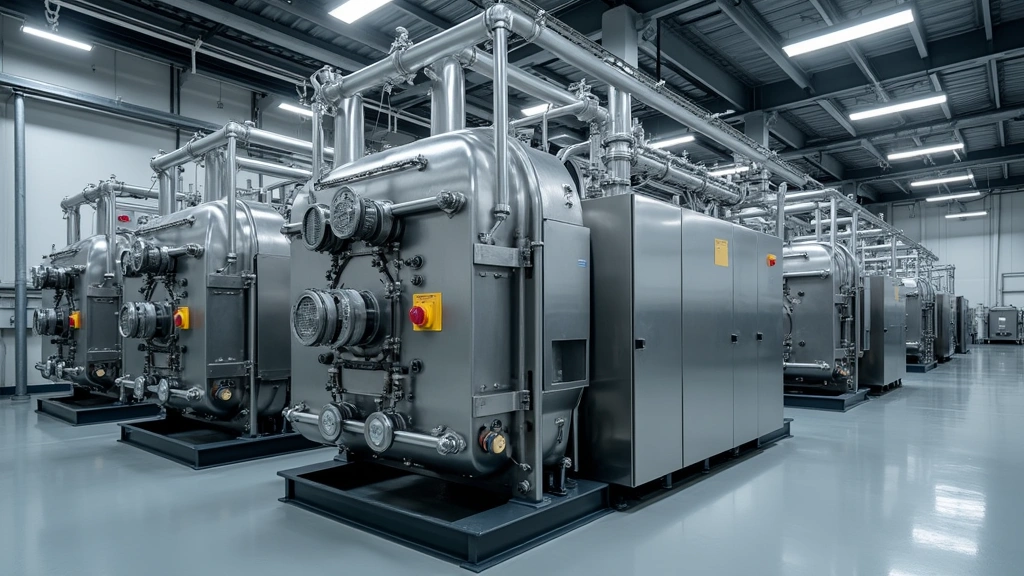
Aduro Clean Tech has emerged as a compelling player in the renewable energy and clean technology sector, attracting attention from both retail and institutional investors seeking exposure to sustainable innovation. The company specializes in advanced thermal conversion technology designed to transform waste into valuable energy resources, positioning itself at the intersection of environmental responsibility and technological advancement. As climate change concerns intensify and governments worldwide mandate stricter emissions standards, companies like Aduro Clean Tech represent a potentially lucrative investment avenue for those banking on the green energy revolution.
This comprehensive analysis examines whether Aduro Clean Tech stock represents a smart investment opportunity. We’ll explore the company’s business model, competitive positioning, financial performance, and growth prospects while providing investors with the critical insights needed to make informed decisions in the increasingly complex clean technology sector.
Understanding Aduro Clean Tech’s Business Model
Aduro Clean Tech operates within the renewable energy technology sector, focusing on thermal conversion systems that convert waste materials into usable energy and valuable products. The company’s core technology platform targets multiple end markets, including waste management, energy generation, and industrial applications. This diversified approach provides revenue stability and multiple pathways for scaling operations across different industries and geographies.
The fundamental premise underlying Aduro’s business model centers on solving two critical global challenges simultaneously: waste management and energy scarcity. By developing proprietary thermal conversion technologies, the company enables industrial clients to reduce landfill dependency while generating revenue from waste streams previously considered unprofitable. This circular economy approach aligns perfectly with increasingly stringent environmental regulations and corporate sustainability commitments.
Aduro’s revenue model combines technology licensing, equipment sales, and potential future revenue sharing arrangements with commercial partners implementing their systems. This hybrid approach provides both upfront capital generation and recurring revenue streams, creating a more resilient financial structure than single-revenue-source competitors. The company has secured partnerships with established industrial players, validating market demand and accelerating commercialization timelines.
Technology and Innovation Pipeline
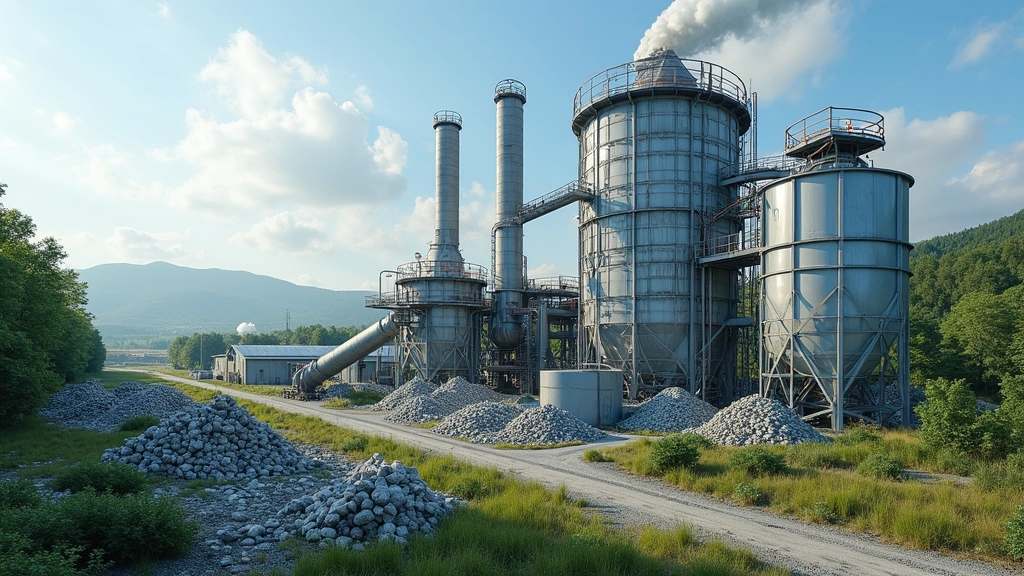
The cornerstone of Aduro Clean Tech’s investment thesis rests on its proprietary thermal conversion technology platform. The company has developed what it terms “hydrothermal processing” capabilities—advanced systems capable of converting diverse waste streams into valuable outputs including renewable fuels, chemicals, and other high-value products. This technology represents a significant advancement over traditional waste management approaches, offering superior efficiency and environmental benefits.
According to industry analysis, Aduro’s thermal conversion systems demonstrate conversion efficiency rates competitive with or exceeding existing market alternatives. The technology’s flexibility allows adaptation to various feedstock types, including agricultural waste, municipal solid waste, plastic waste, and industrial byproducts. This versatility provides the company with multiple commercialization pathways and reduces dependency on any single market vertical.
Aduro’s innovation pipeline includes continuous refinement of existing thermal conversion platforms and development of next-generation systems targeting adjacent market opportunities. The company invests substantially in research and development, maintaining technological leadership within its competitive space. Recent focus areas include scaling production capacity, improving system efficiency, and expanding compatible feedstock types—all critical factors for achieving commercial viability and market penetration.
The company’s patent portfolio provides meaningful intellectual property protection, though investors should recognize that clean technology patents face increasing scrutiny and potential challenges. Aduro maintains multiple patent applications covering various aspects of its thermal conversion technology, creating a defensible competitive moat. However, as with most technology companies, sustained innovation remains essential to maintaining technological superiority as competitors inevitably develop competing solutions.
” alt=”Advanced thermal conversion equipment in industrial facility with control systems”/>
Financial Performance and Market Position
Analyzing Aduro Clean Tech’s financial metrics reveals a company in early-stage commercialization with growth trajectories typical of emerging clean technology firms. Revenue figures remain modest relative to market capitalization, reflecting the pre-scale phase of commercial deployment. However, this characteristic represents both risk and opportunity—limited current revenue reduces immediate profitability but provides substantial upside potential if commercialization accelerates as anticipated.
The company’s cash position and burn rate represent critical investment considerations. Aduro has secured funding through equity raises and strategic partnerships, providing runway for continued operations and commercialization activities. However, investors should carefully monitor cash consumption rates and the company’s path toward positive cash flow generation. Many clean technology companies require substantial capital before achieving profitability, and Aduro follows this pattern.
Market capitalization metrics suggest the investment community maintains cautious optimism regarding Aduro’s prospects. The stock trades at valuations reflective of early-stage technology companies with unproven commercial scalability. This pricing structure creates opportunity for investors believing in the company’s commercialization timeline but simultaneously represents significant risk for those skeptical of the company’s ability to achieve projected growth rates.
Comparing Aduro’s financial metrics with established waste management and energy companies reveals substantial differences in scale and maturity. Traditional waste management operators generate billions in annual revenue with established profit margins, while Aduro operates at a fraction of this scale. However, this comparison may prove misleading—Aduro represents a technology play rather than a mature operational business, and valuation frameworks should reflect this distinction.
Competitive Landscape Analysis
The clean technology and waste conversion sector has attracted numerous competitors pursuing similar value propositions. Established waste management companies like Waste Management Inc. and Republic Services possess superior distribution networks, operational expertise, and financial resources. However, these incumbents primarily focus on traditional waste management services rather than advanced thermal conversion technologies, potentially creating differentiation opportunities for specialized innovators like Aduro.
Emerging competitors developing competing thermal conversion technologies include several well-funded startups and divisions of larger industrial companies. Technology sector analysis indicates increasing venture capital investment in clean technology, intensifying competitive pressures. Aduro must maintain technological superiority and secure commercial partnerships before well-capitalized competitors establish dominant market positions.
Strategic partnerships represent a critical competitive advantage in the clean technology sector. Aduro’s collaborations with established industrial companies provide validation, commercialization support, and market access that smaller competitors lack. These partnerships simultaneously create competitive moats—once a major industrial player commits to Aduro’s technology, switching costs increase substantially, providing revenue stability and reducing competitive threats from alternative solutions.
International expansion creates both opportunity and competitive complexity. European markets, particularly in Scandinavia and Northern Europe, demonstrate strong demand for advanced waste conversion technologies and offer premium pricing relative to North American markets. However, regulatory complexity and established local competitors complicate international expansion efforts. Aduro’s ability to navigate these challenges will significantly impact long-term growth prospects.
Growth Catalysts and Future Prospects
Multiple growth catalysts could accelerate Aduro Clean Tech’s commercialization and revenue expansion. First, securing major commercial deployment contracts with Fortune 500 industrial companies would validate technology performance and generate meaningful revenue while attracting additional customers. The company’s current pipeline reportedly includes multiple advanced discussions with potential customers, suggesting near-term contract announcements could materially impact stock performance.
Regulatory developments supporting waste-to-energy technologies and carbon reduction initiatives create favorable macro tailwinds. Governments worldwide have implemented increasingly stringent waste management regulations and carbon pricing mechanisms that enhance the economic viability of advanced thermal conversion technologies. Aduro benefits directly from these regulatory trends, as customer economics improve when waste disposal costs increase and carbon credits become valuable.
Technology licensing represents another significant growth vector. Rather than deploying systems directly, Aduro could license its technology to established waste management operators and industrial companies, capturing recurring royalty revenue with minimal operational complexity. This model has proven successful in other clean technology contexts and provides Aduro with capital-efficient scaling potential.
Strategic acquisition by larger industrial or waste management companies represents a potential exit scenario that could generate substantial returns for early investors. Several large conglomerates have established sustainability-focused acquisition programs and actively pursue emerging clean technology companies. While acquisition is not guaranteed, the strategic value of Aduro’s technology to potential acquirers provides a meaningful valuation floor.
International expansion, particularly into European markets with stringent waste regulations and high landfill costs, offers significant revenue growth opportunities. Aduro’s technology addresses specific pain points in these markets, creating favorable commercial dynamics. However, international expansion requires capital investment and navigating complex regulatory environments, introducing execution risk.
Investment Risks and Considerations
Investing in Aduro Clean Tech carries substantial risks typical of early-stage technology companies. Commercialization delays represent the primary near-term risk—if the company fails to secure anticipated deployment contracts or experiences technical challenges scaling production, revenue growth could fall significantly below projections. Technology companies frequently encounter unexpected obstacles during commercialization, and investors should maintain realistic expectations regarding execution timelines.
Competitive threats from better-capitalized competitors represent another significant risk factor. Established industrial companies and well-funded startups could develop competing thermal conversion technologies that prove superior or more cost-effective. Technology markets often reward first-movers and companies with superior intellectual property, but competitive dynamics remain unpredictable.
Regulatory uncertainty creates additional risk. Clean technology adoption depends partially on regulatory frameworks supporting waste conversion and renewable energy adoption. Changes in environmental regulations, carbon pricing mechanisms, or renewable energy incentives could impact customer economics and reduce demand for Aduro’s solutions. Conversely, favorable regulatory developments could accelerate growth beyond current projections.
Capital requirements represent a fundamental risk for early-stage clean technology companies. Aduro may require substantial additional capital to fund commercialization activities, expand production capacity, or pursue strategic acquisitions. Future equity raises could dilute existing shareholders, while debt financing could increase financial leverage and risk. Investors should carefully monitor the company’s capital management strategy and ensure adequate funding runway.
Market adoption uncertainty creates existential risk for technology companies. Even superior technology can fail commercially if customers prove reluctant to adopt new solutions, preferring established alternatives. Aduro must overcome natural organizational inertia and switching costs that favor incumbent waste management approaches. The company’s success ultimately depends on demonstrating compelling economic returns that justify customer investment in new systems.
” alt=”Industrial waste processing facility with modern environmental monitoring systems”/>
Valuation Metrics and Price Targets
Valuing early-stage clean technology companies presents significant analytical challenges due to limited revenue, uncertain growth trajectories, and technology commercialization risks. Traditional valuation methodologies based on earnings multiples or cash flow analysis prove inadequate for companies in pre-profitability stages. Instead, investors must employ scenario analysis and risk-adjusted valuation frameworks that account for multiple potential outcomes.
Discounted cash flow analysis represents one valuation approach, though it requires substantial assumptions regarding commercialization timelines, deployment volumes, system pricing, and customer acquisition. Sensitivity analysis across these variables reveals wide valuation ranges, reflecting underlying uncertainty. Conservative scenarios assuming slower-than-anticipated commercialization support significantly lower valuations than optimistic cases assuming rapid market adoption.
Comparable company analysis provides limited utility for Aduro given the absence of directly comparable public companies in identical market segments. However, analyzing valuations of other early-stage clean technology companies and established waste management operators provides context regarding reasonable valuation ranges. Aduro’s current valuation appears neither egregiously expensive nor unusually cheap relative to similar-stage companies, suggesting market pricing reflects moderate optimism regarding commercialization prospects.
Revenue multiple analysis indicates investors currently value Aduro at substantial premiums to current revenue levels, typical for high-growth technology companies. As the company scales revenue, valuation multiples should compress naturally, but stock price could appreciate significantly if growth rates exceed market expectations. Conversely, disappointing commercialization progress could trigger multiple compression that outweighs revenue growth benefits, resulting in negative stock performance.
Institutional analyst coverage of Aduro remains limited, reducing the availability of consensus price targets. Interested investors should conduct independent valuation analysis rather than relying on potentially sparse analyst coverage. The technology sector has experienced numerous instances where analyst estimates proved overly optimistic or pessimistic, emphasizing the importance of independent research.
FAQ
What is Aduro Clean Tech’s primary business focus?
Aduro Clean Tech specializes in developing proprietary thermal conversion technology that transforms waste materials into valuable energy and chemical products. The company’s platform addresses waste management challenges while generating renewable energy, positioning itself at the intersection of environmental sustainability and commercial opportunity.
How does Aduro’s technology compare to traditional waste management approaches?
Aduro’s thermal conversion systems offer superior efficiency and environmental benefits compared to conventional landfill and incineration approaches. The technology converts waste into valuable outputs rather than simply disposing of materials, creating positive unit economics that incentivize customer adoption. However, technology superiority does not guarantee commercial success—customer adoption depends on economic viability and overcoming organizational inertia favoring established solutions.
What are the primary revenue drivers for Aduro Clean Tech?
Aduro’s revenue model combines equipment sales, technology licensing arrangements, and potential recurring revenue from commercial partnerships. Equipment sales provide upfront capital, while licensing and partnership models create recurring revenue streams with lower operational complexity. The company’s financial success depends on securing multiple commercial deployments across different customer segments and geographies.
What represents the most significant risk to Aduro’s investment thesis?
Commercialization delays and slower-than-anticipated customer adoption represent the primary near-term risks. If Aduro fails to secure anticipated deployment contracts or experiences technical challenges scaling production, revenue growth could fall significantly below investor expectations. Additionally, competitive threats from better-capitalized competitors could pressure margins and market share gains.
Is Aduro Clean Tech suitable for conservative investors?
No—Aduro represents a higher-risk, higher-reward investment appropriate primarily for investors with substantial risk tolerance and long investment horizons. The company operates in an early commercialization phase with limited revenue, unproven scalability, and substantial capital requirements. Conservative investors should allocate only capital they can afford to lose completely without impacting financial security.
What catalysts could materially impact Aduro’s stock performance?
Major commercial deployment announcements, significant customer partnerships, regulatory developments supporting waste-to-energy technologies, international expansion successes, and strategic acquisition by larger industrial companies all represent potential catalysts. Conversely, commercialization delays, competitive setbacks, or disappointing financial results could trigger negative stock performance. Investors should monitor quarterly updates and press releases for material developments.
How does Aduro compare to established waste management companies as an investment?
Established waste management companies like those discussed in cloud computing and enterprise solutions contexts offer stable dividends, predictable cash flows, and lower volatility. Aduro represents a higher-risk, higher-growth alternative with potential for substantial returns if commercialization succeeds but with meaningful downside risk if execution falters. Investment selection depends on individual risk tolerance and investment objectives.


