Is AI Changing Gaming? Expert Analysis of Advance Tech Revolutionizing Interactive Entertainment
Artificial intelligence has transcended its role as a buzzword and become a fundamental force reshaping the gaming landscape. From procedurally generated worlds to intelligent non-player characters that adapt to player behavior, AI technologies are creating unprecedented gaming experiences that blur the line between human creativity and machine learning. The integration of advanced tech in gaming represents one of the most significant paradigm shifts since the transition to 3D graphics, fundamentally altering how games are developed, played, and experienced by millions worldwide.
This comprehensive analysis explores how AI is revolutionizing gaming across multiple dimensions—from gameplay mechanics and narrative design to graphics rendering and player engagement. Industry experts, developers, and researchers are witnessing an unprecedented acceleration in AI adoption, with major studios investing billions into machine learning infrastructure. Understanding these technological advances isn’t just relevant for gaming enthusiasts; it provides insights into broader applications of AI and the future of interactive media.

How AI Powers Modern Game Development
Game development has traditionally required enormous teams of artists, programmers, and designers working in tandem for years to create complex digital worlds. AI is fundamentally transforming this workflow by automating tedious tasks and augmenting creative processes. Machine learning algorithms now generate terrain, design levels, create textures, and even compose music—tasks that previously demanded hundreds of human hours. This acceleration in development cycles means studios can iterate faster, experiment with bold ideas, and bring games to market more efficiently.
The democratization of game development through AI tools represents a significant shift. Independent developers who previously lacked resources to create AAA-quality games now have access to artificial intelligence applications transforming the future of creative industries. Tools powered by neural networks can generate game assets, design balanced gameplay mechanics, and even help with bug detection. Major engines like Unreal Engine and Unity have integrated AI capabilities directly into their platforms, making these technologies accessible to developers of all skill levels.
According to research from The Verge, the global gaming AI market is projected to reach $24.87 billion by 2030, growing at a compound annual growth rate of 18.4%. This explosive growth reflects the industry’s recognition that AI isn’t merely supplementary—it’s essential for remaining competitive in an increasingly crowded marketplace.
Content generation has emerged as perhaps the most transformative application. Procedural generation algorithms, enhanced by machine learning, can create infinitely varied dungeons, quests, and environmental challenges. Games like No Man’s Sky demonstrate how AI-powered procedural generation creates vast universes with billions of unique planets, something impossible through manual design. This technology enables developers to focus their creative energy on core gameplay systems and narrative design while algorithms handle the heavy lifting of world construction.

Intelligent NPCs and Dynamic Storytelling
Non-player characters powered by advanced AI algorithms now exhibit behaviors that feel genuinely unpredictable and emotionally resonant. Rather than following scripted patterns, modern NPCs employ machine learning models that enable them to learn from player actions, adapt their strategies, and respond contextually to novel situations. This creates emergent gameplay where no two encounters feel identical, fundamentally enhancing replayability and player investment.
Narrative design has equally benefited from AI integration. Dynamic storytelling systems now adjust plot points, dialogue options, and character arcs based on accumulated player choices and behavioral patterns. CNET’s gaming division reports that players increasingly prefer games where their decisions meaningfully impact world state and character relationships. AI systems can track thousands of variables simultaneously, ensuring narrative coherence while maintaining the illusion of infinite possibility.
Consider how large language models are revolutionizing dialogue systems. NPCs can now engage in contextually appropriate conversations rather than selecting from predetermined response trees. These systems understand nuance, humor, and emotional subtext—enabling interactions that feel authentic rather than mechanical. Some experimental titles have implemented real-time dialogue generation where every NPC conversation is unique, created dynamically based on the conversation context.
The technical implementation involves training neural networks on vast dialogue datasets, enabling the models to generate responses that feel natural and contextually appropriate. When combined with voice synthesis technology, these systems create fully voiced characters capable of discussing topics outside their programmed scope. This represents a fundamental shift from traditional branching dialogue systems toward something approaching genuine conversational AI.
AI-Driven Graphics and Performance Optimization
Graphics rendering represents one of gaming’s most computationally intensive challenges. AI is revolutionizing this domain through technologies like DLSS (Deep Learning Super Sampling) and FSR (FidelityFX Super Resolution). These systems use neural networks to upscale lower-resolution images to higher resolutions while maintaining visual quality—a process that previously required raw GPU power now accomplished through intelligent algorithms.
Ray tracing, which simulates realistic lighting by tracing light rays through 3D scenes, demands enormous computational resources. AI-powered denoising algorithms dramatically reduce the ray count necessary to achieve photorealistic results by intelligently filling in missing data. NVIDIA’s DLSS technology exemplifies this approach, enabling gamers to enjoy cutting-edge graphics on mid-range hardware that would traditionally be insufficient for such visual fidelity.
Performance optimization extends beyond graphics to encompass entire game engines. Machine learning systems analyze gameplay telemetry to identify performance bottlenecks, predict frame rate issues before they occur, and automatically adjust rendering parameters based on hardware capabilities. This intelligent optimization means games run smoother with fewer crashes and stutters, directly improving player experience across diverse hardware configurations.
The implications for gaming accessibility are profound. By leveraging AI-driven optimization, developers can ensure their games run acceptably on older hardware, expanding the potential player base. Additionally, players with less powerful systems can enjoy games at visual quality levels that would have been impossible just years ago, democratizing access to cutting-edge gaming experiences.
Personalization and Player Engagement
AI systems analyze player behavior patterns to create deeply personalized gaming experiences. Machine learning algorithms track how players approach challenges, which game modes they prefer, their skill progression, and their emotional responses to various game elements. This data enables dynamic difficulty adjustment, personalized content recommendations, and customized game progression paths.
Dynamic difficulty represents a particularly elegant application of gaming AI. Rather than presenting static difficulty levels, AI systems continuously analyze player performance and adjust challenge in real-time. A player struggling with a boss encounter might face slightly reduced enemy damage, while a dominant player receives enhanced enemy intelligence and increased attack frequency. This maintains engagement by keeping players in the psychological “flow state” where challenges feel appropriately difficult—not frustratingly impossible nor boringly trivial.
Personalization extends to content discovery and monetization. AI recommendation engines analyze which game modes, cosmetics, and story elements appeal to individual players, enabling developers to surface relevant content and optimize engagement. For free-to-play titles, these systems help balance monetization with player satisfaction, recommending optional purchases that genuinely enhance individual player experiences rather than feeling exploitative.
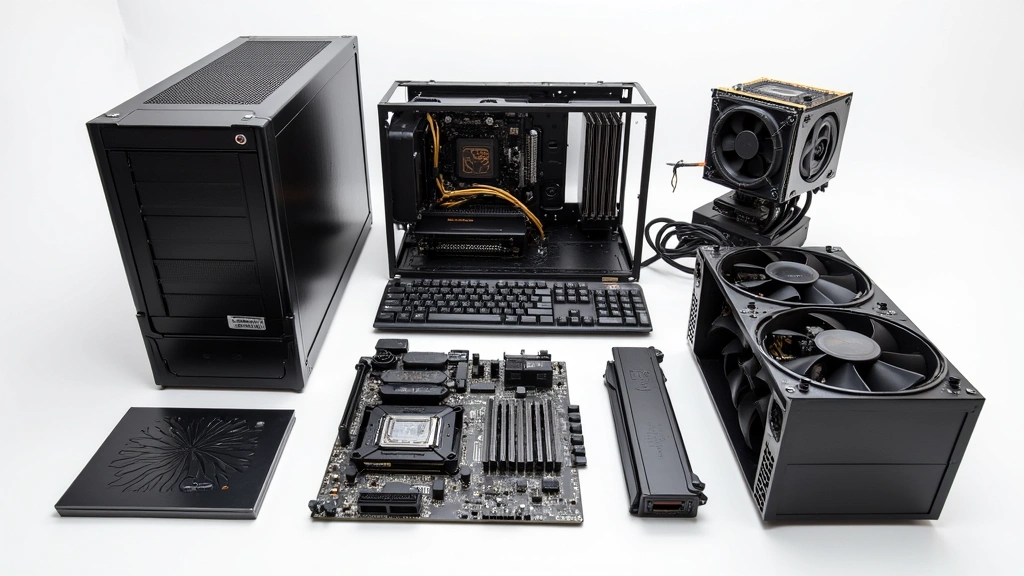
When considering how to build a personal computer optimized for modern AI-enhanced games, understanding these personalization systems becomes relevant. Gaming PCs benefit from hardware that supports machine learning acceleration, enabling these AI features to run smoothly client-side rather than requiring constant server communication.
Competitive Gaming and Anti-Cheat Systems
Competitive gaming relies on fair play enforcement, where AI-powered anti-cheat systems have become indispensable. Machine learning algorithms analyze player behavior patterns to detect aimbots, wallhacks, and other cheating methods with unprecedented accuracy. These systems learn from thousands of hours of legitimate and illegitimate gameplay, identifying suspicious patterns that human moderators might miss.
The sophistication of modern anti-cheat extends beyond simple detection. Behavioral analysis systems track aim accuracy, reaction times, movement patterns, and decision-making to identify players using assistance tools. Some systems employ machine learning to predict potential cheaters before they cause significant disruption, allowing proactive intervention. This represents a crucial development for esports, where tournament integrity depends on fair competition.
However, this technological arms race presents challenges. Cheat developers employ counter-AI tactics, creating tools specifically designed to evade machine learning detection. This dynamic tension drives continuous evolution in both anti-cheat and cheating technologies, with AI systems becoming increasingly sophisticated on both sides of the equation. The result is an ongoing technological competition where neither side can rest on static solutions.
Interestingly, best laptops for students 2025 increasingly feature hardware accelerators for machine learning, making client-side anti-cheat processing more viable. This shift distributes computational load from centralized servers to individual player devices, improving system responsiveness and enabling more sophisticated real-time detection.
The Future of AI in Gaming
Looking forward, AI’s role in gaming will likely expand dramatically. Emerging technologies like generative AI for real-time dialogue, emotion recognition systems that adapt gameplay based on player emotional state, and AI-generated narrative content represent the frontier. Some developers are experimenting with AI systems that generate entirely new game mechanics based on player feedback, creating truly adaptive gaming experiences that evolve over time.
The intersection of AI and cloud computing benefits for businesses extends to gaming, enabling server-side AI processing that would be impossible on local hardware. Cloud gaming platforms leverage powerful AI systems to enhance remote gameplay, stream optimized video feeds, and provide intelligent matchmaking for multiplayer experiences.
Physical gaming hardware will evolve alongside software. As discussed in our guide to how to upgrade laptop memory, gaming systems require increasing RAM capacity to support AI features. Similarly, GPUs will incorporate more specialized tensor cores optimized for machine learning workloads, becoming essential components for next-generation gaming.
Ethical considerations will become increasingly important as AI systems grow more sophisticated. Questions about player privacy, algorithmic bias in matchmaking, and the psychological impact of AI-driven personalization warrant serious consideration. The gaming industry must balance innovation with responsibility, ensuring that AI enhances rather than exploits player experiences.
Industry leaders are already investing heavily in these technologies. According to GamesIndustry.biz, major publishers are establishing dedicated AI research divisions, recruiting machine learning experts, and acquiring AI-focused studios. This consolidation of AI talent signals the technology’s strategic importance to gaming’s future.
The convergence of AI with other emerging technologies—virtual reality, augmented reality, haptic feedback, and brain-computer interfaces—promises experiences currently difficult to imagine. AI will orchestrate these diverse technologies, creating seamless, immersive worlds that respond intelligently to player actions and preferences.
For developers interested in leveraging these technologies, the TechPulse Hunter Blog offers ongoing coverage of gaming technology developments and practical implementation guides.
FAQ
How does AI improve game graphics?
AI enhances graphics through upscaling technologies like DLSS, which intelligently upscale lower-resolution images to higher resolutions using neural networks. Additionally, AI-powered denoising reduces the computational cost of ray tracing, enabling photorealistic lighting on less powerful hardware.
Can AI-controlled NPCs become unbeatable?
While AI NPCs can be extremely challenging, developers intentionally balance difficulty to maintain player engagement. Most games employ difficulty settings that adjust AI behavior, and some use dynamic difficulty systems that adapt AI intelligence based on player performance.
Does AI-driven personalization compromise player privacy?
Privacy concerns are legitimate. Responsible developers implement transparent data practices, provide privacy controls, and use on-device processing where possible. Players should review privacy policies and adjust settings according to their preferences.
How do AI anti-cheat systems work?
These systems analyze player behavior patterns, tracking metrics like aim accuracy, reaction times, and movement patterns. Machine learning models identify suspicious behavior consistent with cheating tools, flagging accounts for review or automatic action.
Will AI replace human game designers?
AI augments rather than replaces human creativity. While algorithms handle procedural generation and optimization, human designers remain essential for conceptualization, narrative crafting, and creative decision-making that defines memorable gaming experiences.
What hardware do I need for AI-enhanced games?
Modern gaming systems benefit from GPUs with tensor cores (NVIDIA RTX or AMD RDNA), adequate RAM for AI processing, and fast storage. However, most AI processing occurs server-side or is optimized for standard hardware, making cutting-edge systems unnecessary for most players.