Ancient Egyptian Tech: Modern Insights Revealed
When we think of ancient Egypt, we envision pyramids, hieroglyphics, and pharaohs—but the technological innovations that built this civilization are often overlooked. The ancient Egyptians were master engineers and inventors whose solutions to complex problems rival modern ingenuity. From precision construction techniques to water management systems, their technological achievements shaped human civilization and continue to inspire contemporary engineers and architects. Understanding these innovations provides fascinating insights into how problem-solving transcends time, much like how modern tech innovations build upon foundational principles.
Recent archaeological discoveries combined with advanced analytical tools have revealed the sophistication behind Egyptian construction, mathematics, and engineering. Scientists now employ cutting-edge technology to decode ancient methods, proving that innovation isn’t exclusive to the digital age. By examining these ancient systems through a modern lens, we can appreciate the universal principles of engineering and design that remain relevant today, whether you’re upgrading hardware components or constructing monumental structures.
This exploration of ancient Egyptian technology demonstrates how timeless engineering principles continue to influence contemporary design, construction, and problem-solving methodologies across industries worldwide.
Precision Construction and the Great Pyramids
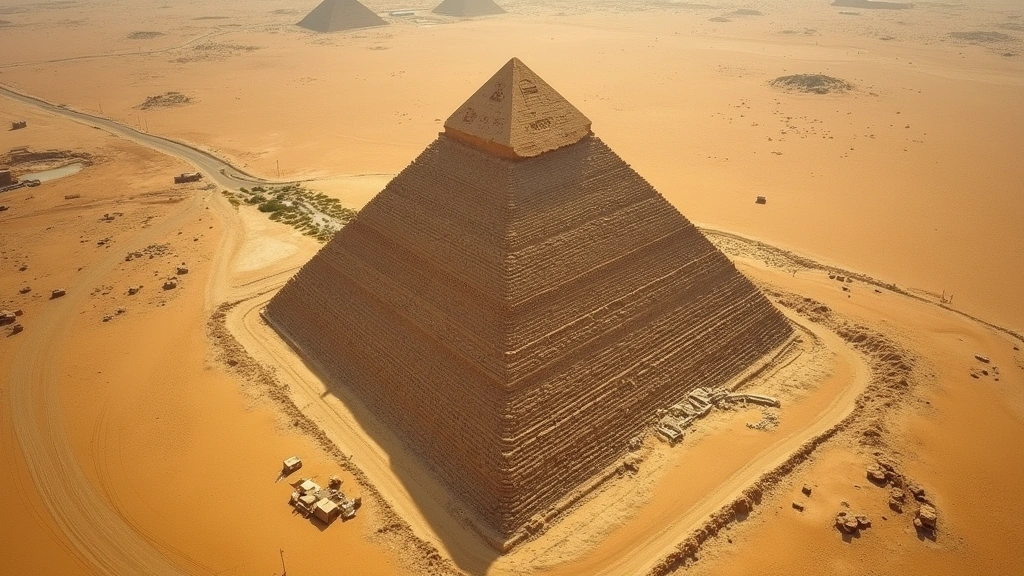
The Great Pyramid of Khufu stands as one of humanity’s most impressive technological achievements, constructed with a precision that astounds modern engineers. Built around 2560 BCE, this monument measures 146.5 meters in height and originally covered 5.3 hectares of ground. The precision involved in its construction is remarkable—the base is level to within 2.1 centimeters, and the sides align almost perfectly to cardinal directions.
Ancient Egyptians achieved this accuracy without modern surveying equipment, employing sophisticated knowledge of geometry and astronomy. They used tools such as plumb bobs, water levels, and measuring ropes to ensure precision. The construction process involved quarrying approximately 2.3 million limestone blocks, each weighing between 2.5 to 15 tons, and moving them into position with remarkable efficiency.
Recent studies using advanced computational analysis have revealed that Egyptian builders understood load distribution and structural integrity principles centuries before formal engineering science emerged. The internal ramp system, recently discovered through muon imaging technology, demonstrates their sophisticated understanding of mechanical advantage and spatial planning. This mirrors modern optimization techniques where engineers calculate the most efficient approaches to complex problems—similar to how professionals optimize computer system performance by identifying inefficiencies.
The precision measurements used in pyramid construction involved understanding proportions and mathematical ratios. Egyptians employed the seked system, a sophisticated angle measurement technique that allowed architects to maintain consistent slopes across massive structures. This mathematical framework enabled consistency across multiple building projects and influenced architectural standards throughout the ancient world.

Water Management and Irrigation Systems
Egypt’s survival depended entirely on the Nile River, and the Egyptians developed extraordinary water management systems to harness and distribute its waters. The nilometer, an ancient device for measuring water levels, allowed officials to predict flooding patterns and plan agricultural activities accordingly. These structures, carved into stone and featuring graduated scales, provided critical data for managing resources and taxation.
The Nilometer represented an early form of data collection and analysis—conceptually similar to how modern sensors gather environmental information for predictive modeling. The most famous example, located on Roda Island in Cairo, dates back to the 8th century BCE and remains functional today, demonstrating the durability and effectiveness of Egyptian engineering principles.
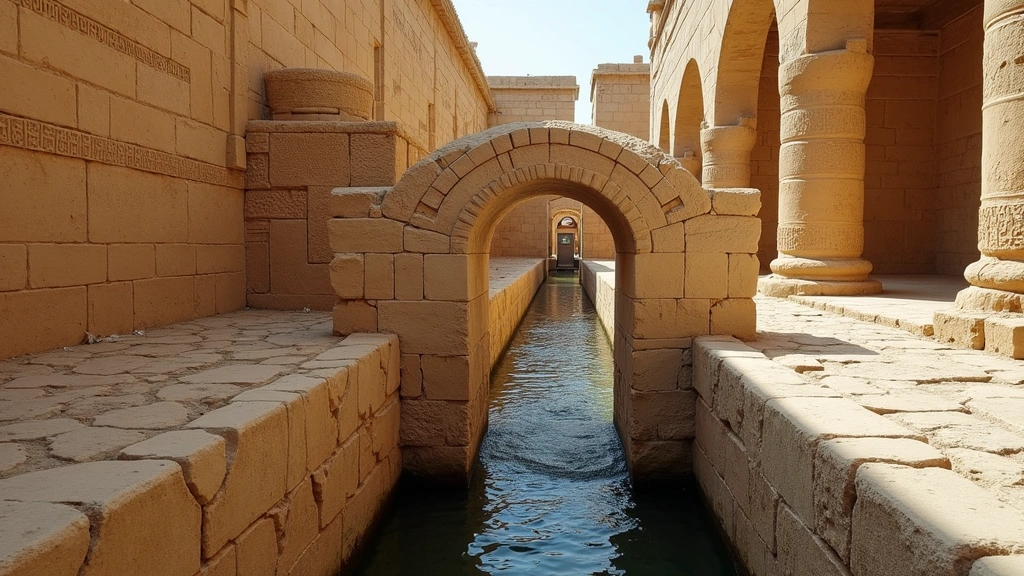
Beyond measurement, Egyptians constructed elaborate canal systems, dikes, and reservoirs to distribute water across agricultural lands. The Fayum region’s irrigation system, developed during the Middle Kingdom, transformed desert areas into productive farmland through sophisticated hydraulic engineering. Water locks and sluice gates controlled water flow with precision, allowing farmers to irrigate different fields at different times—an early form of resource scheduling and management.
These systems employed understanding of gravity, fluid dynamics, and hydraulic pressure centuries before these sciences were formally codified. The efficiency of Egyptian irrigation systems influenced agricultural practices throughout the Mediterranean and Near East, establishing standards that persisted for millennia.
Mathematical Innovations and Geometry
Egyptian mathematics provided the foundation for their technological achievements. The Rhind Mathematical Papyrus and Moscow Mathematical Papyrus reveal sophisticated understanding of algebra, geometry, and practical arithmetic. These documents demonstrate that Egyptian mathematicians solved complex problems involving fractions, areas, volumes, and proportions.
The Egyptians developed a base-10 numerical system and understood the concept of zero, though they represented it differently than modern notation. They calculated areas of triangles, circles, and irregular shapes with remarkable accuracy. For instance, their approximation of pi (approximately 3.16) was sufficiently accurate for architectural and construction purposes.
Their geometric knowledge extended to understanding three-dimensional spatial relationships, essential for designing pyramids, temples, and complex architectural structures. The golden ratio, evident in many Egyptian monuments, suggests understanding of proportional harmony and aesthetic principles that influenced design for centuries afterward.
Egyptian scribes developed systematic methods for teaching mathematics, creating curricula that trained engineers and administrators. This educational approach—breaking complex problems into manageable components and teaching systematic problem-solving—parallels modern pedagogical approaches in educational technology platforms.
Architectural Engineering Marvels
Beyond pyramids, Egyptian architecture showcases extraordinary engineering sophistication. The Temple of Karnak, spanning over three centuries of construction, demonstrates evolving architectural techniques and structural innovations. Its massive columns, some exceeding 20 meters in height, required sophisticated understanding of load-bearing principles and material properties.
Egyptian architects developed standardized building components and modular design principles. Columns followed specific proportions and were manufactured with consistency, allowing for efficient assembly and structural reliability. This prefabrication concept predates modern industrial manufacturing by thousands of years.
The Bent Pyramid at Dahshur reveals experimental construction techniques, showing how Egyptians tested and refined their methods. The change in slope angle mid-structure indicates builders adjusted their approach based on structural observations—an early form of iterative design and quality control. This adaptive engineering approach mirrors modern development methodologies where systems are continuously refined based on performance data.
Temple design incorporated sophisticated understanding of light, shadow, and spatial experience. The alignment of temples with celestial bodies demonstrates astronomical knowledge integrated into architectural planning. These structures served functional, ceremonial, and symbolic purposes while showcasing technical mastery.
Medical and Scientific Instruments
Egyptian medical knowledge, documented in papyri such as the Edwin Smith Papyrus, reveals sophisticated surgical instruments and techniques. Egyptians performed complex surgeries including cataract removal, bone setting, and wound treatment using specialized tools made from bronze, stone, and bone.
The development of surgical instruments required understanding of metallurgy, material properties, and functional design. Bronze tools were precisely crafted to specific shapes for different procedures, demonstrating knowledge of ergonomics and task-specific tool design. This approach to specialized instrument design continues in modern medical technology where tools are optimized for specific applications.
Egyptian physicians understood the importance of hygiene, documented treatments for infections, and developed pharmaceutical preparations from plant materials. Mummification practices, while ceremonial, provided detailed knowledge of human anatomy and preservation techniques. The chemical processes involved in mummification required understanding of natural substances and their properties.
Egyptians invented the water clock (clepsydra), a device that measured time with remarkable accuracy. These instruments regulated water flow through precise apertures, demonstrating understanding of fluid dynamics and mechanical precision. The consistent timekeeping provided by water clocks influenced timekeeping technology for centuries.
Transportation and Maritime Technology
Egyptian shipbuilding represents a significant technological achievement. Evidence from tomb paintings, models, and actual vessel remains shows sophisticated understanding of naval architecture. Egyptian ships featured advanced hull designs optimized for navigating the Nile and Mediterranean waters.
The Khufu ship, discovered in 1954 near the Great Pyramid, demonstrates remarkable construction techniques. This 43-meter vessel was built without nails, using wooden pegs and rope to join planks—a technique that provided flexibility and durability in wooden structures. The ship’s design incorporated sophisticated joinery and weight distribution principles.
Egyptian maritime technology enabled extensive trade networks connecting Egypt with Nubia, the Levant, and beyond. Navigation techniques, including celestial observation and coastal landmark recognition, allowed Egyptian sailors to undertake long-distance voyages. These navigation methods represented early systematic approaches to spatial orientation and route planning.
Transportation infrastructure extended to roads and wheeled vehicles. The introduction of the chariot during the New Kingdom represented significant technological advancement in military and transportation technology. Wheel design, axle engineering, and suspension systems show sophisticated understanding of mechanical principles.
Agricultural Tools and Techniques
Egyptian agriculture depended on specialized tools and techniques adapted to their environment. The shaduf, a lever-based water-lifting device, allowed farmers to raise water from the Nile to irrigated fields with minimal effort. This simple machine demonstrates understanding of mechanical advantage and remains in use in parts of the world today.
Plows, hoes, and sickles were manufactured with specific designs optimized for Egyptian soil conditions and crops. Farmers developed crop rotation systems and understood soil fertility management. Grain storage facilities were engineered to preserve harvests for extended periods, protecting against famine.
Agricultural administration required systematic record-keeping and forecasting. Egyptians maintained detailed records of harvests, water levels, and resource allocation. This data-driven approach to resource management parallels modern system optimization and maintenance practices where monitoring and analysis inform operational decisions.
The integration of agricultural knowledge with mathematical and engineering principles created sustainable food production systems that sustained one of history’s greatest civilizations for over three millennia.
FAQ
How did ancient Egyptians achieve such precision in pyramid construction without modern tools?
Egyptians employed sophisticated techniques including water levels, plumb bobs, measuring ropes, and astronomical observation. They understood geometry and proportional systems thoroughly, allowing them to maintain precision across massive projects. Recent research using modern technology has revealed sophisticated internal ramp systems and load-distribution knowledge that contributed to their accuracy.
What mathematical systems did ancient Egyptians use?
Egyptians developed a base-10 numerical system and understood fractions, algebra, and geometry. The Rhind Mathematical Papyrus documents their problem-solving methods for calculating areas, volumes, and proportions. Their approximation of pi and understanding of geometric relationships were sufficiently accurate for their engineering applications.
How did Egyptian water management systems work?
Egyptians constructed canal systems, dikes, and reservoirs controlled by sluice gates and water locks. The nilometer measured water levels to predict flooding and guide agricultural planning. These hydraulic systems distributed Nile water across agricultural lands with sophisticated control mechanisms.
What surgical instruments did ancient Egyptians use?
Egyptian surgeons used bronze and stone instruments including scalpels, saws, forceps, and probes. These specialized tools were precisely crafted for specific procedures. The Edwin Smith Papyrus documents surgical techniques and instruments used for complex operations.
How did ancient Egyptian shipbuilding influence maritime technology?
Egyptian ships featured advanced hull designs and sophisticated joinery techniques using wooden pegs and rope instead of nails. These construction methods provided flexibility and durability. Egyptian maritime technology enabled extensive trade networks and long-distance voyages using celestial navigation techniques.
What is the significance of the shaduf in agricultural technology?
The shaduf is a lever-based water-lifting device that demonstrates understanding of mechanical advantage. This simple machine allowed farmers to raise water from rivers to fields with minimal effort, making irrigation more efficient and sustainable. It remains in use in some regions today.
How did Egyptians preserve grain and manage food storage?
Egyptians engineered specialized grain storage facilities designed to protect harvests from pests, moisture, and spoilage. These structures incorporated ventilation and design principles that maintained grain quality over extended periods. Systematic record-keeping tracked inventory and resource allocation.
What can modern engineers learn from ancient Egyptian technology?
Ancient Egyptian innovations demonstrate timeless engineering principles including precision, efficiency, systematic problem-solving, and understanding of material properties. Their approach to resource management, iterative design improvement, and integration of multiple disciplines offers valuable insights for contemporary engineering challenges.


