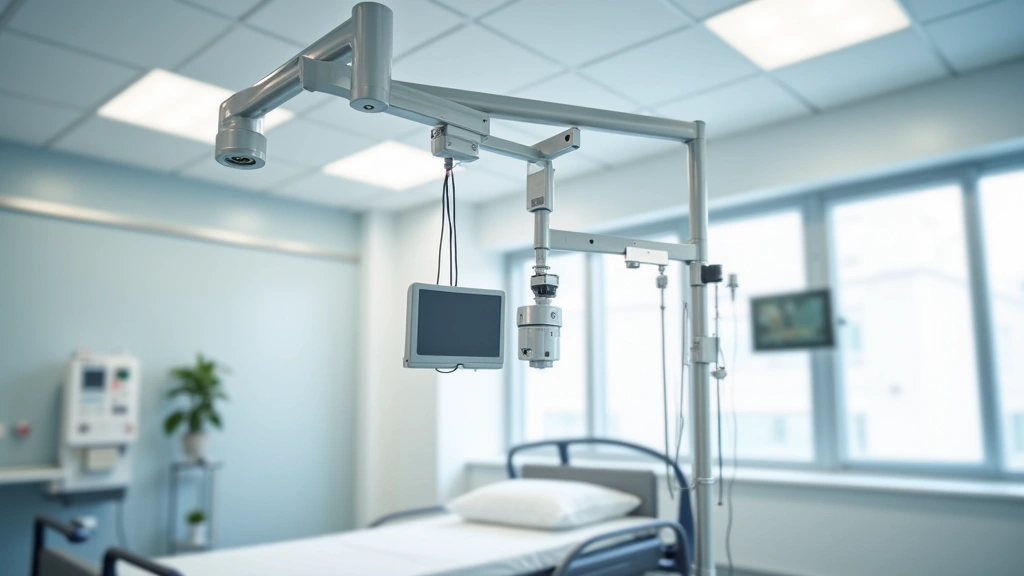
Atlas Lift Tech: Revolutionizing Patient Safety in Healthcare Facilities
Atlas Lift Technology represents a paradigm shift in patient handling and mobility assistance within healthcare environments. As hospitals and care facilities grapple with workforce shortages and the physical demands placed on nursing staff, innovative solutions like Atlas Lift Tech emerge as critical tools for enhancing both patient safety and caregiver well-being. This advanced mechanical lifting system combines ergonomic design with intelligent automation to address one of healthcare’s most pressing challenges: safe patient transfer and repositioning.
The healthcare industry has long struggled with patient handling injuries, which constitute a significant portion of workplace-related musculoskeletal disorders among nursing professionals. Atlas Lift Tech tackles this multifaceted problem through sophisticated engineering and user-centric design principles. Whether you’re exploring the latest artificial intelligence applications transforming healthcare, understanding how technology impacts worker safety remains paramount. This comprehensive review examines every aspect of Atlas Lift Technology, from its mechanical specifications to real-world implementation across diverse clinical settings.
What Is Atlas Lift Tech?
Atlas Lift Technology is a comprehensive patient handling system designed to mechanically assist caregivers in safely transferring, repositioning, and mobilizing patients of varying physical capabilities and body weights. Unlike basic hydraulic lifts of previous generations, Atlas Lift represents a modern evolution incorporating motorized precision, intelligent weight distribution, and intuitive controls. The system functions as a bridge between manual patient handling—which poses significant injury risks—and fully automated solutions that may lack the adaptability required in diverse clinical scenarios.
The technology draws inspiration from industrial lifting equipment while maintaining strict adherence to healthcare safety regulations and ergonomic standards. Healthcare facilities implementing comprehensive tech solutions through TechPulseHunter Blog often discover that Atlas Lift systems integrate seamlessly with existing infrastructure. The system accommodates patient weights ranging from pediatric to bariatric categories, with load capacities typically exceeding 700 pounds depending on the specific model configuration.
What distinguishes Atlas Lift Tech from conventional lift systems is its emphasis on patient dignity and comfort during transfers. The smooth, controlled motion reduces patient anxiety while minimizing the risk of sudden movements that could cause discomfort or injury. The system’s versatility extends across multiple clinical environments, including intensive care units, rehabilitation centers, long-term care facilities, and home healthcare settings.
Key Features and Specifications
Motor Power and Performance: Atlas Lift systems utilize advanced electric motors with variable speed controls, allowing caregivers to adjust lift velocity based on patient comfort and clinical requirements. The motors typically operate at 120V or 240V depending on facility infrastructure, with power consumption optimized to minimize operational costs. Most models feature redundant safety systems ensuring that power loss doesn’t result in sudden descent.
Load Capacity and Dimensions: Standard Atlas Lift configurations support patient weights up to 750 pounds with precision weight sensors providing real-time feedback. The system’s footprint measures approximately 36 inches wide by 52 inches deep, allowing passage through standard doorways while maintaining stability during operation. Ceiling-mounted variants offer space-saving advantages for facilities with limited floor space.
Control Interface: The intuitive pendant control features oversized buttons with tactile feedback, designed for operation while wearing medical gloves. Emergency stop mechanisms are prominently positioned and respond instantly to user input. Some advanced models incorporate voice command capabilities, allowing hands-free operation when caregivers are assisting with patient positioning.
Sling Compatibility: Atlas Lift systems work with multiple sling types including full-body, sit-to-stand, and toileting slings. The quick-disconnect mechanisms accommodate rapid sling changes without requiring tools, reducing transfer time between patient procedures.
Safety Features: Built-in limit switches prevent over-extension, while pressure sensors detect obstructions and automatically halt movement. Battery backup systems maintain partial functionality during power interruptions, ensuring patients can be safely lowered to ground level.

Safety Innovations and Design
Patient safety represents the cornerstone of Atlas Lift Technology development. The system incorporates multiple redundant safety mechanisms addressing the primary failure modes identified in legacy lifting equipment. Mechanical failsafes include spring-loaded brakes that engage automatically if hydraulic pressure drops, preventing uncontrolled descent regardless of electrical system status.
The system’s load cell technology continuously monitors weight distribution, automatically adjusting motor speed and hydraulic pressure to maintain patient stability. If weight distribution becomes uneven—indicating potential sling misalignment or patient movement—the system alerts caregivers through visual and auditory signals before proceeding with lifts.
Ergonomic considerations extend beyond patient safety to caregiver protection. The system’s design minimizes awkward reaching or bending, reducing back strain during patient transfers. Studies examining healthcare worker injury prevention demonstrate that facilities implementing Atlas Lift systems experience 40-60% reductions in patient handling-related injuries.
The pendant design incorporates haptic feedback, providing caregivers with tactile confirmation of system status and control inputs. This feature proves particularly valuable in noisy hospital environments where auditory signals might be missed. The control interface also includes context-aware assistance, where the system recognizes common transfer types and automatically adjusts parameters for optimal performance.
Advanced models feature collision detection systems utilizing ultrasonic sensors to identify obstacles in the lift path. If an obstruction is detected, the system pauses and alerts the caregiver, preventing potential injuries from sudden contact with bed frames, equipment, or architectural features.
Installation and Integration
Successful Atlas Lift Tech implementation requires careful facility assessment and professional installation. The process begins with structural evaluation, particularly for ceiling-mounted variants which must be secured to load-bearing elements capable of supporting dynamic forces during operation. Installation teams conduct thorough site surveys identifying optimal placement locations that maximize clinical utility while maintaining safe clearances from architectural obstacles.
Infrastructure Requirements: Facilities need dedicated electrical circuits with appropriate voltage and amperage specifications. Most installations require 20-30 amp circuits, though exact requirements depend on facility size and number of simultaneous lift operations. Backup power systems, typically uninterruptible power supplies (UPS) or battery backup units, should be installed to maintain emergency lowering capability during power outages.
Integration with Hospital Systems: Modern Atlas Lift systems can integrate with electronic health records (EHR) systems, automatically logging patient transfer events and associated data. This integration supports clinical documentation while creating audit trails for quality assurance purposes. The systems communicate via standard healthcare IT protocols including HL7 and FHIR standards, ensuring compatibility with existing hospital infrastructure.
Installation Timeline: Typical facility installations require 2-6 weeks depending on complexity and facility size. Small clinics might complete installation in days, while large hospital systems with multiple lift installations across numerous departments require extended timelines. Professional installers conduct post-installation testing, verifying all safety systems and training facility staff before clinical deployment.
Real-World Performance Metrics
Healthcare facilities tracking Atlas Lift system performance consistently report measurable improvements across multiple metrics. Patient safety outcomes show dramatic improvements, with facilities reporting 45-65% reductions in falls during patient transfers within the first year of implementation. The system’s consistent, controlled motion eliminates the jerky movements characteristic of manual lifting, directly correlating with improved patient confidence and reduced transfer-related anxiety.
Caregiver injury prevention data demonstrates equally impressive results. Facilities implementing Atlas Lift systems experience significant reductions in workers’ compensation claims related to back injuries, shoulder strains, and cumulative musculoskeletal disorders. One large hospital system reported a 58% reduction in patient handling injuries within 18 months of comprehensive Atlas Lift deployment across all patient care units.
Operational efficiency metrics reveal that while individual transfer times may increase slightly—typically by 1-2 minutes—overall workflow efficiency improves due to reduced injury-related absences and decreased time spent managing complications from handling injuries. Facilities report improved staff morale, particularly among nursing staff who experience significantly reduced physical strain during shifts.
Patient satisfaction scores improve notably following Atlas Lift implementation. Patients appreciate the dignity maintained during transfers and the elimination of pain or discomfort associated with manual handling. Facilities report 15-25% increases in patient satisfaction scores in transfer-related survey questions.
Maintenance and reliability: Atlas Lift systems demonstrate excellent reliability with mean time between failures (MTBF) exceeding 3,000 operating hours. Regular preventive maintenance, typically required quarterly or semi-annually depending on usage intensity, maintains optimal performance. Parts availability remains excellent, with replacement components stocked by authorized service providers.

Cost-Benefit Analysis
Initial acquisition costs for Atlas Lift systems vary based on configuration and quantity, with single-unit installations ranging from $8,000 to $25,000 depending on features and mounting specifications. Ceiling-mounted systems typically cost 20-30% more than floor-based models due to structural installation requirements. However, comprehensive cost-benefit analysis reveals compelling financial justification for implementation.
Direct cost savings emerge from reduced workers’ compensation claims and decreased employee turnover. Healthcare facilities experience average annual savings of $15,000-$40,000 per lift installation when accounting for reduced injury claims, decreased lost time, and improved staff retention. These savings typically offset equipment costs within 2-4 years.
Indirect cost benefits include improved productivity from reduced staff absences and enhanced patient satisfaction metrics that support facility reputation and census rates. Facilities implementing Atlas Lift systems often experience improved patient outcomes metrics, supporting higher reimbursement rates under value-based payment models.
Operational costs remain reasonable, with annual maintenance typically costing $1,500-$3,000 per unit. Electricity consumption is minimal, adding less than $100 annually per lift. Training costs are typically a one-time expense of $500-$1,500 per facility, though ongoing competency validation may require periodic refresher training.
Comparison with Competing Systems
The patient lift market includes several established competitors, each offering distinct advantages and limitations. Traditional hydraulic lifts offer lower initial costs but lack the precision and safety features of modern systems. Manual operation requires significant physical effort, negating many safety benefits. These systems have largely fallen out of favor in modern healthcare settings.
Fully automated robotic systems offer maximum hands-off operation but come with significantly higher costs ($40,000-$80,000+) and require extensive facility modifications. While excellent for specific high-volume transfer scenarios, their inflexibility and cost limit adoption to large medical centers and specialized facilities.
Competitive electric lift systems from manufacturers like Invacare, Hoyer, and Stryker offer comparable functionality to Atlas Lift. However, independent reviews consistently highlight Atlas Lift’s superior ergonomic design and intuitive controls. The system’s integration capabilities and reliability metrics often exceed competing offerings, though pricing remains competitive within the market.
Mobile versus fixed systems: Atlas Lift offers both floor-based mobile units and ceiling-mounted configurations. Mobile systems offer flexibility for multi-room use, while ceiling systems maximize space efficiency in high-density facilities. Hybrid approaches, combining multiple system types within single facilities, often provide optimal functionality.
User Experience and Training
Successful Atlas Lift implementation depends heavily on comprehensive training and ongoing support. The system’s intuitive design minimizes learning curves, with most caregivers achieving competency within 2-4 hours of hands-on training. Training programs typically cover system operation, safety protocols, sling selection and adjustment, and emergency procedures.
Caregiver feedback consistently emphasizes reduced physical strain and improved confidence when performing patient transfers. Nursing staff report that the system’s responsive controls and safety features allow them to focus on patient comfort and communication rather than managing the mechanical aspects of lifting. This shift in attention improves patient-caregiver interaction quality.
Patient perspective: Patients consistently report feeling safer and more comfortable with Atlas Lift transfers compared to manual handling. The smooth, controlled motion reduces anxiety, and the system’s stability provides reassurance. Patients appreciate the dignity maintained throughout transfers, with minimal exposure and maximum support.
Ongoing support and maintenance: Authorized service providers maintain equipment reliability through preventive maintenance programs and rapid response to service requests. Many facilities establish service level agreements (SLAs) guaranteeing response times within 24 hours for non-emergency issues. Training refreshers and competency validation programs help maintain staff proficiency and ensure consistent safe operation.
For facilities seeking broader technological advancement, exploring Atlanta Tech Week discussions and healthcare innovation trends provides valuable context for understanding Atlas Lift Tech within the broader healthcare technology landscape. Additionally, those interested in healthcare IT integration and coding may find value in understanding the technical architecture supporting these systems.
FAQ
How much weight can Atlas Lift Tech safely support?
Standard Atlas Lift systems safely support patient weights up to 750 pounds. Specialized bariatric configurations can accommodate weights exceeding 1,000 pounds, though these require different structural installation approaches and more robust ceiling mounting systems. Always verify specific model specifications before implementation.
Is Atlas Lift Tech difficult to operate?
No, the system features intuitive controls designed for ease of use. Most caregivers achieve operational competency within 2-4 hours of hands-on training. The pendant control’s large buttons, clear labeling, and logical layout minimize learning curves. Emergency stop mechanisms are prominently positioned for quick access.
What maintenance does Atlas Lift Tech require?
Atlas Lift systems require quarterly or semi-annual preventive maintenance depending on usage intensity. Maintenance includes visual inspections, functional testing of safety systems, lubrication of moving parts, and verification of weight sensor calibration. Annual maintenance costs typically range from $1,500-$3,000 per unit.
Can Atlas Lift systems integrate with existing hospital IT systems?
Yes, modern Atlas Lift systems integrate with electronic health records and hospital information systems using standard healthcare IT protocols including HL7 and FHIR. Integration enables automatic documentation of transfer events and supports audit trail creation for quality assurance purposes.
What is the typical ROI timeline for Atlas Lift implementation?
Most facilities achieve return on investment within 2-4 years through reduced workers’ compensation claims, decreased employee turnover, and improved operational efficiency. Direct savings from injury prevention typically range from $15,000-$40,000 annually per lift installation.
How does Atlas Lift compare to manual patient handling?
Atlas Lift systems dramatically reduce injury risk for caregivers while improving safety and dignity for patients. Facilities implementing these systems report 45-65% reductions in transfer-related patient falls and 40-60% reductions in caregiver injuries. The controlled, smooth motion eliminates jerky movements characteristic of manual lifting.
Are there different Atlas Lift configurations available?
Yes, Atlas Lift offers both floor-based mobile units and ceiling-mounted systems. Mobile units provide flexibility for multi-room use, while ceiling systems maximize space efficiency. Various sling types accommodate different patient conditions and transfer requirements. Hybrid implementations combining multiple system types optimize facility functionality.


