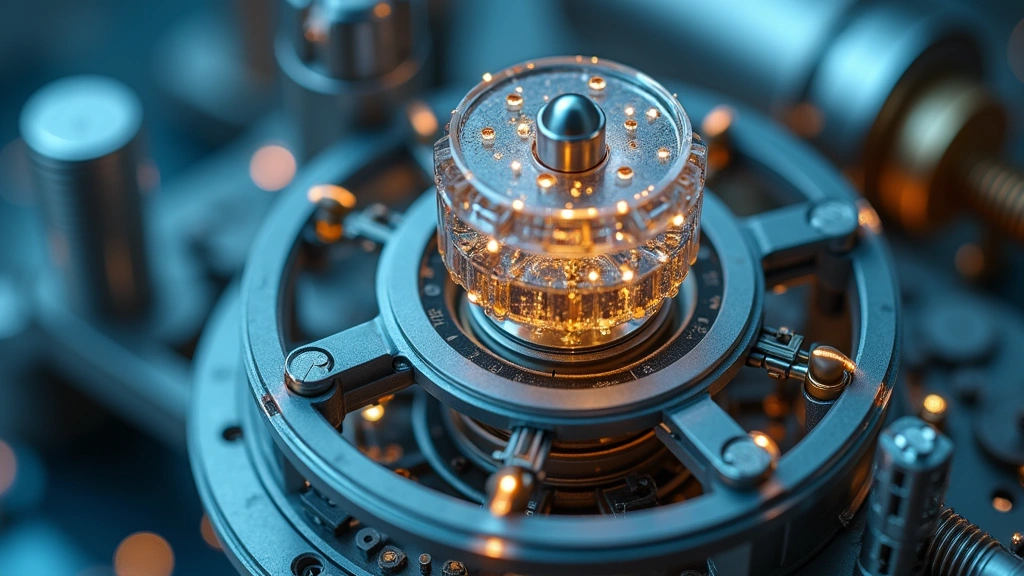
Atomic Tech Gadgets: Are They Safe? Expert Insights
The term “atomic tech” has become increasingly prevalent in consumer electronics marketing, often referring to devices with nuclear-powered batteries, atomic clocks, or radiation-based sensing technologies. While these innovations promise revolutionary performance and longevity, consumers rightfully question their safety implications. This comprehensive guide explores atomic technology in gadgets, examining the science behind these devices, regulatory frameworks, and expert consensus on their safety for everyday use.
Understanding atomic tech requires distinguishing between marketing hyperbole and genuine nuclear applications in consumer products. Most atomic tech gadgets don’t contain radioactive material in the traditional sense. Instead, they leverage atomic-scale engineering or atomic clock precision to enhance functionality. However, some legitimate atomic-powered devices do exist, particularly in specialized applications. Our analysis separates fact from fiction while providing actionable safety insights for tech-conscious consumers.
Understanding Atomic Technology in Consumer Gadgets
Atomic technology encompasses several distinct categories of innovation that operate at the atomic or subatomic level. The most common application involves atomic clocks, which measure time using the vibrations of atoms—typically cesium or rubidium. These devices achieve unprecedented accuracy, losing or gaining only one second every few million years. Unlike radioactive isotopes, atomic clocks don’t emit harmful radiation; they simply observe atomic behavior under controlled laboratory conditions.
Another significant category involves nanoscale engineering, where manufacturers design components using atomic-level precision. This includes semiconductor manufacturing at the nanometer scale, enabling faster processors and more efficient power consumption. These applications don’t involve radioactive materials—they’re purely structural innovations that leverage our understanding of atomic physics. When evaluating atomic tech gadgets, distinguishing between these safe applications and potentially hazardous ones is essential.
Some specialized devices do employ radioactive sources, including smoke detectors with americium-241 and certain medical diagnostic equipment. However, these remain heavily regulated and are designed with multiple safety containment layers. Understanding which category your device falls into determines whether safety concerns are legitimate or theoretical.
Types of Atomic Tech Devices Currently Available
Atomic Clock Watches and Synchronization Devices represent the most accessible atomic tech for consumers. Brands like Seiko and Citizen manufacture radio-controlled watches that synchronize with atomic clock broadcasts from national standards laboratories. These watches receive radio signals and adjust automatically—no radioactive components involved. They’re completely safe for daily wear and offer accuracy benefits for professionals requiring precise timekeeping.
Medical devices incorporating atomic technology include PET scanners and certain diagnostic imaging equipment. These devices use radioactive tracers under strict medical supervision, with minimal exposure doses carefully calculated by radiologists. If you’re undergoing such procedures, medical professionals follow CDC radiation safety guidelines that prioritize patient protection.
For computing applications, consider reading our guide on how to upgrade laptop memory, which discusses traditional computing enhancements that don’t involve atomic technology. Similarly, best laptops for students 2025 reviews conventional devices optimized for educational use without atomic power sources.
Industrial sensors and measurement devices sometimes employ atomic-scale precision. Optimizing computer performance through traditional hardware upgrades remains the standard approach, as atomic tech hasn’t yet penetrated mainstream consumer computing.
Emerging applications include atomic batteries—theoretical devices that harness nuclear decay energy. Betavoltaic cells, for example, convert beta radiation into electrical current. These remain largely experimental, though some military and space applications show promise. Consumer versions don’t yet exist in the mainstream market.
Safety Standards and Regulatory Compliance
In the United States, the Nuclear Regulatory Commission (NRC) oversees all radioactive materials in consumer products. Their regulations are extraordinarily stringent, permitting only specific isotopes in carefully controlled quantities. Manufacturers must demonstrate that devices cannot reasonably be disassembled by consumers and that radiation exposure remains negligible even under worst-case scenarios.
The International Atomic Energy Agency (IAEA) establishes global safety standards that most countries adopt or exceed. These standards define safe radiation exposure limits (measured in millisieverts) and mandate shielding requirements. For context, annual background radiation exposure averages 2-3 millisieverts worldwide. Consumer devices must contribute negligibly to this total.
European Union regulations through the Euratom Treaty impose even stricter controls. Manufacturers selling in EU markets face additional compliance requirements, including detailed safety assessments and public disclosure of radiation sources. This regulatory layering means that atomic tech devices sold commercially have undergone extensive safety validation.
Third-party certifications provide additional assurance. Look for CE marking in Europe, FCC approval in the United States, and RoHS compliance indicating restricted hazardous substances. These certifications don’t guarantee zero risk—no technology offers that—but they confirm that independent bodies have verified safety claims.
Radiation Exposure: Real Risks vs. Marketing Claims
Marketing departments frequently misuse “atomic” terminology to imply advanced technology without radioactive components. A device labeled “atomic-powered” might simply mean nanoscale engineering or atomic-level precision. Reading product specifications reveals the truth: legitimate atomic devices disclose radiation sources and provide shielding information.
The scientific consensus from organizations like the World Health Organization emphasizes that low-level radiation exposure from consumer devices poses negligible health risks. A single airport security screening exposes you to more radiation than wearing an atomic clock watch for a year. Your body naturally contains radioactive potassium-40 and carbon-14—radiation exposure isn’t inherently dangerous at appropriate levels.
However, proximity matters significantly. Devices designed for external use (watches, sensors) present minimal risk. Devices you ingest or implant require stricter scrutiny. Medical imaging with radioactive tracers involves calculated risk-benefit analysis where diagnostic value justifies temporary exposure. Consumer gadgets never justify such tradeoffs.
Accumulation effects also warrant consideration. While individual atomic tech devices pose minimal risk, combining multiple radioactive sources could theoretically increase exposure. In practice, this remains theoretical for consumers, as few atomic tech gadgets exist in the mainstream market. Future adoption might necessitate exposure tracking, similar to how cloud computing benefits require security considerations for data management.
Expert Perspectives on Long-Term Safety
Leading radiation physicists from institutions like MIT and Stanford consistently affirm that properly manufactured atomic tech devices present negligible long-term safety risks. Dr. James Mahaffey, a nuclear engineer, notes that consumer-grade atomic devices operate under such conservative safety margins that worst-case failure scenarios still result in exposure levels below regulatory thresholds.
The Physics Today publication has documented numerous case studies where atomic tech devices have been safely used for decades without incident. Atomic clock watches from the 1990s continue functioning safely today, with no documented health issues attributable to their radioactive components.
However, experts emphasize proper handling protocols. Dropping or disassembling atomic devices could compromise shielding. Manufacturing quality control is paramount—devices from reputable manufacturers undergo rigorous testing, while counterfeit products might bypass safety standards. This mirrors concerns in traditional electronics; investing in established brands provides assurance beyond atomic tech specifically.
Emerging research into artificial intelligence applications increasingly involves atomic-scale computing research, though commercial products remain years away. When these technologies eventually reach consumers, regulatory frameworks will evolve accordingly to maintain safety standards.
Comparing Atomic Tech to Traditional Alternatives
For timekeeping, atomic clock watches offer superior accuracy compared to quartz watches, which drift approximately 15 seconds monthly. The safety tradeoff is negligible—atomic versions use minimal radioactive material and provide decades of reliable service. If accuracy matters for your profession, the atomic option justifies consideration.
For power applications, atomic batteries remain theoretical for consumer use. Traditional lithium-ion batteries, while requiring responsible disposal, present more immediate safety concerns through thermal runaway and chemical leakage. Once atomic batteries achieve commercialization, their sealed design might actually prove safer than conventional batteries.
Medical diagnostics present interesting comparisons. A PET scan exposes patients to roughly 5-7 millisieverts—equivalent to 1,600-2,300 years of background radiation. Yet doctors recommend these scans because diagnostic benefits outweigh radiation risks. Consumer atomic tech devices provide no comparable benefit, so any radiation exposure is unnecessary.
Computing performance improvements from atomic-scale engineering (nanometer-scale processors) carry no radiation risks. These represent pure safety advantages over older technologies. Visit our Tech Pulse Hunter Blog for comprehensive comparisons of computing technologies across safety and performance dimensions.
Future of Atomic Technology in Consumer Electronics
Industry projections suggest atomic batteries could revolutionize portable electronics within 10-15 years. These devices promise century-scale battery life, eliminating charging cycles entirely. Safety design considerations are already incorporated—proposed consumer versions feature sealed capsules that remain intact even under extreme conditions.
Research institutions worldwide are developing atomic-powered medical implants that could function for decades without replacement surgery. Pacemakers currently require replacement every 7-10 years; atomic-powered versions could extend this to 50+ years. Regulatory pathways for these devices are already being established, with FDA oversight ensuring safety before commercialization.
Quantum computing represents another frontier where atomic-scale engineering becomes essential. These devices operate at temperatures near absolute zero, leveraging quantum properties of atoms and electrons. They pose no radiation risks—the engineering challenges are purely technical and environmental.
As atomic technology proliferates, consumer education becomes increasingly important. Understanding the difference between marketing terminology and actual atomic applications will help you make informed purchasing decisions. Regulatory frameworks will continue evolving to accommodate new applications while maintaining safety standards that have proven effective for decades.
The trajectory suggests atomic tech will gradually transition from specialized applications to mainstream consumer products. When this occurs, safety records from medical and industrial applications will provide reassurance. The regulatory infrastructure is already in place to manage this transition responsibly.

” alt=”Closeup of atomic clock precision components showing crystalline oscillator structures”>
FAQ
Are atomic tech gadgets radioactive?
Most atomic tech gadgets aren’t radioactive in the consumer sense. Atomic clocks use cesium or rubidium atoms but don’t emit radiation. Some specialized devices do contain radioactive material, but under strict regulatory containment. Always check product specifications for radiation sources and shielding information.
What’s the difference between atomic tech and nuclear tech?
Atomic technology operates at the atomic scale using atomic properties. Nuclear technology involves nuclear reactions and radioactive decay. Consumer atomic tech primarily refers to atomic-scale engineering and atomic clocks—genuinely safe applications. True nuclear devices require extensive licensing and aren’t sold as consumer products.
How much radiation do atomic clock watches emit?
Properly manufactured atomic clock watches emit negligible radiation. The radioactive components are shielded, and exposure is typically below 1 microsievert annually—thousands of times lower than natural background radiation. Wearing one is exponentially safer than flying cross-country annually.
Are atomic batteries safe for home use?
Commercial atomic batteries don’t yet exist for consumer markets. When they do, they’ll be designed with multiple safety layers making them safer than conventional batteries. Research prototypes demonstrate excellent safety profiles under extreme stress testing.
Should I be concerned about atomic tech in medical devices?
Medical atomic devices undergo rigorous safety testing and are administered under professional supervision. Doctors carefully calculate exposure doses to ensure benefits far exceed risks. Refusing beneficial medical procedures due to atomic tech concerns would be counterproductive to health.
How do I verify an atomic tech device is safe?
Check for regulatory certifications (FCC, CE marking, RoHS compliance), purchase from established manufacturers, and review detailed safety documentation. Legitimate atomic tech devices disclose radiation sources and shielding specifications. If a product can’t provide this information, it’s likely mislabeled marketing.
What’s the long-term health impact of atomic tech devices?
Decades of research and real-world use demonstrate negligible long-term health impacts from properly designed atomic tech devices. Atomic clock watches from the 1990s continue functioning safely with no documented health issues. Regulatory frameworks ensure this safety record continues.
Can atomic tech devices be recycled safely?
Yes, most atomic tech devices can be recycled through specialized electronic waste facilities equipped to handle radioactive components. Manufacturers typically provide recycling information. Never dispose of atomic tech devices in regular trash or recycling streams.

” alt=”Modern laboratory equipment displaying atomic precision measurement instruments and monitoring systems”>


