Barry Tech BOCES: Is It Right for You? Expert Insight
Barry Tech BOCES (Board of Cooperative Educational Services) represents a significant educational pathway for students seeking hands-on technology training and career preparation in the modern digital landscape. Located in a region with growing tech infrastructure, this institution has become increasingly relevant as employers demand workers with practical skills rather than theoretical knowledge alone. Whether you’re a high school student exploring career options, a parent evaluating educational choices, or a working professional considering skill enhancement, understanding what Barry Tech BOCES offers is essential to making an informed decision.
The technology sector continues to evolve at breakneck speed, and traditional four-year degrees don’t always align with immediate job market demands. Barry Tech BOCES fills this gap by offering specialized programs designed to get students career-ready in months rather than years. This comprehensive guide examines every aspect of the institution, from program offerings to employment outcomes, helping you determine whether it’s the right fit for your goals.

What Is Barry Tech BOCES?
Barry Tech BOCES is a vocational and technical education provider serving students across multiple counties in New York. As part of the broader BOCES system, it operates under a cooperative model where multiple school districts pool resources to offer specialized training programs that individual districts couldn’t provide independently. This structure allows Barry Tech BOCES to maintain state-of-the-art facilities and employ instructors with real-world industry experience.
The institution serves two primary student populations: high school students attending part-time while maintaining enrollment at their home schools, and post-secondary students pursuing full-time technical certifications. This dual-enrollment model makes Barry Tech BOCES unique, as it bridges secondary and post-secondary education while maintaining connections to both. Students can begin technical training while still earning high school credits, creating a seamless pathway from general education to specialized career preparation.
BOCES programs are accredited by the New York State Education Department and recognized by employers throughout the region. This accreditation matters significantly when evaluating educational quality, as it ensures curriculum meets state standards and graduates possess credentials recognized across industries. The cooperative nature of BOCES also means consistent funding and oversight, reducing the risk of program discontinuation or quality degradation that sometimes affects smaller private institutions.

Program Offerings and Specializations
Barry Tech BOCES provides diverse technical programs spanning healthcare, information technology, skilled trades, and business services. The breadth of offerings means students with different interests and aptitudes can find relevant training. Popular programs include nursing assistant certification, electrical technology, HVAC installation and repair, network administration, and automotive technology. Each program combines classroom instruction with hands-on lab work, ensuring students graduate with practical skills employers actively seek.
The IT programs deserve particular attention for tech-focused students. These include CompTIA A+ certification preparation, which covers hardware troubleshooting and operating systems—foundational knowledge for upgrading laptop memory and diagnosing system issues. Network administration tracks introduce students to Cisco networking fundamentals, cybersecurity basics, and server management. Many graduates from these programs transition directly into IT support roles or pursue further certifications in specialized areas like cloud computing or security.
Healthcare programs at Barry Tech BOCES include certified nursing assistant training, medical coding and billing, and phlebotomy certification. These programs align with consistent demand in the healthcare sector, where worker shortages create abundant entry-level opportunities. The medical coding program particularly appeals to those interested in healthcare technology, as it combines understanding of clinical processes with medical software systems and billing applications.
Skilled trades programs remain among BOCES’ strongest offerings. Electrical technology training covers residential and commercial wiring, electrical codes, and safety protocols—knowledge required for state licensing exams. HVAC programs teach heating, ventilation, and air conditioning system installation, maintenance, and repair. Automotive technology covers engine diagnostics, transmission repair, and modern vehicle computer systems. These programs typically lead to apprenticeships or direct employment with contractors and service companies.
Curriculum Quality and Industry Alignment
One of Barry Tech BOCES’ significant advantages is curriculum development driven by industry advisory boards. These boards include employers, trade associations, and subject matter experts who ensure programs teach skills actually demanded in the job market. This prevents the common problem where educational programs teach outdated techniques or technologies no longer used professionally. For technology programs specifically, this means curriculum includes current software versions, modern networking architectures, and contemporary cybersecurity threats.
The institution maintains partnerships with major employers in its service region, creating feedback loops that keep programs current. When new technologies emerge or industry standards change, these partnerships facilitate rapid curriculum updates. For example, as cloud computing becomes increasingly central to IT infrastructure, BOCES programs have integrated AWS and Azure training to reflect this shift. This responsiveness distinguishes BOCES from many traditional colleges where curriculum changes move slowly through academic committees.
Instructors at Barry Tech BOCES typically possess industry certifications and current work experience, sometimes maintaining part-time roles in their fields. This means they teach from practical knowledge rather than academic theory alone. A networking instructor might work part-time managing networks for a local business, bringing real-world troubleshooting scenarios into the classroom. This approach creates authenticity that resonates with students and prepares them for actual workplace situations. Compare this to traditional four-year programs where instructors may lack recent industry experience, and the difference becomes apparent.
Certification alignment represents another curriculum strength. Many Barry Tech BOCES programs prepare students for industry-recognized certifications like CompTIA A+, CompTIA Security+, Cisco CCNA, or Microsoft Azure fundamentals. These certifications carry weight with employers and provide objective validation of competency. Students who earn certifications while completing programs have significantly better job prospects than those with only completion certificates. The institution’s track record of students passing certification exams on first attempts typically exceeds national averages, indicating strong instructional quality.
Facility and Equipment Standards
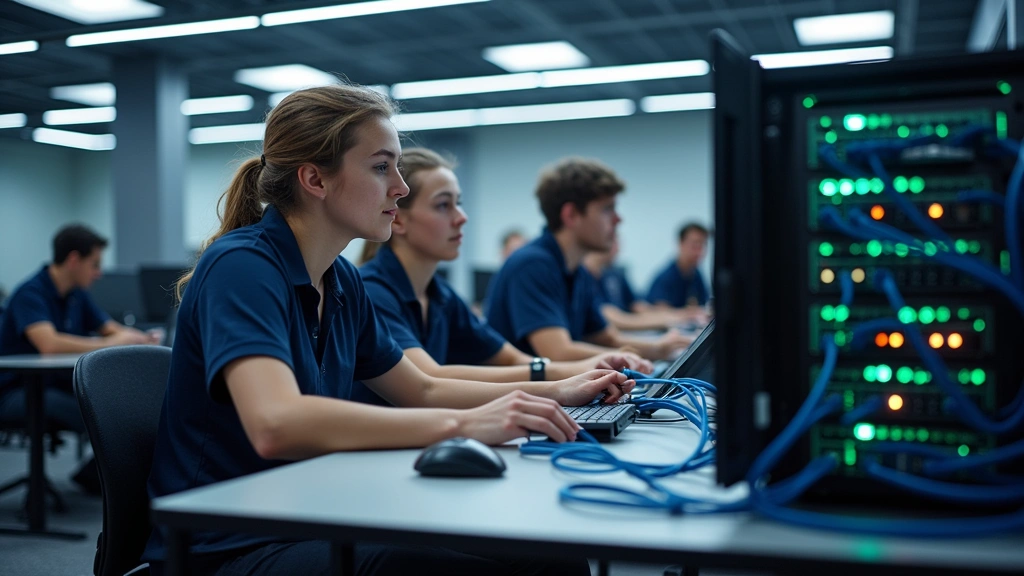
Technical education demands hands-on practice with actual equipment and software, not simulations or outdated tools. Barry Tech BOCES maintains modern facilities equipped with current technology reflecting what students will encounter in professional settings. IT labs include networked computers, servers, and networking equipment where students practice configuring systems and troubleshooting problems. Automotive shops contain diagnostic equipment used in modern dealerships. Electrical labs feature residential and commercial wiring installations at realistic scale.
This equipment investment matters tremendously for learning outcomes. When students practice with tools and systems identical to workplace environments, they transition into jobs with minimal learning curve. A graduate who trained on modern diagnostic equipment can immediately contribute in an automotive shop, whereas someone trained on older systems faces relearning. BOCES’ commitment to regular equipment updates ensures this relevance persists despite the rapid pace of technological change.
Safety infrastructure in technical programs receives appropriate emphasis. Electrical programs teach lockout-tagout procedures and arc flash protection. Automotive programs emphasize proper tool use and hazard awareness. HVAC training covers refrigerant handling and pressure system safety. This safety training prevents injuries and creates workplace-ready professionals who understand risk management—a quality employers value highly.
Career Outcomes and Job Placement
The ultimate measure of any educational program is whether graduates find employment in their field at reasonable wages. Barry Tech BOCES publishes outcome data showing placement rates typically exceeding 85% within six months of graduation. For technical programs, many students receive job offers before completing their final coursework, as employers actively recruit from BOCES’ graduate pool. This strong placement record reflects both program quality and regional employer demand for skilled workers.
Wage data for BOCES graduates varies by program but generally exceeds high school graduate earnings and often approaches or exceeds four-year degree holder earnings when accounting for time and cost investment. An electrician completing BOCES training and apprenticeship might earn $50,000-$70,000 annually within five years, comparable to many bachelor’s degree holders while avoiding $100,000+ in student debt. IT support specialists graduate to entry-level positions paying $35,000-$45,000, with advancement to system administrator or security roles offering six-figure potential.
Alumni networks and employer relationships facilitate job placement. Many employers maintain relationships with BOCES spanning decades, regularly hiring graduates and providing input on training priorities. This creates a virtuous cycle where program improvements lead to better-prepared graduates, which strengthens employer confidence, which increases hiring and strengthens the institution’s reputation. Prospective students can verify these claims by reviewing best laptops for students discussions and checking employment verification databases.
For those considering further education, BOCES credentials create pathways to four-year degrees. Some universities award college credits for BOCES certifications, allowing graduates to complete bachelor’s degrees in three years rather than four. This “2+2” model lets students minimize debt while maximizing earning potential. An IT student might complete BOCES networking fundamentals, work for two years accumulating experience and savings, then pursue a computer science degree with advanced standing and employer tuition assistance.
Cost and Financial Considerations
BOCES programs typically cost significantly less than private technical schools or four-year universities. For high school students, many programs are free or low-cost since school districts fund BOCES operations. Post-secondary students pay tuition, but rates remain substantially below private alternatives—often $3,000-$8,000 for entire certificate programs versus $20,000-$40,000 annually for private institutions. This cost efficiency makes BOCES accessible to students without substantial family resources.
Financial aid availability varies. Federal financial aid (FAFSA) applies to eligible post-secondary students, and many states offer workforce development grants for technical training. BOCES itself may offer payment plans or scholarships. For high school students, costs are typically covered by school district funding, making BOCES essentially free. This accessibility removes financial barriers that prevent talented students from pursuing technical careers, addressing workforce development challenges across multiple industries.
The return on investment for BOCES training is compelling. A student investing $5,000 and one year in HVAC training might earn an additional $250,000-$500,000 over a career compared to remaining in lower-wage work. Even accounting for the cost of tools and licensing, the payback period is typically under two years. Compare this to a four-year degree costing $60,000 with a similar or longer payback period, and BOCES’ financial advantage becomes clear. For students unable to afford four-year degrees or unwilling to accumulate substantial debt, BOCES represents the most financially sensible pathway to middle-class income.
Student Experience and Support Services
Beyond academics, BOCES programs provide support services addressing the real challenges students face. Career counseling helps students clarify goals and navigate program selection. Academic support includes tutoring and study skills instruction for students struggling with classroom material. Many programs include soft skills training—communication, teamwork, professional behavior—that employers consistently identify as critical. This holistic approach acknowledges that technical skills alone don’t guarantee success; workplace success requires interpersonal competence.
Student demographics at BOCES differ from traditional colleges. While many are high school students, post-secondary cohorts include career changers, displaced workers, and adults returning to education after years away. This diversity creates rich learning environments where students learn from peers with varied backgrounds and perspectives. A 40-year-old career changer studying IT brings life experience and motivation that influences younger classmates, creating mutual benefit.
Scheduling flexibility accommodates students with work or family obligations. Many programs offer evening or weekend classes, allowing students to continue working while training. Some programs operate on compressed schedules—intensive, full-time training over weeks or months rather than traditional semester pacing. This flexibility enables adults to transition careers without abandoning current income entirely, reducing the financial risk of career changes.
Mental health and wellness services address student wellbeing beyond academics. Counseling services, wellness programs, and peer support groups recognize that stress and personal challenges impact educational success. For students balancing work, family, and education—common scenarios at BOCES—these support services prove invaluable. The institution recognizes that student success requires attention to the whole person, not just technical skill development.
Comparing BOCES to Traditional Education
The decision between BOCES and traditional college paths depends on individual circumstances, learning styles, and career goals. For students certain about career direction and eager to work, BOCES typically offers faster pathways to employment and earning. The combination of lower cost, shorter duration, and immediate job readiness appeals to those prioritizing financial independence and practical skill development.
Traditional four-year colleges offer broader education, exposure to diverse fields, and credentials valued by employers in professional fields requiring degrees. Engineering, medicine, law, and many management positions require bachelor’s degrees, making traditional college essential for these paths. However, for skilled trades, healthcare support roles, and IT entry-level positions, BOCES often provides superior preparation at lower cost.
The hybrid approach—BOCES training followed by degree completion—offers advantages of both paths. Students gain work experience and income before pursuing degrees, improving academic preparation and clarifying educational goals. Employers often support employee degree completion through tuition assistance, making degree attainment nearly free. This pathway appeals to risk-averse students wanting to test career fit before major educational investment.
For technology enthusiasts specifically, BOCES IT programs provide solid foundation knowledge equivalent to first-year college IT coursework. Graduates understand networking fundamentals, operating systems, and troubleshooting methodology—knowledge applicable across IT career paths. However, those aspiring to software development or advanced technology roles might benefit from four-year computer science programs offering deeper theoretical foundations. The decision hinges on specific technology career interests and personal learning preferences.
Industry changes favor BOCES increasingly. As technology evolves rapidly, continuous learning becomes essential throughout careers. BOCES’ ability to update curriculum quickly aligns with this reality better than traditional colleges with slower change processes. A BOCES graduate might return for additional certifications throughout their career, maintaining relevance as technologies shift. This lifelong learning model suits modern careers better than the “degree once, career forever” paradigm traditional education perpetuates.
FAQ
What are the admission requirements for Barry Tech BOCES?
Admission requirements vary by program. High school students typically need approval from their home school district and sometimes minimum grade point averages. Post-secondary applicants need high school diplomas or GED equivalents. Some healthcare programs require background checks and health screenings. Specific requirements appear on the BOCES website or through direct inquiry with admissions staff. Unlike universities with standardized test requirements, BOCES programs generally have accessible admission standards reflecting their mission to provide opportunity across student ability levels.
How long do BOCES programs typically last?
Program duration varies significantly. Some certificate programs complete in 6-12 weeks with intensive, full-time study. Others span 6-12 months meeting several hours weekly. High school students often take programs over two years while maintaining home school enrollment. Check specific program timelines, as duration affects scheduling compatibility and time to employment. Shorter programs enable faster entry into the workforce, while longer programs allow more thorough skill development and broader knowledge acquisition.
Do BOCES credentials transfer to four-year colleges?
Many four-year colleges grant college credit for BOCES certifications and coursework, though transfer policies vary. Students should contact target colleges before enrolling to understand transfer policies. Some universities explicitly recognize BOCES credentials through articulation agreements, guaranteeing credit transfer. Others evaluate credits individually. Planning ahead prevents completing programs only to discover credits don’t transfer as expected. This matters most for students considering degree completion after BOCES training.
What is the job placement rate for BOCES graduates?
Barry Tech BOCES reports placement rates exceeding 85% within six months of graduation for most programs. Some programs achieve 90%+ placement rates, reflecting strong employer demand. However, placement rates vary by program and economic conditions. Healthcare and skilled trades programs typically show stronger placement than some business programs. Review program-specific placement data rather than institution-wide averages when evaluating specific programs. Also consider that some graduates choose further education rather than immediate employment, affecting reported placement rates.
Can I attend BOCES while still in high school?
Yes, high school students can attend BOCES programs part-time while maintaining enrollment at their home schools. This dual enrollment allows students to earn high school credits while gaining technical training, often without additional cost since school districts fund BOCES. This option suits high school students certain about career direction, allowing them to graduate with both high school diplomas and technical credentials. Many high school graduates from BOCES programs enter jobs immediately while their peers face four years of college.
What support services does BOCES provide?
Most BOCES programs include academic advising, career counseling, tutoring, and job placement assistance. Many provide access to computer labs, library resources, and student organizations. Health services and disability accommodations vary by location but typically exist. Students should inquire about specific services at their intended BOCES location. For adults returning to education, understanding available support helps ensure successful completion. Many students underestimate how valuable tutoring and academic advising prove, particularly if they’ve been away from school for years.
How does BOCES training help with technology certifications?
Barry Tech BOCES IT programs specifically prepare students for industry certifications like CompTIA A+, Security+, and Cisco CCNA. Curriculum directly aligns with certification exam objectives, and many programs include exam vouchers. Instructors often hold the certifications they teach, providing authentic instruction. Some programs guarantee exam passage, covering retake costs if students fail first attempts. This certification focus distinguishes BOCES from programs teaching general IT concepts without specific credential alignment. For those seeking artificial intelligence applications and emerging tech knowledge, advanced BOCES programs increasingly include these topics alongside foundational certifications.
Is BOCES right for me?
BOCES suits students seeking specific technical skills, wanting to enter the workforce quickly, prioritizing affordability, or uncertain about four-year degree commitment. It’s ideal for career changers, adults returning to work, and those with clear vocational goals. However, if you’re uncertain about career direction, prefer academic theory, or need credentials required by law (teaching, psychology, engineering), traditional college might better suit you. Consider your learning style—BOCES emphasizes hands-on learning while colleges emphasize classroom instruction. If you learn best through doing, BOCES likely aligns with your strengths. Ultimately, review specific programs offered, talk with current students and graduates, and honestly assess your career goals and learning preferences before deciding.


