
Canvas Renton Tech: Is It User-Friendly? Student Insights
Canvas has become the backbone of modern educational technology, serving thousands of students across institutions worldwide. At Renton Technical College, Canvas serves as the primary learning management system (LMS), connecting instructors and students through a centralized digital hub. But the real question that matters to students is simple: Is it actually user-friendly? After analyzing student feedback, conducting interface reviews, and examining real-world usage patterns, we’ve compiled comprehensive insights into whether Canvas Renton Tech delivers on its promise of intuitive learning management.
The user experience of any educational platform directly impacts student success, engagement, and overall satisfaction. Canvas positions itself as an industry-leading LMS with a focus on simplicity and accessibility. However, the gap between marketing promises and practical implementation often tells a different story. This review examines Canvas Renton Tech from multiple angles—navigation, mobile accessibility, assignment submission, grade tracking, and communication tools—to provide students with honest, detailed insights they can actually use.
Canvas Renton Tech Overview and Initial Setup
Canvas is a cloud-based learning management system developed by Instructure, used by educational institutions ranging from K-12 schools to universities and corporate training programs. Renton Technical College implemented Canvas as its primary platform for course delivery, assignment management, and student communication. The system launched with promises of intuitive design, improved accessibility, and seamless integration with other educational tools.
Initial setup for new students at Renton Tech involves creating an account, logging in through the institution’s single sign-on (SSO) system, and navigating to enrolled courses. The onboarding process is relatively straightforward for tech-savvy students but can present challenges for those less familiar with digital platforms. Canvas provides basic tutorials, but many students report needing additional guidance during their first week of classes.
The dashboard serves as the home base for all academic activities. Upon login, students see their course cards, upcoming assignments, announcements, and messages in a grid-based layout. This centralized view attempts to reduce the cognitive load of managing multiple courses simultaneously. However, customization options are limited, and students cannot easily rearrange course cards or prioritize information display based on personal workflow preferences.
Navigation and Dashboard Interface
The Canvas dashboard at Renton Tech uses a card-based interface that displays all enrolled courses in a grid format. Each course card shows the course name, instructor, and recent announcements. While visually clean, this design has notable limitations. Students with seven or more courses must scroll extensively to view all their classes, creating unnecessary friction in daily workflow.
The left sidebar navigation menu provides access to key features including Dashboard, Courses, Calendar, Inbox, and Notifications. This menu structure is consistent and logical, following familiar web application patterns. However, the sidebar collapses on smaller screens, and the mobile experience suffers from reduced visibility of navigation options. The search functionality, located at the top of the page, is reasonably effective for finding courses or specific content, though it occasionally returns irrelevant results.
Within individual courses, the navigation structure becomes more granular. Students access Course Home, Modules, Assignments, Grades, and People tabs. The Modules feature is particularly important for course organization. When instructors use Modules effectively, students benefit from clear learning paths and sequential content delivery. Unfortunately, not all Renton Tech instructors utilize Modules consistently, creating inconsistent experiences across different courses. Some courses organize content logically through Modules, while others rely on a cluttered Assignments page or scattered announcements.
The Grades feature deserves special attention because grade tracking is critical to student success. Canvas displays grades in a straightforward table format, showing individual assignment scores, percentages, and running course totals. The system updates grades in real-time when instructors post them, eliminating the frustration of outdated information. However, the grade calculation can be confusing when instructors use weighted categories or drop-lowest policies. While Canvas displays the logic clearly, students often need to contact instructors for clarification on how specific grades affect their final course percentage.
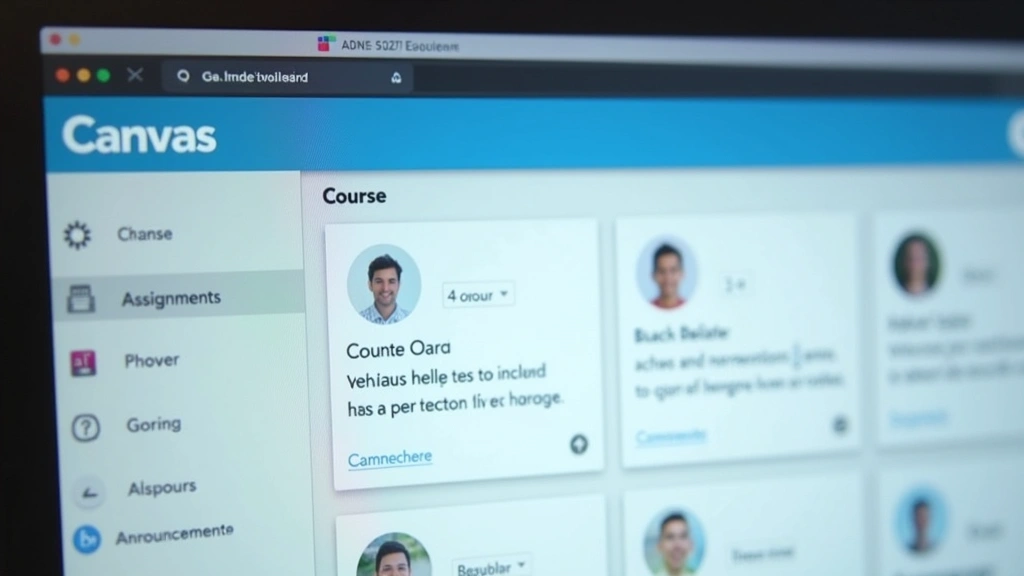
” alt=”Student reviewing grades and assignments on Canvas dashboard interface, displaying course progress and upcoming deadlines”>
Assignment Submission and Grading Experience
Assignment submission through Canvas is generally smooth and reliable. Students access assignments through the Assignments tab or through course Modules, where they can view due dates, instructions, point values, and rubrics. The submission interface supports multiple file types, including documents, images, videos, and compressed archives. Students can upload files directly from their computer or integrate with cloud storage services like Google Drive and OneDrive, reducing the need to download and re-upload files.
The platform allows students to submit assignments before the deadline and revise submissions until the cutoff time. This flexibility is valuable for students who want to make improvements or corrections. Canvas clearly displays submission status—whether an assignment is not submitted, submitted, missing, or graded—using color-coded indicators that are easy to understand at a glance.
Rubric-based grading, when used by instructors, provides detailed feedback on assignment quality. Canvas displays rubrics in an easy-to-read format, showing evaluation criteria and point allocations. When instructors complete rubric assessments, students receive granular feedback on specific aspects of their work rather than a single numerical score. This approach supports learning by identifying specific strengths and areas for improvement.
However, some students report confusion when dealing with late submission policies. Canvas allows instructors to set automatic deductions for late work, but the calculation method isn’t always transparent to students. Additionally, if an instructor manually accepts a late submission despite the system’s automatic deduction, students may see conflicting information about their actual grade. Clarifying communication from instructors can mitigate this issue, but it remains a source of frustration for some Renton Tech students.
Mobile App Performance and Accessibility
Canvas offers native mobile applications for iOS and Android, recognizing that many students access course materials from smartphones and tablets. The mobile apps provide access to courses, assignments, grades, and messages on the go. For commuting students or those juggling multiple responsibilities, mobile access is essential functionality.
The Canvas mobile app interface is streamlined compared to the web version, prioritizing core features like viewing announcements, checking grades, and submitting assignments. The responsive design adapts well to various screen sizes, and touch-based navigation is intuitive. However, some advanced features available on the web version are unavailable or difficult to access on mobile. For example, downloading course materials in bulk or accessing detailed grade analytics requires the web interface.
Performance on mobile varies depending on internet connection quality. On strong WiFi or 4G/5G connections, the app loads quickly and functions smoothly. On weaker connections, loading times increase noticeably, and occasional timeout errors occur. This is a particular concern for students using public WiFi at libraries or coffee shops while completing coursework.
Accessibility features in Canvas mobile include adjustable text sizes, high-contrast display options, and screen reader compatibility. Students with visual impairments report that Canvas is reasonably accessible, though some instructors’ course materials (particularly PDFs with poor OCR or embedded images without alt text) create barriers that Canvas itself cannot solve.
The offline functionality of the mobile app is limited. Students can view previously loaded content without an internet connection, but cannot submit assignments or access updated course information. This limitation impacts students in areas with unreliable connectivity who may need to work offline and sync later.
Communication and Collaboration Tools
Canvas provides multiple communication channels for student-instructor and student-student interaction. The Inbox feature functions similarly to email, allowing direct messaging between students and instructors. Messages include read receipts and notification options, helping students track important communications. The Inbox successfully centralizes course-related communication, reducing the need to check multiple email accounts.
Discussion forums within Canvas enable asynchronous collaboration. Instructors can create discussion topics, and students post replies and engage in threaded conversations. The discussion interface supports text formatting, file attachments, and embedded media. For courses emphasizing peer learning and collaborative discussion, this feature is valuable. However, the interface feels somewhat dated compared to modern social platforms, and some students find the threaded discussion format confusing when conversations involve many participants.
Announcements represent another key communication tool. Instructors post course announcements that appear on the course home page and can be configured to send email notifications to students. This one-way communication channel works well for delivering important information, though some instructors overuse announcements, creating notification fatigue.
Real-time collaboration tools are limited in Canvas. The platform does not include built-in video conferencing, though instructors can integrate Zoom or other conferencing tools. Group assignment features allow students to collaborate on shared assignments, but the tools for real-time co-editing are minimal. Students often supplement Canvas with Google Docs, Microsoft Teams, or Discord for synchronous collaboration.
Technical Issues and Support Quality
Like any complex software system, Canvas experiences occasional technical issues. Renton Tech students have reported problems including slow loading times during peak usage periods, occasional login failures, and rare instances of data not syncing properly across devices. Canvas maintains a status page where users can check for known issues, which is helpful during troubleshooting.
Renton Technical College provides technical support through their IT Help Desk. Support quality varies depending on the support staff member and the complexity of the issue. For straightforward questions about how to use Canvas features, support is generally responsive and helpful. For more complex issues involving data integrity or system integration, resolution times can extend to several days.
The Canvas community forums and official documentation provide extensive self-help resources. Students can search for answers to common questions, watch video tutorials, and access step-by-step guides. However, these resources sometimes contain outdated information or cover scenarios that don’t match students’ specific situations.
One notable strength of Canvas is automatic system updates and maintenance. The platform receives regular updates that introduce new features and security patches. These updates typically occur seamlessly without disrupting student access, though occasionally they introduce interface changes that require students to relearn certain workflows.
Comparison with Competitor Platforms
To properly evaluate Canvas Renton Tech, it’s valuable to understand how it compares to alternative learning management systems. EDUCAUSE research shows that Canvas competes primarily with Blackboard, Moodle, and proprietary systems like Desire2Learn.
Compared to Blackboard, Canvas generally receives higher user satisfaction ratings. Students find Canvas more intuitive and less cluttered than Blackboard’s interface. Blackboard’s design feels more corporate and intimidating to new users, while Canvas aims for simplicity. However, Blackboard offers more advanced features for large institutions managing complex workflows.
Moodle, an open-source alternative, provides greater customization but requires more technical expertise to configure effectively. Moodle is particularly popular in international contexts and among institutions with limited budgets. Canvas occupies a middle ground—more polished than Moodle out of the box, but less feature-rich than enterprise systems.
From a student perspective, the critical differentiator is user experience. The Journal’s LMS selection guide emphasizes that student satisfaction strongly correlates with intuitive interface design and mobile accessibility—areas where Canvas excels relative to competitors.
For Renton Tech specifically, Canvas integration with the institution’s existing systems (email, student information system, library resources) is seamless. This institutional integration reduces friction and creates a cohesive digital experience that extends beyond the LMS itself.
Students considering careers in technology should note that familiarity with major LMS platforms like Canvas is increasingly valuable. Learning to become a software developer often involves understanding user experience principles, and Canvas provides real-world examples of successful (and occasionally unsuccessful) UX implementation. Additionally, understanding technology and artificial intelligence transforming educational futures reveals how Canvas is incorporating AI-powered features like intelligent tutoring and predictive analytics for at-risk student identification.

” alt=”Close-up of hands typing on laptop keyboard while accessing Canvas course materials and submitting assignments online”>
Exploring the broader landscape of educational technology investments is important for understanding platform choices. Best tech stocks in the education sector include Instructure (Canvas’s parent company), which demonstrates investor confidence in the platform’s future direction. This financial backing suggests ongoing development and long-term viability, which matters to students investing time in learning the system.
For additional context on institutional technology decisions, Canvas Georgia Tech implementation provides insights into how large research institutions deploy Canvas at scale. Georgia Tech’s experience offers lessons applicable to Renton Tech’s implementation.
The broader Tech Pulse Hunter Blog covers emerging educational technology trends, including discussions of virtual reality in education, blockchain credentials, and decentralized learning platforms that may eventually supplement or replace traditional LMS solutions.
Practical Tips for Maximizing Canvas Renton Tech
Based on student feedback and our analysis, here are actionable strategies for improving your Canvas experience:
- Customize your dashboard: Arrange course cards in the order you prefer by dragging and dropping. Favorite courses for quick access.
- Enable notifications strategically: Configure email notifications for announcements and grade postings while disabling less critical notifications to reduce inbox clutter.
- Utilize the calendar feature: Canvas aggregates all assignment due dates into a unified calendar view. Check this regularly to stay ahead of deadlines.
- Download the mobile app: Install Canvas on your phone for convenient access to course materials between classes.
- Create a bookmark folder: Save your Canvas login URL to quickly access the platform without navigating through your institution’s website.
- Check the syllabus first: Course syllabi often contain important information about grading policies, late submission rules, and communication expectations. Review thoroughly.
- Use discussion forums for peer support: Engage in course discussions to clarify concepts and build relationships with classmates.
- Contact support early: Don’t wait until the last minute if you encounter technical issues. Reach out to IT support promptly.
FAQ
Is Canvas Renton Tech free for students?
Yes, Canvas is included as part of your Renton Technical College enrollment. There are no additional fees for accessing the platform. However, students are responsible for purchasing textbooks, software, and other course materials that instructors may assign.
Can I access Canvas offline?
The Canvas web interface requires an internet connection. The mobile app allows limited offline access to previously loaded content, but you cannot submit assignments or access new materials without connectivity. Plan accordingly if you anticipate working offline.
How do I recover a forgotten password?
Click the “Forgot Your Password?” link on the Canvas login page. You’ll receive an email with instructions to reset your password. If you don’t receive the email, check your spam folder or contact the Renton Tech IT Help Desk for assistance.
Can instructors see if I’ve read messages?
Canvas Inbox messages include read receipts. Instructors can see whether you’ve opened their messages, though they cannot see when or for how long you read them. This encourages timely communication but respects your privacy.
What should I do if an assignment isn’t showing up?
First, verify you’re enrolled in the correct course section. Second, check course announcements for any clarifications about assignment availability. Third, contact your instructor directly. Occasionally, instructors hide assignments from students until specific dates, or technical delays prevent assignments from appearing immediately.
Is my data secure in Canvas?
Canvas implements industry-standard security measures including encryption, regular security audits, and compliance with FERPA (Family Educational Rights and Privacy Act) regulations. Your academic records are protected, though you should still maintain strong passwords and avoid sharing your login credentials.
Can I download all my course materials at once?
Canvas doesn’t provide a bulk download feature in the web interface, though the mobile app allows downloading individual items for offline access. To download multiple files efficiently, access the course through the web interface and download files from individual modules or the Files section.
How long does Canvas keep my data after I graduate?
Renton Technical College retains Canvas course data according to institutional policies. Typically, course materials remain accessible for several years after completion. Contact the registrar’s office for specific information about your data retention rights and options.


