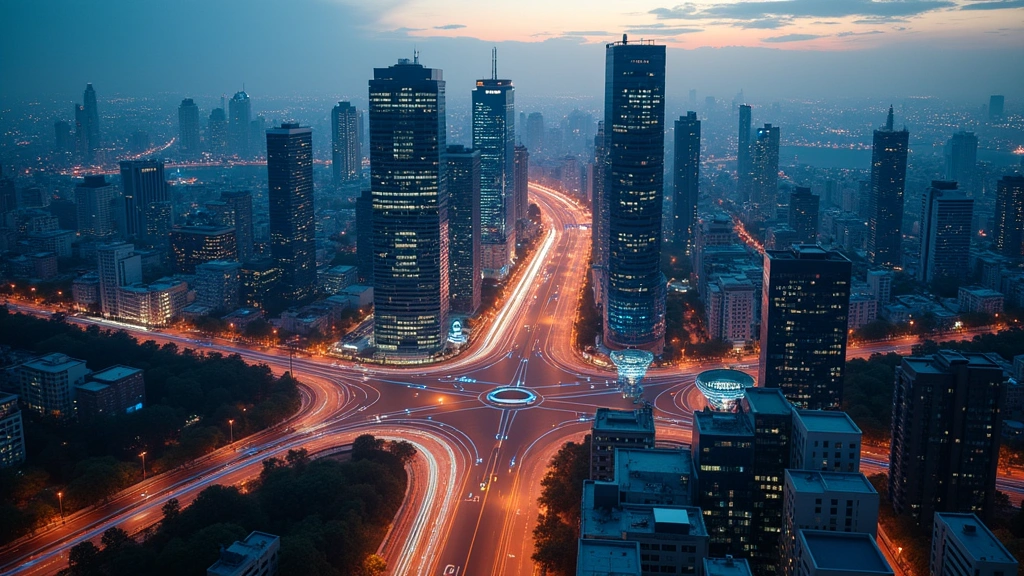
City Tech LOA: Revolutionizing Urban Living?
The concept of City Tech LOA (Location-Oriented Architecture) represents a paradigm shift in how urban environments integrate technology with daily living. As cities worldwide grapple with congestion, pollution, and inefficient resource management, innovative tech solutions are emerging to address these challenges head-on. City Tech LOA encompasses smart infrastructure, IoT-enabled systems, and AI-driven urban planning that transform metropolises into responsive, adaptive ecosystems.
This comprehensive exploration examines whether City Tech LOA truly revolutionizes urban living or if it remains aspirational. We’ll analyze the core technologies, real-world implementations, practical benefits, and persistent challenges that define this emerging field. Whether you’re a city planner, tech enthusiast, or urban resident, understanding City Tech LOA is essential for comprehending our increasingly connected future.
What is City Tech LOA?
City Tech LOA represents an integrated approach to urban development where location-based technology informs architectural and infrastructural decisions. Unlike traditional city planning that operates on fixed blueprints, LOA systems adapt dynamically to real-time data, citizen behavior patterns, and environmental conditions. This framework leverages artificial intelligence applications transforming the future to create responsive urban environments.
The fundamental principle behind City Tech LOA is that every element of urban infrastructure—from traffic lights to energy grids—should communicate with centralized systems that optimize for efficiency, sustainability, and livability. Smart sensors embedded throughout cities collect continuous data streams, which machine learning algorithms process to predict problems before they occur. This proactive approach fundamentally differs from reactive urban management.
City Tech LOA integrates multiple technological domains: Internet of Things (IoT), artificial intelligence, 5G connectivity, cloud computing, and data analytics. The synergy between these technologies creates urban systems that can self-optimize, reducing waste while improving citizen experiences. Cities implementing City Tech LOA report significant improvements in traffic flow, energy consumption, emergency response times, and overall quality of life.
Core Technologies Driving Urban Innovation
Several foundational technologies enable City Tech LOA systems to function effectively. Understanding these components helps clarify how modern cities achieve unprecedented operational efficiency.
5G Networks and Connectivity: Fifth-generation wireless technology provides the low-latency, high-bandwidth foundation necessary for real-time urban data transmission. Unlike 4G, 5G enables thousands of simultaneous connections with minimal delay, critical for coordinating millions of smart devices across metropolitan areas. This connectivity layer allows traffic management systems to communicate with autonomous vehicles, building systems to coordinate with power grids, and emergency services to access real-time situational data.
Edge Computing: Rather than sending all data to distant cloud servers, edge computing processes information locally at network endpoints. This approach dramatically reduces latency and bandwidth requirements while improving privacy and security. Cities utilize edge computing to make split-second decisions in traffic management, emergency response, and utility distribution without relying on centralized infrastructure.
Artificial Intelligence and Machine Learning: AI systems analyze urban data patterns to predict demand, optimize resource allocation, and identify anomalies. Predictive algorithms forecast traffic congestion hours in advance, allowing systems to preemptively adjust signal timing. Machine learning models identify energy consumption patterns, enabling utilities to balance loads before peak hours. These capabilities represent the intelligence layer that transforms raw data into actionable insights.
For those interested in technology careers, understanding these systems is increasingly valuable. Consider exploring how to become a software developer focused on IoT and urban computing applications. Additionally, learning top programming languages in 2025 relevant to smart city development positions professionals for emerging opportunities in this expanding field.
Smart Infrastructure and IoT Integration
Smart infrastructure forms the physical backbone of City Tech LOA implementations. Sensors embedded throughout urban environments continuously monitor conditions and transmit data to processing centers where algorithms determine optimal responses.
Smart Traffic Management: IoT sensors installed at intersections detect vehicle presence, flow rates, and congestion patterns. Computer vision systems identify pedestrians, cyclists, and emergency vehicles. AI algorithms dynamically adjust traffic light timing to minimize wait times and emissions. Cities like Copenhagen and Singapore have implemented sophisticated traffic management systems that reduce congestion by 15-25% while improving air quality. These systems also provide real-time traffic information to navigation applications, helping drivers avoid congested routes.
Intelligent Building Systems: Modern smart buildings utilize occupancy sensors, temperature monitors, and energy consumption trackers to optimize HVAC systems, lighting, and power usage. IoT-enabled building management systems learn occupancy patterns and adjust environmental controls accordingly. A office building can reduce energy consumption by 20-30% through intelligent automation. These systems also enhance security by monitoring access points and detecting unusual activities.
Water and Waste Management: Smart meters track water consumption in real-time, identifying leaks within hours rather than weeks. IoT sensors in waste management systems optimize collection routes based on container fill levels, reducing unnecessary truck trips. These applications prevent water waste and lower municipal operational costs substantially. Some cities have reduced water loss from 30% to under 10% through smart metering systems.
Transportation and Mobility Solutions
Transportation represents a primary focus for City Tech LOA, as urban mobility directly impacts quality of life, environmental quality, and economic productivity.
Autonomous and Connected Vehicles: City Tech LOA environments support autonomous vehicle ecosystems through dedicated communication infrastructure and real-time traffic coordination. Connected vehicles share road condition data with each other and traffic management systems, enabling safer, more efficient movement. V2X (vehicle-to-everything) communication allows vehicles to receive traffic signal timing information, emergency alerts, and hazard warnings.
Multimodal Transportation Integration: Smart city platforms integrate public transit, bike-sharing, ride-hailing, and personal vehicles into unified systems. Citizens access unified mobility applications that provide journey planning across all transportation modes, real-time arrival information, and integrated payment systems. This integration encourages public transit usage and reduces private vehicle dependency, decreasing congestion and emissions.
Real-Time Transit Optimization: AI algorithms adjust public transportation routes and schedules based on demand patterns and real-time passenger information. Buses can modify routes dynamically to serve more passengers efficiently. Predictive models forecast demand during peak hours, allowing transit authorities to deploy additional vehicles preemptively. These capabilities improve transit reliability and reduce wait times, making public transportation more competitive with private vehicles.

Energy Management and Sustainability
Energy efficiency and renewable integration represent critical components of City Tech LOA, addressing climate change while reducing operational costs.
Smart Grid Technology: Modern smart grids utilize IoT sensors and AI algorithms to balance electricity supply and demand in real-time. These systems integrate distributed renewable energy sources—solar panels on buildings, wind turbines, battery storage—into coordinated networks that maximize clean energy utilization. When solar generation peaks during midday, smart grids route excess electricity to storage systems or shift demand to high-energy tasks. This optimization reduces reliance on fossil fuel plants and stabilizes grid frequency.
Demand Response Systems: IoT-enabled appliances and building systems participate in demand response programs, automatically adjusting consumption when grid stress is detected. Electric vehicle charging stations coordinate charging times to avoid peak demand periods. Water heaters activate when renewable generation is abundant. These coordinated adjustments prevent blackouts while maximizing renewable energy utilization.
District Heating and Cooling: Cities implement centralized thermal networks that distribute heating and cooling efficiently across buildings. These systems recover waste heat from data centers, industrial facilities, and wastewater, redistributing it to residential and commercial buildings. Such infrastructure reduces energy consumption by 30-40% compared to individual building systems. Cloud computing benefits for businesses often include waste heat recovery opportunities that can be repurposed in district thermal networks.
Renewable Energy Integration: City Tech LOA systems seamlessly integrate rooftop solar, building-integrated wind turbines, and ground-level renewable installations. Smart systems forecast renewable generation based on weather data and optimize consumption accordingly. Battery storage systems, powered by IoT control systems, store excess renewable energy for use during low-generation periods.
Real-World City Tech LOA Implementations
Several cities worldwide have pioneered City Tech LOA implementations, providing valuable insights into practical applications and measurable outcomes.
Singapore’s Smart Nation Initiative: Singapore represents a comprehensive City Tech LOA implementation, integrating smart traffic management, intelligent building systems, and efficient utilities across the entire city-state. The initiative utilizes extensive IoT sensor networks, 5G infrastructure, and AI-powered analytics to optimize urban operations. Traffic flow has improved measurably, energy consumption has decreased, and citizen services have become more responsive. Channel NewsAsia regularly reports on Singapore’s smart city progress and technological advancements.
Barcelona’s Superblocks: Barcelona implemented “superblocks”—neighborhoods where traffic is restricted to essential vehicles, creating pedestrian-friendly zones. IoT sensors monitor air quality, noise levels, and traffic flow. Data feeds into city management systems that continuously optimize the superblock concept. Residents report improved quality of life, reduced pollution, and stronger community engagement. This approach demonstrates how City Tech LOA enhances urban livability beyond pure efficiency metrics.
Copenhagen’s Cloudy Computing Approach: Copenhagen leverages cloud computing benefits for businesses to manage its smart city infrastructure. The city’s cloud-based platform integrates data from thousands of sensors monitoring traffic, air quality, energy consumption, and water usage. This centralized approach enables rapid scaling and integration of new systems as the city evolves.
Songdo, South Korea: Songdo represents a purpose-built smart city from inception, not a retrofit of existing infrastructure. Every building includes IoT sensors; all utilities operate on smart networks; transportation is fully integrated and optimized. While Songdo demonstrates impressive technological capabilities, it also reveals challenges in achieving widespread adoption and creating vibrant community experiences in technology-first environments.
Challenges and Limitations
Despite significant promise, City Tech LOA implementations face substantial challenges that must be addressed for widespread adoption.
Infrastructure Investment Requirements: Deploying comprehensive IoT networks, 5G infrastructure, and edge computing systems requires massive capital investment. Retrofitting existing cities proves particularly expensive, as infrastructure must be integrated with legacy systems. Many municipalities lack funding for such transformations, creating geographic disparities in smart city adoption. This investment barrier particularly affects developing nations and economically disadvantaged regions.
Data Privacy and Security Concerns: Ubiquitous sensors collecting continuous urban data raise significant privacy concerns. Citizens may feel uncomfortable with pervasive monitoring, even if data collection serves legitimate purposes. Cybersecurity threats pose substantial risks—compromised traffic management systems could cause accidents; breached utility systems could disrupt essential services. Cities must implement robust security protocols and transparent data governance to maintain public trust.
Vendor Lock-in and Standardization Issues: Different manufacturers use proprietary systems and protocols, creating interoperability challenges. Cities adopting specific vendor solutions may face difficulty integrating competing technologies later. Lack of industry standards means cities cannot easily switch providers or combine best-of-breed solutions. The Verge frequently covers standardization debates within smart city development.
Digital Divide and Equity: City Tech LOA benefits may not distribute equally across all socioeconomic groups. Wealthy neighborhoods might receive superior services, while underserved communities lag behind. Algorithmic bias in AI systems could perpetuate discrimination in traffic enforcement, emergency response prioritization, or resource allocation. Cities must deliberately design equitable systems that serve all residents fairly.
Adoption and Behavioral Change: Technology alone cannot revolutionize urban living without corresponding behavioral changes. Citizens must trust systems, understand how to use them, and feel motivated to participate. Older populations may struggle with digital interfaces. Overcoming resistance to change and ensuring inclusive adoption represents a significant challenge.

Future Outlook and Opportunities
City Tech LOA continues evolving rapidly, with emerging technologies promising to expand capabilities and address current limitations.
Advanced AI and Predictive Capabilities: Next-generation AI systems will improve predictive accuracy, enabling cities to anticipate problems weeks or months in advance. Predictive maintenance algorithms will prevent infrastructure failures before they occur. Behavioral prediction models will forecast demand for services with unprecedented precision. These capabilities will further optimize urban operations and reduce costs.
Autonomous Systems Proliferation: As autonomous vehicle technology matures, City Tech LOA systems will coordinate fleets of self-driving vehicles, drones, and robots performing deliveries, maintenance, and service functions. Autonomous systems will optimize routes in real-time, reducing congestion and emissions. Delivery drones will navigate urban airspace coordinated by smart air traffic management systems.
Blockchain for Decentralized Systems: Blockchain technology may enable decentralized smart city systems where multiple autonomous agents coordinate without central control. Distributed ledgers could manage peer-to-peer energy trading among building owners or facilitate transparent, tamper-proof records of city operations. This approach could improve resilience and reduce dependency on centralized infrastructure.
Augmented Reality Integration: AR applications will overlay real-time urban data onto citizens’ views, displaying transit information, air quality readings, energy consumption, and emergency alerts. This visualization layer will help residents understand city systems and make informed decisions. Urban planners will use AR to visualize infrastructure changes before implementation.
Career Opportunities: The expansion of City Tech LOA creates numerous career opportunities for technology professionals. Those pursuing best laptops for students 2025 should consider devices suitable for IoT development, data analysis, and urban computing applications. The field demands expertise in IoT architecture, cloud infrastructure, AI/ML systems, and urban planning. Visit TechPulse Hunter Blog for ongoing coverage of smart city development and technology trends shaping urban futures.
FAQ
What does LOA stand for in City Tech LOA?
LOA stands for Location-Oriented Architecture, an approach that uses location-based data and IoT sensors to inform urban planning and infrastructure decisions. This architecture enables cities to respond dynamically to real-time conditions rather than relying on static planning models.
How does City Tech LOA improve traffic management?
IoT sensors detect vehicle presence and flow patterns, while AI algorithms adjust traffic light timing dynamically. Predictive models forecast congestion hours in advance, allowing preemptive adjustments. Real-time traffic information guides drivers away from congested routes. These coordinated systems reduce wait times, emissions, and accidents.
What are the main privacy concerns with City Tech LOA?
Ubiquitous sensors collecting continuous data raise concerns about surveillance and privacy. Citizens may feel uncomfortable with pervasive monitoring. Cities must implement transparent data governance, robust security protocols, and clear policies about data collection, storage, and usage to maintain public trust.
How much does it cost to implement City Tech LOA?
Implementation costs vary dramatically based on city size and existing infrastructure. Comprehensive smart city systems can cost billions of dollars. Retrofitting existing cities proves more expensive than integrating systems into new developments. Many cities implement phased approaches, starting with specific sectors before expanding citywide.
Which cities are leading in City Tech LOA implementation?
Singapore, Copenhagen, Barcelona, and Songdo represent global leaders in smart city development. Singapore’s Smart Nation initiative, Copenhagen’s cloud-based platform, Barcelona’s superblocks, and Songdo’s purpose-built infrastructure demonstrate different approaches to City Tech LOA implementation. CNET provides detailed coverage of smart city technologies and implementations worldwide.
How does City Tech LOA contribute to sustainability?
Smart grid technology optimizes renewable energy integration. Demand response systems reduce peak consumption. District heating and cooling networks improve thermal efficiency. IoT-enabled transportation reduces emissions through optimized routing and mode shifting to public transit. Energy management systems minimize waste across buildings and infrastructure.
What skills are needed for City Tech LOA careers?
Professionals should develop expertise in IoT architecture, cloud computing, data analysis, machine learning, cybersecurity, and urban planning. Programming proficiency in languages used for IoT and AI development proves essential. Understanding 5G networks, edge computing, and smart infrastructure systems provides competitive advantages in this rapidly growing field.


