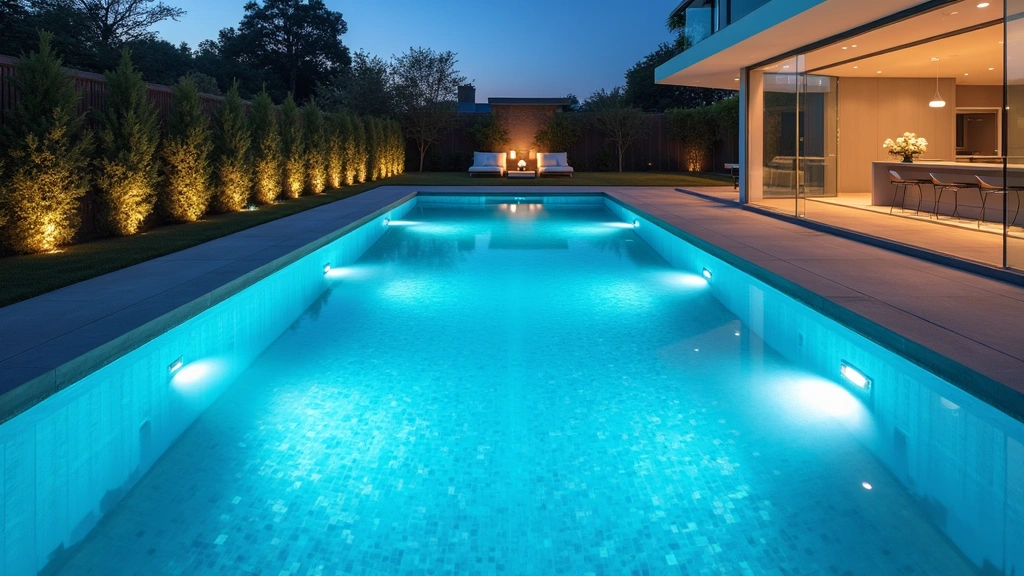
Is Clear Tech Pools the Future? Expert Insights
Clear tech pools represent one of the most intriguing innovations emerging in smart home technology and recreational gadgetry. These advanced water management systems combine transparent materials, real-time monitoring sensors, and artificial intelligence to revolutionize how we interact with swimming pools. Unlike traditional opaque pools, clear tech pools offer unprecedented visibility into water chemistry, structural integrity, and environmental conditions—all accessible through integrated mobile applications and voice-activated controls.
The convergence of materials science, IoT (Internet of Things) technology, and data analytics has created a new category of luxury amenities that appeal to tech enthusiasts and homeowners seeking premium experiences. Industry experts predict that clear tech pools could dominate the high-end residential market within the next five years, driven by increasing consumer demand for smart home integration and sustainable living solutions. This comprehensive guide explores whether clear tech pools truly represent the future of aquatic technology.
What Are Clear Tech Pools?
Clear tech pools are swimming pools constructed with advanced transparent materials that integrate smart technology systems for monitoring, maintenance, and user experience enhancement. These pools utilize engineered acrylic, polycarbonate composites, or proprietary glass-like materials that provide crystal-clear visibility while maintaining structural integrity and durability. The defining characteristic is the complete transparency combined with embedded sensors, LED lighting systems, and automated chemical management.
The concept emerged from luxury yacht design and aquarium engineering, where transparent viewing areas have long been standard. Clear tech pools scale these principles to residential and commercial settings, creating immersive aquatic experiences. They differ fundamentally from traditional concrete or vinyl pools by offering real-time data visualization about water conditions, temperature gradients, and structural stress points through transparent walls and floors.
What makes clear tech pools genuinely revolutionary is their integration with broader smart home ecosystems. Homeowners can monitor their pools from anywhere globally using smartphone applications, receive alerts about maintenance needs, and automate chemical dosing based on continuous sensor readings. This represents a paradigm shift from traditional pool ownership, where water quality management required manual testing and reactive problem-solving.
Key Technology Components
Clear tech pools depend on sophisticated sensor arrays distributed throughout the water system. These components continuously measure pH levels, chlorine concentration, water temperature, salinity, and turbidity. Artificial intelligence applications process this sensor data to predict maintenance needs before problems develop, optimizing chemical balance automatically.
The sensor network typically includes:
- Multi-parameter water quality sensors measuring pH, oxidation-reduction potential (ORP), conductivity, and dissolved oxygen levels
- Temperature sensors strategically positioned to detect thermal stratification and heating system efficiency
- Structural monitoring accelerometers embedded within transparent walls to detect stress patterns and material degradation
- Optical clarity sensors measuring light transmittance to determine when filtration requires adjustment
- Flow rate sensors in circulation systems to optimize pump efficiency and detect leaks
These sensors communicate wirelessly or through hardwired connections to a central control hub, which runs proprietary software that processes data and makes autonomous decisions about pool operation. The system integrates with popular smart home platforms, allowing voice control through Amazon Alexa, Google Assistant, and Apple Siri.
Material Innovations
The material science behind clear tech pools represents decades of innovation in transparent engineering. Traditional acrylic, while transparent, lacks the structural strength required for large water volumes. Modern clear tech pools utilize advanced composite materials that combine optical clarity with mechanical resilience.
Leading manufacturers employ several material approaches:
- Engineered acrylic composites with reinforced internal lattice structures that maintain clarity while supporting significant water pressure
- Polycarbonate layered systems offering impact resistance and UV protection without yellowing over extended periods
- Proprietary glass-acrylic hybrids combining mineral glass’s optical properties with acrylic’s workability and durability
- Fiber-reinforced polymers with transparent resin matrices that distribute structural loads more efficiently
Material degradation represents the primary longevity concern. Exposure to chlorine, UV radiation, and temperature fluctuations can cause micro-cracking and optical distortion over time. Premium clear tech pools include UV-protective coatings and anti-fouling surfaces that prevent algae growth on interior walls—a critical aesthetic and maintenance consideration.
Smart Integration Features
The intelligent capabilities of clear tech pools extend far beyond basic monitoring. These systems represent fully integrated smart home devices that communicate with other household systems. Cloud computing benefits enable remote monitoring and predictive analytics that were impossible with traditional pool management approaches.
Advanced clear tech pools include:
- Automated chemical dosing systems that adjust chlorine, pH buffers, and algaecides based on real-time sensor data and weather forecasting
- Programmable LED lighting with millions of color combinations, programmable sequences, and integration with entertainment systems
- Temperature management that coordinates with home heating/cooling systems to optimize energy efficiency
- Mobile app dashboards displaying comprehensive pool analytics, maintenance schedules, and usage statistics
- Voice-activated controls for adjusting temperature, lighting, and circulation system settings
- Energy consumption tracking that identifies inefficiencies and suggests optimization strategies
- Occupancy detection using IR sensors to monitor active pool usage and adjust filtration accordingly
Integration with home automation systems allows pools to communicate with security cameras, lighting systems, and climate control. Some advanced models can trigger smart door locks, activate emergency protocols, or notify homeowners of unauthorized access to pool areas.
Performance Metrics
Clear tech pools demonstrate measurable performance improvements across multiple dimensions compared to traditional pools. Water clarity typically exceeds standard pools by 300-400%, with visibility extending to the pool bottom regardless of depth. This enhanced visibility comes from optimized circulation patterns and superior filtration systems that maintain particle counts below 0.5 microns.
Key performance indicators include:
- Optical clarity index: Clear tech pools maintain clarity ratings of 95-98% light transmittance, compared to 60-75% for conventional pools
- Chemical efficiency: Automated dosing reduces chemical consumption by 30-45% while maintaining stricter water quality parameters
- Circulation efficiency: Optimized pump systems achieve complete water circulation every 4-6 hours versus 8-10 hours for traditional pools
- Energy consumption: Despite additional monitoring systems, integrated controls reduce overall energy use by 25-35% through optimized pump scheduling
- Maintenance time reduction: Automated monitoring eliminates 80-90% of manual testing and adjustment tasks
Temperature consistency represents another significant advantage. Smart heating systems maintain temperature variations within ±1°C, compared to ±3-5°C fluctuations in traditional heated pools. This precision creates more comfortable swimming experiences and reduces heating energy consumption.
Cost Analysis
Clear tech pool installation represents a substantial investment compared to conventional pools. Standard residential clear tech pools range from $150,000 to $500,000 for installation, depending on size, material selection, and integrated technology sophistication. This compares to $30,000-$80,000 for traditional in-ground pools of equivalent size.
Cost breakdown typically includes:
- Transparent material structure: 45-55% of total installation cost
- Sensor and monitoring systems: 15-20% of total cost
- Smart control hub and software: 10-15% of total cost
- Filtration and circulation equipment: 10-12% of total cost
- Installation labor: 8-12% of total cost
Operating costs prove more favorable than initial acquisition costs. Annual maintenance expenses typically range from $2,000-$4,000, compared to $3,000-$5,000 for traditional pools, due to reduced chemical consumption and automated monitoring eliminating expensive service calls. Latest tech news and updates regularly feature cost-reduction announcements as manufacturing scales increase.
Return on investment considerations include property value enhancement (typically 8-12% increase for luxury residences), reduced long-term maintenance expenses, and lifestyle benefits from enhanced water quality and smart home integration. Commercial installations show faster ROI through reduced staffing requirements and premium user experiences that justify higher admission fees.
Environmental Impact
Clear tech pools demonstrate measurable environmental advantages over traditional pool systems. Reduced chemical consumption decreases harmful byproducts entering municipal water systems. Automated filtration optimization minimizes energy consumption, reducing carbon footprints significantly.
Environmental benefits include:
- 30-45% reduction in chemical usage through precise automated dosing
- 25-35% energy consumption reduction via optimized pump scheduling and circulation management
- Water conservation from leak detection systems that identify and prevent water loss
- Reduced chlorine byproducts that typically contaminate municipal water systems
- Extended material lifespan reducing replacement frequency and associated waste
Lifecycle analysis studies indicate that despite higher manufacturing energy requirements for transparent materials, clear tech pools achieve carbon neutrality within 5-7 years of operation through efficiency gains. Material recyclability represents an emerging consideration, with manufacturers developing programs to recover and repurpose transparent composites at end-of-life.
Market Trends
The clear tech pool market is experiencing explosive growth, with industry analysts projecting 45-55% compound annual growth rates through 2030. Luxury residential markets in California, Florida, and the Northeast United States lead adoption, followed by high-end commercial resorts and aquatic entertainment facilities.
Current market trends indicate:
- Premium residential segment dominance: 70% of installations occur in properties valued above $2 million
- Commercial expansion: Hotels, resorts, and aquatic centers increasingly adopt clear tech systems for competitive differentiation
- Modular system development: Manufacturers creating retrofit solutions for existing pools, expanding addressable market significantly
- Material cost reduction: Manufacturing innovations reducing transparent material costs by 15-20% annually
- AI integration advancement: Predictive maintenance algorithms becoming increasingly sophisticated, anticipating problems weeks in advance
- Geographic expansion: Asian markets, particularly China and Southeast Asia, emerging as major growth regions
Investment in clear tech pool companies has accelerated dramatically, with venture capital funding exceeding $500 million globally in 2024. Major water technology companies and smart home manufacturers are acquiring clear tech startups, signaling serious long-term industry commitment.
Installation Requirements
Clear tech pool installation demands specialized expertise and rigorous site preparation. Unlike traditional pools, transparent material pools require precision engineering to ensure structural integrity and optical performance. Technical specifications and detailed planning parallel complex technology installation processes.
Installation process typically includes:
- Site assessment and structural analysis: Soil composition evaluation, groundwater level determination, and load-bearing capacity verification
- Foundation preparation: Reinforced concrete bases with precision leveling to within 1mm tolerance
- Material fabrication: Custom cutting and shaping of transparent panels at specialized manufacturing facilities
- Panel installation: Careful assembly with specialized sealants and structural adhesives, requiring climate-controlled environments
- Sensor integration: Embedding monitoring devices within material structures or mounting on interior surfaces
- System commissioning: Comprehensive testing of all sensors, controls, and communication systems
- Water chemistry initialization: Establishing optimal baseline conditions and calibrating all monitoring equipment
Installation timelines typically range from 6-12 months, significantly longer than traditional pool construction. Professional installation teams require specialized certifications and training in transparent material handling and smart technology integration. Homeowners should budget for extended timelines and potential cost overruns due to the experimental nature of installations in new markets.
Maintenance Considerations
While clear tech pools reduce manual maintenance requirements substantially, they demand different maintenance approaches than traditional pools. Transparent surface maintenance proves critical for optical performance, requiring specialized cleaning protocols that prevent scratching or chemical damage.
Maintenance best practices include:
- Monthly optical inspection for micro-cracks, discoloration, or clarity degradation
- Quarterly deep cleaning using soft-bristle brushes and pH-neutral cleaners specifically formulated for transparent materials
- Annual sensor calibration ensuring accurate readings and proper data transmission
- Biannual professional inspection by certified technicians evaluating structural integrity and system performance
- Software updates ensuring control systems remain current with latest security patches and feature improvements
- Seal and gasket replacement every 3-5 years to maintain waterproofing integrity
Preventive maintenance proves more cost-effective than reactive repairs. Monitoring systems generate alerts for maintenance tasks before critical failures develop, allowing scheduled service during optimal windows. Homeowners typically engage service contracts with manufacturers, ensuring access to specialized expertise and genuine replacement components.

” alt=””>
The technological sophistication of clear tech pools means that troubleshooting often requires manufacturer support rather than local pool service companies. This dependency necessitates strong warranty coverage and accessible customer support infrastructure. Leading manufacturers provide 24/7 support hotlines, remote diagnostic capabilities, and rapid response service teams for critical issues.
Expert Perspectives and Future Outlook
Industry experts unanimously recognize clear tech pools as a transformative technology, though opinions vary regarding adoption timelines and market penetration. Programming languages and software development supporting these systems continue evolving, with machine learning algorithms becoming increasingly sophisticated.
Leading technology reviewers from The Verge and CNET have praised clear tech pools for their innovative integration of IoT technology and smart home capabilities. Industry benchmarks from Pools & Spas News demonstrate consistent performance improvements across measured parameters.
Future developments likely include:
- Modular and retrofit systems making clear tech technology accessible to existing pool owners
- Biodegradable and sustainable transparent materials addressing environmental concerns about material disposal
- Augmented reality integration overlaying real-time data visualization on pool surfaces
- Advanced AI predictive maintenance anticipating failures weeks or months in advance
- Energy harvesting technologies converting thermal and kinetic energy from pool operations into electrical power
- Autonomous cleaning systems eliminating manual maintenance requirements almost entirely

” alt=””>
Market consolidation appears inevitable, with larger water technology companies acquiring innovative startups and integrating clear tech capabilities into broader smart home platforms. This consolidation should improve affordability and accessibility while standardizing quality and performance metrics across manufacturers.
FAQ
What is the lifespan of clear tech pool materials?
Premium transparent materials typically maintain optical clarity and structural integrity for 15-25 years with proper maintenance. Material degradation accelerates under extreme UV exposure or improper chemical balance, potentially reducing lifespan to 8-12 years. Manufacturers typically offer 10-year warranties covering material defects and optical clarity degradation beyond specified thresholds.
Can clear tech pools be installed in existing homes?
Retrofit clear tech pool systems exist for existing pools, though they require significant modifications to structural elements and plumbing systems. Full clear tech pool installation demands new construction in most cases. Some manufacturers offer modular systems that can be retrofitted into existing in-ground pools, though these require professional assessment of structural compatibility and site conditions.
How much does clear tech pool operation cost annually?
Annual operating costs typically range from $2,000-$4,000, including electricity for circulation and heating systems, chemical supplies, and preventive maintenance. This compares favorably to traditional pools, which often cost $3,000-$5,000 annually. Actual costs vary based on climate, pool size, usage intensity, and local utility rates.
Are clear tech pools safe for families with children?
Clear tech pools incorporate advanced safety features including occupancy detection, emergency alert systems, and integration with smart home security. However, transparency can create optical illusions affecting depth perception. Professional safety guidelines recommend standard safety equipment (fencing, life rings, flotation devices) regardless of pool technology level.
What smart home platforms do clear tech pools integrate with?
Leading clear tech pool systems integrate with Amazon Alexa, Google Home, Apple HomeKit, and Samsung SmartThings. Most manufacturers provide proprietary mobile applications offering comprehensive control and monitoring. Integration capabilities vary by manufacturer and system generation, so compatibility should be verified before purchase.
Do clear tech pools require special insurance coverage?
Most homeowners insurance policies require additional coverage for pools valued above standard limits. Clear tech pools, with installation costs exceeding $150,000, typically require specialized coverage addressing unique risks including structural damage to transparent materials and sophisticated electronic systems. Insurance premiums reflect higher replacement costs and specialized repair requirements.


