
Top B2B Tech Gadgets 2023: Expert Picks for Enterprise Success
The B2B technology landscape in 2023 has evolved dramatically, with enterprise organizations demanding innovative solutions that drive productivity, enhance collaboration, and streamline operations. Whether you’re managing a corporate tech stack or evaluating new tools for your business unit, understanding which gadgets deliver measurable ROI is essential. This comprehensive guide examines the top B2B tech gadgets that have proven their value in real-world corporate environments, helping you make informed purchasing decisions aligned with your organizational goals.
Enterprise technology buyers face unprecedented pressure to justify capital expenditures while simultaneously meeting the demands of increasingly remote and hybrid workforces. The gadgets highlighted in this guide represent the intersection of innovation, reliability, and business impact—tools that organizations like Fortune 500 companies, mid-market enterprises, and scaling startups have adopted to maintain competitive advantage. From communication devices to productivity enhancers, these selections reflect current market trends and expert consensus on what truly matters for B2B success in 2023.

Enterprise Communication Devices
Effective communication remains the backbone of successful B2B operations, and 2023 has brought sophisticated hardware solutions designed specifically for enterprise needs. Video conferencing systems have matured significantly, with devices like the Cisco Webex Room Series and Poly Studio X offering native integration with existing corporate infrastructure. These systems eliminate the friction of software-based solutions by providing dedicated hardware that ensures consistent quality, reduced latency, and seamless calendar integration with Microsoft Exchange and Google Workspace.
The Cisco Webex Room Series has become the gold standard for mid-to-large enterprises, delivering 4K resolution with intelligent framing that automatically adjusts to speaker position. Organizations implementing this solution report improved meeting effectiveness and reduced technical support burden. The device’s ability to handle up to 100 participants natively while maintaining video quality addresses the complex meeting scenarios that define modern B2B collaboration.
For organizations seeking more portable solutions, the Poly Studio X delivers enterprise-grade video conferencing in a compact form factor suitable for smaller conference rooms or hot-desking environments. Its dual-camera setup provides exceptional coverage in rectangular meeting spaces, while its intelligent speaker detection ensures that all participants remain visible regardless of room layout.
Beyond video, unified communications platforms require specialized hardware endpoints. Business-grade phones like the Cisco IP Phone 8800 Series and Poly VVX 500 series provide secure, reliable voice communication with advanced features including call recording, forwarding rules, and integration with CRM systems. These phones incorporate enterprise-grade encryption and can be managed centrally through IT administrators, ensuring compliance with corporate security policies.
Collaboration and Productivity Tools
Modern B2B operations demand seamless collaboration across departments, time zones, and organizational boundaries. Interactive displays have emerged as critical infrastructure for collaborative work environments. The Microsoft Surface Hub 2S and Samsung Flip series represent the evolution of digital whiteboards from novelty items to essential business tools. The Surface Hub 2S, with its 50-inch 4K+ display and built-in compute, transforms conference rooms into dynamic collaboration spaces where teams can ideate, design, and solve problems together.
The Surface Hub 2S integrates natively with Microsoft 365, enabling seamless document sharing, real-time co-authoring, and whiteboarding with automatic cloud synchronization. Organizations implementing these systems report significant improvements in brainstorming efficiency and decision-making speed. The device’s ability to support multiple simultaneous users through touch and pen input creates an intuitive interface that requires minimal training.
For organizations investing in comprehensive tech infrastructure, complementary productivity gadgets prove essential. Wireless presentation systems like Barco ClickShare and Cisco Webex Desk Pro eliminate cable management headaches while improving meeting flow. These devices enable presenters to share content instantly from any device—laptop, tablet, or smartphone—without fumbling with adapters or driver installations.
Keyboard and mouse combinations designed for enterprise environments, such as the Microsoft Sculpt Ergonomic Desktop and Logitech MX Keys for Business, address the physical demands of knowledge workers. These peripherals incorporate ergonomic design principles that reduce repetitive strain injuries, addressing a significant source of worker compensation claims in corporate environments. The MX Keys for Business includes advanced features like gesture controls and multi-device switching, allowing users to seamlessly transition between corporate laptops, desktops, and tablets.
Security and Network Infrastructure
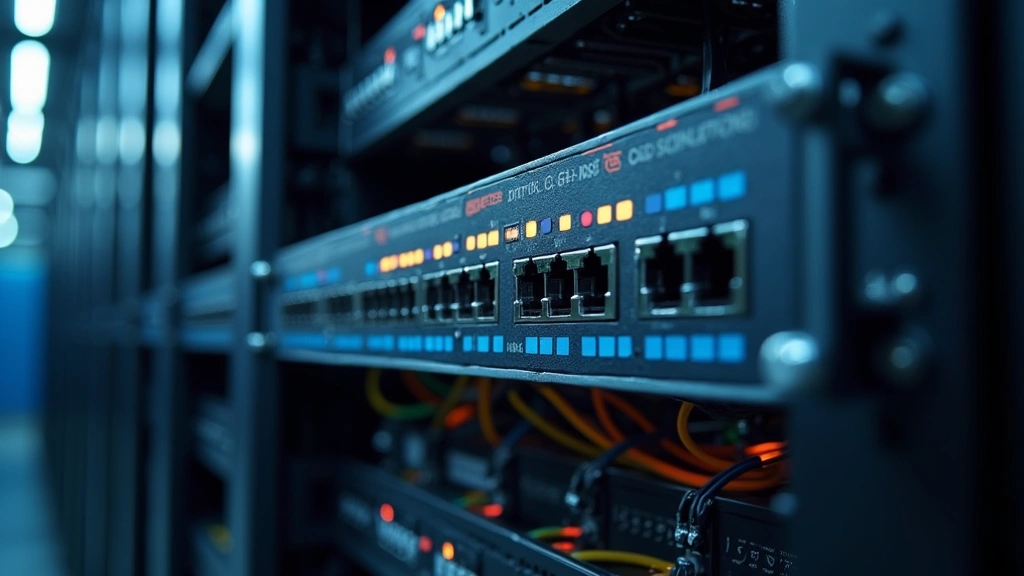
B2B technology decisions cannot be separated from security considerations, and hardware-level security solutions have become non-negotiable for enterprise deployments. Network security appliances form the foundation of corporate IT infrastructure, with Fortinet FortiGate and Palo Alto Networks PA Series devices providing advanced threat protection, VPN capabilities, and application-level visibility. These appliances go far beyond basic firewall functionality, incorporating machine learning models that identify anomalous traffic patterns and potential breach attempts in real-time.
The sophistication of modern network threats demands that enterprises move beyond software-only security models. Hardware security modules (HSMs) like the Thales Luna HSM and Gemalto SafeNet provide cryptographic key management and secure storage for sensitive data. These devices ensure that encryption keys remain protected even if attackers compromise application servers or databases, providing a critical layer of defense for organizations handling regulated data.
For enterprises managing sensitive intellectual property or regulated information, secure storage solutions have become essential. Network-attached storage (NAS) systems from Synology and QNAP designed for business environments incorporate advanced security features including ransomware protection, snapshot capabilities, and multi-user access controls. These systems enable organizations to maintain local backup capacity while ensuring data remains protected from both external threats and internal misuse.
Mobile device management requires specialized hardware endpoints. Devices like the latest enterprise smartphones from Samsung Knox-enabled devices and Apple iPhones with enterprise management support provide secure platforms for business applications. These devices incorporate hardware-level security features that protect sensitive data even if the device is stolen or lost.
Mobile Workforce Solutions
The shift toward hybrid and remote work has fundamentally changed how B2B organizations approach mobile technology. Business laptops have evolved to balance performance, security, and portability in ways that address the complex needs of distributed teams. The Dell Latitude 5000 series and Lenovo ThinkPad X1 Carbon represent the pinnacle of business laptop design, incorporating features specifically requested by IT departments and knowledge workers.
These devices integrate sophisticated security features including biometric authentication, encrypted hard drives, and remote management capabilities that allow IT teams to maintain security standards across distributed environments. The ThinkPad X1 Carbon’s lightweight design (approximately 2.5 pounds) makes it suitable for mobile workers who spend significant time traveling between client sites or working from coffee shops, while its robust build quality ensures it survives the rigors of business travel.
Battery life has become a critical specification for mobile workers, with modern business laptops achieving 15+ hours under real-world usage conditions. This extended battery life enables full workdays without requiring power adapters, a significant quality-of-life improvement for traveling professionals. Fast charging technology means that even when battery depletion occurs, 30 minutes at a charging station provides several additional hours of operation.
Complementing laptops, portable docking stations and external displays create complete mobile workstations. Devices like the CalDigit Thunderbolt 3 Dock and portable monitors from ASUS and ViewSonic enable remote workers to maintain desktop-class productivity from any location. These peripherals include integrated cable management and power delivery, reducing the number of individual cables required and simplifying setup for workers transitioning between home offices and corporate facilities.
Emerging mobile technologies continue reshaping B2B work patterns. Tablet devices with productivity software like the iPad Pro with Magic Keyboard have evolved from consumer gadgets to legitimate productivity tools for specific business functions. Sales professionals, field service technicians, and project managers increasingly rely on tablets for job-specific applications that leverage their touchscreen interfaces and portability advantages.
Data Management and Analytics Hardware
Organizations pursuing digital transformation require specialized hardware for processing and analyzing the massive data volumes generated by modern business operations. Data appliances and edge computing devices have emerged as critical infrastructure components for enterprises managing real-time analytics workloads. Devices like the NVIDIA EGX platform provide GPU-accelerated computing at the edge, enabling organizations to process sensor data and real-time information streams without transmitting raw data to centralized cloud infrastructure.
This edge computing approach addresses critical business requirements including reduced latency for time-sensitive applications, improved privacy by keeping sensitive data local, and reduced bandwidth consumption for organizations with geographically distributed operations. Manufacturing facilities, retail locations, and logistics operations increasingly deploy these systems to enable real-time decision-making based on current operational conditions.
For organizations implementing sustainability initiatives and energy management programs, power monitoring devices and environmental sensors provide visibility into facility operations. Devices like the Schneider Electric PowerLogic monitoring system and various IoT sensors enable organizations to identify energy waste, optimize HVAC operations, and demonstrate progress toward sustainability commitments. This data-driven approach to facility management often delivers rapid ROI through reduced utility costs.
Storage infrastructure supporting data-intensive workloads requires specialized hardware. All-flash storage systems from Pure Storage and Dell EMC provide the performance and reliability demanded by database workloads, virtual environments, and big data applications. These systems incorporate advanced features like deduplication and compression that improve storage efficiency while maintaining the performance characteristics required by demanding enterprise applications.
Implementation Strategy for B2B Tech
Successful B2B technology adoption requires more than selecting individual gadgets—it demands a comprehensive implementation strategy aligned with organizational capabilities and business objectives. Building strong technical foundations begins with assessing current infrastructure, identifying integration requirements, and developing change management plans that address user adoption challenges.
Enterprise procurement processes should incorporate total cost of ownership analysis that extends beyond initial hardware costs. Maintenance contracts, software licensing, support services, and eventual decommissioning expenses significantly impact the financial outcomes of technology investments. Organizations should evaluate industry analyst reports and technology reviewer assessments that provide comparative analysis of competing solutions.
Pilot programs testing gadgets in representative use cases provide invaluable insights before organization-wide rollout. These pilots should involve actual end-users performing real work tasks, generating feedback that informs final purchasing decisions and implementation approaches. Organizations that skip pilot phases frequently encounter unexpected compatibility issues, user resistance, or performance problems that could have been identified and addressed earlier.
Training and documentation prove critical for maximizing technology ROI. Even sophisticated gadgets deliver limited value if users lack understanding of available features or best practices for integration with existing workflows. Developing role-specific training materials and establishing support channels enables rapid capability development across the organization.
Monitoring and optimization should continue beyond initial deployment. Technology environments evolve as user needs change, new features become available, and organizational priorities shift. Regular reviews of hardware utilization, user satisfaction, and business impact metrics inform decisions about optimization opportunities and future technology investments.
FAQ
What B2B gadgets provide the fastest ROI?
Gadgets addressing specific pain points in existing workflows typically deliver the fastest ROI. Communication devices resolving meeting quality issues, security appliances preventing breaches, and productivity tools eliminating time-consuming manual processes consistently demonstrate rapid payback periods. Organizations should prioritize solutions addressing documented business problems rather than adopting technology for its own sake.
How should we approach security with new B2B gadgets?
Security should be evaluated at multiple levels: device-level security features, network integration requirements, data handling capabilities, and management infrastructure. Devices should support enterprise authentication mechanisms, encryption standards, and remote management protocols aligned with corporate IT policies. Engaging security teams early in evaluation processes prevents deployment of gadgets that create compliance risks or weaken existing security posture.
What’s the typical refresh cycle for B2B technology hardware?
Most business gadgets maintain productive use for 3-5 years before requiring replacement. However, security considerations may necessitate earlier replacement if vendors discontinue security updates or if new threat vectors emerge. Organizations should establish technology refresh policies based on depreciation schedules, vendor support timelines, and risk assessments rather than arbitrary age thresholds.
How do we measure B2B gadget effectiveness?
Measurement should align with business objectives driving the original technology investment. Productivity metrics like reduced meeting setup time, collaboration metrics like document co-authoring frequency, security metrics like threat detection rates, and financial metrics like cost per transaction provide objective evidence of technology value. Establishing baseline measurements before deployment enables clear demonstration of improvement.
Should we prioritize brand-name gadgets or evaluate emerging vendors?
Established vendors typically offer superior support, longer product lifecycles, and integration with existing enterprise infrastructure. However, emerging vendors often deliver innovative features and specialized capabilities addressing niche business requirements. A balanced approach evaluates established solutions for core infrastructure while selectively adopting innovative solutions addressing specific business needs.


