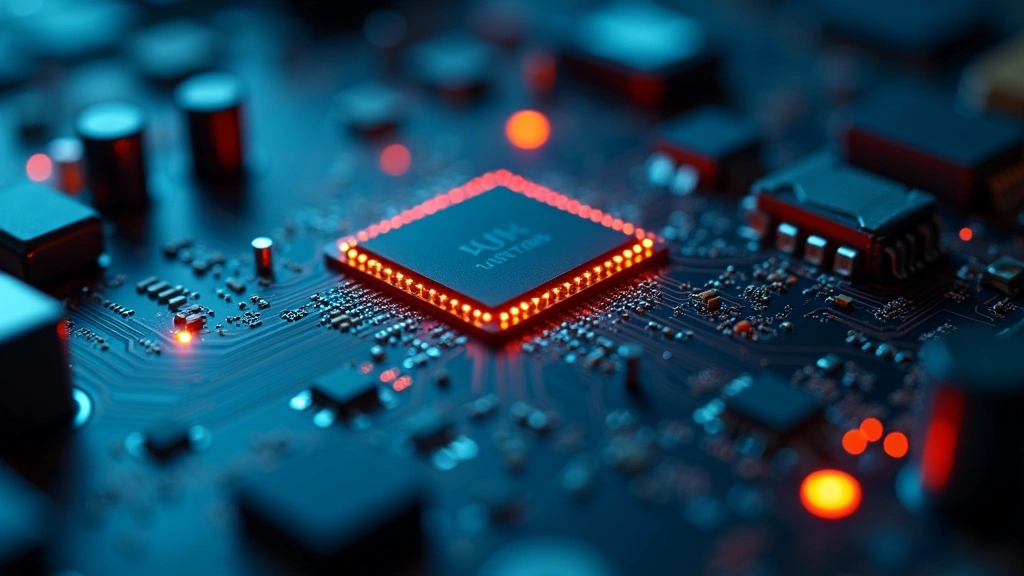
CPS Tech Gadgets: Are They the Future?
Cyber-Physical Systems (CPS) represent one of the most transformative technological paradigms of our era, bridging the digital and physical worlds in ways that were once purely theoretical. CPS tech gadgets integrate computing, networking, and physical processes into seamlessly coordinated systems that respond to real-world conditions in real-time. From smart home devices to autonomous vehicles, industrial IoT sensors to wearable health monitors, these interconnected gadgets are fundamentally reshaping how we live, work, and interact with our environment.
The convergence of artificial intelligence, cloud computing, and embedded systems has accelerated CPS adoption across consumer and enterprise markets. When you explore the latest tech gadget reviews, you’ll notice an overwhelming emphasis on connectivity, automation, and intelligent decision-making—hallmarks of true CPS technology. But are these innovations merely incremental improvements, or do they represent a fundamental shift in how technology will function going forward? This comprehensive analysis examines whether CPS tech gadgets truly constitute the future of consumer electronics and industrial systems.
What Are CPS Tech Gadgets?
Cyber-Physical Systems represent a fundamental evolution beyond traditional embedded systems. While conventional gadgets operate with predetermined programming, CPS tech devices actively monitor their environment, collect real-time data, communicate with other systems, and make autonomous decisions based on complex algorithms and machine learning models. This closed-loop feedback mechanism distinguishes genuine CPS implementations from simple connected devices.
A CPS gadget typically incorporates several essential components: sensors that gather environmental data, processors that analyze information locally or in the cloud, actuators that execute physical changes, and communication protocols that enable device-to-device and device-to-cloud interaction. The intelligence lies not just in individual components but in the orchestration of these elements into a cohesive system that demonstrates adaptive behavior.
Consider the distinction between a traditional thermostat and a modern smart thermostat with CPS capabilities. The former responds to preset temperature thresholds; the latter learns your schedule, observes weather patterns, monitors occupancy, and optimizes energy consumption while maintaining comfort. This represents a qualitative difference in technological sophistication that defines the CPS paradigm.
Understanding enterprise technology infrastructure becomes increasingly important as CPS gadgets proliferate in business environments. Organizations must ensure proper integration, security protocols, and maintenance frameworks to maximize CPS deployment effectiveness.
Core Technologies Driving CPS Innovation
Several foundational technologies enable modern CPS gadgets to function effectively. 5G and beyond wireless networks provide the low-latency, high-bandwidth connectivity required for real-time data transmission and remote control capabilities. Edge computing allows data processing to occur at the device level, reducing dependency on cloud infrastructure and enabling faster response times critical for time-sensitive applications.
Artificial intelligence and machine learning algorithms represent another pillar of CPS advancement. These technologies enable gadgets to recognize patterns, predict failures, optimize performance, and adapt to changing conditions without explicit human programming. Natural language processing allows voice control interfaces that feel intuitive and responsive.
Internet of Things (IoT) protocols like MQTT, CoAP, and Zigbee standardize communication between heterogeneous devices, creating ecosystems where gadgets from different manufacturers can interoperate. Blockchain technology is emerging in certain CPS applications to provide secure, decentralized verification of device authenticity and transaction integrity.
Battery technology improvements, particularly solid-state and long-duration cells, have extended operational periods for portable CPS gadgets. Advanced sensors—including LiDAR, multi-spectrum cameras, and environmental sensors—provide increasingly granular environmental awareness. When researching technology trends and innovations, you’ll observe these enabling technologies appearing consistently across product announcements and industry forecasts.
Current Market Applications and Examples
The CPS gadget market has expanded dramatically across multiple sectors. Healthcare wearables exemplify sophisticated CPS implementation: devices like smartwatches and fitness trackers continuously monitor vital signs, detect irregular patterns, alert users to potential health issues, and transmit data to medical professionals. Advanced versions can trigger emergency protocols autonomously.
Autonomous vehicles represent perhaps the most complex CPS systems currently deployed. These vehicles integrate dozens of sensors, process terabytes of data per hour, make split-second decisions affecting passenger safety, and communicate with infrastructure and other vehicles. The sophistication required surpasses anything previously achieved in consumer electronics.
Smart home ecosystems have matured into legitimate CPS platforms. Modern systems orchestrate lighting, climate control, security, appliance operation, and entertainment based on occupancy detection, time-of-day patterns, energy pricing signals, and user preferences. These systems learn and adapt, improving their decision-making over time.
Industrial IoT sensors and controllers represent the enterprise CPS frontier. Manufacturing facilities deploy thousands of sensors monitoring equipment performance, environmental conditions, and process parameters. Predictive maintenance algorithms analyze this data to identify components requiring replacement before failure occurs, reducing downtime and extending equipment lifespan significantly.
The Smart Home Revolution
Smart homes exemplify how CPS technology transforms consumer spaces. Modern implementations go far beyond simple automation, incorporating genuine intelligence and adaptive behavior. A fully realized CPS smart home understands resident preferences, anticipates needs, responds to environmental changes, and optimizes resource consumption automatically.
Smart thermostats demonstrate CPS principles effectively. Devices like Nest and Ecobee learn heating and cooling patterns, adjust based on weather forecasts, recognize when residents are away, and coordinate with utility companies to reduce consumption during peak pricing periods. They communicate with other home systems, adjusting lighting and ventilation in concert with temperature management.
Security systems have evolved into comprehensive CPS platforms. Modern installations integrate door locks, window sensors, cameras, motion detectors, and alarm systems into unified networks that recognize normal activity patterns, identify anomalies, alert residents in real-time, and can trigger predetermined responses automatically. Machine learning distinguishes between authorized activity and potential threats.
Kitchen appliances increasingly incorporate CPS functionality. Smart refrigerators track inventory, suggest recipes based on available ingredients, place grocery orders when supplies run low, and communicate with other appliances to coordinate meal preparation timing. Ovens preheat automatically and adjust temperatures based on food monitoring sensors.
The convergence of smart home technology with major platform developments suggests accelerating integration and standardization across consumer CPS ecosystems. Major technology companies are investing heavily in smart home infrastructure, indicating confidence in long-term market viability.
Industrial and Enterprise CPS Solutions
Enterprise implementations of CPS technology deliver quantifiable business value. Manufacturing facilities deploying Industrial CPS systems report significant improvements in operational efficiency, quality control, and predictive maintenance capabilities. These systems monitor thousands of parameters simultaneously, identifying optimization opportunities humans would miss.
Predictive maintenance represents perhaps the most valuable CPS application in industrial settings. Rather than following fixed maintenance schedules, systems analyze equipment performance data, identify degradation patterns, and predict failure before it occurs. This approach reduces unexpected downtime by up to 45% and extends equipment lifespan by 20-40%.
Supply chain management benefits enormously from CPS implementation. RFID tags, GPS trackers, and environmental sensors provide real-time visibility into inventory location, condition, and movement. Logistics systems optimize routing, predict delivery times accurately, and identify spoilage or damage immediately.
Energy management represents another critical CPS domain. Smart grids integrate distributed renewable energy sources, battery storage systems, and consumption patterns into coordinated networks that balance supply and demand dynamically. These systems reduce waste, improve reliability, and enable higher renewable energy penetration.
Healthcare facilities deploy CPS systems for patient monitoring, medication management, equipment tracking, and resource optimization. Connected medical devices provide continuous vital sign monitoring, alert clinicians to critical changes, and coordinate with electronic health records systems for comprehensive patient data integration.
Challenges and Limitations
Security vulnerabilities represent the most significant challenge facing widespread CPS adoption. Interconnected systems create expanded attack surfaces; compromise of a single device can potentially provide access to entire networks. Manufacturers must implement robust encryption, regular security updates, and authentication protocols, yet many current implementations fall short.
Interoperability issues persist despite standardization efforts. Different manufacturers use proprietary protocols, creating closed ecosystems that prevent seamless integration. A device from one ecosystem often cannot communicate effectively with systems from competitors, limiting user flexibility and system functionality.
Privacy concerns escalate as CPS gadgets collect increasingly detailed personal data. Smart home systems track occupancy patterns, activity timing, and preference details that could be exploited if security is compromised. Regulatory frameworks like GDPR impose strict requirements on data handling, increasing compliance complexity.
Reliability and latency issues affect certain CPS applications critically. Autonomous vehicles, medical devices, and industrial systems require guaranteed response times and near-perfect reliability. Network congestion, hardware failures, or software bugs cannot be tolerated in safety-critical applications.
Cost barriers limit CPS adoption among price-sensitive consumers. High-quality CPS gadgets command premium prices, and comprehensive ecosystem implementation requires substantial investment. This creates a digital divide where affluent users benefit from advanced CPS capabilities while others lack access.
Exploring investment opportunities in technology reveals that companies addressing these CPS challenges—particularly in security, interoperability, and cost reduction—attract significant capital and market attention.
Future Outlook and Market Projections
Market research firms project explosive CPS gadget growth over the coming decade. Global IoT device shipments are expected to exceed 15 billion units annually by 2030, with CPS-capable devices representing an increasing percentage of that total. Enterprise CPS adoption particularly shows strong growth momentum.
Edge AI represents a transformative trend in CPS evolution. Processing artificial intelligence algorithms directly on devices rather than relying on cloud connectivity enables faster response times, improved privacy, and functionality during network outages. This architectural shift will enable new applications and improve existing implementations significantly.
Quantum computing may eventually revolutionize CPS optimization capabilities. Complex system coordination problems that are computationally intractable with classical computers could become solvable with quantum processors, enabling unprecedented optimization in logistics, energy management, and manufacturing.
6G networks, expected in the early 2030s, will provide ultra-low latency and massive bandwidth that enable new CPS applications currently impossible. Holographic communication, real-time remote surgery, and fully autonomous systems at scale become feasible with 6G infrastructure.
Sustainability considerations increasingly drive CPS development. Smart grid systems, precision agriculture, and environmental monitoring CPS gadgets help optimize resource consumption and reduce waste. As climate concerns intensify, CPS technology becomes critical infrastructure for achieving sustainability objectives. Professionals interested in this intersection should explore emerging career opportunities in climate technology.
Standardization efforts are accelerating, with organizations like IEEE and the Industrial Internet Consortium establishing frameworks for CPS interoperability and security. As standards mature, ecosystem lock-in decreases, enabling more fluid device mixing and user choice.
The convergence of CPS technology with augmented reality, virtual reality, and extended reality platforms will create immersive interactive experiences. Users will control physical systems through virtual interfaces, and digital information will overlay physical environments in real-time.
Frequently Asked Questions
What distinguishes CPS gadgets from regular smart devices?
CPS gadgets incorporate closed-loop feedback systems where devices continuously sense their environment, process information intelligently, and take autonomous actions based on learned patterns and real-time conditions. Regular smart devices typically follow preset programming without adaptive learning or autonomous decision-making capabilities.
Are CPS gadgets secure enough for sensitive applications?
Security varies significantly across implementations. Enterprise-grade CPS systems in healthcare and critical infrastructure undergo rigorous security testing and implement advanced protection measures. Consumer CPS gadgets show more variable security practices. Users should research manufacturer security records and implement network security measures when deploying CPS systems.
How much does a comprehensive CPS smart home system cost?
Complete CPS smart home installations typically range from $3,000 to $15,000+ depending on home size, desired features, and system sophistication. Individual devices range from $50 for simple sensors to $500+ for advanced control hubs. Phased implementation allows spreading costs over time.
Can CPS gadgets function without internet connectivity?
Many CPS gadgets incorporate edge computing capabilities, enabling local operation without cloud connectivity. However, functionality may be reduced—cloud-based machine learning models won’t update, remote access becomes unavailable, and some advanced features require internet access. Local-first architecture is increasingly common in modern CPS implementations.
What’s the expected lifespan of CPS gadgets?
Hardware typically lasts 5-10 years depending on usage and environmental conditions. Software support varies; some manufacturers provide updates for 5-7 years, while others discontinue support sooner. Battery-powered devices may require battery replacement after 2-4 years of heavy use.
Which CPS gadgets offer the best return on investment?
Smart thermostats typically deliver 1-2 year payback through energy savings. Smart lighting systems reduce electricity consumption by 15-25%. Industrial predictive maintenance systems often achieve payback within 6-12 months through reduced downtime. ROI depends heavily on baseline usage and local utility rates.


