Are Electric Cars the Future? Expert Analysis
The automotive industry stands at an unprecedented crossroads. As traditional internal combustion engines face mounting environmental scrutiny and regulatory pressure, electric vehicles (EVs) have emerged from niche novelty to mainstream contender. But is this truly the future of personal transportation, or merely a transitional phase? This comprehensive analysis examines the technological, economic, and practical factors reshaping how we think about cars powered by batteries instead of gasoline.
Electric vehicles represent far more than simple swaps of fuel sources. They embody a fundamental reimagining of automotive architecture, performance characteristics, and the relationship between vehicles and smart infrastructure. Understanding whether EVs constitute our automotive future requires examining cutting-edge battery technology, charging networks, market adoption rates, and the sophisticated artificial intelligence systems increasingly managing vehicle operations and energy distribution.
The Battery Revolution: Core Technology
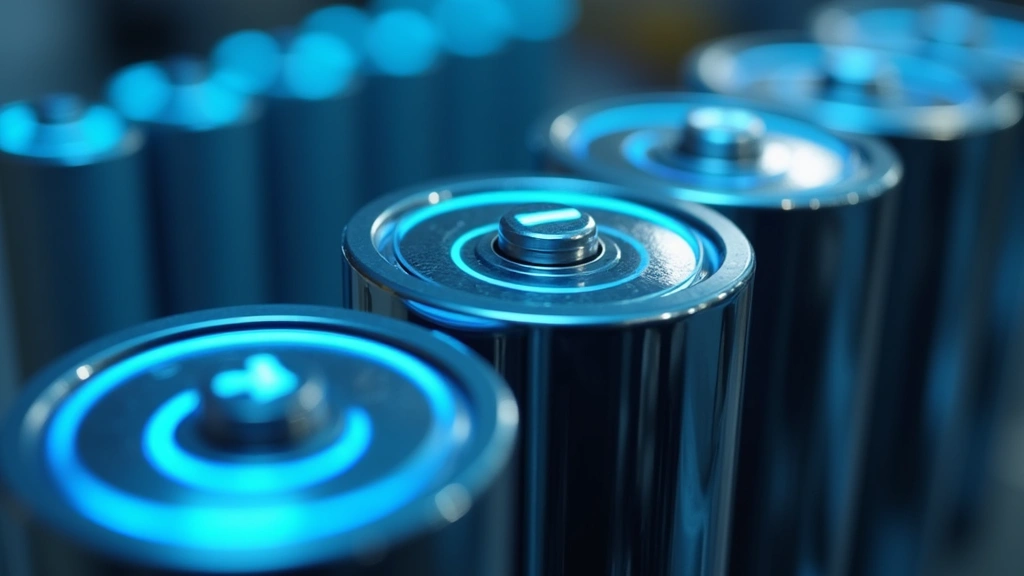
Modern electric vehicles depend entirely on lithium-ion battery technology, which has undergone dramatic improvements over the past decade. Contemporary EV batteries deliver energy density ranging from 200-300 watt-hours per kilogram, compared to roughly 40-50 watt-hours per kilogram in earlier generations. This exponential advancement directly translates to increased range, reduced charging times, and improved overall vehicle performance.
Tesla’s 4680 battery cells exemplify current cutting-edge development, featuring cylindrical designs that increase energy capacity while reducing manufacturing complexity. These cells deliver approximately 5 times more energy, 6 times more power, and 16 percent greater range than previous-generation technology. Competitors including CNET’s automotive division reports that solid-state batteries—currently in development phases—promise to revolutionize the sector further by replacing liquid electrolytes with solid materials, potentially doubling energy density within five years.
Battery management systems have evolved into sophisticated electronic ecosystems featuring thermal regulation, cell balancing algorithms, and predictive maintenance capabilities powered by artificial intelligence applications. These systems continuously monitor individual cell performance, optimize charging patterns based on driving habits and weather conditions, and extend battery lifespan from typical 8-10 year warranties to projected 15-20 year operational periods. The integration of machine learning algorithms enables vehicles to learn driver patterns and preemptively manage battery resources accordingly.
Performance Specifications vs Combustion Engines
Electric motors deliver maximum torque instantaneously—a characteristic fundamentally different from gasoline engines that require RPM buildup. The Tesla Model S Plaid accelerates from 0-60 mph in 2.1 seconds, surpassing nearly all production sports cars. This immediate power delivery stems from electric motors producing peak torque from zero RPM, whereas traditional engines require thousands of revolutions to reach maximum output.
Acceleration metrics tell only part of the performance story. Regenerative braking systems convert kinetic energy during deceleration back into battery charge, recovering 15-25 percent of energy that combustion vehicles waste as heat. This technology extends driving range while reducing brake wear and maintenance costs. Premium EV models now incorporate dual-motor all-wheel-drive systems offering independent torque vectoring—continuously adjusting power distribution between wheels for enhanced handling characteristics.
Range specifications have become competitive with traditional vehicles. Current generation EVs deliver 200-400 miles per charge under EPA testing conditions, with premium models exceeding 500 miles. However, real-world range varies significantly based on driving conditions, temperature, and driving style. Cold weather reduces battery efficiency by 20-40 percent, while highway driving at constant high speeds consumes more energy than urban stop-and-go patterns. The Verge’s automotive coverage notes that manufacturers increasingly employ EPA-adjusted estimates rather than theoretical maximums, providing more realistic consumer expectations.
Charging Infrastructure Development
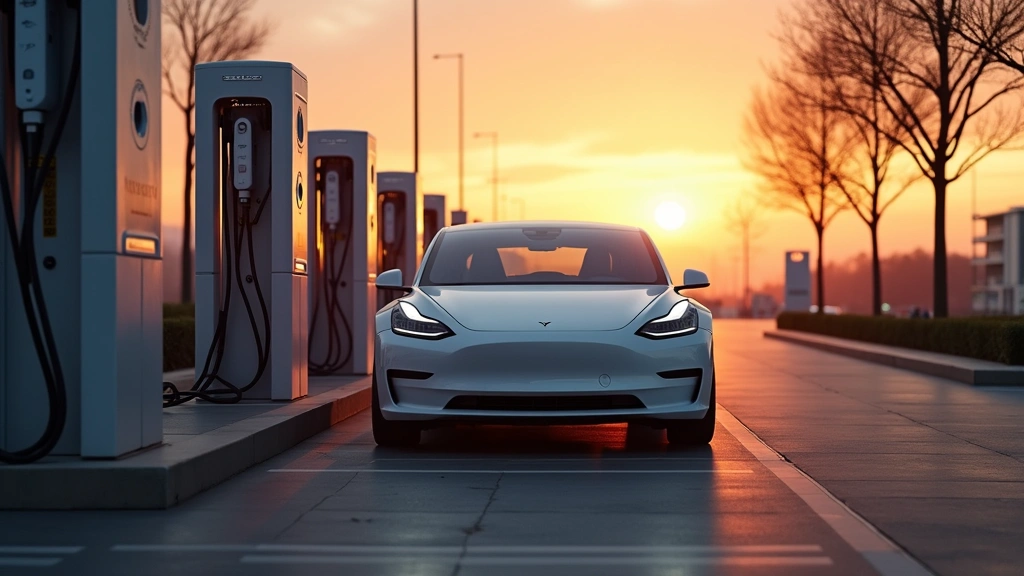
Charging infrastructure represents perhaps the most critical factor determining EV adoption rates. Home charging via standard 240-volt Level 2 chargers delivers 25-30 miles of range per hour, suitable for daily commute needs but insufficient for long-distance travel. Direct current fast charging stations provide 150-350 kW output, adding 200 miles of range in 20-30 minutes, though battery thermal management prevents truly rapid charging indefinitely.
The United States currently operates approximately 50,000 public charging stations, with Tesla’s Supercharger network comprising roughly 60 percent of the total. However, distribution remains highly uneven geographically, with coastal regions and urban areas enjoying extensive infrastructure while rural communities face significant charging deserts. The Biden administration allocated $7.5 billion toward establishing 500,000 public chargers by 2030, representing unprecedented federal infrastructure investment in EV support systems.
Charging standards fragmentation creates consumer confusion and operational inefficiency. Tesla recently opened Supercharger networks to competing manufacturers after initially maintaining proprietary access, while the industry gradually standardizes on NACS (North American Charging Standard). This transition period creates temporary incompatibility issues that technology solutions continue addressing through adapter availability and software updates. International markets employ different standards entirely, with Europe utilizing CCS connectors and China developing proprietary systems.
Global Market Adoption Trends
Global EV sales reached approximately 13.6 million vehicles in 2023, representing roughly 14 percent of worldwide automotive sales. This marks substantial growth from single-digit percentages just five years ago, though adoption rates vary dramatically by geography. Norway leads with 90 percent of new vehicle sales being electric, reflecting aggressive government incentives and high gasoline prices. China commands approximately 60 percent of global EV production and 55 percent of global EV sales, driven by government subsidies, manufacturing expertise, and aggressive domestic competition.
United States EV adoption reached 13.6 percent of new vehicle sales in 2023, concentrated heavily among affluent demographics in coastal metropolitan areas. Pickup trucks and SUVs—America’s traditionally dominant vehicle categories—have seen slower EV penetration, though Ford F-150 Lightning and Chevrolet Silverado EV represent emerging offerings addressing this market segment. Consumer surveys consistently identify charging availability anxiety and upfront purchase price as primary barriers to adoption among mainstream buyers.
Luxury vehicle manufacturers face an interesting paradox: premium EV adoption rates exceed mainstream market penetration significantly. Porsche, Jaguar, and Mercedes-Benz EV models command waiting lists despite premium pricing, suggesting that early adopters within affluent segments view electric propulsion as desirable rather than merely practical. This phenomenon contrasts sharply with mass-market segments where EV adoption remains tied closely to government incentives and charging infrastructure availability.
Environmental Impact Assessment
Electric vehicles produce zero direct tailpipe emissions, a fundamental advantage over combustion engines. However, comprehensive environmental analysis must account for electricity generation sources and battery manufacturing processes. EVs charged using renewable energy sources (solar, wind, hydroelectric) deliver dramatic emissions reductions compared to combustion vehicles. Even in regions relying partially on fossil fuel power generation, EV lifetime emissions typically remain 50-70 percent lower than comparable gasoline vehicles.
Battery manufacturing represents the most environmentally intensive phase of EV production, requiring energy-intensive mining and processing of lithium, cobalt, nickel, and other materials. A typical EV battery generates approximately 2-8 tons of CO2 equivalent during manufacturing, though this “carbon debt” is repaid through years of zero-emission driving. Most EVs achieve carbon parity with comparable gasoline vehicles after 15,000-30,000 miles of driving, depending on regional electricity generation sources. Subsequent driving provides pure environmental benefit with no equivalent combustion vehicle advantage.
Recycling infrastructure for EV batteries remains underdeveloped but rapidly advancing. Current battery recycling processes recover 90-95 percent of valuable materials including cobalt, nickel, and lithium, enabling second-life applications or remanufacturing into new batteries. Companies like Redwood Materials and Li-Cycle operate large-scale battery recycling facilities recovering materials worth hundreds of dollars per battery, creating economic incentives for comprehensive recycling infrastructure development.
Total Cost of Ownership Analysis
Purchase price remains the most visible barrier to EV adoption. A typical EV costs $5,000-$15,000 more than a comparable combustion vehicle, though federal tax credits up to $7,500 and state incentives narrow this gap considerably. However, total cost of ownership calculations reveal different economic realities. EV charging costs approximately 3-4 cents per mile, compared to 10-12 cents per mile for gasoline vehicles at current fuel prices. Annual maintenance costs for EVs run 40-60 percent lower than combustion vehicles due to eliminated oil changes, simpler drivetrains, and regenerative braking reducing wear.
Battery replacement costs have declined dramatically as manufacturing scales increase. Replacement battery packs now cost $5,000-$15,000 depending on capacity, compared to $30,000-$50,000 just five years ago. Most manufacturers provide 8-10 year battery warranties covering degradation exceeding 70-80 percent capacity retention, effectively eliminating catastrophic replacement costs during typical vehicle ownership periods. Insurance costs for EVs have begun approaching parity with comparable combustion vehicles as repair expertise expands and accident statistics accumulate.
Depreciation patterns for EVs show improvement as market maturity increases and range anxiety diminishes. Early EV models suffered severe depreciation as technology rapidly advanced, but current generation vehicles hold value more predictably. Used EV markets are developing maturity, with certified pre-owned vehicles offering significant discounts while maintaining substantial remaining battery life.
Future Technologies and Innovations
Solid-state battery technology represents the next major breakthrough, potentially doubling energy density and reducing charging times to 10-15 minutes for full charges. Toyota, QuantumScape, and Samsung are aggressively pursuing commercialization, with initial production potentially beginning in 2027-2030. These batteries eliminate flammability concerns associated with liquid electrolytes while enabling higher energy density for extended range without proportional weight increases.
Wireless charging infrastructure is advancing from theoretical concepts toward practical deployment. Several manufacturers are testing dynamic wireless charging embedded in roadways, enabling vehicles to charge while driving. This technology could fundamentally transform EV practicality by eliminating range anxiety entirely, though infrastructure costs and efficiency considerations present substantial implementation challenges.
Vehicle-to-grid (V2G) technology enables EVs to discharge stored energy back into electrical grids during peak demand periods, transforming vehicles from mere consumers into distributed energy storage resources. This bidirectional capability creates economic opportunities for EV owners while stabilizing grid performance during renewable energy fluctuations. The cloud computing infrastructure supporting smart grid management increasingly integrates V2G capabilities, enabling sophisticated demand response optimization.
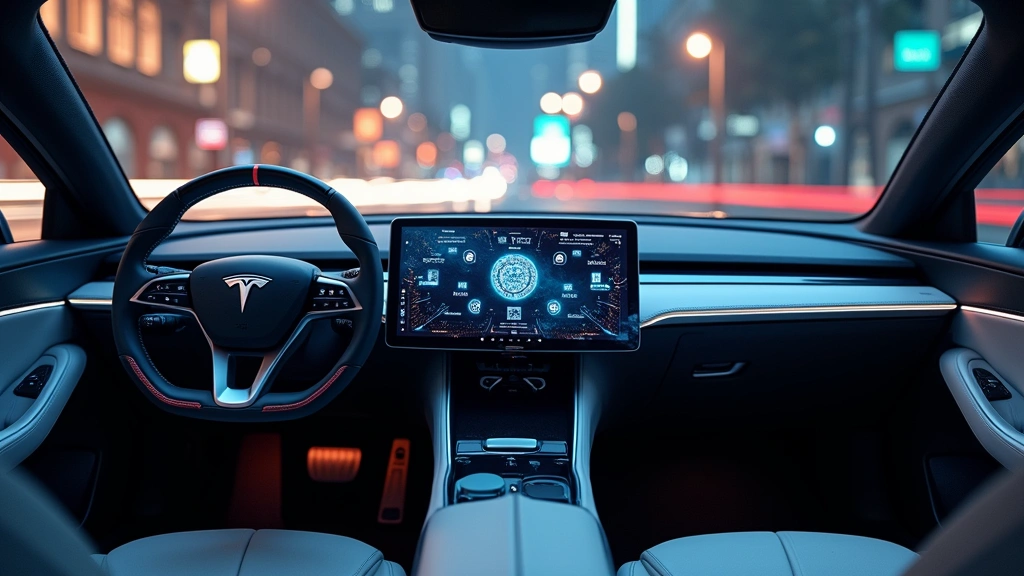
Autonomous driving technology integrates closely with EV development, as electric architecture inherently supports the sophisticated sensors, processors, and actuators autonomous systems require. Tesla’s Full Self-Driving Beta, Waymo’s autonomous ride-hailing services, and Cruise Origin autonomous shuttle exemplify converging EV and autonomy development trajectories.
Lightweight materials including carbon fiber composites and aluminum alloys continue advancing, reducing vehicle weight and proportionally extending range. Structural battery packs that integrate battery cells into vehicle chassis components promise dramatic weight reductions while improving packaging efficiency. BMW and Volkswagen are among manufacturers actively developing structural battery integration for next-generation models.
Solid-state and lithium-metal batteries under development promise energy densities exceeding 400 watt-hours per kilogram, potentially enabling 600-800 mile ranges in conventional vehicle form factors. These advances would effectively eliminate practical distinctions between EV and combustion vehicle driving experiences regarding range and refueling time, accelerating mainstream adoption substantially.
FAQ
How long do electric vehicle batteries last?
Modern EV batteries typically retain 80-90 percent capacity after 8-10 years or 100,000-150,000 miles. Most manufacturers warrant batteries against degradation exceeding 70-80 percent retention during this period. Real-world data from Tesla owners with 300,000+ miles show batteries retaining 85-90 percent capacity, suggesting lifespan may exceed 20 years under typical ownership conditions. Battery degradation occurs gradually rather than catastrophically, rarely requiring replacement during normal vehicle ownership periods.
Can electric cars travel long distances?
Modern EVs with 300-400+ mile ranges handle most long-distance driving adequately when charging infrastructure exists. Road trips require strategic charging stops—typically 20-30 minute breaks every 200-250 miles—rather than traditional gasoline vehicle fueling patterns. Premium models exceeding 500 miles range approach combustion vehicle capabilities. Charging network expansion continues reducing practical limitations, though rural regions still present challenges. Trip planning applications now automatically route vehicles through optimal charging locations.
Are electric cars more expensive than gas cars?
Purchase prices typically run $5,000-$15,000 higher, though federal tax credits reduce this premium substantially. However, total cost of ownership calculations favor EVs significantly due to lower fuel costs (3-4 cents per mile versus 10-12 cents), dramatically reduced maintenance expenses, and improving resale values. Most analyses show EVs achieving purchase price parity within 5-7 years of ownership through cumulative fuel and maintenance savings.
What happens if an electric car runs out of battery?
Modern EVs provide extensive range warnings and navigation guidance directing drivers toward charging stations. Running completely out of battery is virtually impossible in practice due to driver notifications and charging infrastructure guidance. Should battery depletion occur, towing services can transport vehicles to charging locations, though this remains rare due to conservative battery management algorithms and driver awareness systems.
Do electric cars work in cold weather?
Cold weather reduces EV range 20-40 percent due to decreased battery efficiency and increased cabin heating energy demands. However, modern thermal management systems, preconditioning capabilities, and heat pump technology minimize these effects compared to early EV generations. Owners in cold climates typically experience 200-300 mile range reductions rather than dramatic usability impacts. Garage charging and preconditioning before driving substantially mitigate cold weather effects.


