Future of Aerospace Tech? Expert Insights Into Next-Generation Aviation
The aerospace industry stands at an inflection point. As we venture deeper into the 21st century, technological innovations are reshaping how we think about flight, space exploration, and air transportation. From autonomous aircraft systems to advanced materials science, the future promises transformative changes that will redefine the boundaries of human achievement in the skies and beyond.
Industry experts predict that the next decade will witness unprecedented acceleration in aerospace technology adoption. The convergence of artificial intelligence, sustainable propulsion systems, and next-generation avionics creates a perfect storm of innovation. Companies like SpaceX, Boeing, and Airbus are investing billions into research and development, signaling confidence in these emerging technologies. Understanding these developments is crucial for anyone interested in the intersection of technology and innovation.
This comprehensive guide explores the cutting-edge developments shaping aerospace technology today. We’ll examine expert perspectives, analyze breakthrough innovations, and discuss the implications for commercial aviation, space exploration, and beyond.
AI and Autonomous Systems: The Intelligent Cockpit
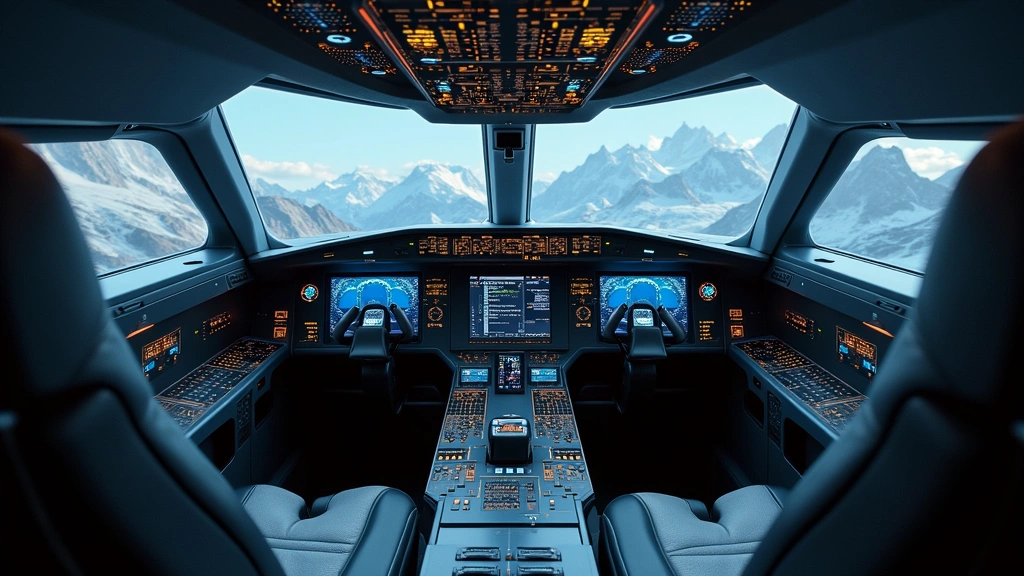
Artificial intelligence represents perhaps the most transformative force in modern aerospace technology. Unlike consumer applications discussed in our artificial intelligence in gaming exploration, aerospace AI focuses on safety-critical systems where precision and reliability are non-negotiable.
Autonomous flight systems are advancing rapidly. Modern aircraft already employ sophisticated autopilot systems, but next-generation autonomous systems go far beyond maintaining altitude and heading. These systems integrate real-time weather analysis, predictive maintenance algorithms, and adaptive flight path optimization. According to The Verge’s technology coverage, autonomous capabilities are expected to handle increasingly complex scenarios without human intervention.
The development of machine learning models trained on millions of flight hours enables predictive decision-making. These systems can anticipate equipment failures, optimize fuel consumption, and suggest route adjustments based on atmospheric conditions. Experts emphasize that human pilots won’t disappear—instead, they’ll evolve into system managers overseeing increasingly intelligent aircraft.
Key developments in AI-powered aerospace include:
- Predictive maintenance systems that analyze sensor data to identify component degradation before failure
- Natural language processing for enhanced pilot-aircraft communication
- Computer vision systems for autonomous landing and taxiing operations
- Real-time threat detection for collision avoidance and weather hazard identification
- Adaptive control algorithms that adjust aircraft behavior based on environmental conditions
Major aerospace manufacturers have established dedicated AI research divisions. Boeing’s autonomous flight systems laboratory and Airbus’s AI innovation hub demonstrate institutional commitment to these technologies. Industry analysts predict that autonomous cargo aircraft will enter service within 5-7 years, with passenger aircraft following as safety certifications mature.
” alt=”Advanced aerospace cockpit with digital displays and AI integration systems”>
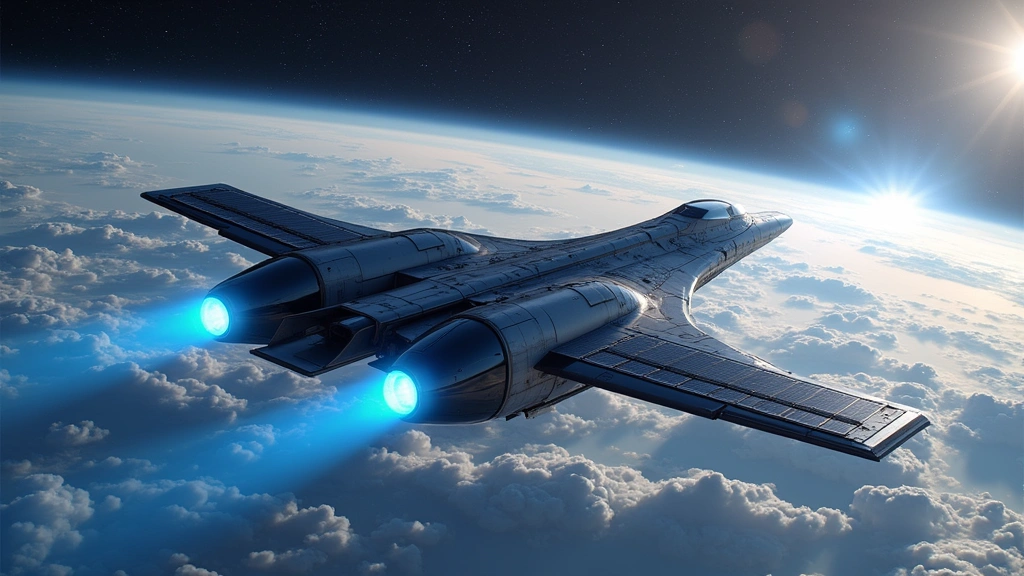
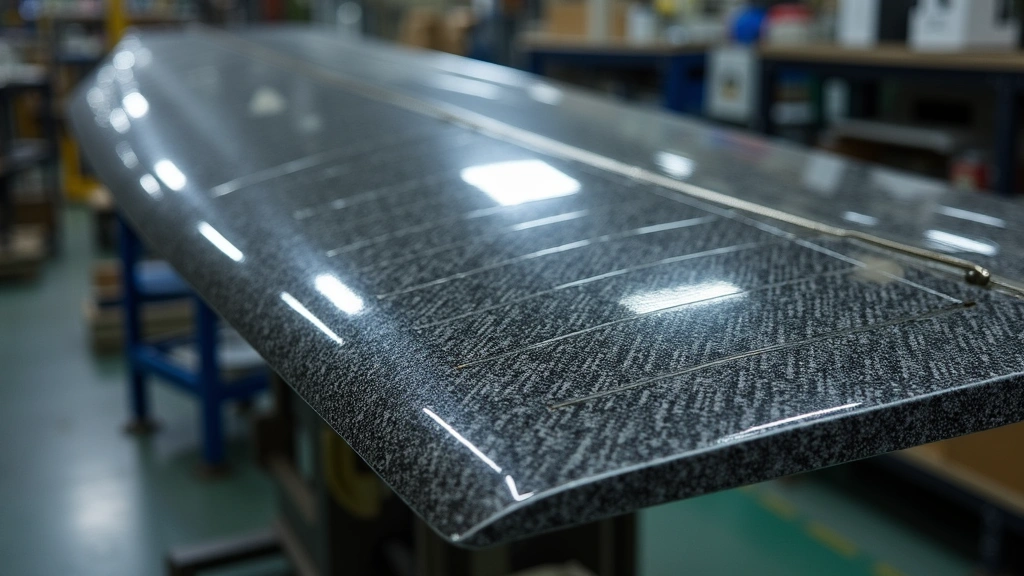
Environmental concerns drive urgent innovation in propulsion systems. Aviation currently accounts for approximately 2-3% of global carbon emissions, a figure that’s unsustainable as air travel demand increases. The aerospace industry is pursuing multiple pathways to decarbonization. Electric propulsion represents the most visible near-term solution. Regional aircraft with 50-100 passenger capacities could operate on electric batteries within the next decade. Companies like Heart Aerospace and Eviation are developing electric aircraft prototypes, with certification expected by 2025-2026. However, battery energy density remains a limiting factor for long-haul flights, restricting current electric designs to shorter routes. Hybrid-electric systems offer a pragmatic intermediate solution. These architectures combine traditional jet engines with electric motors, optimizing efficiency across different flight phases. Takeoff and climb—the most fuel-intensive phases—benefit from electric power, while cruise utilizes conventional engines. This approach could reduce fuel consumption by 30-50% depending on mission profile. Sustainable aviation fuels (SAF) provide another critical pathway. These drop-in replacements for conventional jet fuel can reduce lifecycle carbon emissions by up to 80%. Major airlines including United, Southwest, and Lufthansa have committed to SAF adoption, with production capacity expanding rapidly. CNET’s technology analysis highlights that SAF compatibility requires minimal aircraft modifications, enabling rapid deployment. Advanced propulsion concepts under development include: The International Air Transport Association (IATA) targets net-zero carbon emissions by 2050. Achieving this goal requires coordinated adoption of multiple technologies. No single solution suffices—instead, a portfolio approach combining improved engines, lightweight materials, operational efficiency, and sustainable fuels will drive progress. Modern aircraft already incorporate substantial quantities of composite materials, but next-generation designs push these technologies further. Carbon fiber composites reduce weight compared to aluminum while offering superior fatigue resistance. Boeing’s 787 Dreamliner exemplifies this approach, with composites comprising approximately 50% of structural weight. Emerging materials promise even greater advantages. Advanced ceramics withstand higher temperatures than traditional alloys, enabling more efficient engines. Graphene-enhanced composites offer improved strength-to-weight ratios and thermal conductivity. Shape-memory alloys can morph aircraft surfaces dynamically to optimize aerodynamics across flight regimes. Additive manufacturing (3D printing) revolutionizes aerospace component production. Rather than machining parts from solid stock—a wasteful process—additive techniques build components layer-by-layer. This approach reduces material waste by up to 90%, cuts production time significantly, and enables complex geometries impossible with traditional manufacturing. GE Aviation already produces 3D-printed fuel nozzles for commercial engines, with thousands deployed globally. These nozzles demonstrate superior performance while reducing weight by 25%. Expansion into larger structural components represents the natural next step, with GE’s aerospace division leading development efforts. Manufacturing innovations supporting aerospace advancement: These manufacturing advances directly support sustainable development. By reducing material consumption and enabling lightweight designs, advanced manufacturing contributes to fuel efficiency improvements. The synergy between materials science, manufacturing technology, and design optimization creates compounding benefits. Space technology advancement accelerates at an extraordinary pace. Reusable launch vehicles pioneered by SpaceX have fundamentally altered the economics of space access. The Falcon 9 rocket’s ability to land and reflew reduces launch costs by orders of magnitude compared to expendable alternatives. Reusability principles extend beyond launch vehicles. SpaceX’s Starship program aims for fully reusable super-heavy lift capability, potentially reducing deep space mission costs dramatically. Blue Origin’s New Shepard and New Glenn vehicles pursue similar objectives through different technical approaches. Commercial space stations represent the next frontier. Axiom Space is constructing modular space station segments for assembly in orbit, eventually serving as an independent facility after International Space Station retirement. This commercialization enables diverse applications—manufacturing, research, tourism, and resource utilization. In-situ resource utilization (ISRU) technologies enable sustained space presence. Mining water ice from lunar poles provides propellant and life support resources. Extracting oxygen from lunar regolith reduces material transport requirements. These capabilities transform space from a destination requiring continuous Earth resupply into a sustainable frontier. Space exploration technology developments include: These developments parallel broader technology trends. Similar to how technology drives renewable energy innovation, space technology advancement benefits from cross-pollination with terrestrial industries. Battery technology, materials science, and autonomous systems developed for commercial applications find space applications, while space-developed technologies often transition to Earth-based uses.Sustainable Propulsion Technologies: Greening the Skies
Advanced Materials and Manufacturing: Building Better Aircraft
Space Exploration Innovations: Beyond Earth’s Atmosphere
” alt=”Advanced spacecraft with ion propulsion systems and solar arrays in orbital environment”>
Modern aircraft generate enormous quantities of data. Thousands of sensors monitor engine performance, structural integrity, system status, and environmental conditions. Harnessing this data through digital transformation initiatives improves operational efficiency and safety. Connected aircraft systems transmit real-time data to ground operations centers. Airlines analyze this information to optimize maintenance scheduling, predict equipment failures, and improve operational efficiency. Rather than following fixed maintenance intervals, predictive approaches perform service only when needed, reducing downtime and costs. The cloud computing infrastructure supporting modern business operations also benefits aerospace. Cloud platforms enable sophisticated data analytics without requiring expensive on-premise infrastructure. Airlines leverage cloud resources to analyze millions of flight parameters, identifying optimization opportunities invisible to traditional analysis methods. Air traffic management modernization represents another critical digital transformation area. Traditional radar-based systems are transitioning to performance-based navigation (PBN) and automatic dependent surveillance-broadcast (ADS-B). These technologies enable more precise aircraft tracking, supporting increased capacity and improved fuel efficiency. Cybersecurity becomes increasingly important as aircraft connectivity expands. Aviation authorities establish stringent requirements for protecting aircraft systems from unauthorized access. Manufacturers implement defense-in-depth strategies, incorporating multiple security layers to prevent compromise. Digital transformation initiatives reshaping aviation include: Advancing aerospace technology requires regulatory approval, a process balancing innovation with safety. Aviation authorities including the FAA, EASA, and CAAC establish certification standards that manufacturers must satisfy before new aircraft enter service. Autonomous systems present particular certification challenges. Regulators must establish performance standards for systems making safety-critical decisions without human intervention. How should autonomous collision avoidance systems be tested? What failure modes must be addressed? How do we validate that autonomous decision-making matches or exceeds human pilot performance? Safety validation for new technologies requires extensive testing. Manufacturers conduct ground testing, simulation, and flight testing under controlled conditions. Only after demonstrating safety equivalence or superiority do regulators approve commercial operations. The path from innovation to deployment typically requires 5-10 years. This timeline frustrates innovators eager to deploy new capabilities but reflects the industry’s appropriate caution. Aviation’s safety record—commercial aviation fatality rates continue declining—demonstrates that this conservative approach works. International harmonization of aerospace standards facilitates global aircraft operations. When the FAA and EASA establish similar certification requirements, manufacturers can design aircraft meeting both standards simultaneously, reducing development costs and accelerating deployment. Regulatory considerations shaping aerospace technology adoption: Autonomous cargo aircraft are expected within 5-7 years, with passenger aircraft following as safety certifications mature. The timeline depends on regulatory approval and public acceptance rather than technical capability. Sustainable aviation fuels reduce lifecycle carbon emissions by up to 80% compared to conventional fuel. They’re compatible with existing aircraft and infrastructure, requiring minimal modifications for adoption. Composites offer superior strength-to-weight ratios compared to aluminum, reducing aircraft weight and improving fuel efficiency. They also provide better fatigue resistance and can be molded into complex shapes. 3D printing reduces material waste by up to 90%, cuts production time, and enables complex geometries impossible with traditional manufacturing. It’s particularly valuable for producing intricate components like fuel nozzles and brackets. AI will enable autonomous flight systems, predictive maintenance, adaptive flight path optimization, and enhanced pilot-aircraft communication. Human pilots will transition from direct control to system management roles. Space-developed technologies like advanced batteries, materials, and autonomous systems often transition to Earth-based applications. The reverse is also true—commercial technologies find space applications through adaptation.Digital Transformation in Aviation: Connected Aircraft and Operations
Regulatory and Safety Challenges: Navigating Certification
FAQ
When will autonomous commercial aircraft enter service?
How do sustainable aviation fuels compare to conventional jet fuel?
What advantages do composite materials provide in aircraft construction?
How does additive manufacturing impact aerospace production?
What role will artificial intelligence play in future aircraft?
How do space exploration technologies benefit terrestrial applications?


