Best VR Headsets for 2023: Expert Picks and Complete Buying Guide
Virtual reality has evolved dramatically over the past few years, transforming from a niche gaming accessory into a legitimate consumer technology category. Whether you’re a hardcore gamer, a creative professional, or someone curious about immersive experiences, finding the right VR headset can be overwhelming with so many options available. Our team has tested dozens of headsets to identify the absolute best performers across different budgets and use cases.
In this comprehensive guide, we’ll break down the top VR headsets of 2023, examining their specifications, performance metrics, and real-world capabilities. We’ve evaluated everything from display quality and processing power to comfort features and content ecosystems. Whether you’re setting up a VR experience in Denver’s tech center or anywhere else, this guide will help you make an informed decision.
Meta Quest 3: The Best Overall VR Headset
The Meta Quest 3 stands as our top recommendation for most consumers in 2023. This standalone headset delivers an impressive balance of performance, affordability, and content availability that’s hard to beat. With its sleek design and intuitive interface, it’s perfect for both VR newcomers and experienced enthusiasts.
The Quest 3 features a dual-LCD display system with 4K resolution across both eyes, providing significantly improved visual clarity compared to previous generations. The 1800×1920 resolution per eye eliminates much of the screen-door effect that plagued earlier headsets. Color accuracy has been enhanced considerably, making games and applications feel more immersive and lifelike.
Processing power comes from Qualcomm’s Snapdragon XR Gen 1 processor, which handles demanding applications with ease. The headset supports both standard VR experiences and mixed reality applications, allowing you to blend digital content with your real environment. This dual capability makes it incredibly versatile for gaming, fitness, productivity, and creative applications.
One standout feature is the integrated hand tracking system. You can navigate menus and interact with applications using just your hands—no controllers required. However, the included Touch controllers offer more precise input for games and applications that demand it. Battery life reaches approximately 2-3 hours of continuous use, which is respectable for a standalone device.
The content library is extensive, featuring thousands of games, fitness apps, educational experiences, and productivity tools. Integration with the latest tech pulse hunter blog updates shows continuous software improvements and new features rolling out regularly.
At $499 for the 128GB model and $649 for 512GB storage, the Quest 3 offers exceptional value. It’s an ideal entry point for anyone wanting to explore VR without breaking the bank.
PlayStation VR2: Premium Console Gaming
Sony’s PlayStation VR2 represents the next generation of console-based virtual reality gaming. If you’re a PlayStation 5 owner seeking the ultimate VR gaming experience, this headset delivers stunning performance specifically optimized for Sony’s gaming ecosystem.
The OLED display technology in PSVR2 provides exceptional contrast ratios and deep blacks that LCD panels simply cannot match. With a 2000×2040 resolution per eye and a 110-degree field of view, games appear incredibly detailed and immersive. The HDR support ensures vibrant colors and improved brightness across gaming content.
What truly sets PSVR2 apart is the eye-tracking technology integrated directly into the headset. This allows games to implement foveated rendering, which concentrates processing power on where you’re actually looking while reducing quality in peripheral vision. This optimization results in better performance and more realistic eye contact during social experiences.
The haptic feedback system in the controllers provides precise tactile sensations that correspond to in-game actions. Whether you’re feeling the recoil of a weapon or the rumble of an engine, these haptics significantly enhance immersion. The controllers also feature adaptive triggers that simulate resistance and tension, adding another layer of realism to gameplay.
PlayStation VR2 requires a PS5 console connection via USB-C, meaning you’re tethered but receiving consistent high-performance gaming. The library of exclusive titles optimized for PSVR2 is growing, with major releases from major studios ensuring excellent content availability. Check out the best new technology products for ongoing PSVR2 game releases and updates.
At $549.99, PSVR2 is a premium investment, but PlayStation 5 owners will find it delivers uncompromised VR gaming performance.
HTC Vive XR Elite: Professional-Grade Performance
The HTC Vive XR Elite targets professionals and enthusiasts who demand cutting-edge technology. This premium standalone headset combines powerful processing with advanced features designed for both entertainment and professional applications.
Featuring dual AMOLED displays with 2064×2064 resolution per eye, the XR Elite delivers stunning visual fidelity. The AMOLED technology ensures perfect blacks and exceptional color accuracy. A 110-degree field of view provides excellent peripheral vision, enhancing the sense of presence in virtual environments.
The processor is Qualcomm’s flagship Snapdragon XR Gen 1 platform, identical to the Quest 3, ensuring excellent performance across demanding applications. However, the Vive XR Elite includes superior cooling systems and optimized power management for extended use sessions.
Eye tracking and face tracking come standard, enabling more natural interactions and sophisticated avatar representations. These features are particularly valuable for professional applications like virtual meetings, design collaboration, and training simulations.
Hand tracking is exceptional, with precise finger detection allowing natural interaction without controllers. The included controllers offer premium build quality and advanced input options for gaming and professional tools.
The headset supports both standalone operation and PC tethering via high-speed wireless connection or USB-C cable. This flexibility allows you to choose between portability and maximum performance depending on your needs.
At $1,699, the Vive XR Elite represents a significant investment, but professionals in architecture, design, engineering, and enterprise training will appreciate the advanced capabilities.
Valve Index: PC VR Excellence
For PC VR enthusiasts, the Valve Index remains the gold standard. This tethered headset delivers exceptional performance when paired with a capable gaming PC, offering features that many standalone headsets still can’t match.
The dual LCD displays provide 1440×1600 resolution per eye with a 120-degree field of view—the widest of any major headset. This expansive view creates an incredibly immersive experience. The 144Hz refresh rate option eliminates motion sickness for sensitive users and provides ultra-smooth gameplay.
The Index Controllers are legendary among VR enthusiasts. Featuring capacitive touch sensors, individual finger tracking, and premium haptic feedback, these controllers enable incredibly natural interactions. The dual-stage triggers and grip sensors allow for nuanced control in games and applications.
The audio system includes integrated speakers that deliver spatial audio without blocking your ears, allowing you to hear both VR audio and real-world sounds simultaneously. This design choice improves safety and reduces ear fatigue during extended sessions.
PC VR gaming offers unparalleled graphical fidelity and processing power compared to standalone headsets. Games can push visual quality to extreme levels, with ray tracing, ultra-high resolution textures, and complex physics simulations becoming standard.
At $999, the Valve Index requires a gaming PC investment (typically $1,500+), making the total cost substantial. However, for hardcore PC gamers, this represents the ultimate VR gaming experience. Check out best tech stocks to invest in if you’re considering companies in the VR hardware space.
Apple Vision Pro: The Future of Spatial Computing
Apple’s Vision Pro represents a paradigm shift in how we think about mixed reality and spatial computing. This premium headset blurs the line between VR and AR, creating experiences that seamlessly blend digital content with your physical environment.
The dual micro-OLED displays deliver 4K resolution per eye with exceptional color accuracy and contrast. The unique optical design provides a wide field of view while maintaining excellent visual clarity. The ability to see through to your environment using external cameras makes this headset incredibly versatile.
The M2 processor combined with a dedicated R1 chip provides processing power comparable to high-end laptops. This enables complex applications, spatial computing tasks, and professional workflows that were previously impossible on wearable devices.
Eye tracking is incredibly sophisticated, enabling natural gaze-based interaction and authentication. Hand tracking precision is exceptional, allowing you to manipulate digital objects with intuitive gestures. The spatial audio system creates realistic directional sound that adapts to your environment.
The killer feature is the external display that shows your eyes to people around you, making social interaction less awkward. The ability to seamlessly transition between fully immersive VR and mixed reality experiences is genuinely impressive.
At $3,499, the Vision Pro is expensive, but it represents Apple’s long-term vision for spatial computing. Early adopters and professionals in design, architecture, and content creation will find tremendous value.
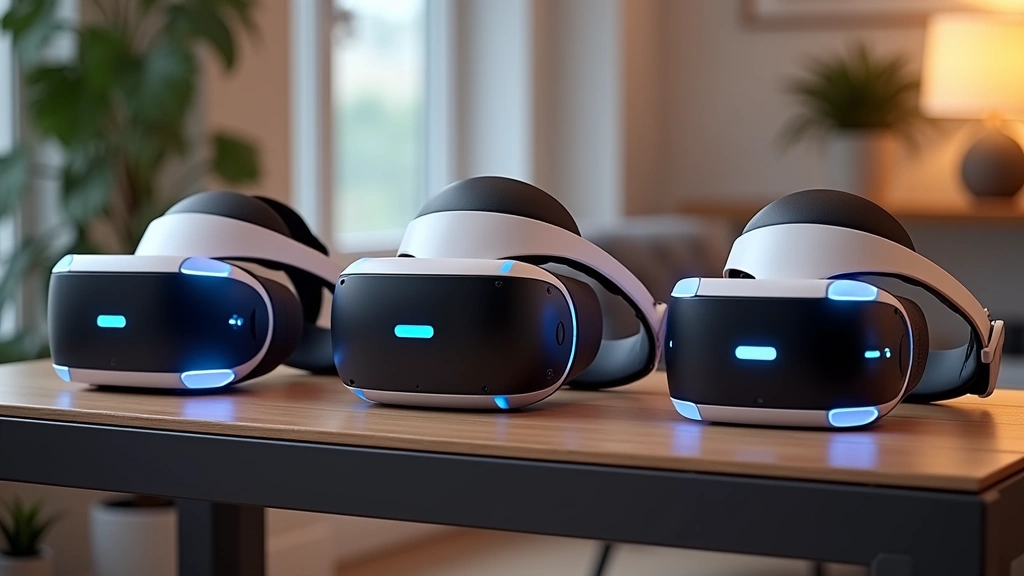
Budget-Friendly Options Worth Considering
If you’re looking for excellent VR experiences without premium pricing, several solid options exist. The Meta Quest 2 (now called Meta Quest 2) remains a fantastic budget choice at $249 for refurbished models. While older than the Quest 3, it still delivers excellent gaming and entertainment experiences.
The Pico 4 offers impressive specs at an aggressive price point, with 4K resolution and solid performance for around $349. It’s particularly popular internationally and offers excellent value for casual users.
For PC VR on a budget, the HTC Vive Focus 3 provides business-focused features at reasonable pricing. While not optimized for gaming, it’s excellent for enterprise applications and training.
Don’t overlook mobile VR solutions if you’re just starting out. While not as advanced as dedicated headsets, devices that use your smartphone can provide an affordable introduction to virtual reality without major upfront investment.
Key Specs Comparison Chart
Here’s how our top headsets compare across critical specifications:
- Meta Quest 3: 1800×1920 per eye, 90Hz refresh rate, 2-3 hour battery, $499
- PlayStation VR2: 2000×2040 per eye, 90-120Hz, requires PS5, $549.99
- HTC Vive XR Elite: 2064×2064 per eye, 90Hz, standalone/PC, $1,699
- Valve Index: 1440×1600 per eye, 144Hz option, PC required, $999
- Apple Vision Pro: 4K per eye, 90Hz, spatial computing focus, $3,499
How to Choose Your Perfect Headset
Selecting the right VR headset depends on several factors. First, consider your budget. Standalone headsets like the Quest 3 offer the best value, while PC-tethered options like the Valve Index demand higher investment but deliver superior performance.
Think about your primary use case. Gaming? The PSVR2 excels for console gaming, while the Valve Index leads in PC gaming. Professional applications? The Vision Pro or Vive XR Elite offer advanced features. Casual entertainment? The Quest 3 is unbeatable.
Consider your physical space. Standalone headsets work anywhere with wireless connectivity, while PC headsets require proximity to your gaming PC. Some headsets need more play space than others.
Content availability matters significantly. The Meta ecosystem offers the largest library of games and applications. PlayStation VR2 is optimized for PS5 exclusives. PC VR has the most hardcore gaming titles. Learn more about artificial intelligence applications that are increasingly powering VR experiences.
Comfort is crucial for extended use. Try headsets in person if possible. Weight distribution, strap design, and lens quality all affect comfort. Some users prefer the halo design of Quest 3, while others like traditional straps.
Future-proofing your investment matters. Headsets with active software development and strong manufacturer support will receive updates and improvements over time. Meta’s commitment to Quest 3 development is impressive, while Apple will likely support Vision Pro for many years.
Check external reviews from trusted sources like The Verge, CNET, and VRHeads for detailed performance benchmarks and long-term reliability assessments.
Visit local tech retailers or VR arcades to try headsets before purchasing. The best headset is the one that feels comfortable and matches your specific needs. Don’t let marketing hype drive your decision—focus on specs that matter for your intended use cases.
FAQ
What’s the difference between standalone and PC VR headsets?
Standalone headsets have built-in processors and don’t require connection to external devices. They offer portability and ease of use but have less processing power than PC-connected headsets. PC VR headsets tether to gaming computers, enabling higher graphical fidelity and more demanding applications but sacrificing mobility.
Do I need a powerful gaming PC for VR?
For PC VR, yes. Minimum specs typically include an NVIDIA GTX 1060 or equivalent, 8GB RAM, and USB 3.0 ports. High-end VR gaming demands an RTX 3070 or better for maximum visual quality and frame rates.
Is VR motion sickness a real concern?
Some users experience motion sickness, particularly with lower refresh rates or high latency. Modern headsets with 90Hz+ refresh rates and excellent tracking minimize this. Starting with slower-paced games and taking breaks helps acclimatization.
How much play space do I need?
Minimum recommended space is 6×6 feet for room-scale VR. Larger spaces allow more natural movement. Some games work in smaller spaces with standing or seated play.
Can I use VR for work and productivity?
Absolutely. Headsets like the Vision Pro and Vive XR Elite support productivity applications. Virtual meetings, design work, training simulations, and collaborative environments are increasingly viable VR applications.
What’s the content library situation for each headset?
Meta Quest has the largest library with thousands of titles. PlayStation VR2 focuses on high-quality exclusive games. PC VR has the most hardcore gaming content. Vision Pro is still building its application ecosystem. Research your intended use cases before purchasing.
How often do VR headsets get updated?
Major hardware updates typically come every 2-3 years. Software updates and new features roll out regularly. The Quest 3 receives frequent updates, as does the Vision Pro. Older headsets may eventually fall behind as software requirements increase.
What about eye strain during extended VR sessions?
Modern displays and optics minimize eye strain, but extended sessions (4+ hours) may cause fatigue. Taking breaks, ensuring proper focus, and using headsets with excellent lens quality helps. Blue light filtering features in some headsets provide additional relief.