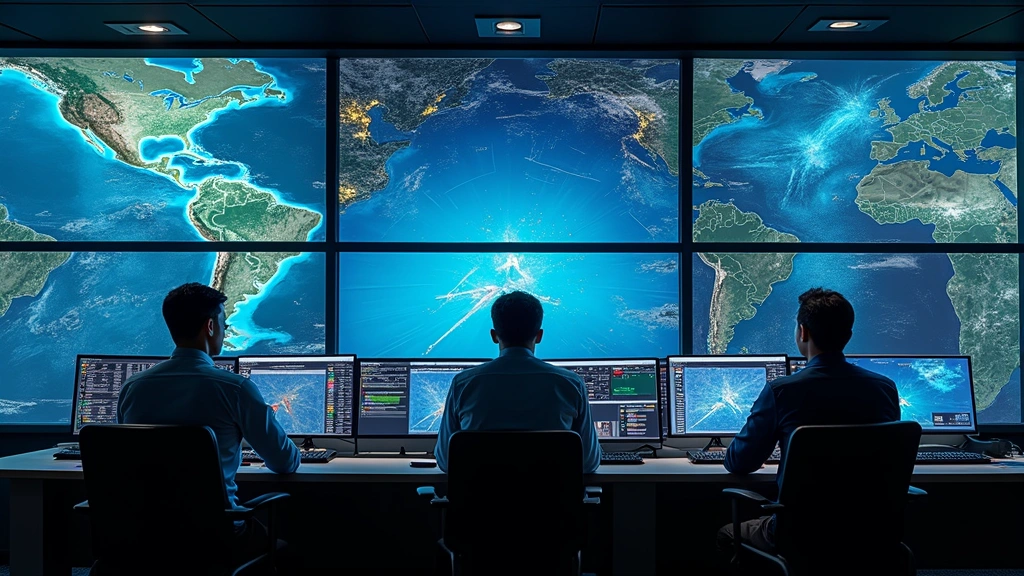
Control Tower Tech: Revolutionizing Air Traffic?
Air traffic control has remained fundamentally unchanged for decades, relying on radar systems, voice communications, and human operators coordinating thousands of flights daily. However, control tower technology is undergoing a dramatic transformation that promises to reshape aviation safety, efficiency, and capacity. From artificial intelligence-powered traffic prediction systems to remote digital towers and automated conflict detection algorithms, the aviation industry is embracing cutting-edge innovations that could revolutionize how we manage one of the world’s most complex operational environments.
The global air traffic management market faces unprecedented pressure. Commercial aviation is expected to double in the coming decades, yet many airports operate at near-maximum capacity with aging infrastructure. Control tower technology represents the critical frontier where innovation directly impacts safety, environmental sustainability, and economic viability. Modern solutions leverage real-time data analytics, machine learning, and advanced visualization to give air traffic controllers superhuman awareness and decision-making capabilities.
This comprehensive review explores the latest control tower tech innovations, examining how these systems work, their real-world applications, implementation challenges, and the future of aviation operations. Whether you’re an aviation professional, investor, or tech enthusiast, understanding these transformative technologies is essential for grasping the future of commercial flight.
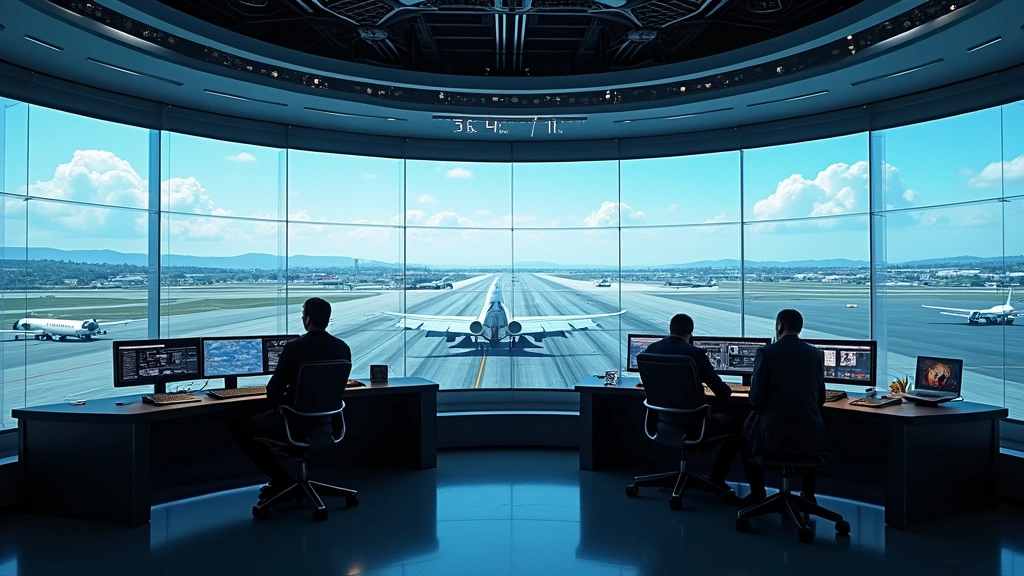
Understanding Modern Control Tower Technology
Traditional control towers represent some of aviation’s most critical infrastructure—physical buildings housing trained controllers who maintain visual contact with airspace, manage radio communications, and coordinate ground operations. However, modern control tower tech transcends the physical structure entirely. Today’s systems integrate multiple technologies into unified platforms that provide unprecedented operational awareness.
The foundation of modern control tower technology rests on Automatic Dependent Surveillance-Broadcast (ADS-B), a technology that allows aircraft to automatically transmit their position, altitude, velocity, and identification information to ground stations and other aircraft. Unlike traditional radar that requires ground-based systems to actively track targets, ADS-B creates a collaborative environment where aircraft actively participate in surveillance. This fundamental shift enables controllers to work with data that’s more accurate, updated more frequently, and available across wider geographic areas.
Building on ADS-B infrastructure, control tower tech incorporates advanced data fusion systems that synthesize information from multiple sources: radar, weather systems, aircraft transponders, airport surface detection equipment, and flight plan databases. These integrated platforms create a unified operational picture that controllers access through intuitive, customizable interfaces. Modern displays show not just current positions, but predictive trajectories, potential conflicts, separation violations, and optimization opportunities—all in real-time.
The technological stack supporting modern control tower operations includes sophisticated communication systems that go far beyond traditional radio. Voice over Internet Protocol (VoIP) technology, combined with advanced audio processing and noise cancellation, ensures crystal-clear communications even in noisy environments. Some systems integrate text-based communications alongside voice, reducing miscommunication risks and creating permanent records of critical conversations.

Remote Digital Towers: The Future of ATC
Perhaps the most revolutionary advancement in control tower tech is the emergence of remote digital towers—facilities where air traffic controllers operate from locations far removed from the airports they manage. Rather than sitting in a tower building overlooking the runway, controllers view the airport environment through multiple high-resolution cameras, synthetic vision systems, and enhanced displays that often provide superior situational awareness compared to traditional visual observation.
Companies like Saab and Indra have pioneered remote tower technology, with operational implementations now running at airports across Europe and beyond. Saab’s RemoteAirTower system, for instance, combines 360-degree video feeds, enhanced vision systems, and integrated data displays to create an operational environment that controllers report as superior to traditional towers in many respects.
The advantages of remote digital towers extend far beyond technological novelty. Cost efficiency represents perhaps the most compelling benefit—eliminating the need for physical tower buildings at smaller airports makes ATC infrastructure financially viable for regional facilities that previously couldn’t justify the expense. A single remote tower facility can manage multiple airports simultaneously, with controllers switching focus between locations as operational demands fluctuate. This flexibility dramatically improves resource utilization and reduces operational costs.
Remote towers also enhance resilience and business continuity. If a physical tower becomes unavailable due to weather, maintenance, or other factors, operations can seamlessly transition to remote facilities. This redundancy ensures that critical airports never lose ATC coverage. Additionally, remote tower technology enables training and mentorship in ways traditional towers cannot—experienced controllers can observe trainees in real-time, provide guidance, and intervene if necessary, improving training effectiveness and safety outcomes.
The video technology underlying remote towers continues evolving rapidly. Modern systems employ multiple high-definition and thermal cameras positioned around the airport, providing 360-degree coverage with the ability to zoom, pan, and focus on specific areas of interest. The Verge has covered how these visual systems incorporate artificial intelligence to highlight aircraft, vehicles, and potential hazards automatically, further augmenting controller awareness.
AI and Predictive Analytics in Air Traffic Management
Artificial intelligence represents perhaps the most transformative force in modern control tower tech. Machine learning algorithms trained on decades of flight data can now predict aircraft trajectories, identify optimal routing, detect potential conflicts before they develop, and continuously learn from operational outcomes to improve performance.
One critical application involves arrival sequencing and merging—the process of organizing aircraft approaching an airport into an efficient landing sequence. Traditional controllers perform this task manually, using experience and intuition to balance efficiency with safety. AI-powered systems analyze hundreds of variables simultaneously: aircraft type and performance characteristics, current weather, runway configurations, fuel states, passenger connections, and airport congestion patterns. These systems can generate optimal sequences that reduce delays, minimize fuel consumption, and maintain safety margins automatically.
Demand-capacity balancing represents another area where AI excels. During periods of high traffic demand, controllers must decide which flights proceed and which experience delays. AI systems can model the entire network impact of individual routing decisions, identifying choices that reduce overall delays and optimize fuel efficiency across multiple airports. This systemic optimization produces better outcomes than local, controller-by-controller decisions.
Predictive analytics also enable proactive safety management. Rather than reacting to conflicts as they develop, modern systems can identify situations where aircraft separation might be violated minutes or hours in advance, giving controllers time to implement preventive measures. Machine learning models analyze historical safety data to identify subtle patterns that humans might miss—weather-traffic interactions, time-of-day factors, specific controller fatigue patterns, and aircraft-type-specific behaviors that correlate with safety risks.
Weather integration represents another frontier where AI transforms control tower operations. Modern systems don’t just display current weather conditions; they integrate sophisticated weather prediction models, wind shear detection, turbulence forecasting, and convective weather analysis. AI algorithms correlate weather patterns with traffic flows, identifying optimal routing decisions that minimize encounters with hazardous weather while maintaining efficiency.
Automation and Conflict Detection Systems
Modern control tower tech incorporates sophisticated automated conflict detection and resolution systems that continuously monitor all aircraft in controlled airspace, identifying situations where separation standards might be violated. These systems don’t just detect conflicts—they generate resolution recommendations that controllers can implement immediately.
The most advanced systems employ four-dimensional trajectory planning, accounting for time as a fourth dimension alongside three-dimensional space. Rather than thinking of aircraft as points moving through three-dimensional space, these systems model precise flight paths that include timing information. This enables optimization that accounts for when aircraft will be at specific locations, enabling more efficient conflict avoidance and routing.
Separation assurance automation represents a particularly important innovation. Traditional separation standards require controllers to maintain specific distances between aircraft—typically 1,000 feet vertically or three nautical miles horizontally. Automated systems can identify when these separations are at risk and recommend corrective actions—altitude changes, speed adjustments, or heading modifications—that restore safe separation while minimizing disruption to flight plans.
These automated systems don’t replace controllers; rather, they augment human decision-making by handling the computational burden and highlighting critical information. Controllers remain in command, with full authority to accept, modify, or reject automated recommendations. However, the systems’ ability to process vast quantities of data and identify optimal solutions transforms the controller’s role from reactive problem-solver to strategic decision-maker overseeing automated systems.
Integration with best tech stocks to invest in shows that aviation technology companies increasingly dominate innovation investments. Companies developing control tower automation systems represent some of the most compelling opportunities in aerospace and defense technology sectors.
Real-World Implementation and Case Studies
Control tower tech isn’t theoretical—it’s operational at major airports worldwide, with proven track records of improved safety and efficiency. Understanding real-world implementations clarifies both the potential and challenges of these technologies.
Singapore Changi Airport represents a leading example of modern control tower technology integration. The facility employs advanced data fusion systems, sophisticated conflict detection, and integrated decision-support tools that help controllers manage one of the world’s busiest airports with remarkable efficiency. Changi’s CNET coverage highlighted how their systems reduced delays while maintaining perfect safety records.
European remote tower initiatives have demonstrated the viability of remote ATC operations. Multiple European airports now operate with controllers located in centralized facilities managing multiple regional airports. These implementations have validated that remote operations can match or exceed traditional tower safety and efficiency performance while reducing costs dramatically.
Copenhagen Airport implemented Saab’s RemoteAirTower system for backup operations, demonstrating that remote towers can seamlessly take over when physical towers become unavailable. This redundancy has proven invaluable during maintenance periods and provides confidence in remote technology reliability.
Dallas/Fort Worth International Airport and other major U.S. hubs have implemented advanced decision-support systems that help controllers manage complex traffic flows. These systems reduce controller workload during peak periods, improving safety by preventing fatigue-related errors while maintaining or improving operational efficiency.
The FAA’s Next Generation Air Transportation System (NextGen) initiative represents North America’s comprehensive modernization effort. NextGen implementations at major airports demonstrate that modern control tower tech can significantly improve efficiency—some facilities report 15-20% reductions in flight times and corresponding fuel savings through optimized routing and sequencing enabled by advanced decision-support systems.
Challenges and Safety Considerations
Despite tremendous promise, control tower tech faces significant implementation challenges that must be carefully managed to ensure continued aviation safety.
Cybersecurity represents perhaps the most critical concern. Control tower systems manage the movement of thousands of aircraft carrying hundreds of thousands of passengers. Cyberattacks targeting these systems could have catastrophic consequences. Modern systems must incorporate military-grade security: encryption, intrusion detection, redundant networks, and systems designed to continue operating safely even if compromised. The aviation industry has recognized cybersecurity as a critical priority, with major investments in secure system design and threat monitoring.
Transition and training challenges emerge when implementing new technology. Controllers trained over decades using traditional systems must learn entirely new interfaces and workflows. Poorly managed transitions can actually decrease safety as controllers struggle with unfamiliar tools. Successful implementations involve extensive training programs, gradual rollouts, and maintaining traditional systems in parallel until controllers achieve proficiency with new technology.
Algorithm transparency and explainability create challenges with AI-based systems. Controllers need to understand why automated systems make specific recommendations—they can’t blindly trust black-box algorithms. Modern systems are designed with explainability in mind, providing controllers with clear reasoning for recommendations so they can evaluate and, if necessary, override them.
Reliability and redundancy are non-negotiable requirements. Unlike consumer applications where occasional outages are inconvenient, control tower systems must maintain continuous operation with near-perfect reliability. Systems incorporate multiple redundancies: backup power supplies, redundant computers and networks, and failsafe modes that degrade gracefully rather than failing catastrophically.
Regulatory approval moves slowly in aviation for good reason. New control tower tech must undergo extensive testing, validation, and certification before operational deployment. This regulatory caution has prevented disasters but also slows innovation adoption. Balancing innovation speed with safety rigor remains an ongoing challenge for aviation regulators and technology developers.
The Economics of Control Tower Modernization
Understanding the economic drivers behind control tower tech adoption reveals why these innovations are spreading rapidly despite challenges.
Capital cost reduction represents a primary economic driver. Traditional control towers are expensive to build—a new physical tower for a major airport costs $50-100 million or more. Remote tower facilities serving multiple airports cost a fraction of this amount while providing superior capabilities. For regional airports, remote tower technology makes ATC economically viable for the first time.
Operational cost reduction flows from automation and efficiency improvements. Modern systems reduce controller workload, enabling fewer controllers to manage higher traffic volumes safely. Optimized routing and sequencing reduce fuel consumption, generating savings that accumulate to millions of dollars annually for major airports. These economic benefits incentivize rapid adoption despite implementation challenges.
Capacity expansion enables airports to handle more traffic without physical infrastructure expansion. Many major airports operate at or near maximum capacity, constrained by ATC capabilities rather than physical runway capacity. Advanced control tower tech can increase capacity 15-25% through more efficient traffic management—equivalent to building new runways at a fraction of the cost.
The climate tech jobs sector increasingly overlaps with aviation technology as environmental considerations drive adoption of efficiency-improving technologies. Fuel savings from optimized routing contribute meaningfully to aviation’s sustainability goals, creating environmental incentives alongside economic drivers.
Workforce economics create complex incentives. While control tower tech reduces the number of controllers needed, it increases demand for specialists who understand and maintain these systems. The aviation industry faces controller shortages in many regions, making automation attractive for managing traffic with available personnel. However, this creates transition challenges for existing controllers and training institutions.
Investment in big tech and renewable energy convergence shows how aviation technology increasingly intersects with broader tech trends. Battery-electric aircraft development, for instance, requires new air traffic management approaches that control tower tech innovations will enable.
The technology in renewable energy innovations driving sustainable futures also influences aviation modernization. As the aviation industry pursues sustainability goals, control tower technology improvements that optimize fuel efficiency and reduce emissions become critical components of environmental strategies.
For investors and industry professionals, understanding control tower tech economics is essential. The TechPulseHunter Blog regularly covers developments in aviation technology investment, providing insights into which companies and technologies are driving industry transformation.
Looking at Tech Group21 resources reveals comprehensive analysis of aerospace technology trends, including detailed coverage of control tower modernization initiatives across different regions and their economic implications.
FAQ
What exactly is control tower technology?
Control tower technology encompasses the systems, software, and hardware that air traffic controllers use to manage aircraft movements safely and efficiently. This includes radar systems, communication equipment, display systems, data fusion platforms, artificial intelligence applications, and automation tools. Modern control tower tech integrates all these components into unified platforms that provide controllers with comprehensive operational awareness and decision-support capabilities.
How do remote digital towers work?
Remote digital towers use multiple high-resolution cameras positioned around an airport to provide 360-degree video coverage. Controllers view these feeds on high-resolution displays, often with enhancement technologies like synthetic vision and thermal imaging. The system integrates video with all traditional air traffic control data—radar, flight plans, weather, aircraft positions—to provide controllers with situational awareness comparable to or exceeding traditional physical towers. Controllers can zoom, pan, and focus on specific areas while maintaining awareness of the entire airport environment.
Can artificial intelligence replace air traffic controllers?
No. Artificial intelligence and automation in control tower tech are designed to augment human controllers, not replace them. Controllers remain in command, making final decisions on all critical matters. AI systems handle computational burden, identify optimization opportunities, and highlight critical information—but controllers evaluate, modify, or override recommendations as appropriate. The human element remains essential for handling unexpected situations, exercising judgment, and maintaining ultimate responsibility for safety.
Is remote air traffic control safe?
Remote air traffic control has demonstrated safety equivalent to traditional tower operations in operational implementations. Extensive testing and real-world deployment at multiple airports has validated that remote operations can maintain safety standards while improving efficiency. The video quality, data integration, and decision-support capabilities of modern remote systems often provide superior situational awareness compared to traditional visual-only tower operations. However, successful remote ATC requires careful system design, thorough testing, and comprehensive training.
How much does control tower modernization cost?
Costs vary dramatically depending on implementation scope. Remote tower systems serving multiple airports might cost $50-200 million for the entire facility. Individual airport upgrades with new display systems, data fusion, and automation software typically cost $10-50 million depending on airport size. These investments typically pay for themselves within 5-10 years through operational efficiencies, reduced delays, and fuel savings. Capital costs for remote towers are substantially lower than traditional tower construction ($50-100+ million for a single physical tower).
When will control tower technology be available at all airports?
Deployment timelines vary significantly by region and airport size. Major international hubs have already implemented advanced systems. European airports are rapidly adopting remote tower technology. U.S. implementation follows FAA’s NextGen modernization schedule, with major upgrades already underway at significant facilities. Smaller regional airports may take 10-15 years to receive modern systems due to funding constraints and lower traffic volumes that make investment less immediately economical. However, remote tower technology is making modernization economically viable for regional airports for the first time.


